PYRO Fire Pit Review: Titanium Meets Smokeless Tech
The PYRO combines aerospace titanium, 276 air injectors, and a built-in 30,000mAh power station to deliver a truly smokeless campfire experience.
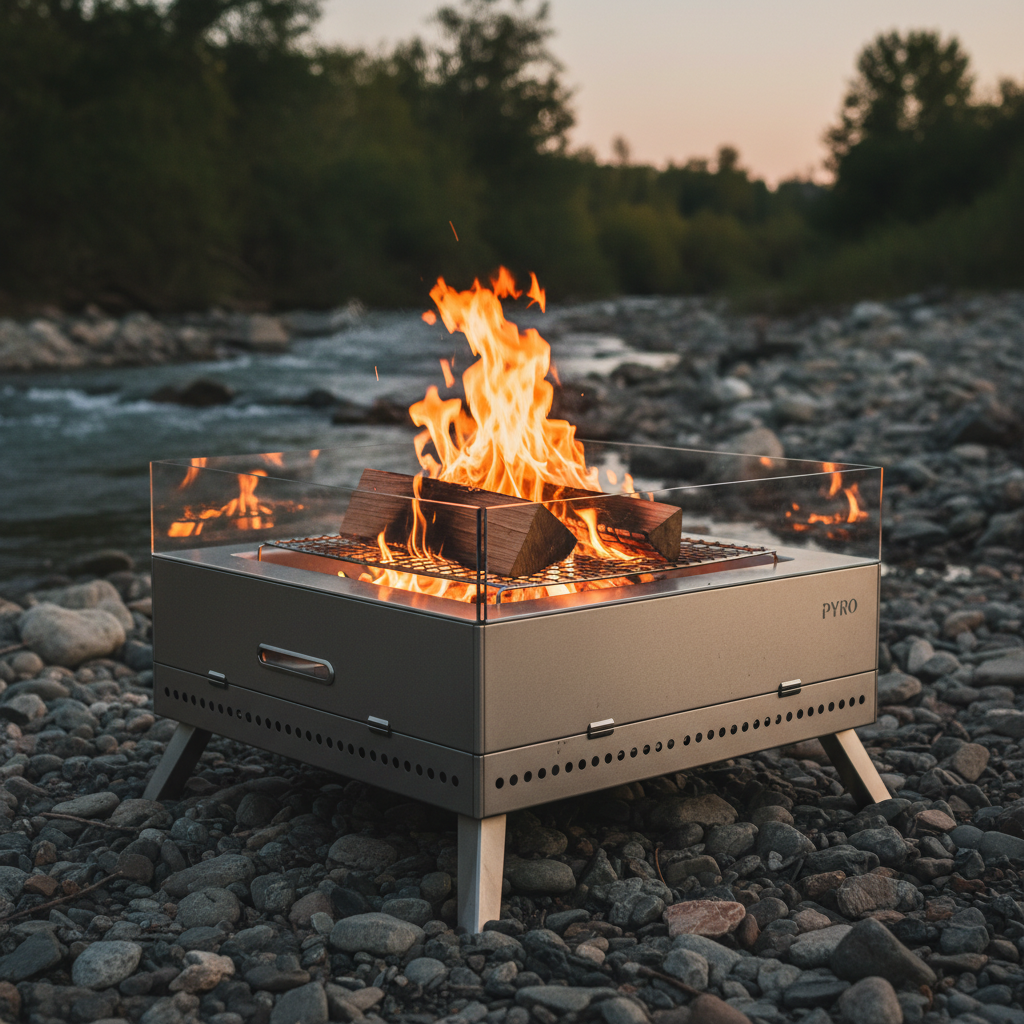
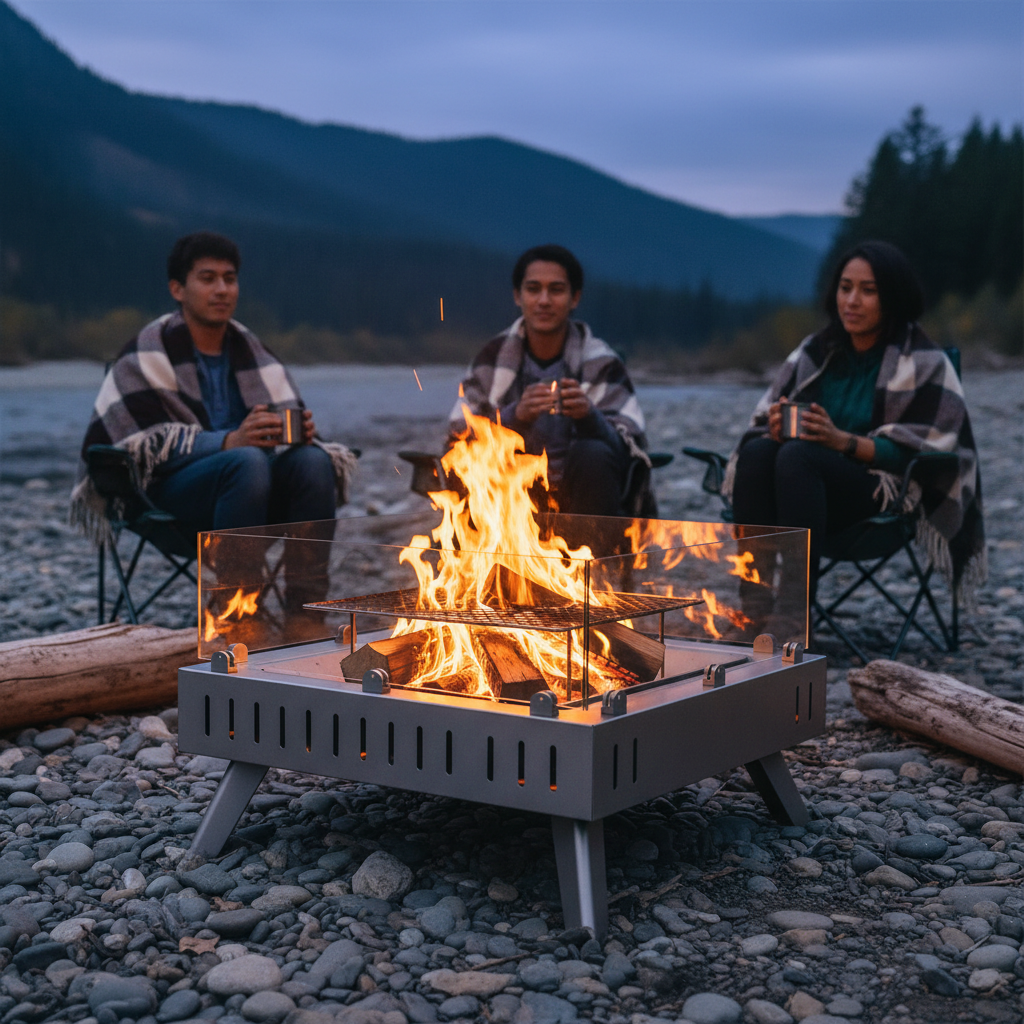
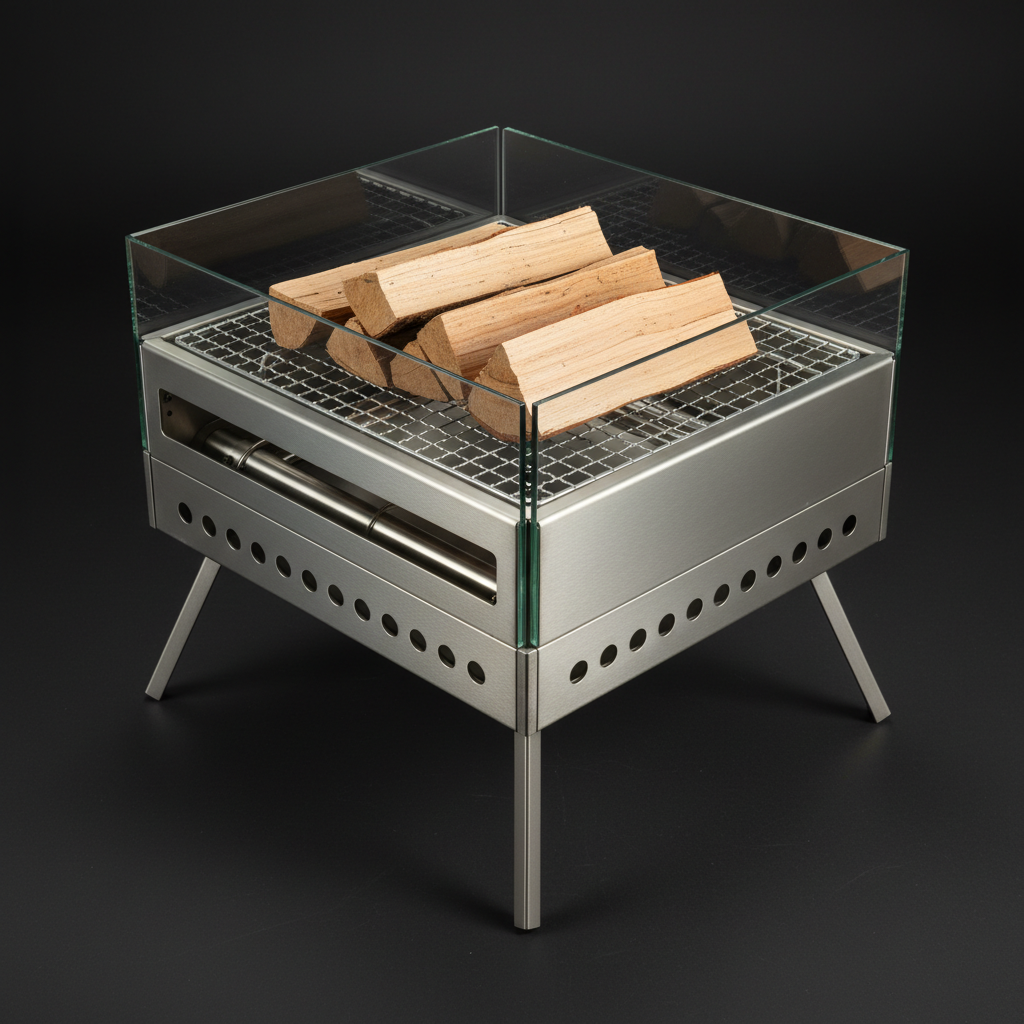
Picture this: a cold evening on the patio, flames dancing behind crystal-clear glass panels, warmth radiating from every side, and not a single wisp of smoke chasing you around the circle. That is the promise behind the PYRO, a smokeless fire pit from solarlunix that just blew past its Kickstarter goal by over 2,000%. Built from aerospace-grade titanium in a low-profile rectangular design with quartz glass wind guard panels on all four sides, angled legs, and a built-in 30,000mAh power station, the PYRO is not just another fire pit with "smokeless" slapped on the label. It is engineered from the ground up to eliminate smoke through active combustion technology, and it ignites in just 5 seconds.
We spent time digging into the specs, comparing it against established players like Solo Stove and BioLite, and breaking down what makes this design genuinely different. Here is what you need to know before backing.
What Makes the PYRO Different from Every Other Fire Pit
Most smokeless fire pits are cylindrical tubs that rely on passive airflow. Double-wall construction pulls air in from the bottom, heats it between the walls, and pushes it out through holes near the top to create secondary combustion. It works reasonably well, but performance depends heavily on wind conditions, fuel type, and how you build your fire.
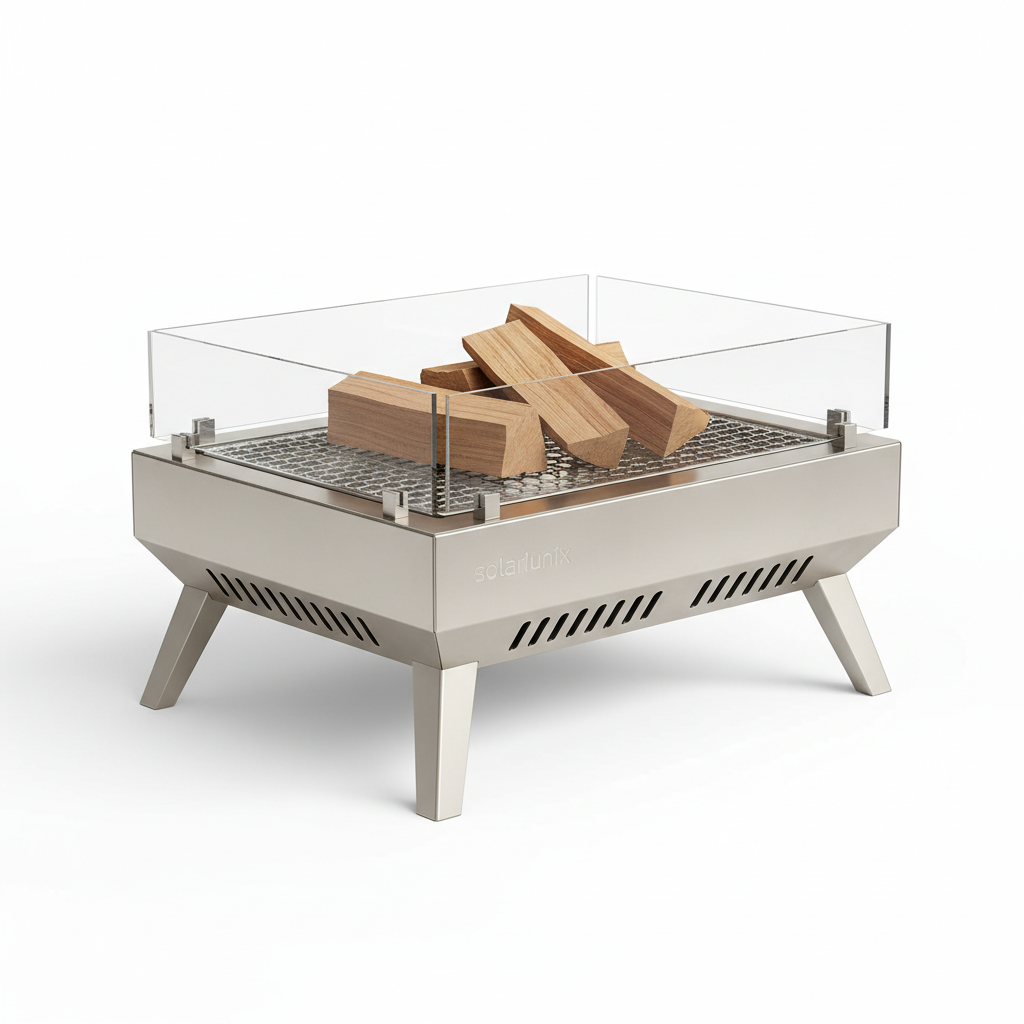
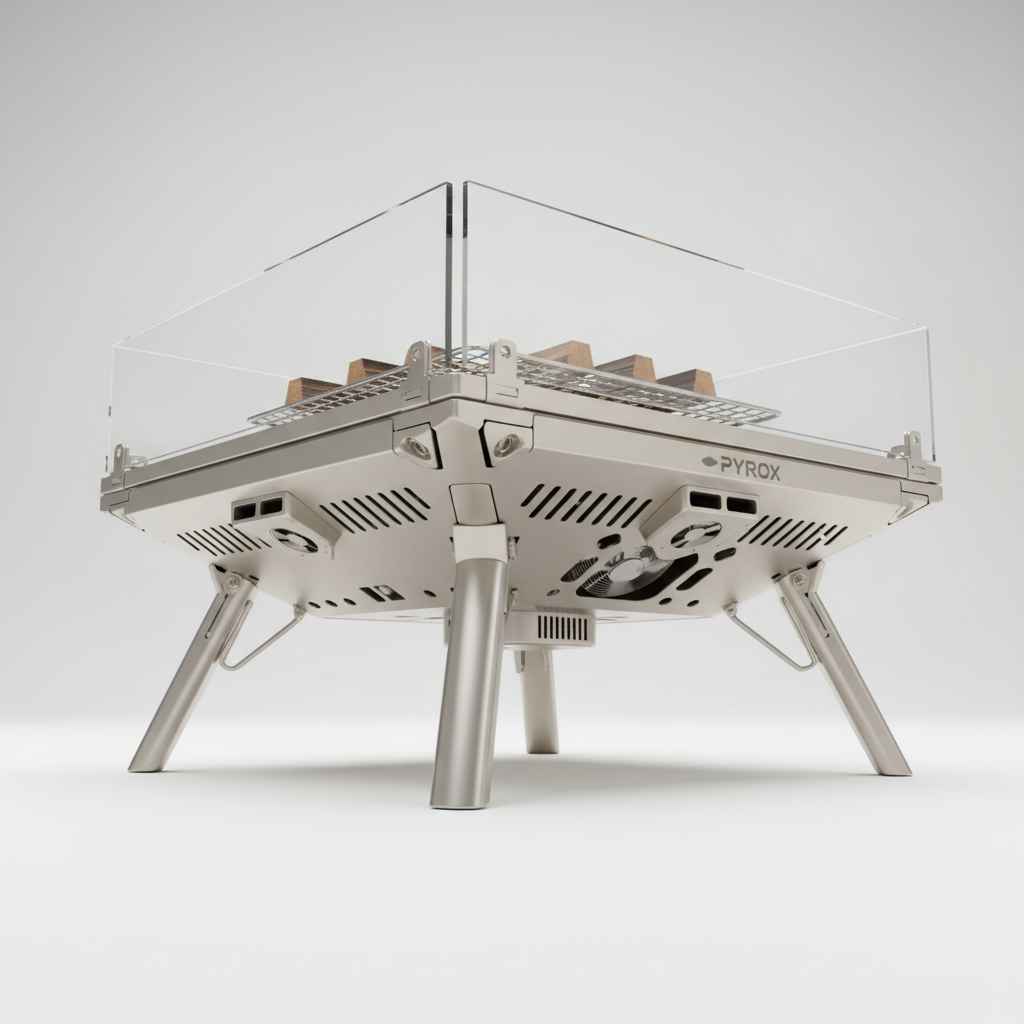
The PYRO breaks from that mold entirely. Its flat, rectangular form factor looks more like a portable fire table than a traditional fire pit. Four angled legs elevate the titanium base, which houses six internal fans powered by a built-in 30,000mAh lithium battery. Those fans actively force air through 276 precision-drilled injectors in the combustion chamber. That is not a typo. 276 individual air channels feed oxygen exactly where combustion needs it most, creating a burn that is cleaner and more complete than passive systems can manage on their best day.
The result is stepless airflow control up to 100 CFM. You can dial the fans from a gentle glow for ambiance all the way up to serious heat output for cold nights. That level of precision control simply does not exist in passive designs like the Solo Stove Bonfire or Breeo X Series. And because the fans maintain consistent airflow regardless of wind direction, you get reliable smokeless performance even in conditions that would compromise a passive system.
The whole unit weighs roughly 15 pounds (7 kg), and its flat, rectangular profile with folding legs makes it genuinely packable for camping trips and tailgates. For context, the Solo Stove Bonfire 2.0 weighs about 15 pounds as well, but it is a bulky cylinder made of stainless steel. Titanium gives the PYRO a comparable weight with significantly better corrosion resistance, a higher strength-to-weight ratio, and a form factor that actually fits in a car trunk without hogging space. Solarlunix also claims 5-second quick ignition, meaning you go from cold to flame almost instantly with the fan-assisted airflow.
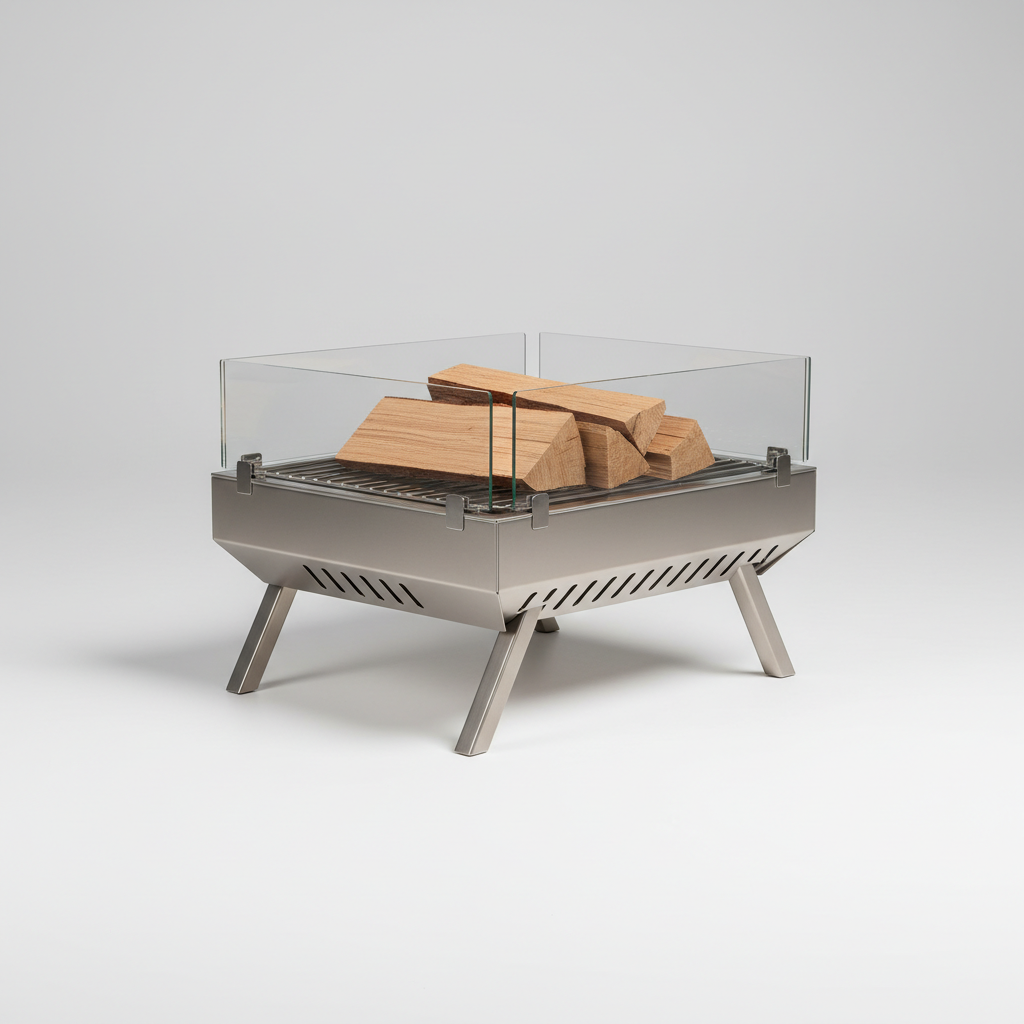
PYRO 360 Titanium Smokeless Fire Pit
See current price
Rectangular flat-profile titanium smokeless fire pit with quartz glass side panels, 276 air injectors, six fans, 5-second ignition, and a built-in 30,000mAh power station.
The Tech Behind 276 Air Injectors and Six Fans
The combustion system is where the PYRO separates itself from the pack. Each of the 276 injectors is positioned to maximize oxygen delivery at the point of combustion. When wood burns incompletely, you get smoke, which is really just unburned particulate matter carried upward by hot air. When it burns completely, you get heat, light, water vapor, and carbon dioxide with minimal visible particulate output. The PYRO's active fan system ensures that secondary combustion happens consistently, not just when ambient conditions cooperate.
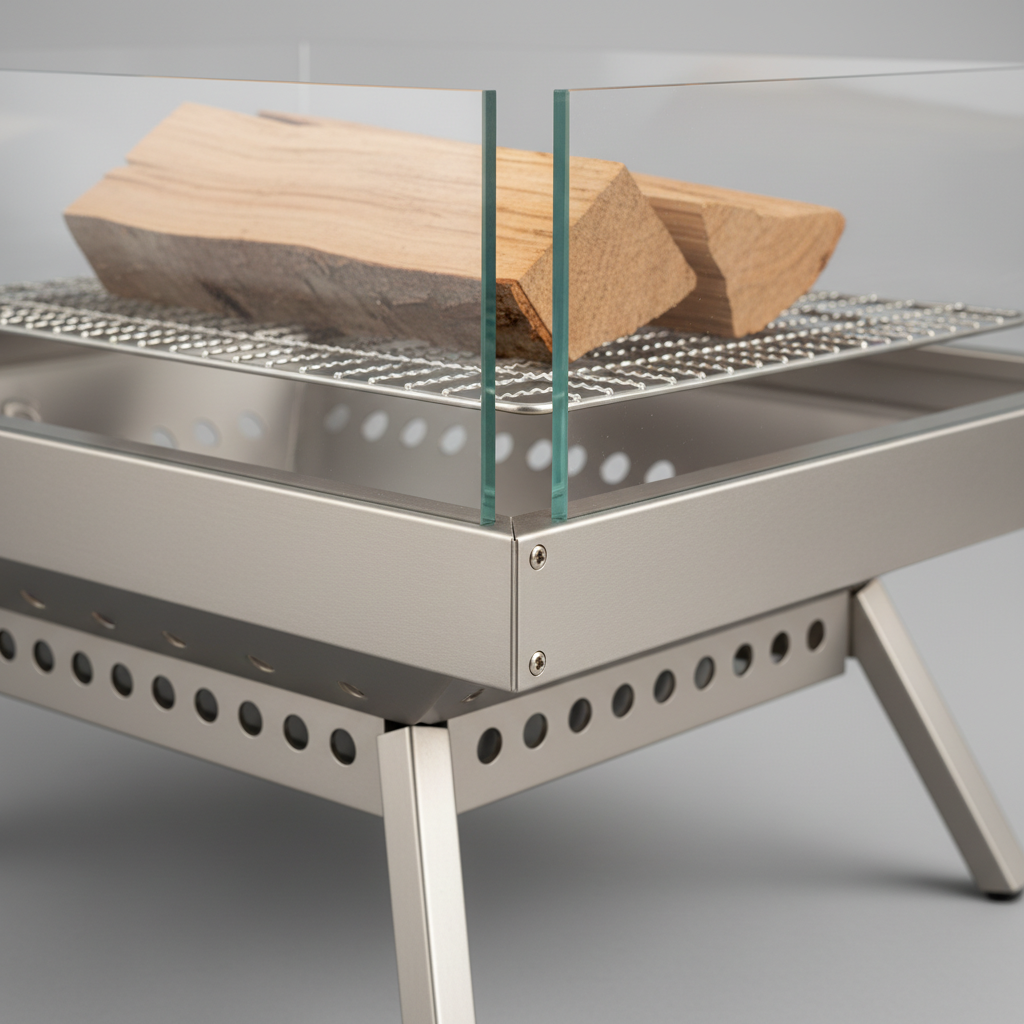
The 30,000mAh lithium battery is integrated into the base unit. At moderate fan speeds, you get several hours of runtime on a single charge, which is more than enough for a typical evening fire. The battery charges via USB-C, and the entire power system adds minimal weight because the titanium shell is already doing the structural work.
Pro Tip
Start with low fan speed and dry, seasoned hardwood. Once the fire establishes a strong coal bed after about 10 minutes, increase the airflow gradually. This sequence gives you the cleanest burn and longest fuel efficiency from each load of wood.
The quartz glass wind guard panels deserve their own discussion. Mounted on all four sides of the rectangular frame, they serve double duty: shielding the fire from wind while giving everyone seated around it a clear view of the flames. Unlike tempered glass or mica windows found in some fire pits and wood stoves, quartz glass handles extreme thermal shock without cracking and resists staining from soot and carbon buildup over time. No jockeying for the "good seat," no craning your neck around a steel wall. Every angle gives you full flame visibility.
This combination of active airflow, premium materials, and full visibility is what makes the PYRO more than an incremental improvement. It is a different category of product altogether.
How Does PYRO Compare to Solo Stove and BioLite?
The smokeless fire pit market has matured significantly. Solo Stove essentially created the consumer category with their stainless steel, passive-airflow design. BioLite added battery-powered fans and app control. TIKI brought wood pellet compatibility into the mix. Here is how the PYRO stacks up against each.
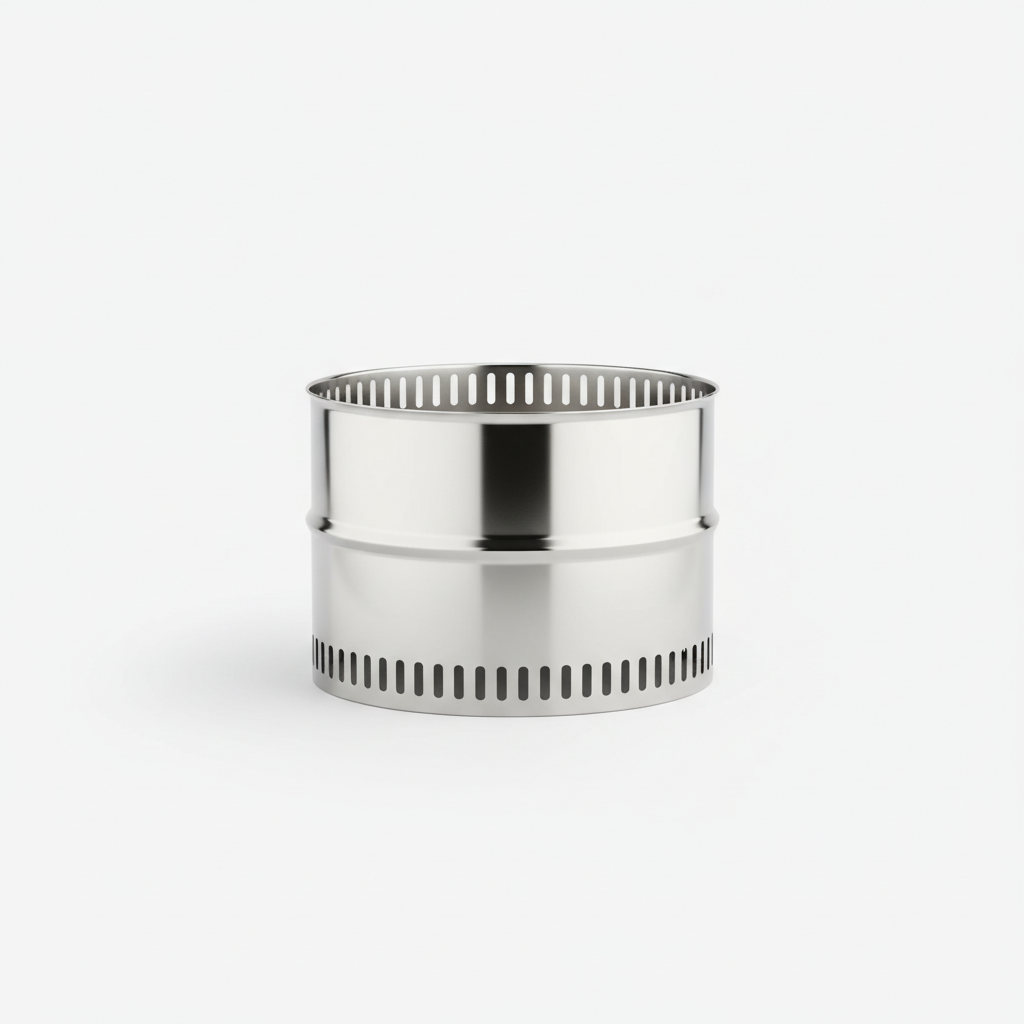
Solo Stove Bonfire 2.0 ($224) is the default recommendation for most buyers, and for good reason. It is stainless steel, relies entirely on passive airflow through its double-wall design, and comes with a lifetime warranty that Solo Stove actually honors. It works well in calm conditions, but wind can disrupt the airflow pattern and increase smoke output. There are no moving parts, no batteries, and nothing to charge. That simplicity is both its greatest strength and its biggest limitation. If you want zero maintenance and proven reliability, the Bonfire is still the safest pick.
Solo Stove Bonfire 2.0
$224
The category-defining stainless steel smokeless fire pit with passive double-wall airflow. Zero moving parts, no batteries needed. Lifetime warranty included.
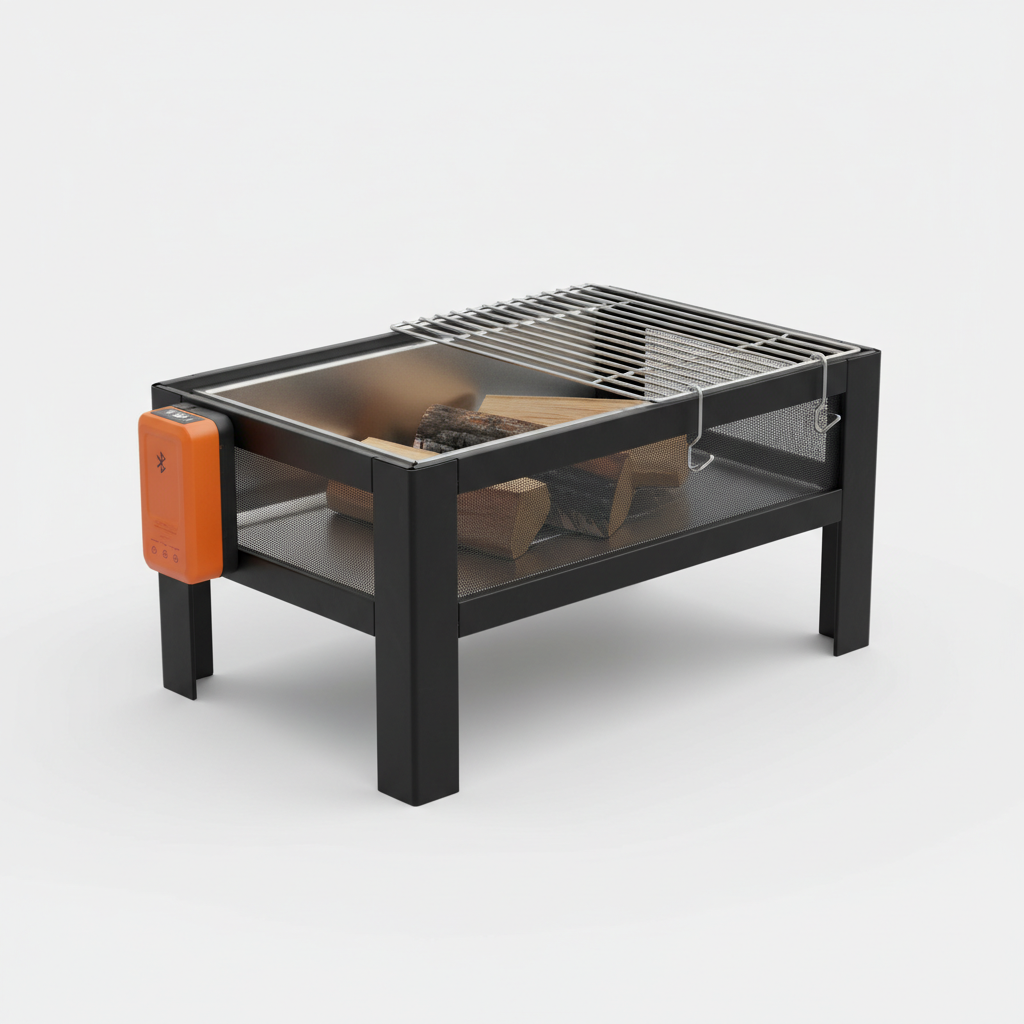
BioLite FirePit+ ($300) is the closest competitor to the PYRO in concept. It uses a detachable battery pack to power an internal fan, controllable via Bluetooth app on your phone. It is compatible with both firewood and charcoal, includes a grilling grate for cooking, and weighs under 20 pounds. The fan helps reduce smoke meaningfully, but it is a single fan unit rather than the PYRO's six-fan, 276-injector array. The tradeoff: BioLite is a shipping product you can buy today with established user reviews, while the PYRO is still in its crowdfunding phase. BioLite's warranty is one year.
BioLite FirePit+
$300
Battery-powered smokeless fire pit with Bluetooth app control, dual-fuel compatibility for wood and charcoal, and an included grilling grate. Under 20 lbs.
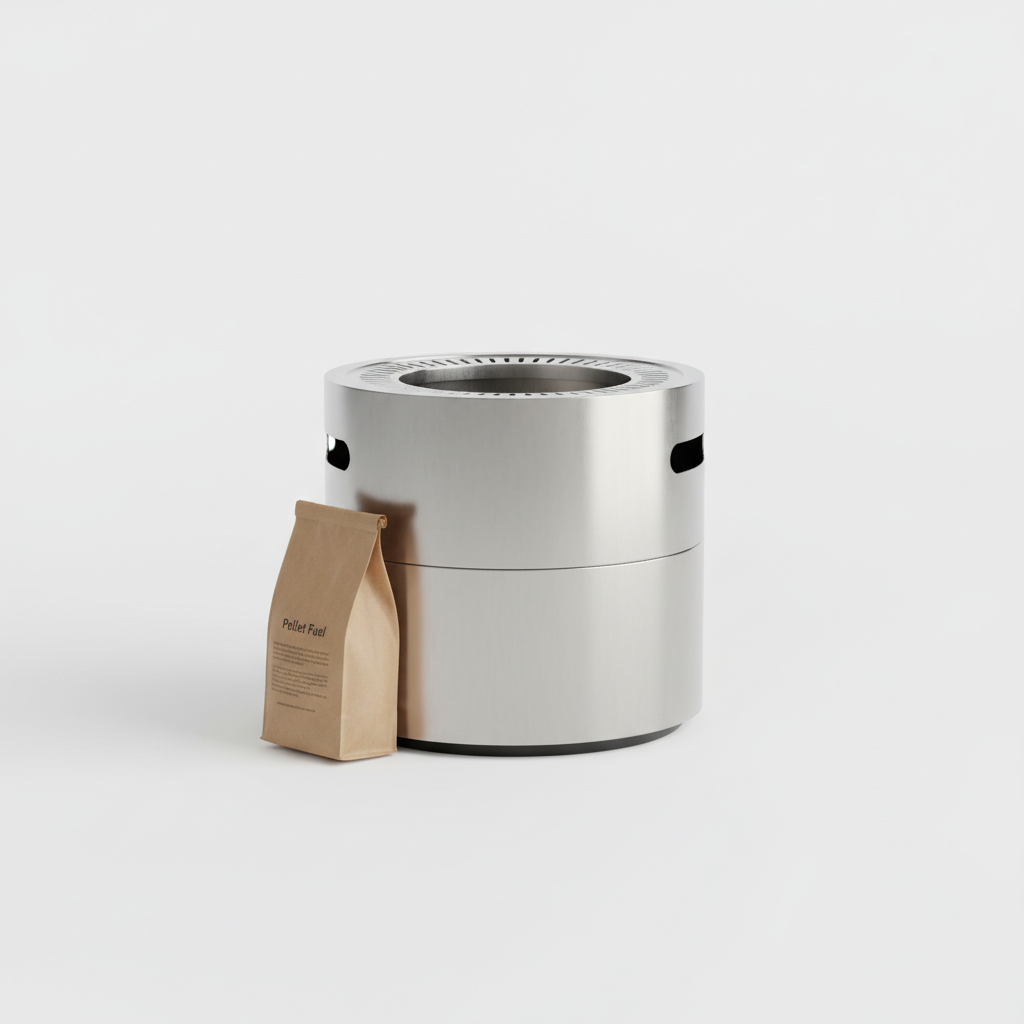
TIKI Patio Fire Pit ($395) takes a different approach by optimizing for wood pellets. Burning pellets produces significantly less smoke than logs in most fire pits, and the TIKI's internal airflow system claims to reduce smoke by up to 80%. It is a solid patio-focused option, but at $395 with only a two-year warranty, it sits at a price premium without offering the advanced combustion technology or premium materials of the PYRO.
TIKI Patio Smokeless Fire Pit
$395
Optimized for wood and wood pellets with internal airflow reducing smoke by up to 80%. Includes one pellet burn bag. Cylindrical design with built-in hand-holds.
The PYRO's average Kickstarter pledge sits around $222, which puts it right between the Solo Stove and BioLite in price. For that, you get titanium construction, quartz glass wind guards on all four sides, a flat-profile design with folding legs for portability, and the most advanced active airflow system in any consumer fire pit currently available. The tradeoff is that this is a crowdfunding product, not a retail-ready item from an established brand with years of customer service history.
Is the PYRO Worth Backing on Kickstarter?
Crowdfunding always carries inherent risk. Delivery timelines slip. Final products sometimes differ from campaign renders. But the PYRO campaign has several factors working in its favor.
First, the funding numbers. With over $113,000 raised against a $5,000 goal, the campaign hit 2,288% of its target with 516 backers. That level of traction, combined with an average pledge of $222, usually indicates a product that resonates beyond the early-adopter crowd and has enough financial backing to reach production.
Second, the engineering choices suggest a team that understands materials science. Aerospace-grade titanium is expensive to source and machine, but it offers a strength-to-weight ratio that stainless steel simply cannot match. Choosing quartz glass over cheaper alternatives like tempered glass or mica shows a commitment to long-term durability over short-term margin. These are not the decisions of a team cutting corners.
Third, the core technology is not experimental. Active airflow through precision injectors is proven in industrial combustion applications. Quartz glass has decades of use in laboratory and high-temperature industrial settings. The PYRO is essentially scaling down established industrial technology into a consumer product, which is a more predictable engineering path than inventing something entirely new.
The main concerns are typical for any crowdfunding campaign. There is no established warranty track record. Replacement parts, specifically quartz panels and fan modules, need to remain available after the campaign closes. And the 30,000mAh battery, while impressive, will degrade over time like any lithium cell. How easy it is to replace that battery pack will matter three to five years down the road.
Pros
- +Aerospace titanium keeps total weight at just 15 lbs
- +276 air injectors with six fans deliver consistent smokeless performance
- +30,000mAh battery provides hours of active airflow per charge
- +Quartz glass wind guards on all four sides for flame visibility
- +5-second quick ignition with stepless airflow control up to 100 CFM
- +Flat-profile design with folding legs for genuine portability
- +Competitive pricing at roughly $222 average pledge
Cons
- -Kickstarter product with no established retail warranty yet
- -Lithium battery will degrade over years of regular use
- -Replacement parts availability (quartz panels, fan modules) is unconfirmed
- -More complex than zero-maintenance passive designs like Solo Stove
- -Not yet a shipping product, delivery timeline could shift
Our Take on the PYRO
The PYRO is the most technically ambitious smokeless fire pit we have come across. While Solo Stove proved that passive airflow works and BioLite showed that a battery-powered fan helps meaningfully, the PYRO pushes the concept further with six fans, 276 injectors, and a flat-profile aerospace titanium body surrounded by quartz glass wind guards. The 5-second ignition and stepless airflow control make it remarkably easy to use despite the advanced engineering underneath. At roughly $222 on Kickstarter, it is priced competitively against established alternatives that use simpler materials and less advanced combustion technology.
If you want a proven, zero-maintenance fire pit with a lifetime warranty, the Solo Stove Bonfire remains the safe choice. If you want app-controlled versatility with grilling capability from a shipping product, BioLite delivers. But if you want the cutting edge of smokeless fire technology in a portable, table-style package that weighs 15 pounds, ignites in seconds, and gives everyone a clear view of the flames through glass panels on every side, the PYRO is the most compelling option available right now.
The campaign runs through March 20, 2026. With 2,288% funding and over 500 backers already committed, this one has momentum.
Interested in backing the PYRO?
Check out the PYRO campaign on Kickstarter
Related Reading
- Best Smart Home Gadgets Worth Buying in 2026
- Best Carry-On Travel Bags and Packing Essentials
- The Misen Carbon Nonstick Pan Review
The Weekly Dispatch
Enjoying this article?
Subscribe and get our best gear picks delivered every Sunday morning.
Related Stories

What IP Ratings Mean for Waterproof Gear
IP ratings tell you exactly how waterproof your gear is, but most people misread them. Here's what those numbers actually mean for real-world use.
Best Pocket-Friendly Sunglasses Cases
Hard shells crack under pressure, soft pouches let lenses scratch. We tested compact cases that actually fit in your pocket and protect your sunglasses.

Best Lightweight Scarves for Travel in 2026
Discover the best lightweight travel scarves that pack small, provide warmth, and serve multiple purposes. From merino wool to silk blends, here's what works.