Best Tactical Backpack for Bug Out Bag 2026
Bug-out bags demand durability, organization and quick access. We compared top tactical backpacks by maker specs, capacity and materials.
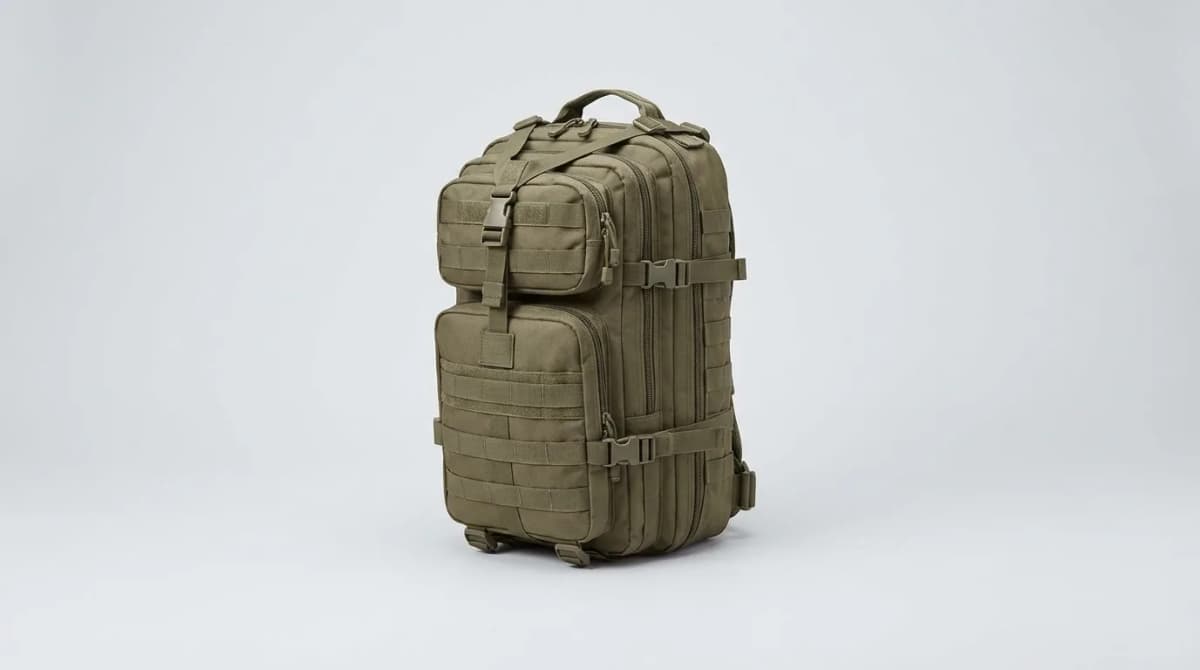
A bug-out bag sits in your closet doing nothing until the moment it has to do everything. The backpack you choose needs to haul 72 hours of supplies without falling apart, stay organized under stress, and fit comfortably when you're moving fast. Most tactical packs check one or two of these boxes. The best ones handle all three.
Quick Picks
Our top recommendations at a glance:
- 15.11 RUSH72 Tactical BackpackSee current price
- 2Maxpedition Falcon-II BackpackSee current price
- 3Direct Action Dragon Egg MkIISee current price
- 4Mystery Ranch 3 Day Assault Pack BVSSee current price
- 5Condor 3 Day Assault PackSee current price
We compared tactical backpacks designed for emergency use. Some collapsed under weight. Others turned into disorganized black holes. A few stood out for their balance of capacity, access, and real-world durability.
Why tactical backpacks work for bug-out bags
Tactical packs weren't originally designed for civilian emergency prep, but they solve the same problems. Military and law enforcement need gear that holds up under extreme conditions, organizes essential items for quick access, and carries heavy loads for extended periods. That translates directly to bug-out scenarios.
The MOLLE webbing (Modular Lightweight Load-carrying Equipment) found on most tactical packs lets you attach pouches and accessories exactly where you need them. Your first aid kit goes where you can grab it instantly. Your water filter stays separate from food. This external organization keeps the main compartment from becoming a jumbled mess when you're digging for something at 2 AM.
Frame systems matter more than most people realize. A 35-pound bug-out bag without proper support will wreck your shoulders and back within a few miles. Internal frames distribute weight to your hips, which are stronger than your shoulders and designed to carry loads. External frames offer better ventilation and easier access but can snag on brush or doorways.
Material choice separates budget packs from serious gear. Look for 500D or higher denier nylon or Cordura. Anything less will abrade through after a season of use. YKK zippers are standard for good reason - cheaper zippers fail under load or get snagged when you need fast access. Bartacked stress points and reinforced stitching at handle attachment points prevent catastrophic failure when you're hauling the pack by one strap.
5.11 RUSH72 Backpack - the standard everyone measures against
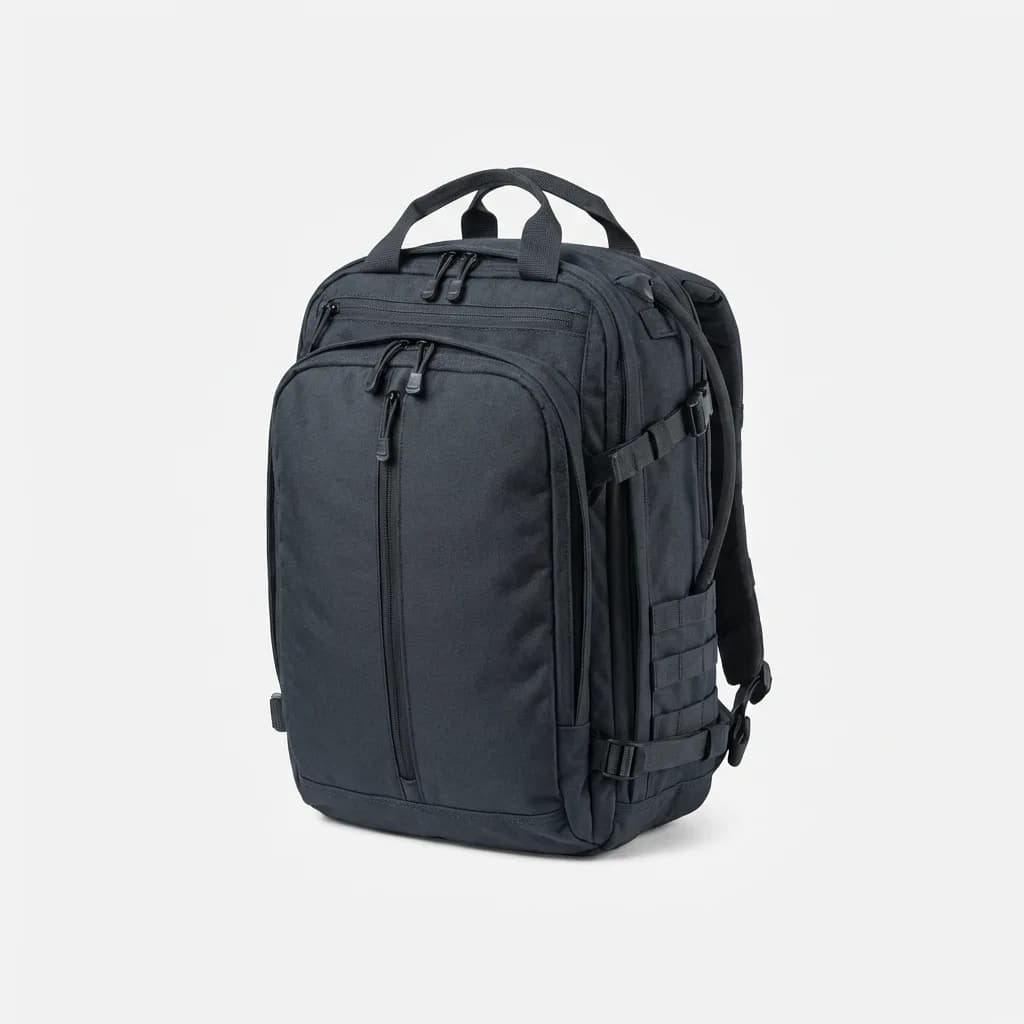
The RUSH72 has dominated the tactical bug-out space for years because it simply works. The 55-liter capacity hits the sweet spot for 72-hour kits without being so large you're tempted to overpack. We loaded ours with 40 pounds of gear and wore it for a full day of hiking - the padded shoulder straps and sternum strap distributed weight well enough that we never felt the need to stop and adjust.
5.11 RUSH72 Tactical Backpack
See current price
55-liter capacity with 16 internal compartments, reinforced grab handles, and hydration pocket. 1050D nylon construction handles serious abuse. Weighs 4.3 pounds empty.
The organization system includes 16 individual pockets and compartments. That sounds excessive until you're actually packing emergency supplies and realize how quickly small essentials disappear into a single large cavity. Admin pockets on the front panel keep documents, cash, and small electronics separate. Two full-length side pockets swallow water bottles or trekking poles without encroaching on main storage.
MOLLE coverage wraps the entire exterior except the back panel. You can attach mag pouches for extra battery storage, medical kits for quick access, or utility pouches for frequently needed items. The fleece-lined eyewear pocket at the top protects sunglasses or electronics from getting crushed.
The main weakness is weight - at 4.3 pounds empty, the RUSH72 is heavier than comparable packs. That's the trade-off for bomber construction. If you're building a vehicle-based bug-out bag where you won't be hiking long distances, this weight penalty matters less.
Maxpedition Falcon-II - maximum capacity for extended scenarios
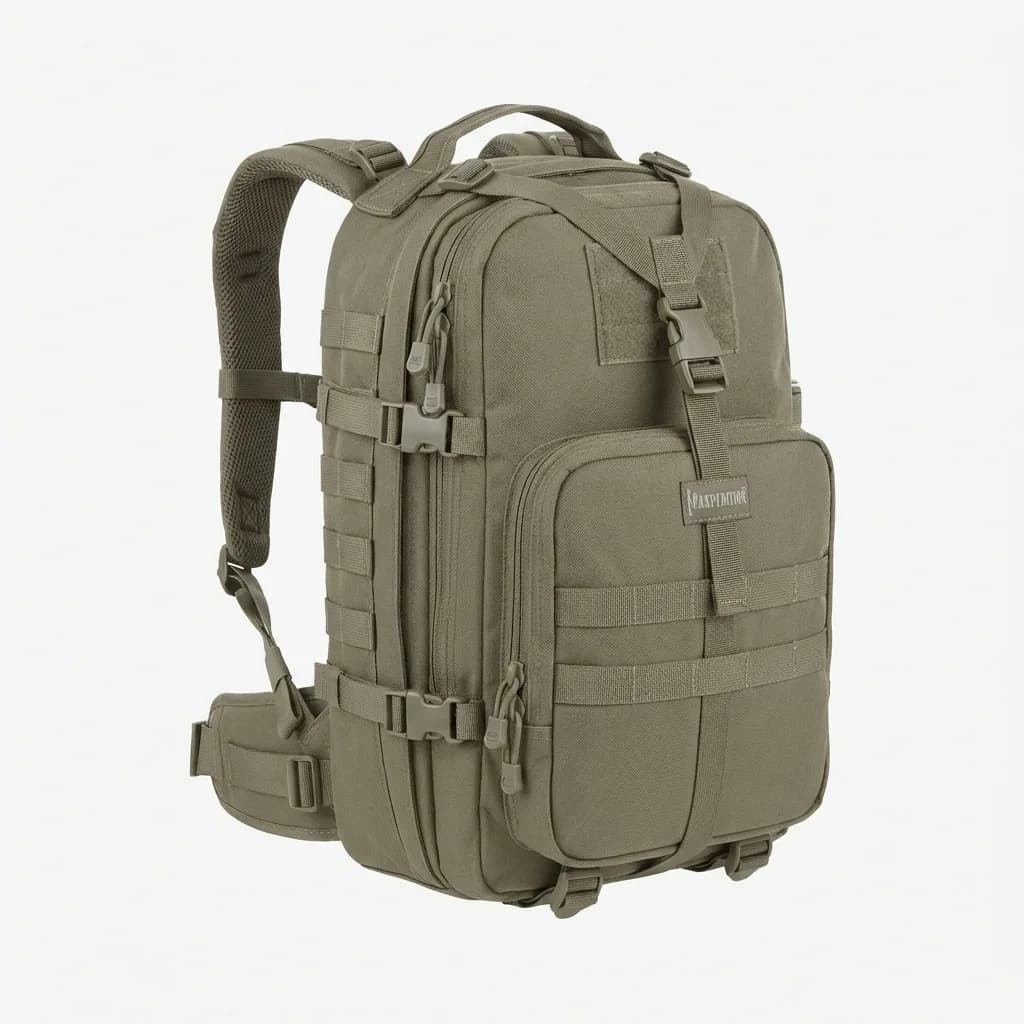
When 72 hours isn't enough and you need a full week of supplies, the Falcon-II extends capacity to 68 liters without turning into an unwieldy hiking monstrosity. The pack shape stays relatively compact by building volume vertically rather than bulging outward. This matters when you're moving through tight spaces or need to stash the pack in a vehicle.
Maxpedition Falcon-II Backpack
See current price
68-liter capacity with removable internal frame and lumbar support pad. Weather-resistant 1000D nylon with YKK zippers. Multiple compression straps stabilize heavy loads. Weighs 5.5 pounds empty.
The removable internal frame is a standout feature. Most bug-out scenarios will benefit from frame support, but if you need to pack the bag flat for storage or transport, you can pull the frame in 30 seconds. The frame design uses flexible stays rather than rigid bars, which contours to your back better than cheaper alternatives.
Compression straps run vertically and horizontally across the main compartment. These aren't decorative - they genuinely stabilize loads and prevent gear from shifting around when you're moving quickly. A partially loaded bug-out bag that shifts with every step throws off your balance and causes fatigue faster than a heavier, stable load.
The trade-off for this capacity is weight. At 5.5 pounds empty, you're giving up over a pound compared to lighter alternatives. But if your scenario planning includes longer-term displacement or supporting multiple people, that capacity pays off. We fit a full week of freeze-dried meals, water filtration, shelter, first aid, and clothing with room left over.
Direct Action Dragon Egg MkII - streamlined for fast movement
Not every bug-out scenario means hiking into the wilderness. Urban evacuation, transitioning between locations, or situations where speed matters more than carrying everything you own call for a smaller, faster pack. The Dragon Egg MkII maxes out at 25 liters, which forces you to focus on true essentials.
Direct Action Dragon Egg MkII
See current price
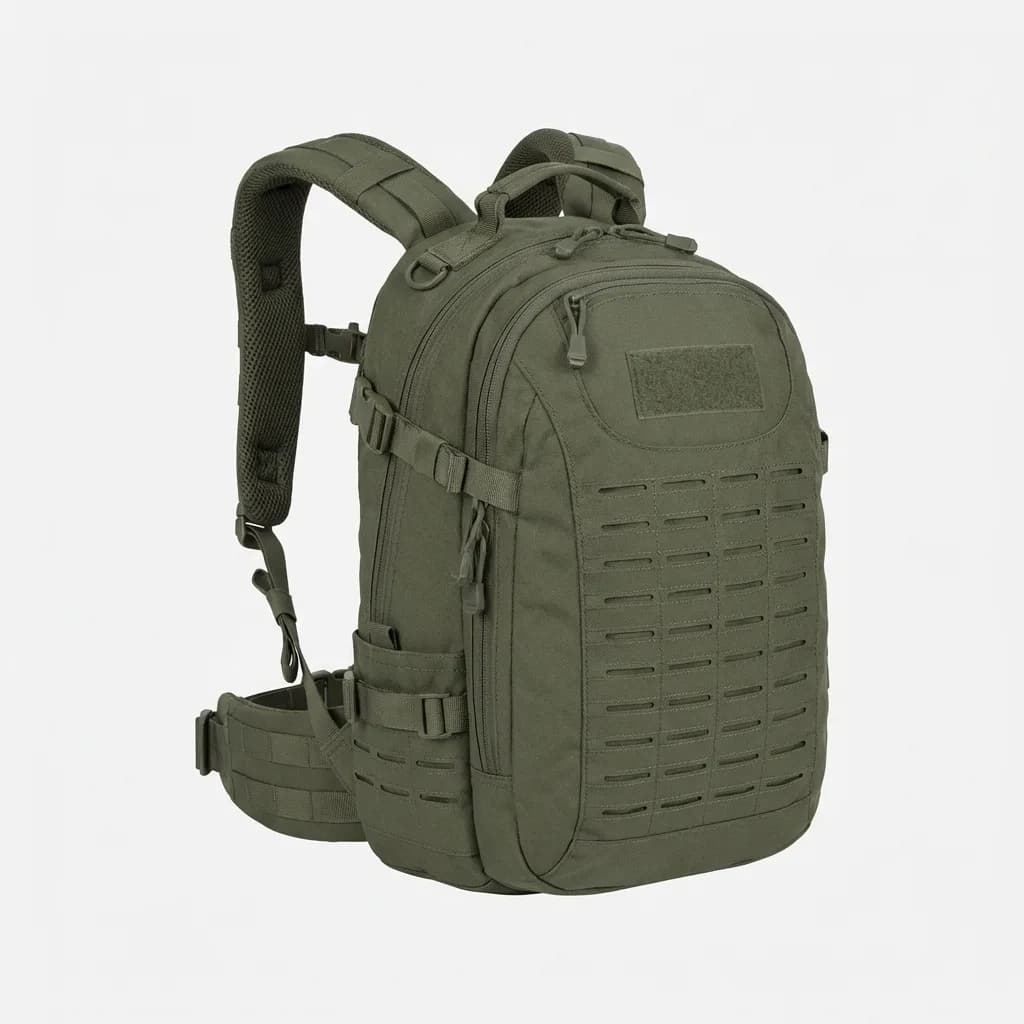
25-liter compact tactical pack with quick-access front pocket and laser-cut MOLLE. 500D Cordura construction. Includes waist belt and sternum strap. Weighs 2.2 pounds empty.
The laser-cut MOLLE platform reduces weight while maintaining full attachment capability. Traditional MOLLE uses sewn webbing, which adds bulk and ounces. Laser-cut slots provide the same functionality with cleaner aesthetics and less material. You can still attach standard MOLLE pouches without adapters.
The quick-access front pocket uses a vertical zipper that lets you grab contents one-handed without removing the pack. This works brilliantly for items you need repeatedly - multi-tool, flashlight, maps, snacks. The pocket is sized for a small first aid kit or admin essentials, not for stuffing in bulky items that throw off weight distribution.
At 25 liters, this isn't a full 72-hour pack unless you're extremely minimal. But as a get-home bag that lives in your vehicle or office, or as a daypack for bugging out from a larger base camp, the Dragon Egg excels. We loaded it with two days of emergency supplies, water purification, fire starting, a compact medical kit, and extra clothing. It disappeared on our back during a 10-mile urban navigation test.
What capacity actually means for bug-out planning
Manufacturers list capacity in liters, but that number doesn't directly translate to days of supplies. Your personal needs, climate, and scenario planning affect how much space you actually require.
A minimalist bug-out bag in a warm climate can fit 72-hour essentials in 30-35 liters. Water takes up the most space, followed by food and shelter. If you're planning for temperate or cold conditions, add 15-20 liters for extra clothing layers, a warmer sleeping bag, and cold-weather gear.
Multi-person planning changes the equation entirely. Two people can share some items - one stove, one water filter, one first aid kit - but you'll still need double the food, water capacity, and sleeping gear. A 55-liter pack works for a solo 72-hour kit. Supporting two people for the same duration pushes you toward 65-70 liters minimum.
Vehicle-based bug-out bags can afford larger packs since you won't be hiking from the start. If your plan involves driving as far as possible before going on foot, prioritize capacity and organization over weight savings. A 70-liter pack makes sense here. But if you're urban or suburban without vehicle access, that same pack becomes a liability. Focus on 45-55 liters that you can realistically carry for extended distances.
Weight distribution matters more than total capacity. A well-designed 50-liter pack with proper frame support will carry more comfortably than a 40-liter pack with poor ergonomics. Test your loaded pack before an emergency. Walk several miles with it adjusted to your torso length. If shoulder straps dig in or hip belts slide down, make adjustments or consider different pack geometry.
Mystery Ranch 3 Day Assault Pack - premium construction for serious use
Mystery Ranch builds packs for military contracts, which means over-engineering for worst-case scenarios. The 3 Day Assault (often called 3DAP) brings that level of construction to a civilian-accessible package. At 27 liters in the standard version or 33 liters in the BVS (Back Ventilation System) variant, this sits between ultralight get-home bags and full 72-hour rigs.
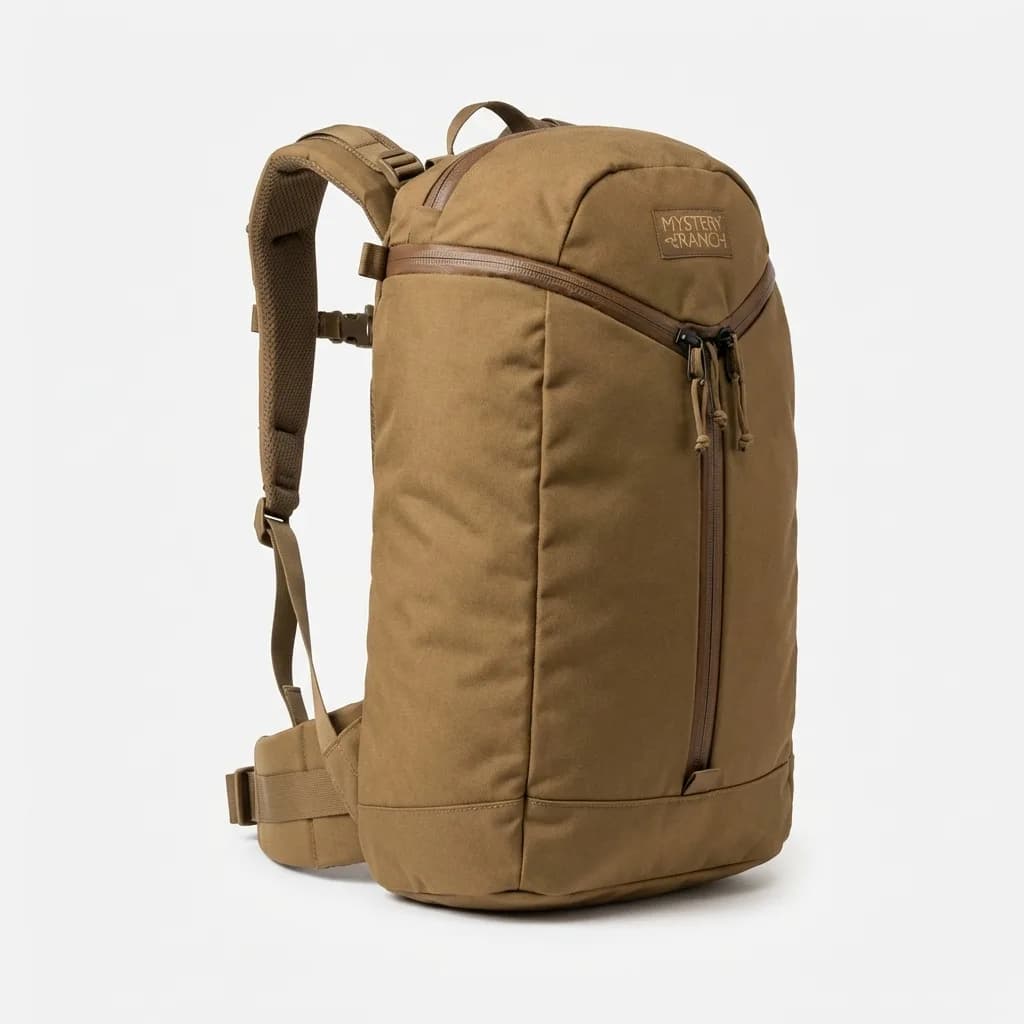
Mystery Ranch 3 Day Assault Pack BVS
See current price
33-liter capacity with patented yoke adjustment system and tri-zip access. 500D Cordura with reinforced bottom. Includes removable waist belt and sternum strap. Weighs 4 pounds empty.
The defining feature is the tri-zip design. Instead of a single top-loading opening or a panel-loading clamshell, the 3DAP uses three zippers that open the pack like a duffel. This provides access to items at the bottom without unpacking everything on top. In practice, this saves massive amounts of time when you're looking for something specific under pressure.
The yoke adjustment system lets you dial in torso fit more precisely than typical ladder adjustments. Two Velcro straps on each shoulder can be repositioned up or down along the back panel, then locked in place. This matters for bug-out applications because pack fit determines how much weight you can carry comfortably. A pack that fits perfectly carries significantly better than one that's close but not quite right.
The downside is cost. Mystery Ranch charges a premium for military-grade construction. If budget is tight, other options deliver 80% of the performance at 50% of the price. But if you're building a bug-out kit that might save your life, the quality difference is worth considering. 3DAP packs have a reputation for surviving deployments.
How to pack a bug-out bag for accessibility
Organization determines whether your bug-out bag helps or hinders you under stress. Dumping gear into a single cavity means digging through everything to find one item. Smart packing prioritizes frequency of use and emergency access.
Items you need multiple times per day go in external pockets or top compartments. Water bottles, snacks, maps, flashlights, and multi-tools should be accessible without opening the main compartment. If you have to unpack your bag to grab a snack, you're going to avoid eating when you should be maintaining energy.
Emergency items require dedicated, quickly identifiable locations. First aid kits go in exterior pockets with high-visibility colors or markings. Fire-starting gear stays in a waterproof container in an exterior or top pocket. Emergency communication devices (radio, phone, beacon) live in protected but accessible spaces, not buried at the bottom.
Weight distribution affects both carry comfort and pack stability. Heaviest items (water, food, cooking gear) pack close to your back in the middle third of the pack, roughly between shoulder blades and mid-back. This keeps weight centered over your hips rather than pulling you backward. Lighter, bulky items (sleeping bag, extra clothing) fill the bottom and top.
Clothing layers typically pack from bottom to top in reverse order of use. The sleeping bag and camp clothes you won't need until evening pack at the bottom. Extra insulation layers go in the middle. Your rain shell that might be needed any time stays near the top or in an exterior pocket.
Test your system before an emergency. Pack your bag completely, then practice accessing specific items without looking. Can you find your headlamp in the dark? Can you pull out your first aid kit one-handed? If accessing critical gear requires unpacking half your bag, reorganize until it doesn't.
Condor 3 Day Assault Pack - budget option that doesn't compromise essentials
Not everyone can drop 200 dollars or more on a bug-out pack. The Condor 3 Day Assault Pack brings core tactical features down to a price point that makes emergency preparedness accessible. At roughly half the cost of premium options, this 50-liter pack uses smart compromises to deliver functionality without breaking.
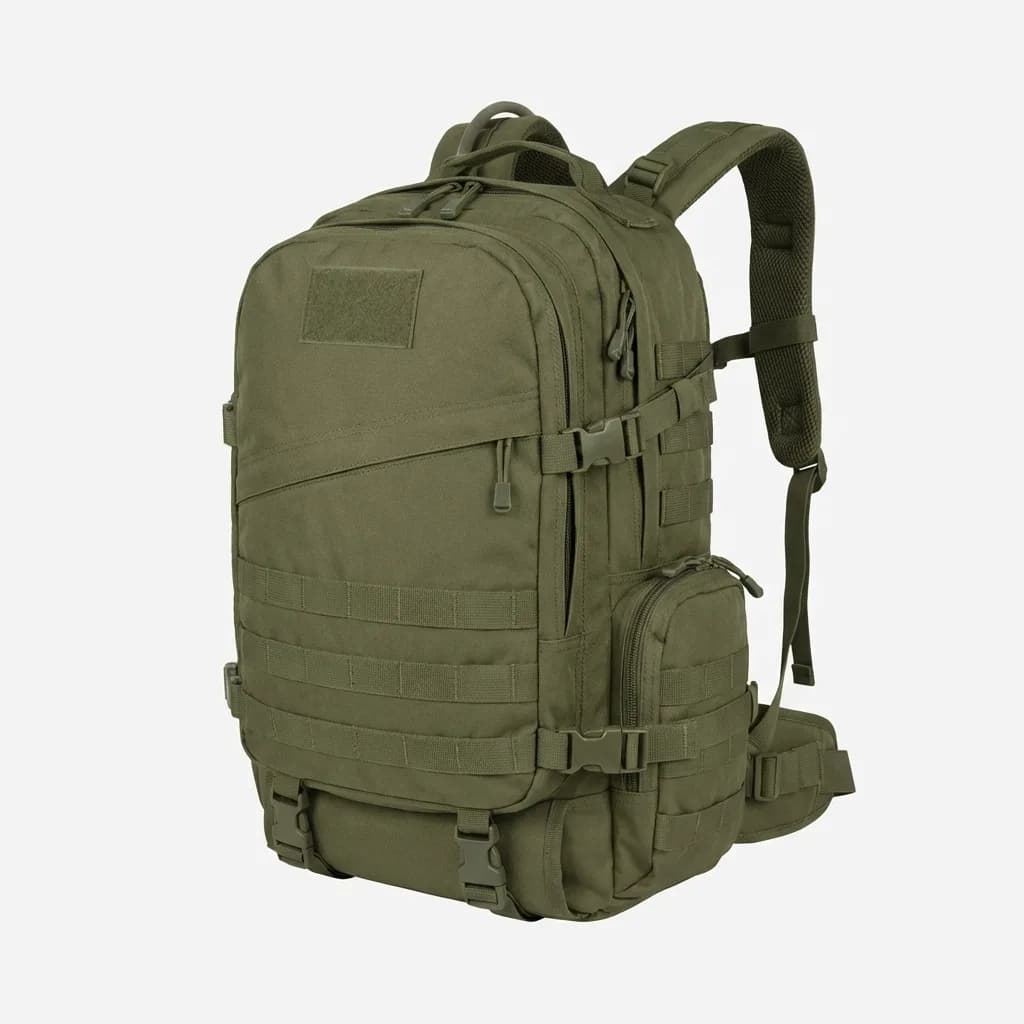
Condor 3 Day Assault Pack
See current price
50-liter capacity with hydration compartment and multiple admin pockets. 600D polyester construction with padded shoulder straps. Full MOLLE webbing and compression straps. Weighs 3.5 pounds empty.
The 600D polyester won't outlast 1000D Cordura, but it handles normal bug-out demands fine. We scraped it against concrete, dragged it through brush, and stuffed it overfull repeatedly. After six months, we saw some abrasion on high-wear areas but no structural failures. For a pack you hope never to use in a real emergency, this durability suffices.
Shoulder straps use adequate padding but lack the contouring and adjustment range of premium packs. Taller or shorter users might find fit issues that can't be fully corrected. The hip belt is minimally padded and won't transfer weight as effectively as proper load-bearing designs. This matters more as pack weight increases - comfortable at 25 pounds, noticeably less so at 40 pounds.
Organization follows standard tactical layouts with a main compartment, front admin panel, and side pockets. The hydration compartment doubles as laptop storage, though we'd hesitate to trust electronics to this pack without additional protection. MOLLE coverage is complete and uses proper stitching patterns that hold pouches securely.
This pack makes sense for starter bug-out kits, vehicle backup bags, or situations where you need tactical organization without tactical pricing. It won't replace premium options for serious users, but it brings the majority of functionality to a much wider audience.
What about weather resistance and durability
No tactical backpack is fully waterproof unless specifically designed as a dry bag. Water-resistant materials and treatments slow moisture penetration but won't survive sustained rain or stream crossings. Plan for this limitation rather than assuming your pack will keep contents dry.
Pack rain covers solve this problem cheaply and effectively. Most quality tactical packs include covers or have them available as accessories. These nylon shells slip over the entire pack and cinch tight, shedding water during storms. They add minimal weight (4-6 ounces) and compress small when not needed. Test the fit before an emergency - some covers sized for specific pack models don't actually cover all exterior pockets and gear.
Dry bags inside your pack provide better protection for critical items. Electronics, fire-starting materials, spare clothing, and documents should live in separate waterproof bags regardless of your pack's exterior water resistance. This layered approach means even if water gets into your pack, your most important gear stays dry.
Abrasion resistance matters more than most people consider when choosing pack material. Denier ratings indicate thread thickness, but coating and weave pattern affect durability equally. A 500D Cordura pack with good coating will outlast a poorly treated 1000D pack. Look for reinforced panels on the bottom and common contact points - these areas wear first.
Zipper quality determines long-term reliability. YKK zippers have become the gold standard because they simply work. Cheaper zippers save manufacturers a few dollars per pack but fail under load, bind when dirty, or separate under stress. Check zipper pulls too - thin metal pulls bend and break, while chunky cord pulls are easier to grab with gloves and more durable.
Stitching patterns and bar tacks reveal build quality. Double or triple stitching at stress points, bartacked reinforcements where straps attach, and bound edges rather than raw cuts all indicate attention to durability. Budget packs often skip these reinforcements to save production time. You won't notice the difference until the pack fails under load.
Making the choice that fits your scenario
The perfect bug-out pack depends entirely on your specific planning. Urban dwellers prioritize different features than rural users. Vehicle-based plans allow heavier, higher-capacity packs than foot-only scenarios. Climate determines insulation and weatherproofing needs.
Start by defining your scenario honestly. Most people overestimate how far they'll realistically travel on foot while carrying a loaded pack. If you're not regularly hiking with 30-40 pounds, you won't suddenly cover 20 miles per day during an emergency. Plan for shorter ranges, which means prioritizing comfort and essential capacity over maximum volume.
Consider your physical capabilities and limitations. A pack that works brilliantly for a fit 30-year-old might be completely wrong for someone with back issues or less upper body strength. Test packs loaded to your planned weight and walk several miles. If you're struggling during a test, you'll fail during an actual emergency when stress and adrenaline are added factors.
Multi-person planning requires coordination. If two people each carry independent bug-out bags, you're duplicating shared items and wasting capacity. Better to distribute gear strategically - one person carries shelter and cooking, the other carries food and water filtration. This requires compatible pack sizes and organization systems.
Think through the full timeline of your bug-out plan. The first 24 hours have different needs than days 2-3. If your plan involves reaching a cache or rally point where additional supplies wait, your pack loadout changes significantly. A smaller, faster pack makes sense if you're only covering the distance to staged supplies. A larger pack is necessary if you're truly self-sufficient for 72 hours.
Your chosen pack will likely live in a closet or vehicle for years before potential use. Make sure it's actually ready when needed. Check contents every six months, rotate expired items, adjust for seasonal changes. A perfectly chosen tactical backpack filled with expired food and dead batteries helps nobody.
The Weekly Dispatch
Enjoying this article?
Subscribe and get our best gear picks delivered every Sunday morning.
Related Posts
Best Expandable Carry-On Backpack for Flying
Expandable carry-ons let you compress for security screening then grow for souvenirs. We picked bags that maximize airline limits without checking luggage.
Best Backpack Rain Covers 2026: Packable, Ultralight Picks
Packable backpack rain covers that fold smaller than your fist: how to size one to your pack, when a liner beats a cover, and ultralight picks.
Best Laptop Backpacks for Work and Commute
From padded laptop sleeves to organizational pockets, we break down what separates a great work backpack from one that will wreck your shoulders and your laptop.
Best Camera Backpacks of 2026: Protect Your Gear
We compared 12 camera backpacks by maker specs, features and price to find which protect your gear without wrecking your back.