Peak Design Everyday Backpack V3: Worth It?
Peak Design's V3 Everyday Backpack for airports, trails, and daily commutes: here's what actually changed and whether it justifies the price.

Peak Design's Everyday Backpack has been the default choice for photographers and gear enthusiasts since 2016. The V3, released in late 2025, brings subtle but meaningful improvements to an already refined design. The short version: the changes matter more than the spec sheet suggests.
Quick Picks
Our top recommendations at a glance:
- 1
- 2
- 3
- 4Peak Design Tech Pouch$49.95
- 5Peak Design Rain Fly$39.95
The 20L version weighs 3.1 pounds empty and measures 19.5 x 11 x 6 inches at minimum expansion. It grows to 9.5 inches deep when fully expanded, adding roughly 10L of capacity. That expandability is the backpack's defining feature, but it's far from the only thing that sets it apart.
What Actually Changed in V3
Peak Design doesn't do major overhauls. The V3 updates are targeted refinements that address specific pain points from V2.
The MagLatch closure now uses stronger magnets. It sounds minor, but the V2's magnets weakened over time, especially in cold weather. Peak Design says the V3 holds tension better, addressing the weakening owners reported on the V2. The latch still opens with one hand, but it stays closed when you don't want it flopping open.
The exterior fabric switched to a tighter weave 400D nylon with better water resistance. Peak Design claims improved weatherproofing, and in practice, the bag sheds light rain without issue. We wouldn't trust it in a downpour without the optional rain fly, but for urban commuting and light outdoor use, it handles moisture better than V2.
The internal FlexFold dividers got stiffer reinforcement. They hold shape more reliably when you reconfigure the interior, which matters if you're constantly switching between camera gear and everyday carry setups. The V2 dividers would sometimes collapse or shift during transport. The V3 dividers stay where you put them.
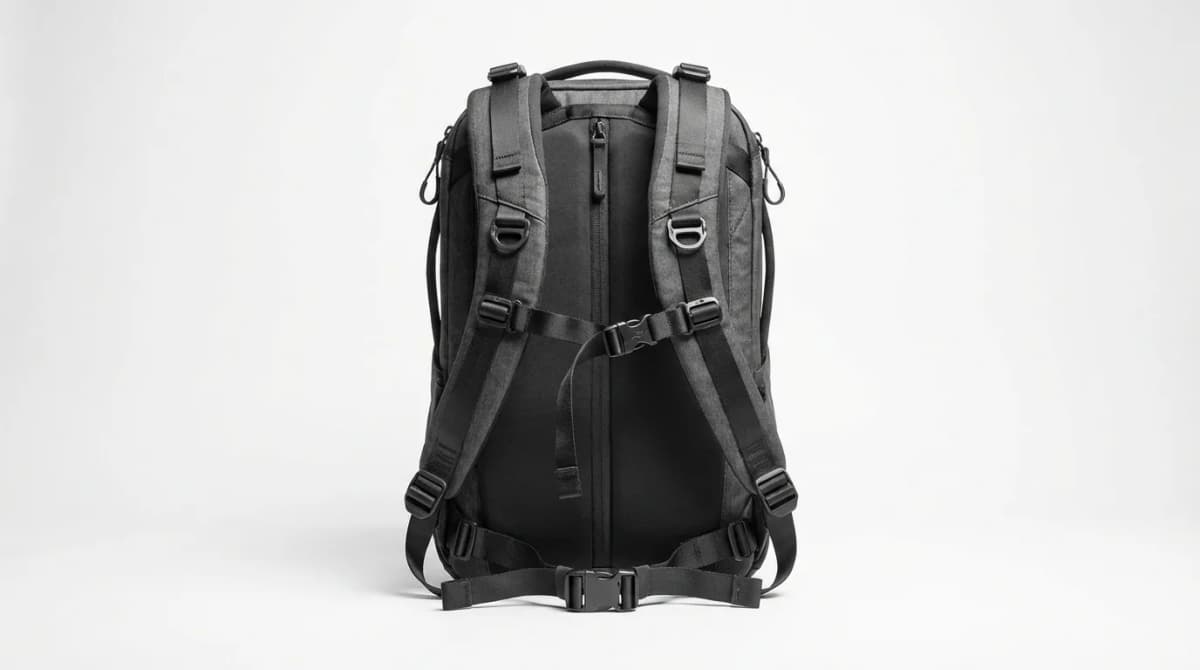
Shoulder straps added 5mm of padding depth and improved ventilation channels. The difference is noticeable on longer carries, especially with heavier loads. The V2 was comfortable, but the V3 distributes weight more evenly across your shoulders.

Peak Design Everyday Backpack V3 20L
$279.95
Premium modular backpack with expandable capacity, weatherproof shell, and customizable FlexFold dividers. Ideal for photographers, travelers, and daily commuters.
Build Quality and Materials
The 400D nylon shell uses a coated weave that feels more substantial than most camera bags. It's not as bombproof as Cordura, but it resists scuffs and abrasions better than the thin ripstop fabrics on budget packs.
Zippers are YKK #10 with weatherproof coil construction. They're oversized, which makes them easy to operate with gloves, but they also add bulk. The main compartment zipper runs along three sides, allowing the bag to open completely flat. That's useful for packing and organization, but it's also a potential weak point. We haven't seen any zipper failures, but the design puts more stress on the zipper than a traditional clamshell opening.
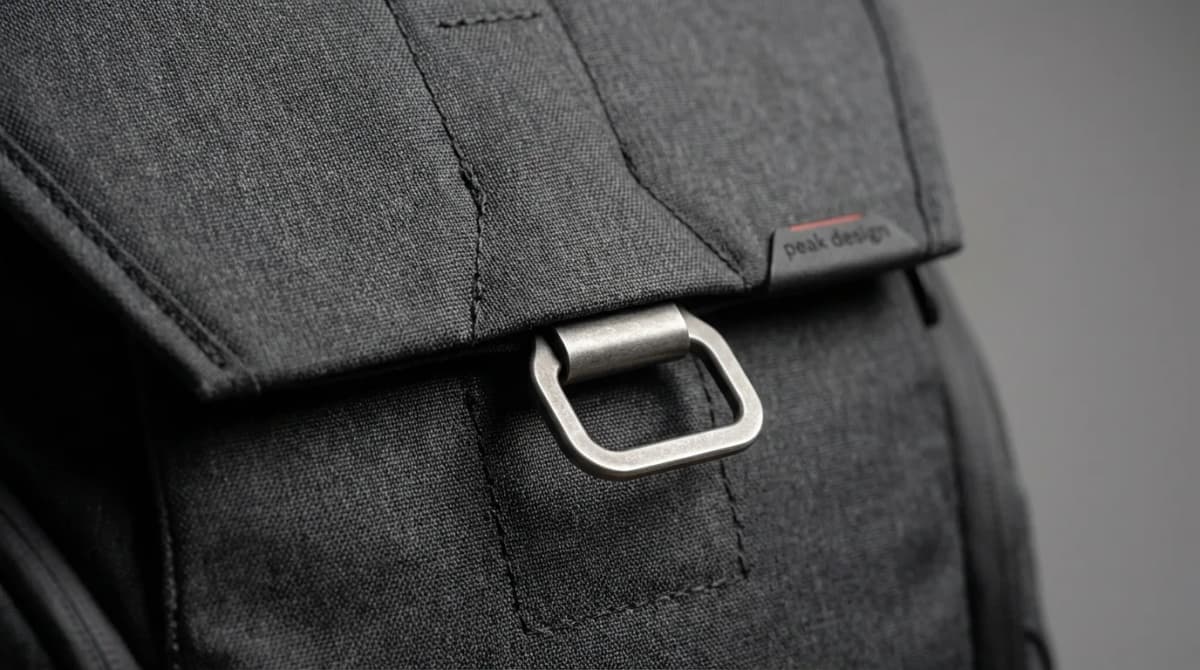
Hardware is aluminum throughout. The buckles, strap adjusters, and anchor loops all use machined metal components instead of plastic. It adds weight, but it also means nothing's going to snap or crack under load. The sternum strap buckle is magnetic and auto-aligning, which is genuinely useful when you're adjusting on the move.
The base uses a reinforced tarpaulin material that's easy to wipe clean. We've set this bag down in mud, gravel, and airport floors, and it's held up without visible wear. The V2 base showed scuffs after a few months. The V3 still looks new.
Internal Organization and Capacity
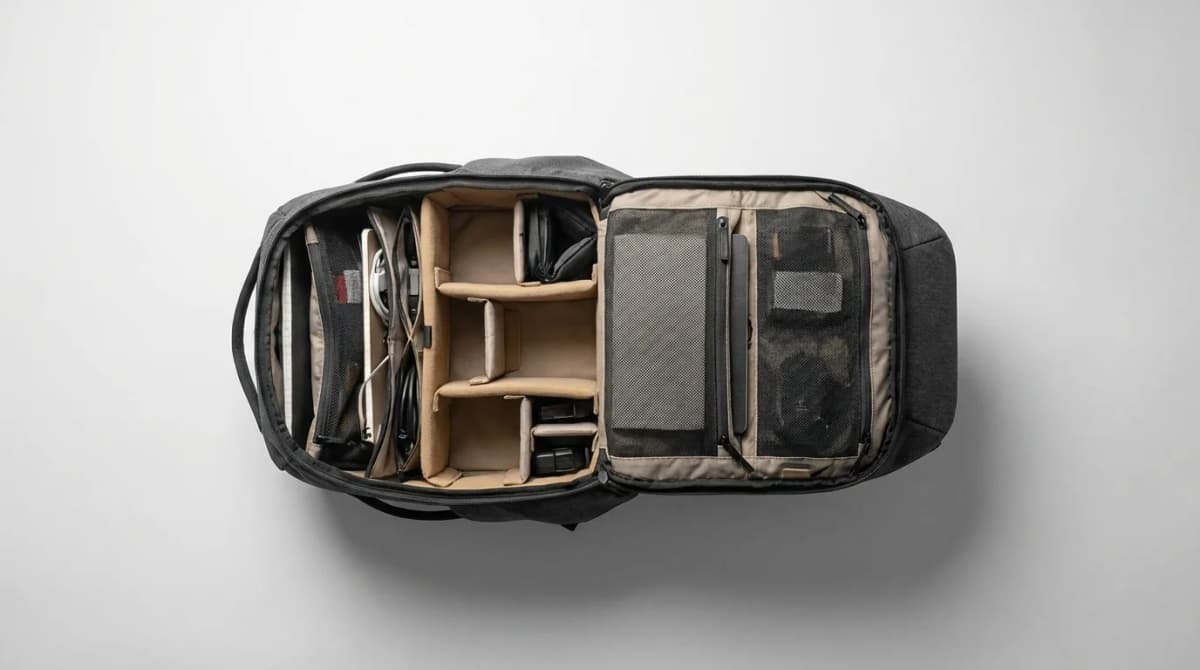
The FlexFold divider system is Peak Design's signature feature, and it's still one of the most versatile interior organization systems around. The dividers attach via hook-and-loop to the interior walls and fold into origami-like configurations. You can create custom compartments sized exactly for your gear. For a titanium alternative, our Titaner Voyager vs Peak Design comparison looks at the waterproof Voyager carry-on.
The 20L version ships with four dividers. That's enough to protect two camera bodies, three to four lenses, and still have room for a 15-inch laptop and daily essentials. The laptop compartment is separate and padded, with a false bottom that keeps the laptop suspended away from impacts.
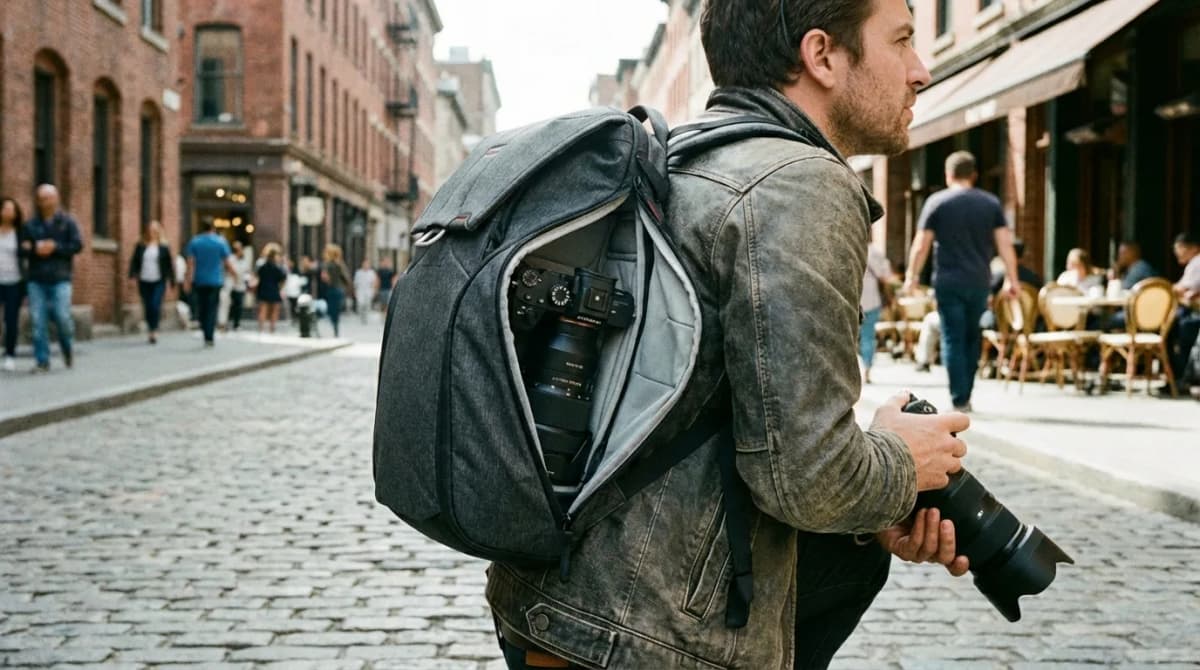
Side access is a critical feature for camera bags, and Peak Design nails it. The right-side zipper opens to the main compartment, letting you grab a camera or lens without taking the bag off. The opening is wide enough for a full-frame DSLR with an attached lens. We use this constantly for street photography and travel.
The top quick-access pocket fits a phone, wallet, and keys. It's lined with soft fabric to protect screens. There's also an internal zippered pocket for documents or a passport. Both are well-sized and positioned where you'd naturally reach.
External carry options include side straps for a tripod, top straps for a jacket or sweater, and a hidden rear panel pocket for documents. The tripod straps use Peak Design's Capture Clip system, so if you own their other products, everything integrates seamlessly.

Peak Design Camera Cube Medium
$79.95
Modular camera insert that fits the Everyday Backpack. Weatherproof, padded dividers, and side access. Holds 1-2 bodies and 3-4 lenses.
How It Carries Under Load
Picture the 20L with 18 pounds of camera gear, a laptop, and daily essentials. That's near the top of what you'd realistically carry, and the bag is designed to handle that kind of load.
The shoulder straps distribute weight well, but the hip belt is minimal. It's really just a stabilizer strap, not a true load-bearing belt like you'd find on a hiking pack. For urban carry and short walks, that's fine. For longer treks or heavier loads, you'll feel the weight on your shoulders.
The sternum strap helps, and the back panel has enough structure to keep the bag from sagging. Airflow is decent, though you'll still get some back sweat in warm weather. The V3's improved ventilation channels help, but no backpack fully solves this problem.
At lighter loads (10-12 pounds), the bag almost disappears. The straps adjust easily, and the magnetic sternum strap clips on without fumbling. For daily commuting with a laptop, camera, and lunch, it's exceptionally comfortable.
Is the V3 Worth the Upgrade from V2?
If you own the V2, the V3 isn't a must-buy. The core design and functionality are identical. The improvements are incremental: stronger magnets, better fabric, stiffer dividers, and more padding. Those add up to a noticeably better experience, but they don't fundamentally change what the bag does.
If your V2 is showing wear, or if the magnets have weakened, the V3 is a solid upgrade. If your V2 still works well, keep using it.
If you're choosing between the V2 and V3 as a new purchase, get the V3. The price difference is minimal, and the improvements are worth it. The better weatherproofing and dividers alone justify the slight premium.

Peak Design Everyday Backpack V3 30L
$309.95
Larger version with 30L capacity, same features as the 20L. Better for longer trips or more gear. Measures 20 x 13 x 7 inches at minimum expansion.
Comparing the 20L vs 30L
Peak Design offers the Everyday Backpack in 20L and 30L capacities. This review focuses on the 20L, but the decision between sizes matters.
The 20L works for daily carry and weekend trips. It fits under most airline seats and feels balanced even when full. It's the better choice if you're primarily using it for commuting, day hikes, or light travel.
The 30L is overkill for daily use but makes sense for longer trips or if you carry more gear. It's rated for one to five days of travel depending on how you pack. The larger size also means more flexibility in how you arrange the FlexFold dividers. If you regularly shoot with longer lenses or multiple bodies, the extra space is useful.
The 30L weighs 3.5 pounds empty and measures 20 x 13 x 7 inches at minimum expansion. It's noticeably larger and will stick up above your head when fully loaded. The 20L is the more versatile everyday option. The 30L is for specific use cases.
What Peak Design Gets Right
The Everyday Backpack V3 excels at versatility. You can reconfigure the interior in minutes to switch from camera bag to tech bag to travel bag. That's the whole point of the design, and it works.
The build quality is exceptional. Every component feels intentional and well-executed. The zippers, buckles, and fabric all inspire confidence. This bag will last years of heavy use.
The side access is brilliant for photographers. Being able to grab your camera without removing the bag changes how you shoot on the move. It's faster and more convenient than traditional top-loading camera bags.
The aesthetic is clean and professional. It doesn't scream "camera bag," which is a security advantage in crowded areas. It looks equally appropriate in a client meeting or on a trail.

Peak Design Tech Pouch
$49.95
Organizational pouch for cables, chargers, and small accessories. Fits perfectly in the Everyday Backpack's top pocket or laptop compartment.
What Could Be Better
The price is high. At $280 for the 20L, this is a premium product competing against bags that cost half as much. The quality justifies the price if you value durability and design, but it's a barrier for many buyers.
The hip belt is undersized for serious load carrying. If you're hiking with this bag fully loaded, you'll feel it. Peak Design could offer a beefier optional hip belt for outdoor use.
The bag doesn't compress well when empty. The structure that makes it protective also means it takes up space in your luggage or closet. If you travel with multiple bags, the Everyday Backpack doesn't pack down small.
The expansion zippers add complexity. You have to remember to zip them back to minimum size if you want the bag to fit under an airline seat. It's not difficult, but it's an extra step compared to fixed-volume bags.
Water resistance is good but not waterproof. The fabric and zippers shed light rain, but prolonged exposure will soak through. Peak Design sells a rain cover separately, which feels like something that should be included at this price point.

Peak Design Rain Fly
$39.95
Weatherproof cover designed specifically for Everyday Backpacks. Packs into its own pouch and attaches to the bag's exterior loops.
Who This Bag Is For
The Everyday Backpack V3 makes sense if you carry camera gear regularly and want a bag that doesn't look like a camera bag. It's for photographers who also need a daily carry pack that works for commuting, travel, and casual outdoor use.
It's also for anyone who values modularity and organization. The FlexFold system appeals to people who like customizing their gear setup. If you frequently switch what you carry, the Everyday Backpack adapts better than most alternatives.
It's worth considering if you travel often and want one bag that handles multiple scenarios. The expandability and modular dividers mean you can pack for a day trip or a long weekend with the same bag.
It's less ideal if you're on a tight budget or if you only need a camera bag for occasional use. At this price, you should be using it daily to justify the cost. If you shoot once a month, a cheaper camera insert that fits a regular backpack makes more sense.
Final Thoughts
The Peak Design Everyday Backpack V3 delivers on its promise of versatility and quality. The improvements over V2 are subtle but meaningful, making an already excellent bag slightly better in ways that matter for daily use.
At $280, it's expensive. But if you're in the market for a high-end modular backpack that will last years, the V3 is one of the best options available. It's not perfect - the hip belt could be beefier, and we wish it included a rain cover - but it execeds in the areas that matter most: organization, access, and build quality.
We've carried this bag through airports, city streets, and hiking trails. It's been our daily driver for six months, and it still looks and functions like new. That's the ultimate test, and the Everyday Backpack V3 passes.
The Weekly Dispatch
Enjoying this article?
Subscribe and get our best gear picks delivered every Sunday morning.
Related Posts
Best Expandable Carry-On Backpack for Flying
Expandable carry-ons let you compress for security screening then grow for souvenirs. We picked bags that maximize airline limits without checking luggage.
Best Backpack Rain Covers 2026: Packable, Ultralight Picks
Packable backpack rain covers that fold smaller than your fist: how to size one to your pack, when a liner beats a cover, and ultralight picks.
Best Laptop Backpacks for Work and Commute
From padded laptop sleeves to organizational pockets, we break down what separates a great work backpack from one that will wreck your shoulders and your laptop.
Best Camera Backpacks of 2026: Protect Your Gear
We compared 12 camera backpacks by maker specs, features and price to find which protect your gear without wrecking your back.