Best Keychain Multitools & Tools (2026)
Most keychain tools collect dust, but these compact EDC essentials earn their spot with real utility. From pry bars to USB drives, here's what actually works.
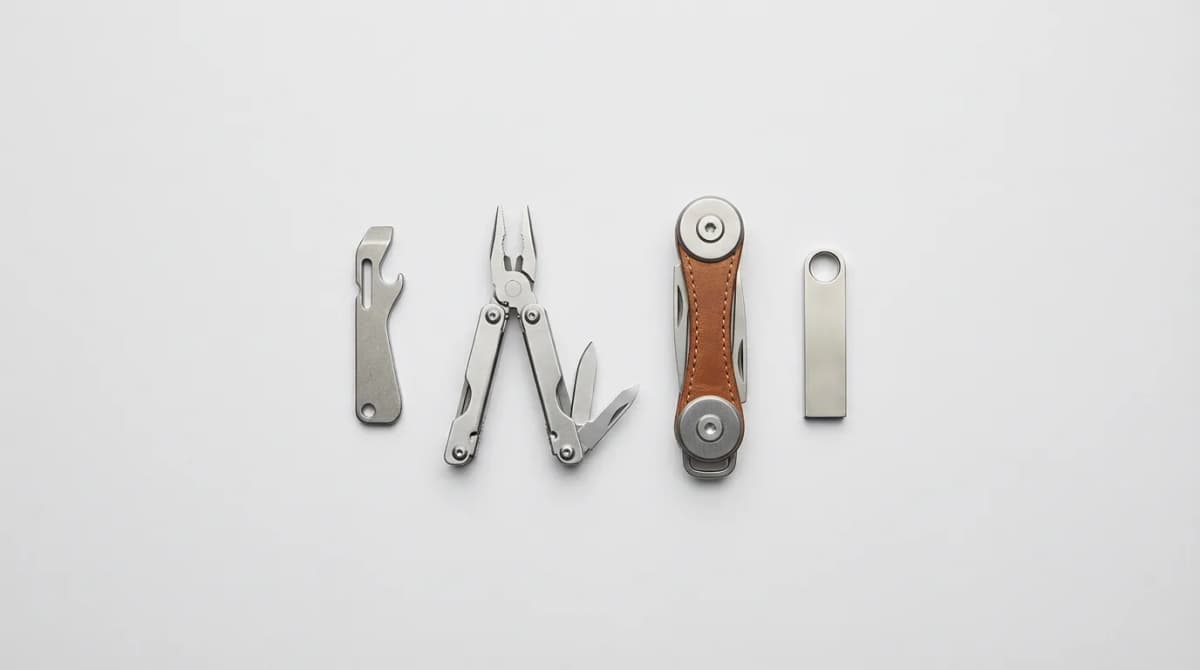
Your keychain is prime real estate. Every gram counts, and anything that doesn't pull its weight gets left behind. Most keychain tools are novelties - cute ideas that sound useful until you realize you've never actually needed a miniature saw blade while unlocking your car.
Quick Picks
Our top recommendations at a glance:
- 1True Utility TU247 SmartKnifeSee current price
- 2
- 3Big Idea Design Mini Titanium Pry Bar$25, price at publish (Oct 2026)
- 4Nite Ize DoohicKey Key Tool$6.99 (price at publish, Oct 2026)
- 5Gerber Dime$34.99, price at publish (Oct 2026)
But some keychain tools are different. They solve problems you actually face. A bottle opener when you need one. A screwdriver for the loose hinge on your laptop. A pry bar for opening packages without destroying your fingernails. The trick is knowing which tools deliver on their promise and which ones just add jingle.
Here's how the top options compare, using maker specs and prices. If you want a folding keychain multitool with real pliers or scissors, jump to the picker below; the one-piece bars and openers follow.
Quick Picks (2026)
- Best for flying (no blades): Big Idea Design Mini Titanium Pry Bar, a small Grade 5 titanium pry bar with no blade or notch (the maker says the tip can score boxes; TSA officers make the final call), $25. Runner-up: Gerber Shard, 7 functions, 28 g, $7.99 (has a wire-stripper notch).
- Cheapest clip-on tool: Nite Ize DoohicKey Key Tool: 5-in-1 with a small box-cutter notch, $6.99.
- Best titanium one-piece: WESN MT: 3 tools, 11 g, from $45 (often sold out).
- Best titanium pry bar: Big Idea Design Mini Titanium Pry Bar: Grade 5 titanium, $25 (in stock).
- Best keychain multitool with pliers: Gerber Dime: spring-loaded needle-nose pliers and scissors, 2.2 oz, $34.99.
- Best keychain multitool with scissors: Leatherman Micra: 10 tools, 1.8 oz, $49.95.
- Best organizer: KeySmart. The Pro with Tile is discontinued, so the current pick is the KeySmart iPro at $49.99.
| Pick | Tier | Weight (maker) | Tools (maker) | Price at publish (Oct 2026) | Stock |
|---|---|---|---|---|---|
| Gerber Shard | Best for flying #2 (no blade; wire-stripper notch; TSA officers decide) | 1.0 oz (28 g) | 7 functions | $7.99 | In stock |
| Nite Ize DoohicKey Key Tool | Main list: small cutting notch (box cutter); TSA officers decide at the checkpoint | Not listed by maker | 5-in-1 | $6.99 | In stock |
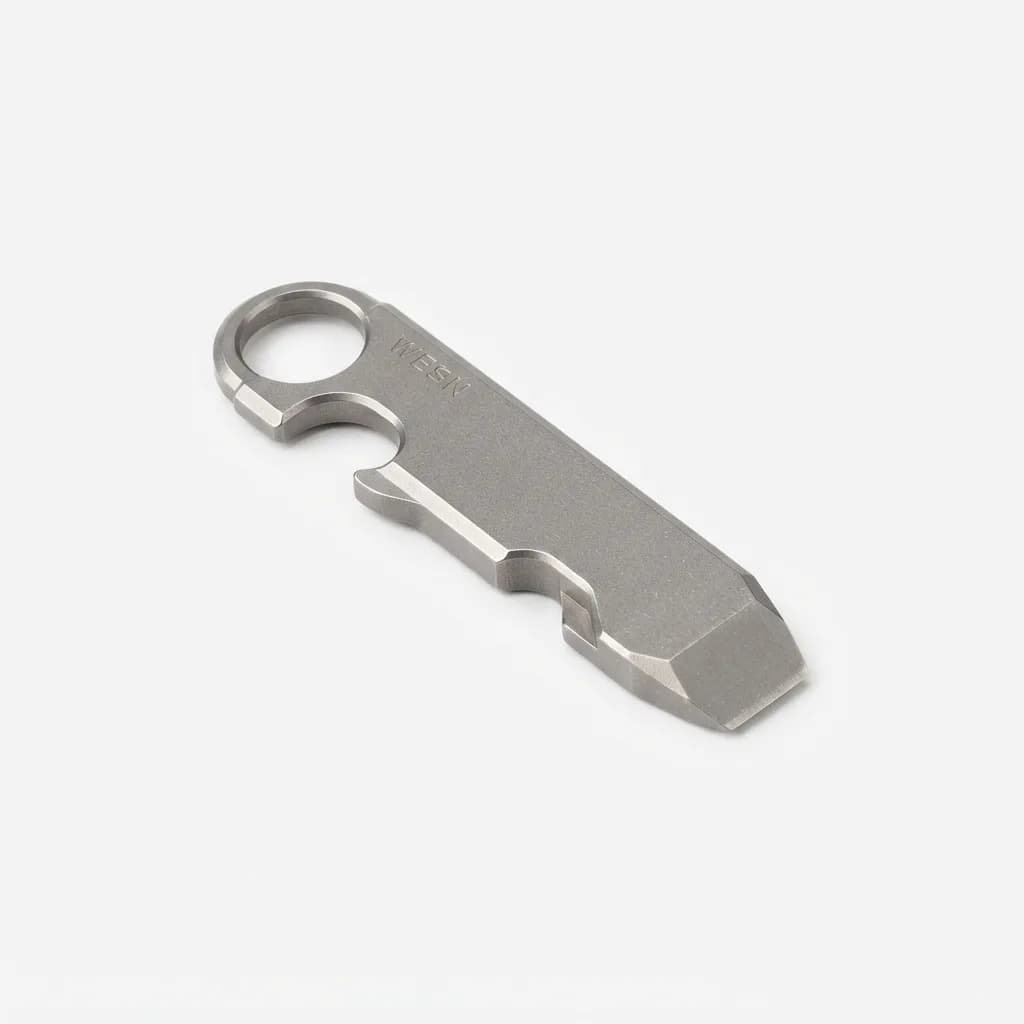
| WESN MT | Titanium one-piece (pry end doubles as box cutter per WESN) | 11 g | 3 tools | $45 (Blacked Out $50) | In stock at Oct 11 recheck (often sells out) |
| Big Idea Design Mini Titanium Pry Bar | Best for flying #1 / titanium pry bar (no blade or notch listed; maker says the tip can score boxes; TSA officers decide) | Not listed by maker | Pry, box opening, flathead, bottle opener (maker) | $25 | In stock |
| True Utility Smartknife (TU247) | Has a blade (not for carry-on) | 75 g | Not counted by maker | GBP 14.99 (UK maker store) | In stock (UK) |
| KeySmart iPro (replaces Pro) | Organizer | Not listed by maker | Organizer + opener | $49.99 | In stock; Pro discontinued |
Prices are from the maker's site; retailer prices vary. Prices and stock are listed as price at publish (Oct 2026).
Keychain Multitool Picker: Pliers vs Scissors vs No Blade
Start with the one tool you'd actually use, then pick the format.
- Need pliers? Get the Gerber Dime. It's the only current pick here with pliers: spring-loaded needle-nose pliers, a wire cutter and scissors, 2.2 oz, $34.99 (price at publish, Oct 2026). It also has a blade, so it isn't a carry-on tool.
- Need scissors? Get the Leatherman Micra (spring-action scissors, 10 tools, 1.8 oz, $49.95) or a Victorinox: the Classic SD (7 functions, 0.7 oz, $24) or the Rambler (10 functions, 1.1 oz, $35). All three have a small blade.
- Need no blade or cutting edge? Use the one-piece picks in the Best for flying (no blades) section. Folding multitools with scissors or wire cutters don't belong in that tier, and TSA officers decide at the checkpoint either way.
Keychain Multitool Weights (Maker-Listed)
| Tool | Type | Weight (as listed by maker) | Tools (maker) | Price at publish (Oct 2026) | Source |
|---|---|---|---|---|---|
| WESN MT | Titanium one-piece | 11 g | 3 | $45 | wesn.com |
| Gerber Shard | Steel one-piece | 28 g (1.0 oz) | 7 functions | $7.99 | gerbergear.com |
| Victorinox Classic SD | Folding, scissors | 0.7 oz | 7 functions | $24 | victorinox.com |
| Victorinox Rambler | Folding, scissors | 1.1 oz | 10 functions | $35 | victorinox.com |
| Leatherman Micra | Folding, scissors | 1.8 oz | 10 | $49.95 | leatherman.com |
| Gerber Dime | Folding, pliers | 2.2 oz | Listed as 10 and as 12 | $34.99 | gerbergear.com |
| True Utility Smartknife (TU247) | Folding, blade | 75 g | Not counted by maker | GBP 14.99 | trueutility.com |
Weights are shown in the unit each maker lists. Nite Ize, KeySmart and Big Idea Design aren't included because they don't list a weight.
Why Most Keychain Multi-Tools Fail
The problem with most keychain multi-tools is they try to do everything. You end up with eight tools, all of them compromised. The screwdriver bit is too short for leverage. The knife blade is dull and borderline useless. The bottle opener works, but it's buried under three other functions you have to fold out first.
Single-purpose tools tend to work better at keychain scale. A dedicated bottle opener outperforms the one built into a 12-in-1 gadget. A standalone pry bar is more robust than the thin metal tab on a multi-tool. Specialization wins when you're working with this little mass and volume.
That said, there are exceptions. A few multi-tools manage to nail two or three functions without compromising any of them. Those are worth considering if they match your specific needs.
Bottle Openers That Don't Feel Like an Afterthought
Every keychain needs a bottle opener. Not because you open bottles daily, but because when you need one, you really need one. The best keychain bottle openers are small, sturdy, and fast to deploy.
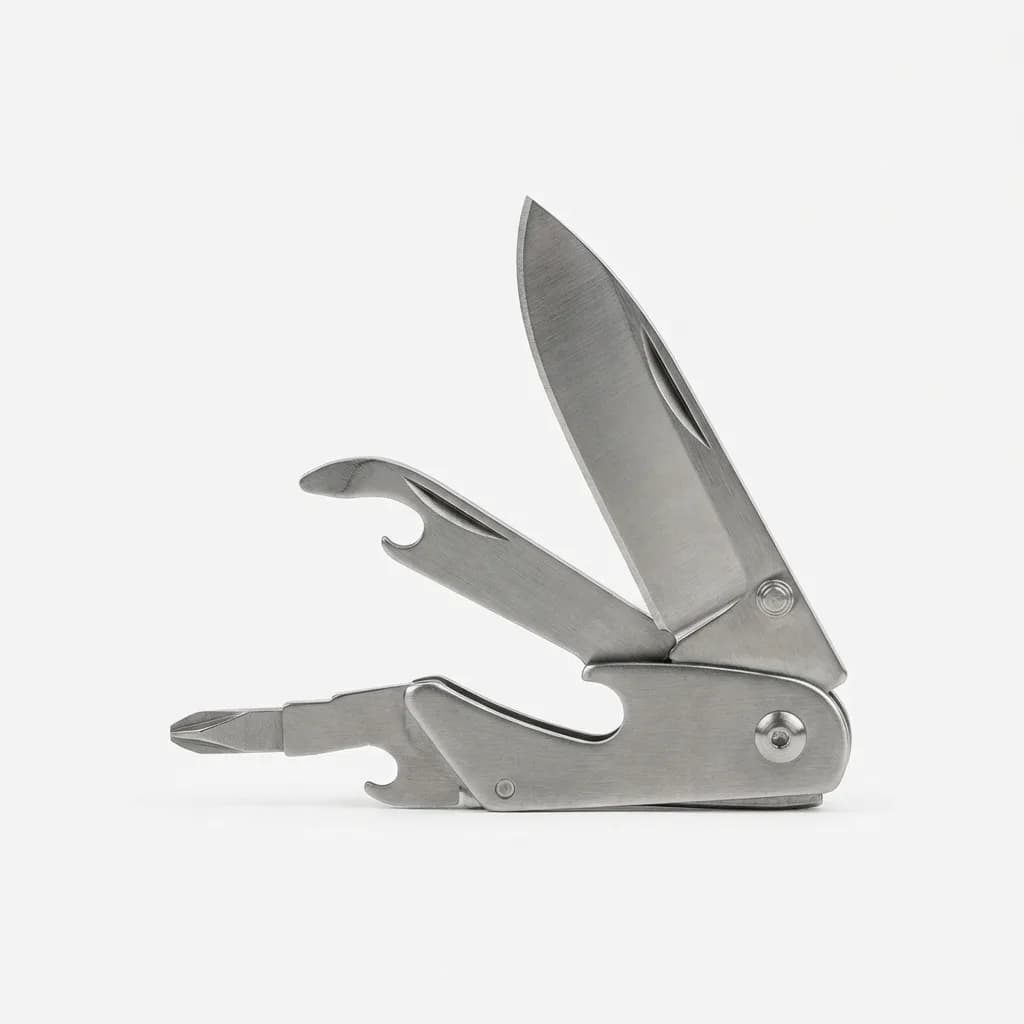
True Utility TU247 SmartKnife
See current price
Stainless steel and anodized aluminum with a bottle-opener clip, flat screwdriver, wrenches, box cutter and a folding blade. 75 g per True Utility.
(2026 note: True Utility's own listing calls the Smartknife "the knife that's a multi tool" and lists 75 g. Because it has a blade, don't count on it clearing airport security. For bladeless options, see the "Best for flying (no blades)" section below.) For a multi-function option, True Utility's SmartKnife punches above its weight class. The bottle opener is the primary function, not an afterthought. It also has a folding blade, so it's a knife first and doesn't belong in your carry-on.
If you prefer titanium, look at the Maratac Titanium Pry Bar. It's overkill for opening bottles, but it doubles as a pry tool and scraper. The titanium construction means it's lighter than steel despite being thicker, and it won't corrode if you live near salt water or carry it through sweaty summer days. For a balisong-style fidget that is also a working multitool, see our SnapTac 2601 breakdown.
Compact Screwdrivers Worth Carrying
You don't need a screwdriver every day. But when you do need one, it's usually for something annoying - a loose screw on your glasses, a battery compartment that won't open, an electronics panel held shut by tiny Phillips heads.
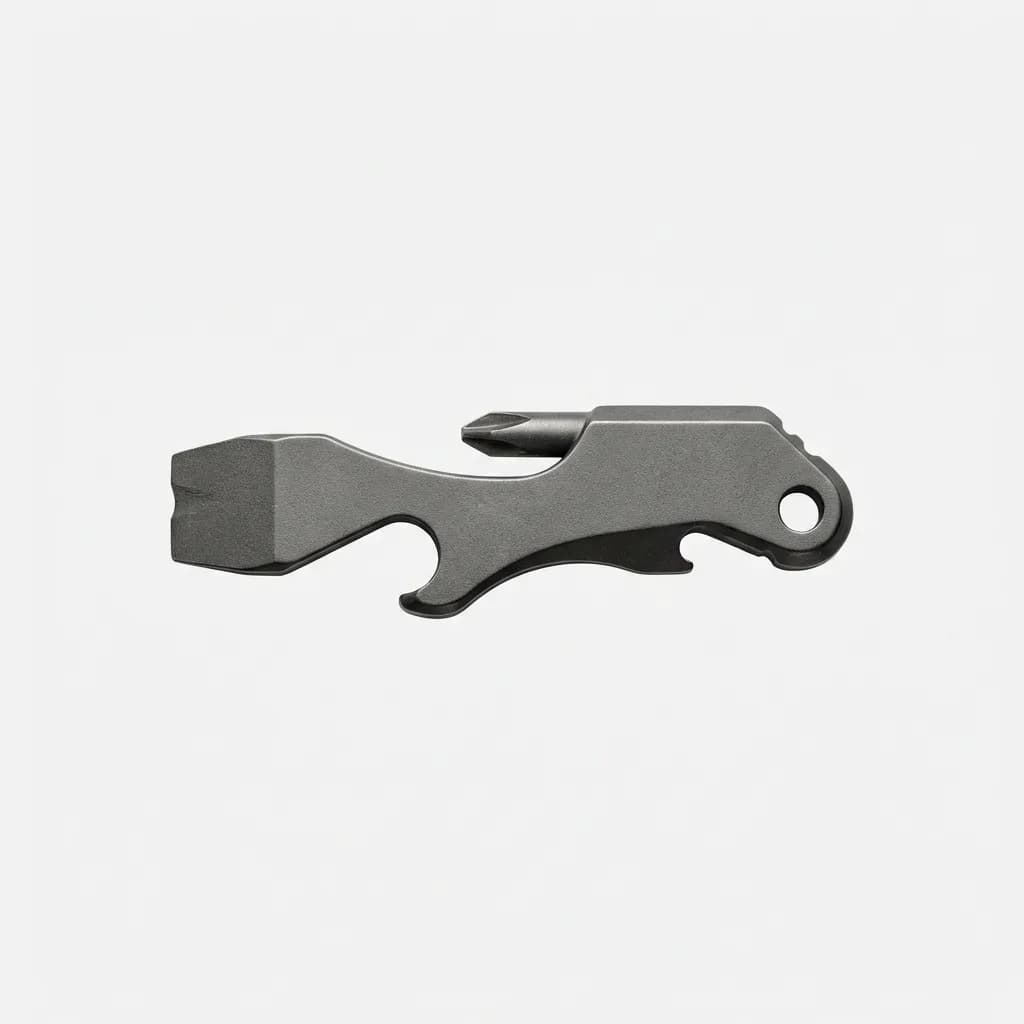
Gerber Shard Keychain Multi-Tool
$7
Titanium coated stainless steel with flat and Phillips drivers, pry bar, bottle opener, and wire stripper. Weighs 0.4 oz and measures 2.75 inches.
The Gerber Shard keeps its design simple. The screwdriver tips are positioned at the ends rather than folding out from the middle, which gives you decent torque. It has no blade, Gerber markets it as airline safe, and at under $10, it's cheap enough to lose without stress. For compact bit-driver multitools, see our GripNGo Vault vs Rixel Revolver comparison.
The limitation is bit length. You get maybe half an inch of driver, which is fine for small electronics but frustrating for recessed screws. If you need more reach, consider a dedicated bit driver instead of a flat multi-tool.
A better option for serious use is a micro ratcheting screwdriver. They're bulkier than the Shard but still keychain-scale, and the ratcheting mechanism makes a huge difference when you're dealing with tight or stripped screws. The Wera Kraftform Micro is the gold standard - it comes with multiple bits stored in the handle and works as well as full-size drivers for most tasks.
Pry Bars and Package Openers
Pry bars sound like overkill until you start using one. They're perfect for opening paint cans, prying apart electronics, scraping off stickers, and opening packages without using your keys as an improvised knife.
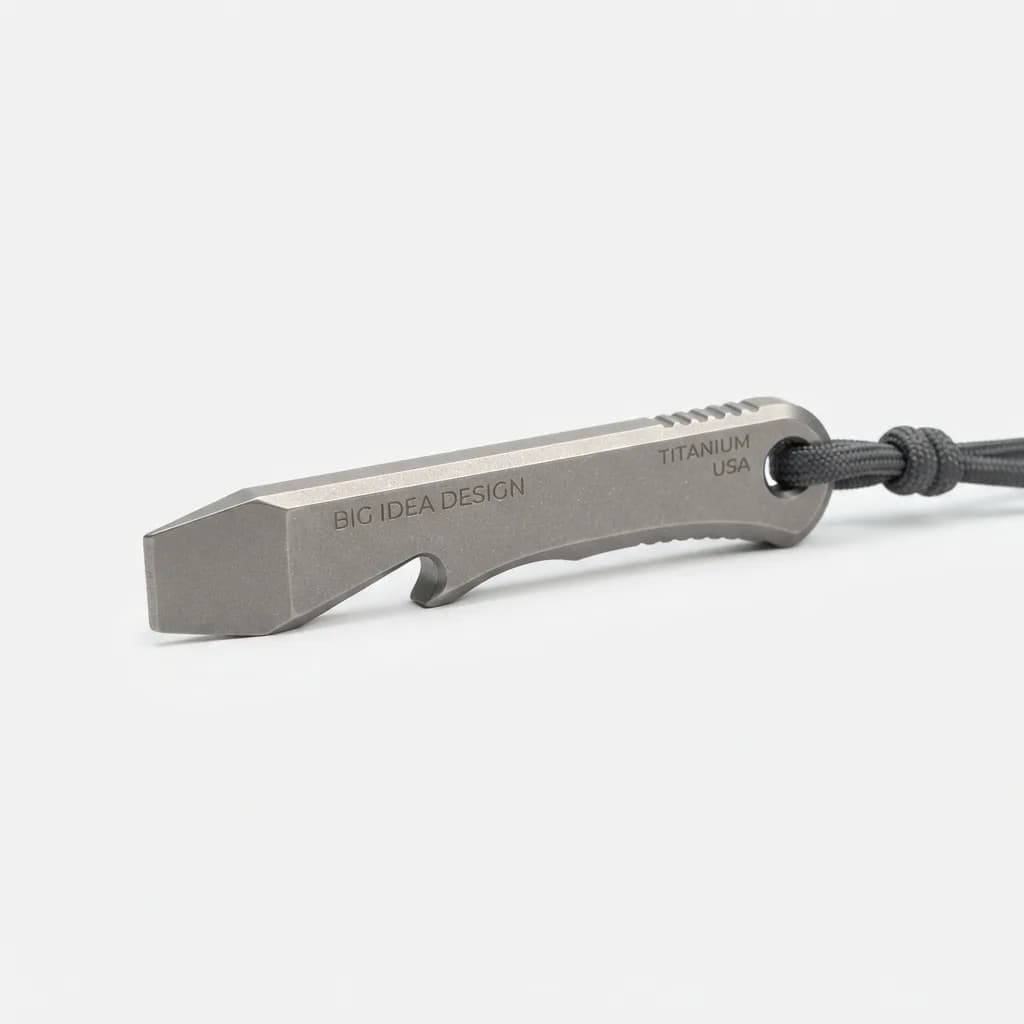
Big Idea Design Mini Titanium Pry Bar
$25, price at publish (Oct 2026)
Small Grade 5 titanium pry bar for light-duty prying, opening taped boxes, a flathead screwdriver and bottle caps (Big Idea Design). No blade or notch; the maker says the tip can score boxes. TSA officers make the final call, so check before you fly. In stock. $25 (price at publish, Oct 2026).
The Big Idea Design Mini Titanium Pry Bar is our top pry bar pick. Big Idea Design makes it from Grade 5 titanium for light-duty prying, opening taped boxes, tightening flathead screws and popping bottle caps, and sizes it to sit on a key ring until you need it. No blade or notch; the maker says the tip can score boxes. TSA officers make the final call, so check before you fly.
For a budget option, the CountyComm Widgy Pry Bar is a stainless steel alternative that typically costs less. It's stainless steel instead of titanium, so it's heavier, but it's also less likely to scratch if you throw it in a pocket with other gear.
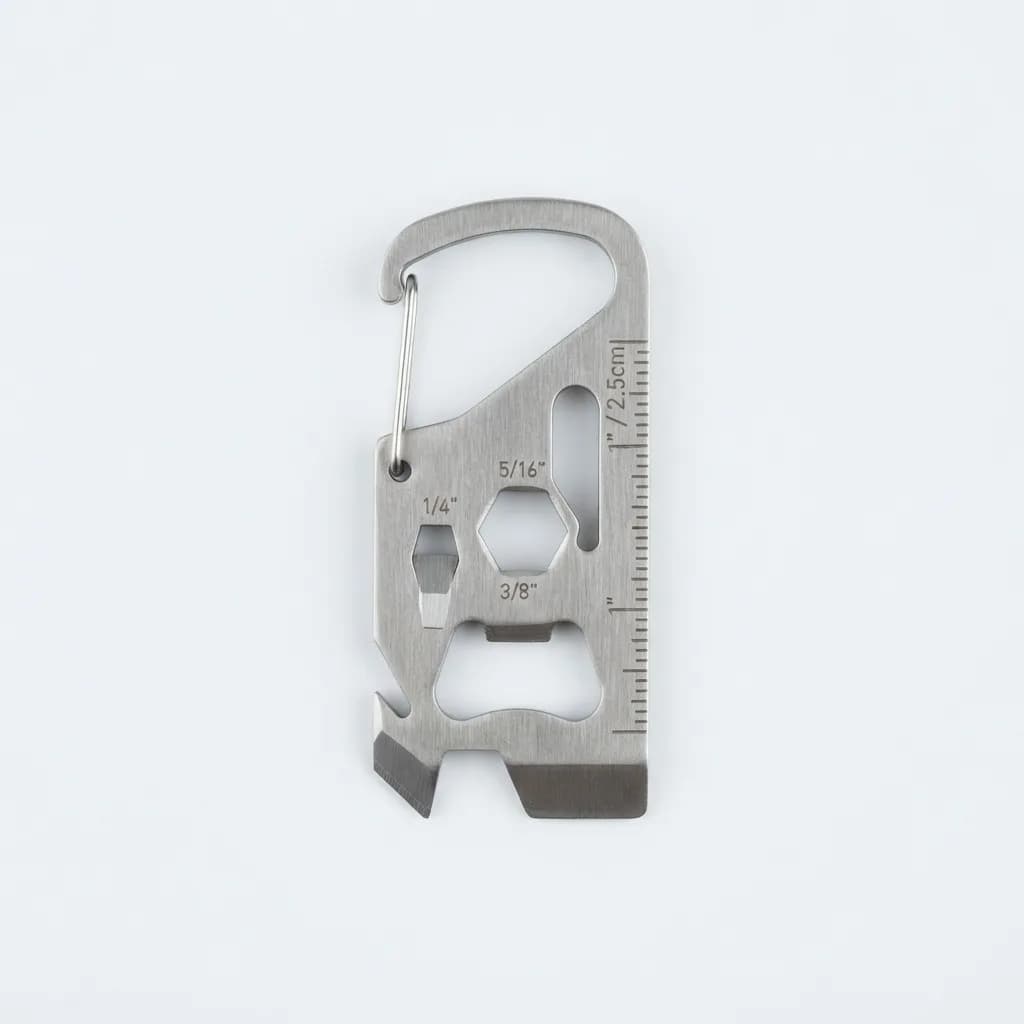
Nite Ize DoohicKey Key Tool
$6.99 (price at publish, Oct 2026)
Stainless steel 5-in-1 per Nite Ize: a small cutting notch (box cutter), flathead screwdriver, 1/4, 5/16 and 3/8 in wrenches, ruler and bottle opener, with a carabiner-style clip. Because of the cutting notch, TSA officers decide at the checkpoint whether it can fly.
The DoohicKey is the cheapest clip-on option here, and it adds wrench sizes and a ruler. Its box-cutter notch is a small cutting edge, so TSA officers decide at the checkpoint, and it isn't in our best-for-flying picks. Nite Ize doesn't publish a weight on its product page, so we haven't listed one.
If you mostly need a package opener rather than a heavy-duty pry tool, skip the metal bars entirely and get the Slice 10558 Manual Box Cutter. It's ceramic-bladed and safer than a traditional knife for slicing tape and plastic. Because it has a blade, keep it out of your carry-on. The blade is recessed and finger-safe, which matters when you're digging it out of a pocket full of keys. For tools that disappear in a pocket, see our best flat EDC tools for minimal carry.
Folding Keychain Multitools With Pliers or Scissors
These fold like a tiny pocket knife and carry real pliers or scissors. All of them have a blade, so pack them in checked luggage when you fly.
The Gerber Dime opens butterfly-style to spring-loaded needle-nose pliers, with a wire cutter, a 1.5 in blade, a package opener, scissors, a flat driver, tweezers, a file and a bottle opener that stays exposed when closed. Gerber lists 2.2 oz and 2.75 in closed, and its page says both "10 tools" and "12 useful tools".
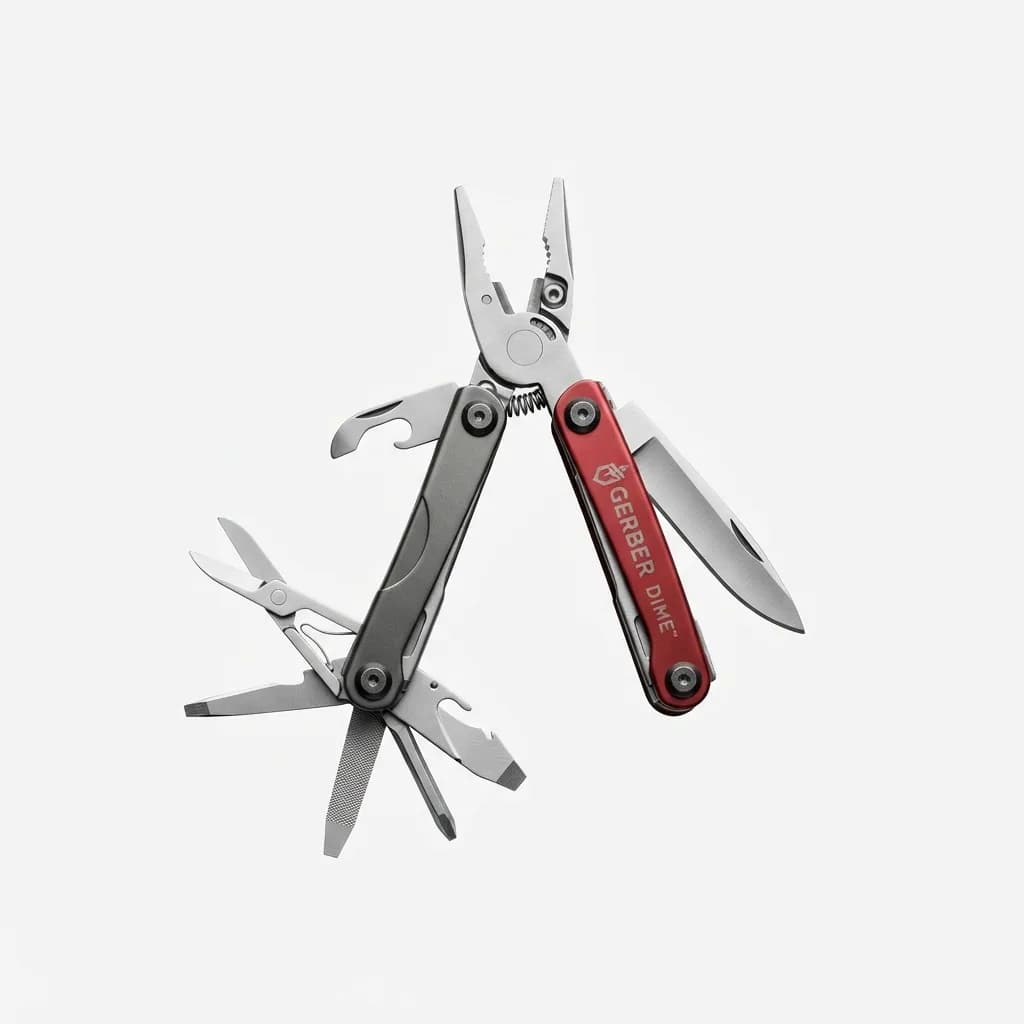
Gerber Dime
$34.99, price at publish (Oct 2026)
Keychain multitool with spring-loaded needle-nose pliers, wire cutter, 1.5 in blade, package opener, scissors, flat driver, tweezers, file and bottle opener. 2.2 oz, 2.75 in closed, limited lifetime warranty (Gerber). In stock. $34.99 (price at publish, Oct 2026).
The Leatherman Micra is built around spring-action scissors. Leatherman lists 10 tools (420HC knife, scissors, three screwdrivers, ruler, nail cleaner, tweezers, bottle opener and nail file), 1.8 oz, 2.5 in closed and a 25-year warranty. Cappuccino was sold out at publish; other colors were in stock.
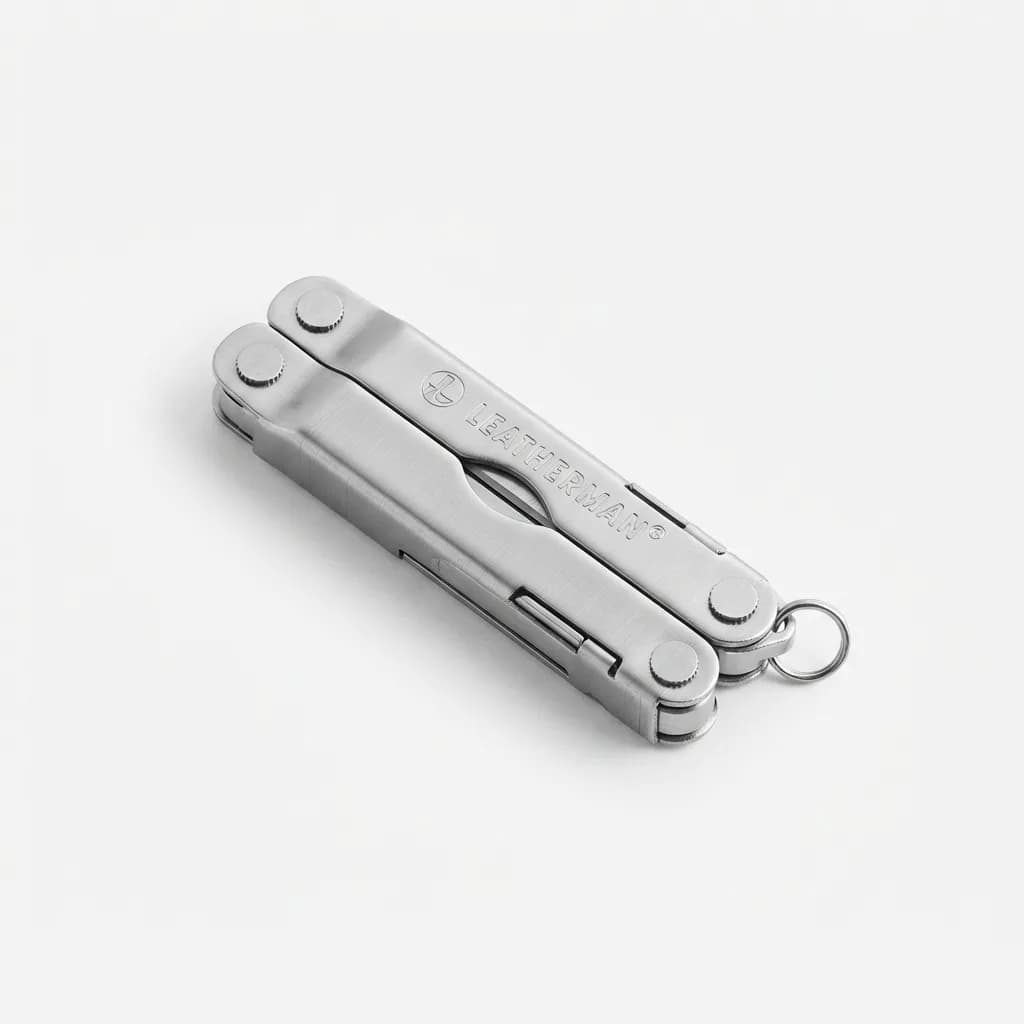
Leatherman Micra
$49.95, price at publish (Oct 2026)
10 tools including spring-action scissors, 420HC knife, screwdrivers, ruler, tweezers, bottle opener and nail file. 1.8 oz, 2.5 in closed, key ring loop, 25-year warranty (Leatherman). In stock in most colors. $49.95 (price at publish, Oct 2026).
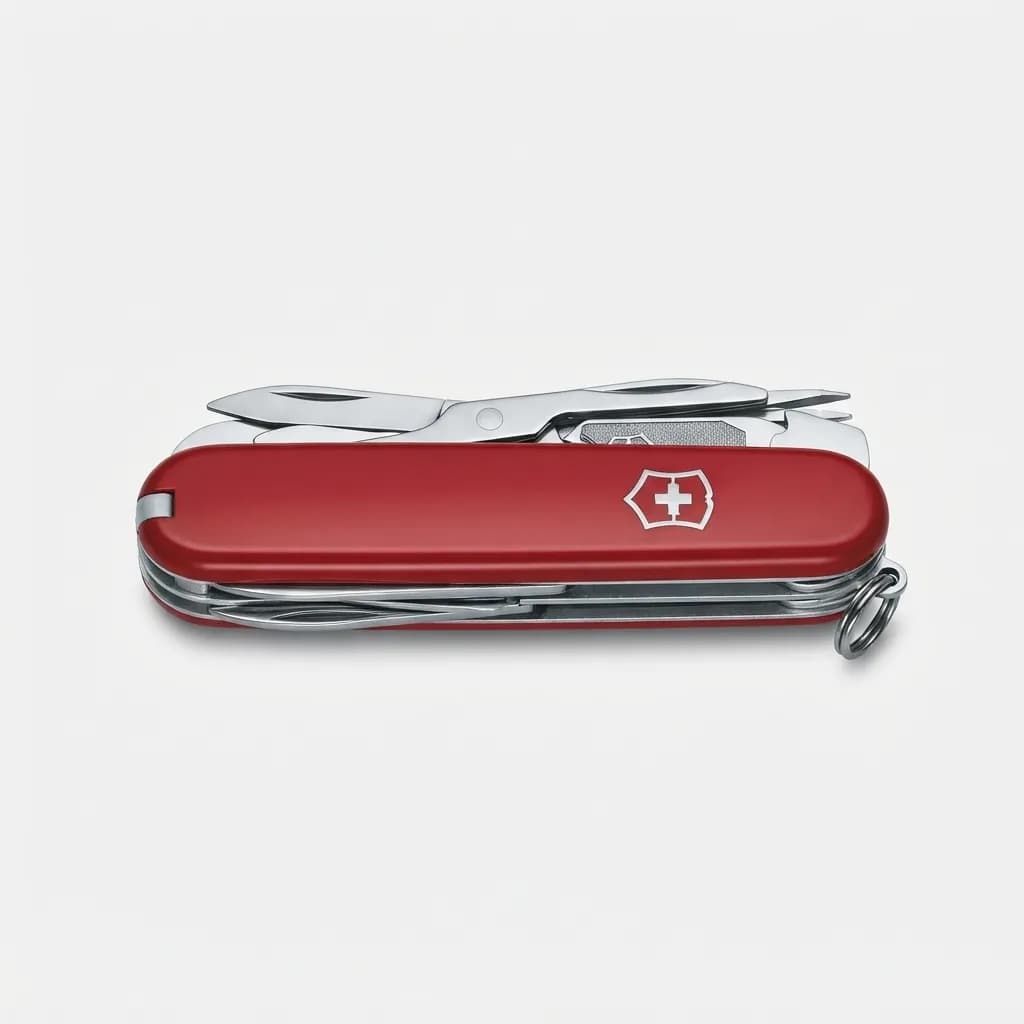
The Victorinox Classic SD is the least weight of the folding picks: 7 functions (small blade, scissors, nail file with screwdriver, tweezers, toothpick, key ring) at 0.7 oz and 2.3 in. The Rambler is the same length and adds a magnetic Phillips, a wire stripper and a bottle opener for 10 functions at 1.1 oz. Victorinox's US page has shown the Rambler both in stock and "not available online", so check before ordering.
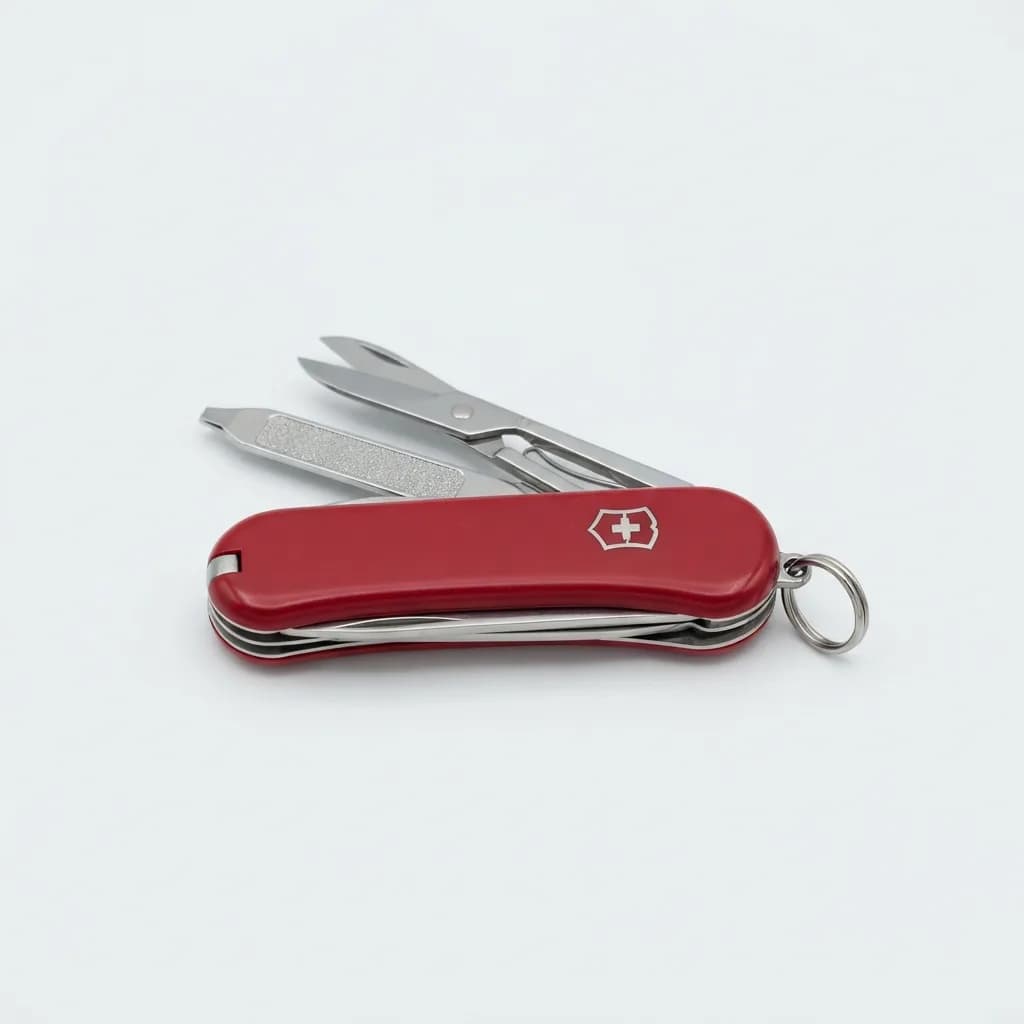
Victorinox Classic SD
$24, price at publish (Oct 2026)
7 functions: small blade, scissors, nail file with 2.5 mm screwdriver, tweezers, toothpick and key ring. 0.7 oz, 2.3 in, Swiss made, lifetime warranty (Victorinox). $24 (price at publish, Oct 2026).
Victorinox Rambler
$35, price at publish (Oct 2026)
10 functions: small blade, scissors, 2.5 mm screwdriver, magnetic Phillips 0/1, key ring, wire stripper, bottle opener, nail file, toothpick and tweezers. 1.1 oz, 2.3 in, lifetime warranty (Victorinox). Online stock varies. $35 (price at publish, Oct 2026).
Looking for the Leatherman Squirt PS4 or Style PS? Both are on Leatherman's retired products page, so we don't list them. For full-size pocket tools such as the Skeletool, see our multi-tools by profession guide.
Best for flying (no blades)
If your keys go through airport security, skip anything with a blade or cutting edge. These picks have no blade. The TSA officer at the checkpoint decides what goes through, so check the TSA "What Can I Bring?" tool before you fly.
Big Idea Design Mini Titanium Pry Bar: a Grade 5 titanium pry bar. No blade or notch; the maker says the tip can score boxes. TSA officers make the final call, so check before you fly. $25 and in stock (price at publish, Oct 2026). See the full card.
The Gerber Shard is the second pick. It has no blade, but its wire-stripper notch is a small edge, so it's a step behind the Big Idea Design Mini Pry Bar.
Gerber Shard: has a wire-stripper notch; Gerber markets it as airline safe, but TSA officers decide at the checkpoint. $7.99 (price at publish, Oct 2026), 28 g. See the full Shard card.
We left out the Nite Ize DoohicKey because it has a small box-cutter notch (see the pry bar section). We also left out the WESN MT, because WESN says its pry end doubles as a box cutter.
Titanium One-Piece Keychain Tools
One-piece tools have no hinges, screws or springs to loosen. A single milled bar of titanium is light, won't rust, and survives a pocket full of keys.
WESN MT
From $45 (price at publish, Oct 2026; often sold out)
Milled titanium, 2.75 in long and 0.4 oz (11 g) per WESN. Three tools: bottle opener, flathead screwdriver, and a pry bar that WESN says doubles as a scraper or box cutter. Lifetime warranty.
The Big Idea Design Mini Titanium Pry Bar (above) is the other titanium one-piece pick: Grade 5 titanium, $25 at publish (Oct 2026). If you'd rather carry a modular tool than a single bar, our Pockitrod modular pen multitool breakdown covers a rod that splits between pocket and keychain. To keep the whole ring tidy, see our best minimalist keychain organizer guide.
Key Organizers That Double as Tool Carriers
Key organizers solve two problems at once. They eliminate key jingle and provide a mounting platform for other tools. The best ones integrate bottle openers, bit holders, or USB drives directly into the frame.
KeySmart Pro Compact Key Holder
$40
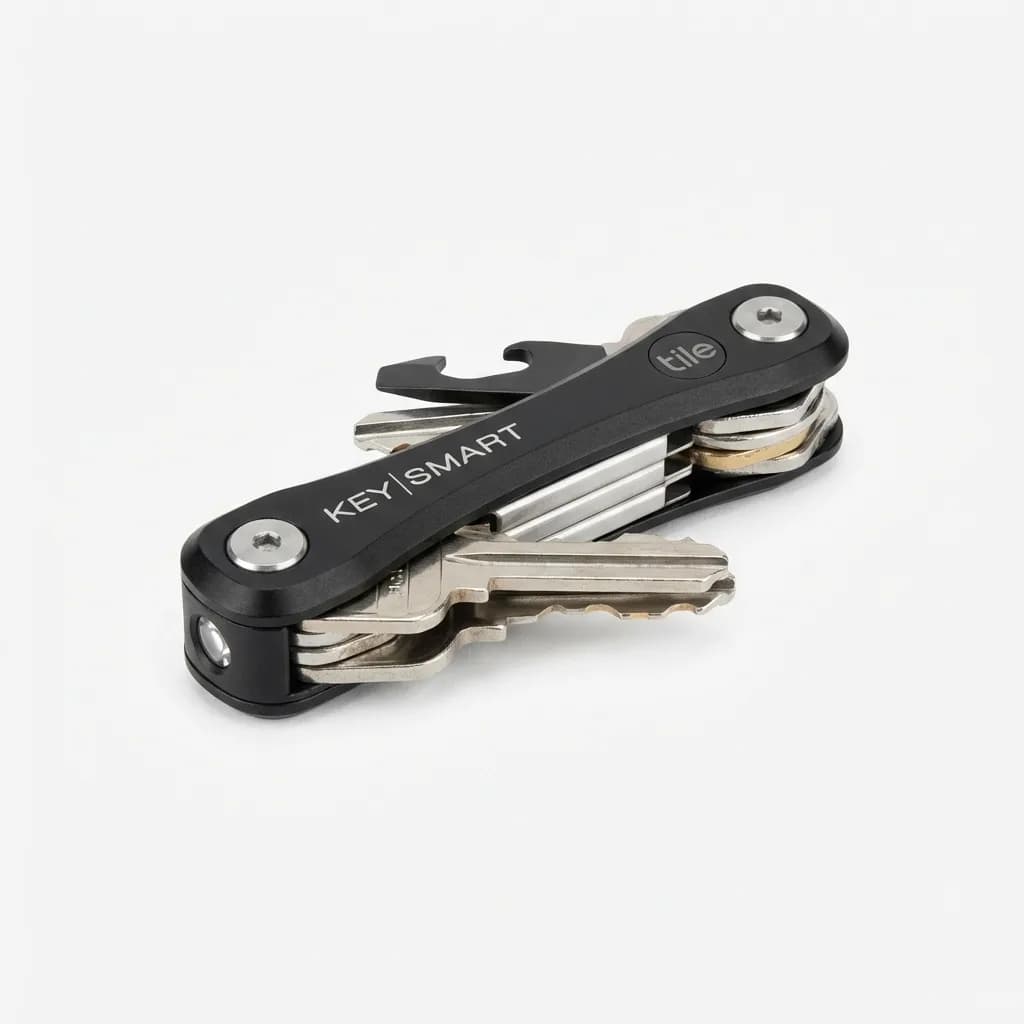
Holds up to 8 keys with integrated Tile tracking, LED light, and bottle opener. Aircraft-grade aluminum frame with expansion packs for additional tools.
(2026 update: KeySmart lists the Pro with Tile as no longer available. Its current version is the KeySmart iPro, $49.99 and in stock at publish (Oct 2026), which uses Apple Find My instead of Tile.) KeySmart Pro is the most popular organizer for good reason. The core design is simple and effective - keys stack between two aluminum plates secured by screws. The Pro version adds Bluetooth tracking and an LED light, which can sound gimmicky, but the light helps with keyholes and door locks, and the Tile integration means you can ping your keys from your phone. If you're choosing between KeySmart and a KeyBar, our KeySmart vs KeyBar comparison lays out capacity and price.
The modular design lets you add a bottle opener, pocket clip, quick-disconnect clasp, or USB drive. We recommend starting basic and adding only what you actually use. Most people end up with the core organizer plus a bottle opener and maybe a clip.
For a minimalist alternative, the Orbitkey 2.0 uses a different approach - keys thread onto a leather or silicone strap secured by metal posts. It's less modular than KeySmart but also less bulky. The leather version develops a nice patina over time, and the whole thing feels more refined than the industrial look of aluminum frames. If you like gear that ages with you, our guide to brass and copper EDC covers patina and care.
USB Drives and Digital Carry
A keychain USB drive is one of those things you don't need until you desperately need it. Transferring files from an old laptop. Booting a recovery OS. Sharing large files when Wi-Fi is slow or locked down.
128GB is the sweet spot for capacity versus cost. It's enough for OS recovery images, entire photo libraries, or large video files, but it's not so much storage that you'll be tempted to use it as a primary backup device (which would be a mistake - USB drives fail, and keychain carry is harsh).
If you want a drive on your keys, pick a short, low-profile one with a keyring loop, and get one with both USB-A and USB-C connectors if you switch between newer and older machines.
What About Flashlights?
Keychain flashlights are tempting, but most of them are a compromise. They're either too dim to be useful, too bulky to carry comfortably, or they drain the battery too quickly.
The exception is if you specifically need a flashlight frequently - late-night dog walks, camping trips, working in dark server closets. In that case, the Olight i3T EOS is our keychain light pick. It's pen-sized rather than truly compact, but it produces 180 lumens on high and runs on a single AAA battery. The tail cap twist switch is intuitive, and the aluminum body is durable enough for daily keychain abuse.
For most people, though, your phone's flashlight is good enough. Carrying a dedicated light means one more thing to maintain, one more battery to replace, and one more piece of metal clanking around. Save the space for tools that your phone can't replace.
How to Choose What Actually Matters
Start with what you already do. If you open bottles regularly, prioritize a good opener. If you're constantly tightening screws on glasses or laptops, focus on a screwdriver. If you open packages daily, get a pry bar or package opener.
Don't buy tools for hypothetical scenarios. The tiny saw blade sounds useful until you realize you've never needed to saw anything while away from home. The emergency whistle seems smart until it sits unused for three years.
Weight and profile matter more than you think. A tool that's too heavy or bulky will get left behind, which means it's useless no matter how well it works. Titanium is worth the extra cost if you're sensitive to pocket weight. For most tools, though, stainless steel or aluminum is fine.
Check the ergonomics before committing. Some keychain tools have sharp edges or uncomfortable grip points that only become obvious after a week of carry. If possible, handle the tool in person before buying, or at least order from a retailer with easy returns.
Build quality separates the tools that last from the ones that fail. Cheap screwdrivers strip out. Flimsy bottle openers bend. Weak clips break. Look for materials like titanium, stainless steel, or aircraft-grade aluminum. Check reviews for mentions of durability and long-term use.
The Minimal Keychain Setup That Works
If we had to build one universal keychain from scratch, it would look like this: KeySmart organizer with four to six keys, Gerber Shard for screwdriver tasks, bottle opening and light prying, and a WESN MT if you want a titanium backup.
That's three items, and none of them is redundant. The Shard (28 g) and MT (11 g) add 39 g by maker specs.
The alternative minimal setup swaps the KeySmart for an Orbitkey, drops the Gerber Shard, and adds a titanium pry bar such as the Big Idea Design Mini for bottles and prying. That trades screwdriver capability for better prying and a more refined aesthetic. It's also slightly lighter.
Both setups skip the flashlight, knife, and other tools that sound useful but rarely get used in practice. Your phone handles lighting. Your pocket knife (if you carry one separately) handles cutting tasks better than any keychain blade. Keep the keychain focused on what it does best - lightweight, always-available tools for quick tasks.
The goal isn't to carry every tool you might possibly need. It's to carry the tools you actually reach for, in a package light enough that you'll never leave home without it.
FAQ
Are keychain multitools allowed on planes? The Big Idea Design Mini Titanium Pry Bar has no blade or notch, though the maker says the tip can score boxes, so TSA officers make the final call. The Gerber Shard has no blade but does have a wire-stripper notch, and Gerber markets it as airline safe. Anything with a box-cutter notch, like the Nite Ize DoohicKey or the WESN MT's pry end, is up to the officer. TSA has the final say at the checkpoint, so check its "What Can I Bring?" tool before you fly.
Which keychain tool here weighs the least? By maker specs, the WESN MT at 11 g. Among the folding multitools, the Victorinox Classic SD is the lowest listed weight at 0.7 oz.
Is titanium worth it over stainless steel? If you care about pocket weight and corrosion, yes. If you don't, the $7.99 Shard or $6.99 DoohicKey do the basics for far less.
Which tool has the most functions? The Gerber Shard, with 7 functions listed by Gerber, among the one-piece tools. Among the folding multitools, the Leatherman Micra (10 tools) and Victorinox Rambler (10 functions) list the most.
What's the best keychain multitool with pliers? The Gerber Dime: spring-loaded needle-nose pliers, a wire cutter and scissors at 2.2 oz, $34.99 (price at publish, Oct 2026). It has a blade, so TSA officers decide at the checkpoint and checked luggage is the safer bet.
What's the best keychain multitool with scissors? The Leatherman Micra ($49.95, 1.8 oz) for spring-action scissors and a 25-year warranty, or the Victorinox Classic SD ($24, 0.7 oz) for the least weight.
Are prices current? They're price at publish (Oct 2026) from maker product pages. Retailer prices vary.
The Weekly Dispatch
Enjoying this article?
Subscribe and get our best gear picks delivered every Sunday morning.
Related Posts
Best Key Organizers 2026: KeySmart, Orbitkey, KeyBar
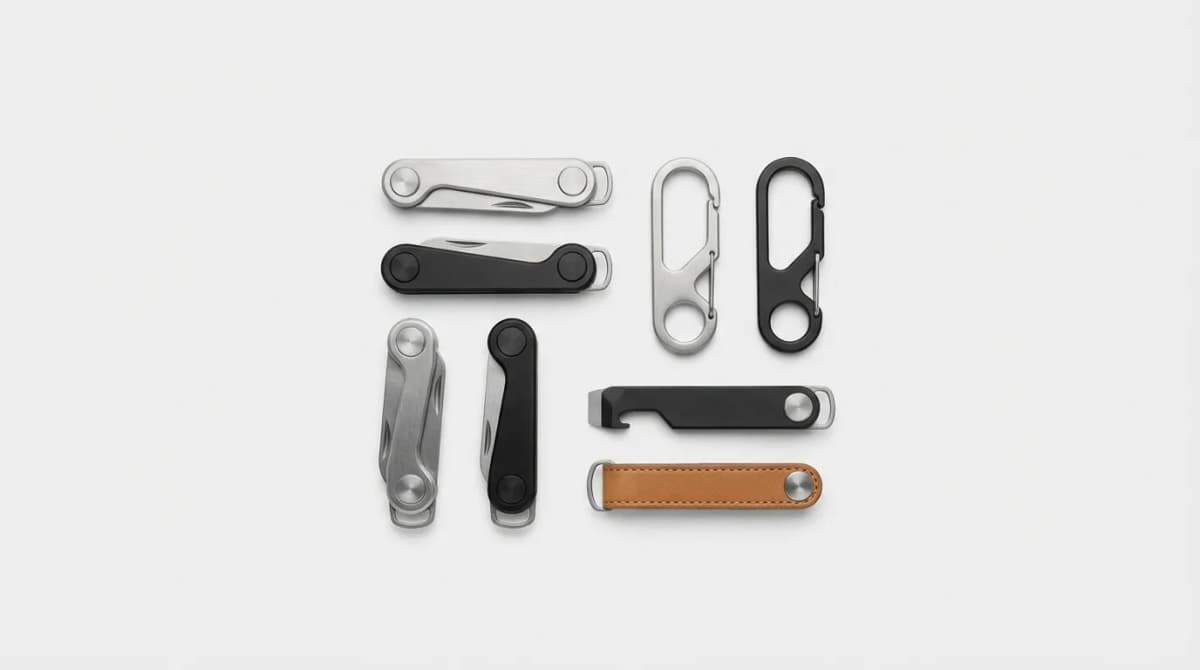
KeySmart, Orbitkey and KeyBar key organizers compared by maker specs, key capacity and price, plus titanium and modular options to cut keychain bulk.
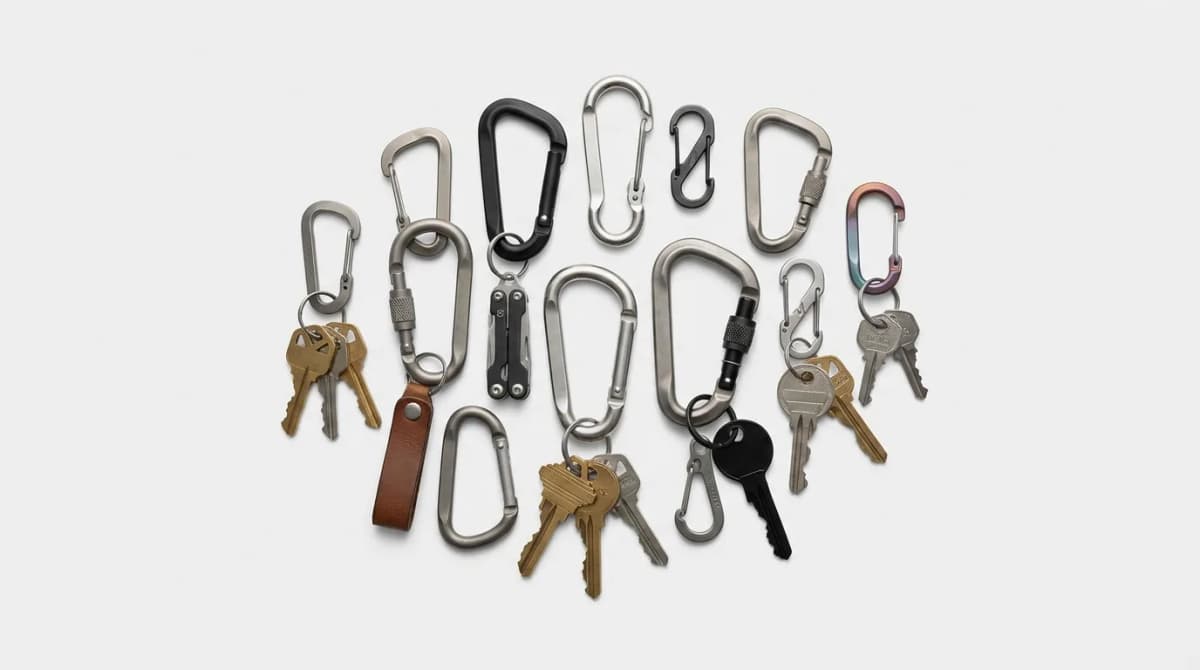
Best EDC Carabiners 2026: Keychain and Gear Clips
The best EDC carabiners and carabiner keychains for 2026: Nite Ize S-Biner and MicroLock, Heroclip Mini, County Comm Key Titan, Maratac GhostLinq and Black Diamond Positron. Gate styles, sizes and real strength needs. Prices at publish, Oct 2026.
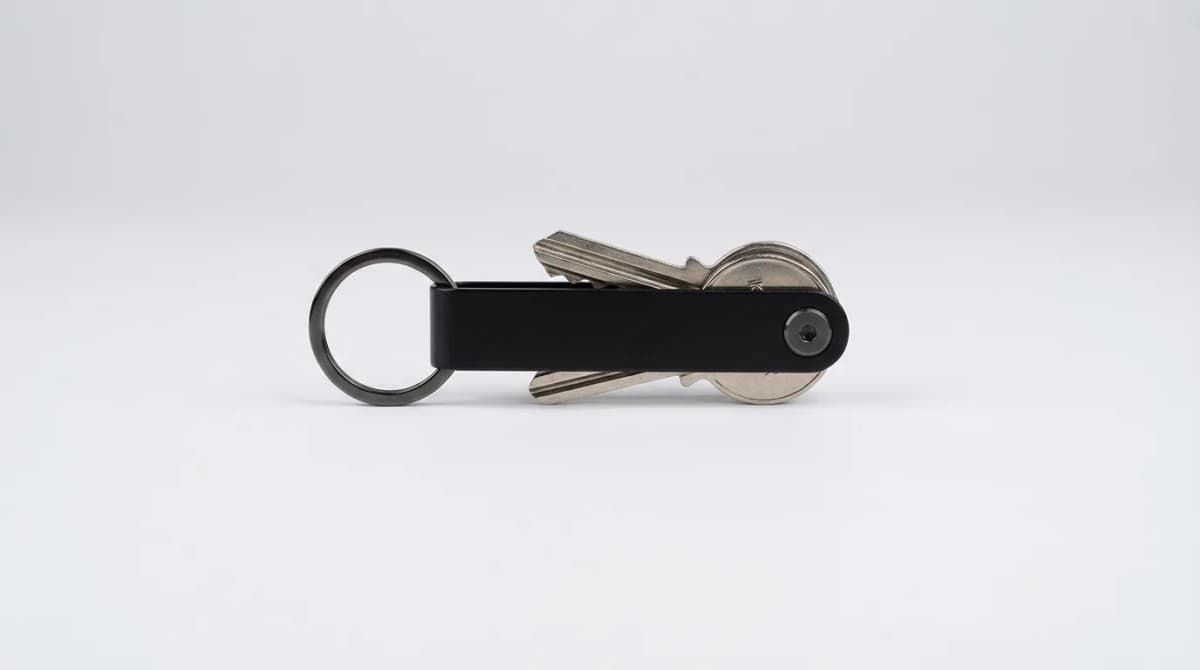
KESTAR Key Chain Review: Business Meets Function
KESTAR car key chain organizer: design, quick-release clasp, key capacity and who it suits, plus KeySmart and Orbitkey alternatives.
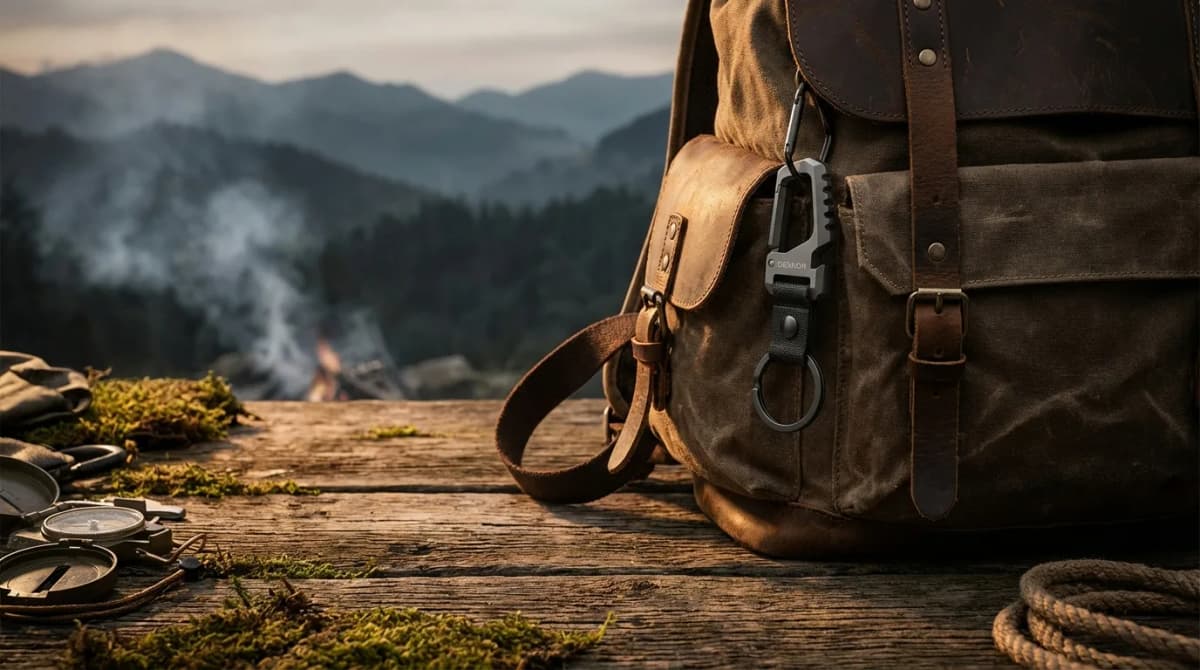
Dexnor Heavy Duty Carabiner Keychain Review
This aerospace-grade stainless steel carabiner keychain combines bottle opener functionality with secure key organization in a compact EDC package.