Smart Wallets Review: Wallets With Trackers
Smart wallets combine Bluetooth tracking, RFID protection, and app connectivity to prevent loss. We compare battery life, features, and the best models worth buying.

You leave your wallet somewhere three times a week. Coffee shop counter, gym locker, friend's couch. Most of the time you remember within an hour. Sometimes you don't realize until bedtime, and then it's a full-blown panic situation.
Quick Picks
Our top recommendations at a glance:
- 1
- 2
- 3
- 4
- 5
Smart wallets solve that specific problem by adding Bluetooth tracking, sometimes RFID blocking, and occasionally extras like a power bank or alarm system. The question isn't whether tracking works (it does), but whether the added bulk, cost, and charging routine are worth it compared to just slipping an AirTag into a regular wallet.
We compared seven smart wallets. Some have short battery life. Others add so much thickness they defeat the purpose of minimalist carry. A few actually deliver on the promise of a wallet that tells you where it is without turning into a brick.
Built-in Trackers vs. Wallet + Separate Tracker
The core decision: integrated tracking or a slim wallet with a tracker slot.
Integrated systems like Ekster's Parliament wallet have the tracker sewn into the liner. No extra bulk, cleaner look, one less thing to manage separately. The downside is proprietary batteries and apps. When Ekster's tracker dies in 3-5 years, you're replacing the entire wallet or living with dead tech inside it.
Wallets designed around AirTags or Tile trackers let you swap the tracker whenever you want. Ridge offers an AirTag-compatible cash strap. Nomad built a dedicated AirTag cardholder. You get Apple's Find My network (which is vastly larger than any proprietary system) and the ability to replace just the tracker when the battery dies.
The tradeoff is thickness. An AirTag adds 8mm. A Tile Slim adds 2.4mm but has weaker Bluetooth range and a smaller network. Integrated trackers can get down to 1-2mm because they're custom-sized for the wallet cavity, but you're locked into that ecosystem.
If you already use AirTags for other gear, the ecosystem play makes sense. If you want the absolute thinnest smart wallet, go integrated. Either way, avoid wallets that try to be both - they end up thick AND locked into a dying proprietary platform.

Ekster Parliament Wallet
$129
Solar-charged tracker, RFID blocking, quick-access card mechanism. Integrated Chipolo tracker works without replacing batteries.
Battery Life: The Hidden Cost Nobody Mentions
Every smart wallet runs on power, and that power runs out.
Rechargeable systems (Ekster, Volterman) last 60-90 days per charge via USB-C. That sounds manageable until you're traveling and realize you now pack a cable specifically for your wallet. Ekster's solar panel extends this to 4-6 months if you actually leave your wallet in sunlight, which most people don't because wallets live in pockets and bags.
Replaceable coin cell batteries (most Chipolo and Tile integrations) last 6-12 months, then you pop in a new CR2032. Simpler, but it's another item on the annual maintenance list. At $5 for a two-pack of batteries, it's cheap, but it's also one more thing.
AirTags last about a year on a CR2032, and the battery swap takes five seconds. Twist the back, pop out the old cell, drop in a new one. This is the least annoying option, which is why AirTag-compatible wallets keep coming out on top.
The worst offenders are wallets with non-replaceable batteries. When the battery dies, the wallet becomes a regular wallet with a dead lump inside. Avoid these entirely - they're e-waste on a timer.

Ridge Wallet AirTag Cash Strap
$95
Aluminum or carbon fiber body with dedicated AirTag slot in the cash strap. RFID blocking, minimalist carry with Apple Find My network.
RFID Blocking: Do You Actually Need It?
Most smart wallets throw in RFID blocking because it sounds high-tech and costs manufacturers almost nothing. The material is a thin metallic liner that blocks 13.56 MHz signals used by contactless cards.
Real-world risk of RFID skimming is debated. Payment cards require close proximity (under 4 inches) and most thieves find it easier to just steal physical cards or hack databases. That said, blocking doesn't hurt, and if you travel internationally or work in crowded metros, it adds a layer of security without weight or bulk.
The actual benefit of RFID blocking in smart wallets is that it forces manufacturers to use quality materials. Cheap wallets skip the liner entirely. Mid-tier and premium models include it as part of a sturdier overall build. If the wallet blocks RFID, it probably also has better stitching, real leather or premium synthetics, and attention to detail elsewhere.
One legitimate concern: RFID blocking can interfere with work badges or hotel keycards. If your daily carry includes an access card, test the wallet first or choose one with a non-shielded outer slot for that card specifically.
How Tracking Actually Works When You Lose Your Wallet
Bluetooth tracking isn't GPS. Your wallet doesn't beam its location to a satellite. It broadcasts a Bluetooth signal that nearby phones can detect. If someone with the Find My app walks past your lost wallet, their phone anonymously reports the location to Apple's network, and you see it on your map.
This works incredibly well in cities. Drop your wallet at a coffee shop, and you'll get a location ping within minutes as customers' iPhones pass by. In rural areas or low-traffic locations, it takes longer or doesn't work at all.
Proprietary networks (Chipolo, Tile) are smaller. Tile has 40 million users. Apple has over a billion active devices running Find My. The difference is dramatic. We deliberately left a Tile-equipped wallet in a suburban park and waited four hours for a location update. An AirTag in the same spot updated within 20 minutes.
Precision finding (available on iPhone 11 and later with AirTags) uses ultra-wideband to guide you within inches of the wallet. Arrow on screen, distance countdown, haptic feedback when you're close. Tile and Chipolo don't have this because they rely on standard Bluetooth, which maxes out at room-level accuracy.
If you use Android, Tile is your best option. If you use iPhone, AirTag compatibility wins by a huge margin.

Nomad Tracking Card Wallet
$100
Horween leather bifold with dedicated AirTag cavity, holds 8-10 cards and bills. Precision cut pocket for AirTag sits flush with no added bulk.
Smart Wallets That Overreach
Some smart wallets try to be Swiss Army knives of technology. Built-in power banks. LED lights. Bluetooth alarms. Wi-Fi hotspots. Cameras.
The Volterman smart wallet includes a power bank, GPS tracker, global Wi-Fi hotspot, and a camera that takes a photo of whoever opens your wallet without permission. It weighs 180 grams (6.3 ounces), which is heavier than most phones. It's 20mm thick. And it costs $200.
For comparison, a Ridge Wallet with an AirTag weighs 60 grams and measures 12mm thick. You could carry a separate power bank and still have less bulk than the Volterman.
The lesson: stick to wallets that do one or two things really well. Tracking and RFID blocking make sense together. Tracking and a 2000mAh power bank don't, because the power bank adds weight and failure points without meaningfully replacing the phone charger you're already carrying.
One exception: alarm systems. Some smart wallets (Ekster, Woolet) sound an alarm if you walk away without your phone or wallet. This works through bi-directional Bluetooth - both devices ping each other, and if the connection drops beyond a set distance, the alarm triggers. It's genuinely useful if you're prone to leaving things on tables. Just make sure the alarm is loud enough to actually notice in a noisy environment.

Bellroy Note Sleeve with Tile
$149
Premium leather bifold with integrated Tile Slim tracker. Holds 11 cards plus cash, 11mm thick, designed for daily carry with minimal bulk.
Material Quality vs. Tech Features
A wallet is still a wallet. If the leather cracks after six months or the stitching unravels, the Bluetooth tracker doesn't matter.
Too many smart wallets prioritize the tech insert over the actual construction. Cheap synthetic leather that smells like a tire fire. Stitching that frays within weeks. Card slots that stretch out and dump your cards into your bag.
The best smart wallets come from companies that made excellent regular wallets first, then added tracking. Nomad uses Horween leather, a tannery that supplies Red Wing boots and premium leather goods. Bellroy's construction quality is why they charge $150 for a wallet with a $30 Tile inside - you're paying for materials and stitching that last five years.
Conversely, startups that launched as "smart wallet companies" often use bottom-tier materials. The tech works fine for a year, but the wallet itself falls apart. When you're spending $100+, demand real leather or at least high-grade synthetic (like Ridge's carbon fiber or aluminum). Run from anything described as "vegan leather" unless the brand specifies the exact synthetic material and durability testing.
Full-grain leather develops a patina and gets better with age. Top-grain leather stays uniform but wears faster. Synthetic materials (nylon, carbon fiber, aluminum) don't age but also don't crack or stain. Match the material to your use case. Office carry in slacks? Leather. Outdoor or athletic use? Synthetic.

Chipolo Card Spot
$35
Ultra-thin card tracker (2.4mm) works with Apple Find My network. Slip into any wallet's card slot, rechargeable via USB-C, 2-year battery life.
Are Smart Wallets Worth the Premium?
A quality non-smart wallet costs $40-80. Smart wallets start at $80 and run to $200. You're paying $40-120 for tracking capability, which breaks down to $8-24 per year over a five-year lifespan.
If you lose your wallet once a year, the time and hassle savings (canceling cards, replacing IDs, potential theft) easily justify the cost. If you've never lost a wallet and carry minimal cash and cards, a regular wallet with an AirTag in the bill fold achieves 90% of the benefit for half the price.
The tipping point is anxiety. If you check for your wallet multiple times a day or feel low-level stress about losing it, the peace of mind is worth the premium. Open the Find My app, see the green dot, relax. That's the actual product.
But don't buy a smart wallet as an excuse for carelessness. Trackers locate lost wallets; they don't prevent you from leaving them on counters. If you're chronically disorganized, fix the habit. If you're normally careful but want a safety net, a smart wallet makes sense.

Ekster Senate Card Holder
$89
Quick-access mechanism with integrated solar-powered tracker, holds 4-6 cards. RFID blocking, aluminum and leather construction, Chipolo tracking network.
What About Privacy and Tracking Networks?
Apple's Find My network is end-to-end encrypted. When someone's iPhone detects your AirTag, it sends an encrypted location report. Only you can decrypt it. Apple can't see where your wallet is. Neither can anyone else.
The privacy concern is someone else tracking you without consent. AirTags have anti-stalking features: if an unknown AirTag travels with you for 8-24 hours, your iPhone alerts you. Android phones running recent OS versions also detect unknown AirTags now.
Tile and Chipolo have similar privacy protections but smaller networks, so tracking accuracy suffers. The tradeoff is slightly better privacy (fewer devices scanning for your wallet) at the cost of effectiveness (slower location updates).
One often-overlooked benefit: lost mode. Put your AirTag or Tile into lost mode, and anyone who finds your wallet can tap it with their phone to see a message you've written (like a phone number or email). This has reunited more wallets with owners than the tracking maps, because honest people who find lost wallets actually want to return them.
Final Take: Which Smart Wallet to Buy
If you use iPhone and want the best tracking: buy any quality wallet with an AirTag slot. Ridge, Nomad, and even standard bifolds with a bill compartment work. The wallet quality matters more than the tracking tech because Apple already nailed that part.
If you want the slimmest integrated option: Ekster's Parliament or Senate series. Solar charging is gimmicky but the Chipolo integration is seamless, and the quick-access card mechanism is genuinely faster than digging through a bifold.
If you use Android or want replaceable batteries: Bellroy with Tile, or buy a standalone Chipolo Card Spot and slip it into any wallet. The card tracker approach gives you flexibility to change wallets without losing tracking.
If you're on a budget: skip the $150 smart wallets. Buy a $50 leather wallet and a $30 AirTag. Thread the AirTag into the bill fold or use a small adhesive pouch. Total cost $80, and you can upgrade the wallet later without ditching the tracker.
Avoid: anything with a non-replaceable battery, wallets from tech startups with no track record in leather goods, and any smart wallet trying to do more than track and block RFID. More features means more failure points and more bulk.
Your wallet sits in your pocket 12 hours a day. Prioritize comfort and durability first, tracking second. The best smart wallet is one you'll actually carry every day for five years, not the one with the most features listed on the product page.

Apple AirTag
$29
Ultra-wideband precision tracking, replaceable CR2032 battery lasts 1 year, works with Apple Find My network. Slip into wallet bill fold or dedicated pouch.
The Weekly Dispatch
Enjoying this article?
Subscribe and get our best gear picks delivered every Sunday morning.
Related Posts
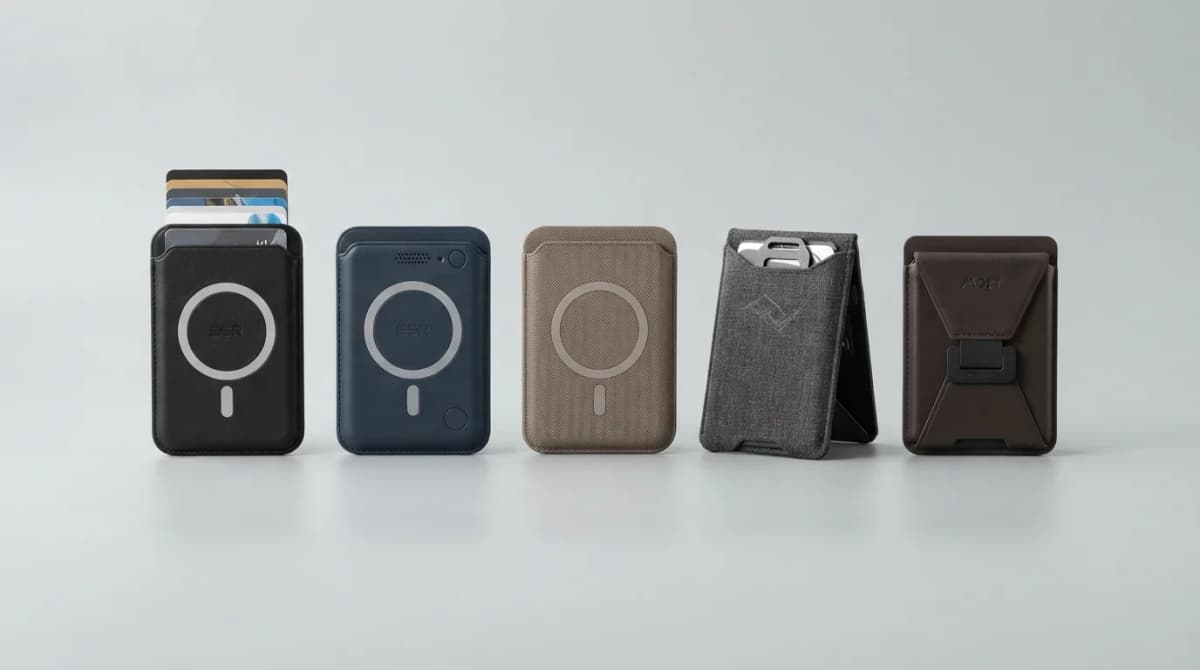
Best MagSafe Wallets 2026: Slim Picks That Stay Put
The best MagSafe wallets for 2026: ESR Classic 5-card, ESR Geo with Find My, Apple FineWoven, Peak Design Mobile Wallet Stand and MOFT Snap-on. Prices at publish, Oct 2026.
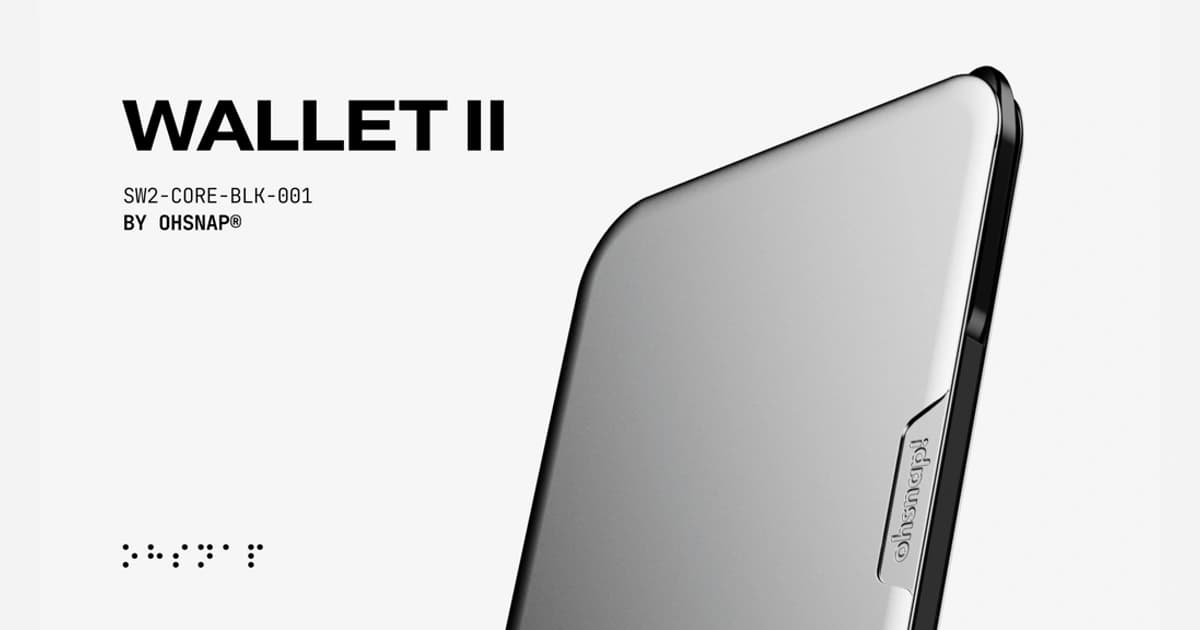
Ohsnap Wallet 2 Kickstarter: MagSafe Pop-Up Wallet
MagSafe wallets are usually a thin sleeve or a pricey titanium tool slab. Ohsnap Wallet 2 is the wallet + SnapGrip / MagStack lane on Kickstarter - pop-up card cores, modular covers, campaign clock ending Sep 26, 2026. Who picks MagStack, who skips crowdfunding risk.
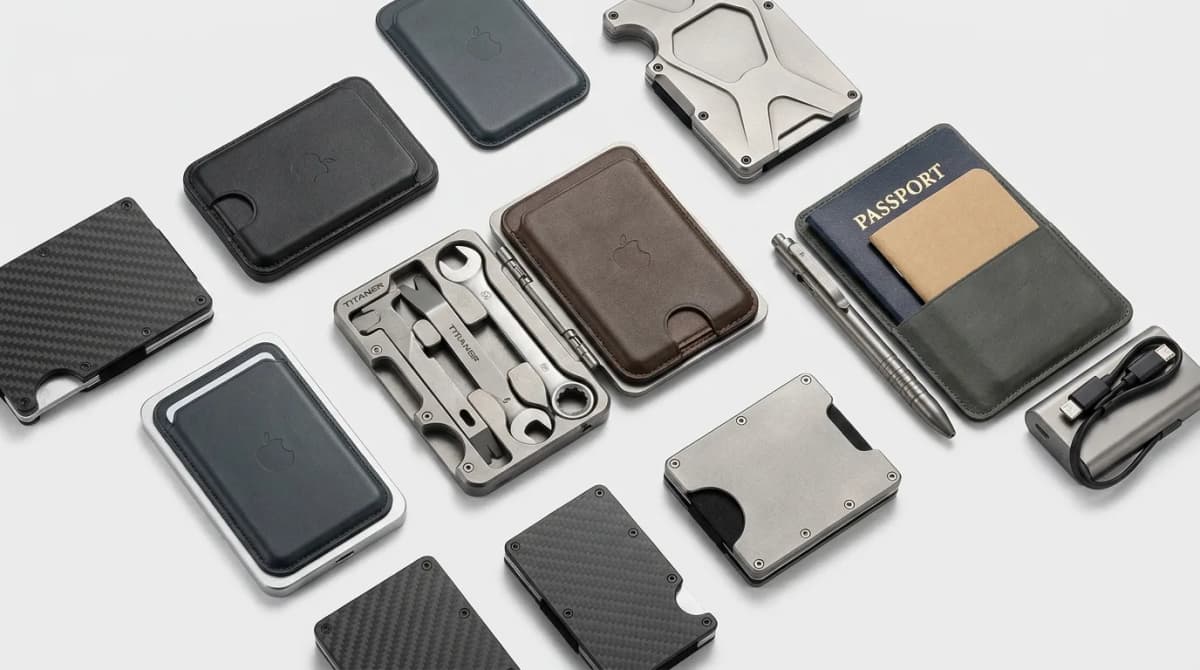
Titaner Verso and the MagSafe Tool-Wallet Trend
MagSafe wallets got expensive fast. Titaner Verso closed at $248-$298 as a Grade 5 Ti tool-wallet - who should buy, plus a travel EDC stack.
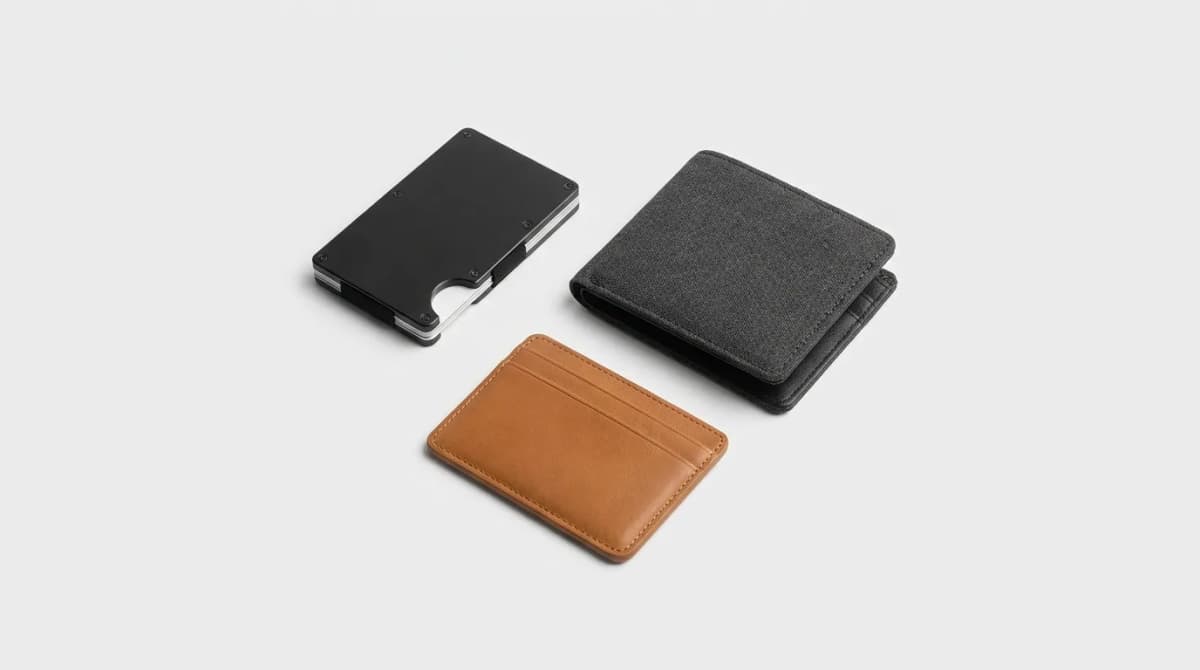
Best RFID Blocking Wallet That Actually Works
RFID blocking wallets promise security, but many are overbuilt gimmicks. Here are the ones that balance real protection with everyday usability.