Best Minimal Wallets for People Who Carry Cash
Cash carriers need different wallet designs than card-only users. We break down the best minimal wallets that actually hold bills without bulk or compromise.
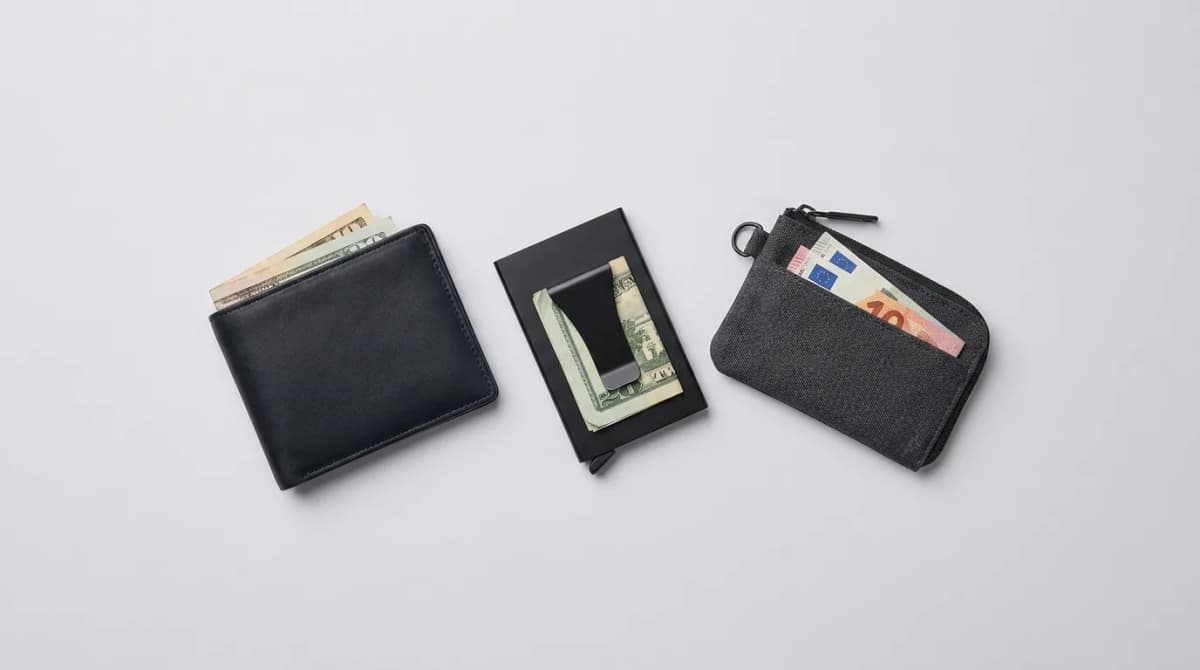
Most minimal wallet advice assumes you've gone cashless. But if you regularly carry bills, whether for tips, small businesses that don't take cards, or simply preference, you need a different approach. A card-focused minimalist wallet will mangle your cash or force awkward folds that leave bills sticking out.
Quick Picks
Our top recommendations at a glance:
- 1
- 2
- 3
- 4
- 5
The challenge is finding something that holds bills flat or securely clipped without adding the bulk of a traditional bifold. The wallets that work best share a few key traits: they either fold bills once cleanly, grip them with a dedicated clip mechanism, or create a separate cash pocket that doesn't interfere with card access.
Why Standard Minimal Wallets Fail Cash Carriers
Elastic band wallets like the Ridge or Ekster force you to fold cash twice and jam it under the strap. This works for emergencies, but daily use leaves bills wrinkled and the elastic stretched. The bills also block card access, so you're constantly moving cash around.
Card sleeves without any cash solution are worse. Tucking bills between cards creates a messy stack, and pulling out a card often drags bills with it. You end up choosing between carrying a proper cash wallet or accepting that cash handling will be clumsy.
What cash carriers actually need is either a single-fold design that keeps bills accessible, or a clip system that secures cash separately from cards. Both exist in minimal formats, but they require different tradeoffs.
Best Money Clip Wallets
Money clips get dismissed as old-fashioned, but modern versions combine clip functionality with card storage in surprisingly slim packages. The clip keeps bills secure and accessible without folding, and because cash sits on the outside, you never have to dig through cards.
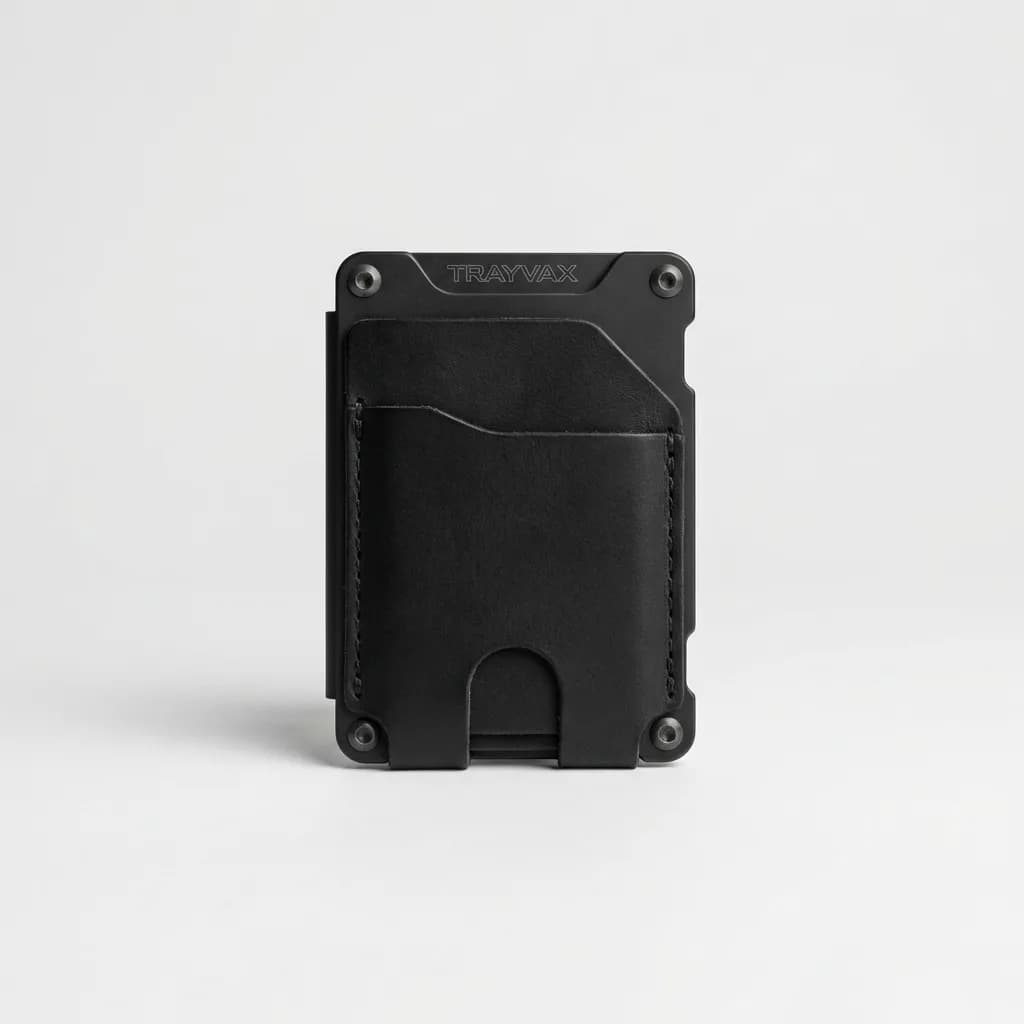
Trayvax Contour
$45
Stainless steel frame with integrated spring clip holds 5-7 cards plus cash. The clip tension is adjustable and the frame doubles as a bottle opener. 3.4 x 2.2 x 0.3 inches.
The Trayvax Contour solves the biggest money clip problem: clip tension. Too loose and bills slide out, too tight and you can't add or remove cash smoothly. Trayvax uses a curved spring steel design that grips firmly but releases easily. The clip sits on top of the card frame, so bills stay flat and visible.
The metal construction adds weight (1.8 ounces versus under an ounce for leather options), but it's virtually indestructible. We've carried this daily for six months with zero loosening of the clip tension. The frame edges are smooth enough for front pocket carry, though back pocket users should note it's rigid and won't conform to your body.
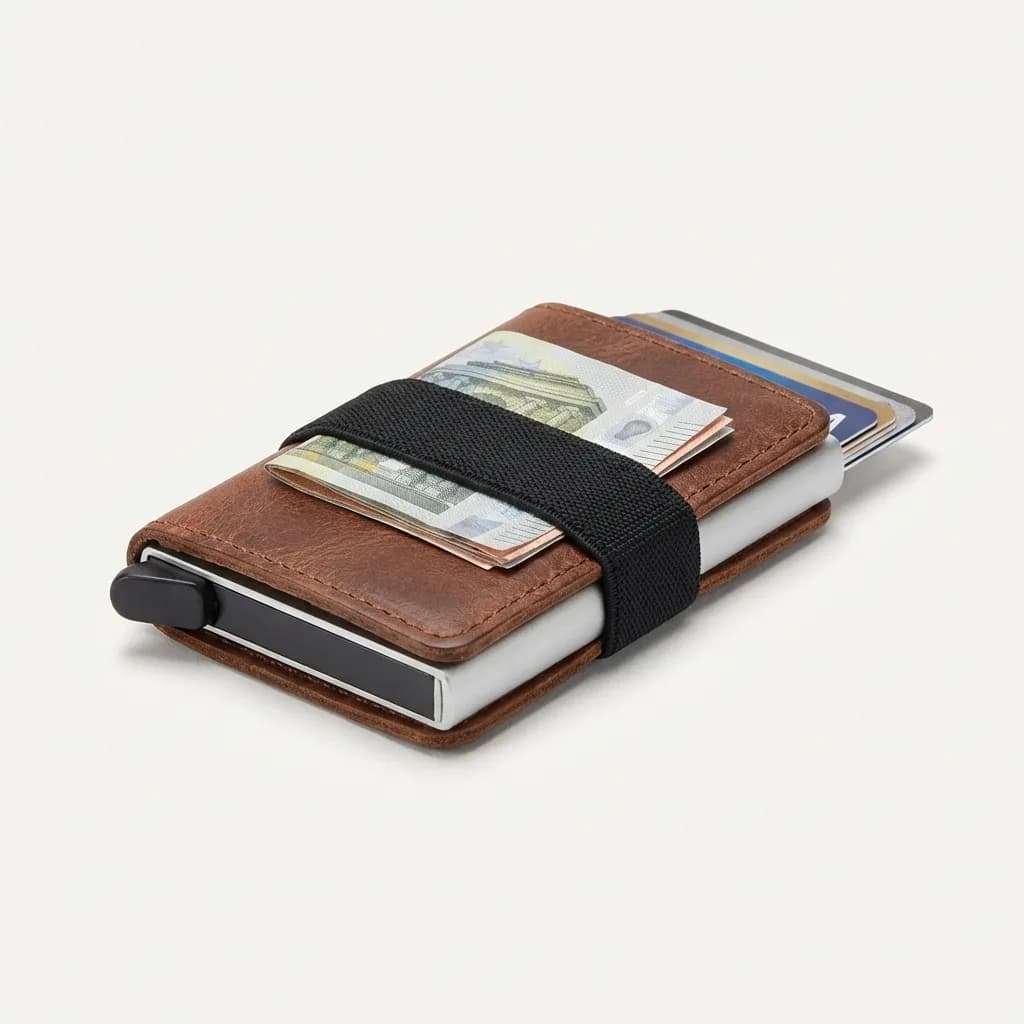
Secrid Slimwallet with Moneyband
$79
RFID-blocking aluminum card case with elastic band for bills. Holds 4-6 embossed cards, quick-eject button, leather exterior. Available in 20+ colors. 2.5 x 3.9 x 0.6 inches.
If you want RFID protection with cash capacity, Secrid's Moneyband version adds an elastic strap to their signature card case. The strap wraps around the outside and holds folded bills securely. It's not a true clip, but the elastic is reinforced and significantly more durable than generic band wallets.
The trade-off is bulk. At 0.6 inches thick, this is thicker than pure money clips. But you gain the card ejection mechanism, which is genuinely useful when you're holding bills in one hand and need a card quickly. The leather exterior also ages better than exposed metal if you care about patina.
Single-Fold Leather Wallets for Cash
If clips feel too exposed or you prefer leather, single-fold designs offer the best minimal approach for cash. These fold bills once lengthwise, which keeps them protected but still allows quick access. The key is finding one with a dedicated bill pocket, not just space between card slots.
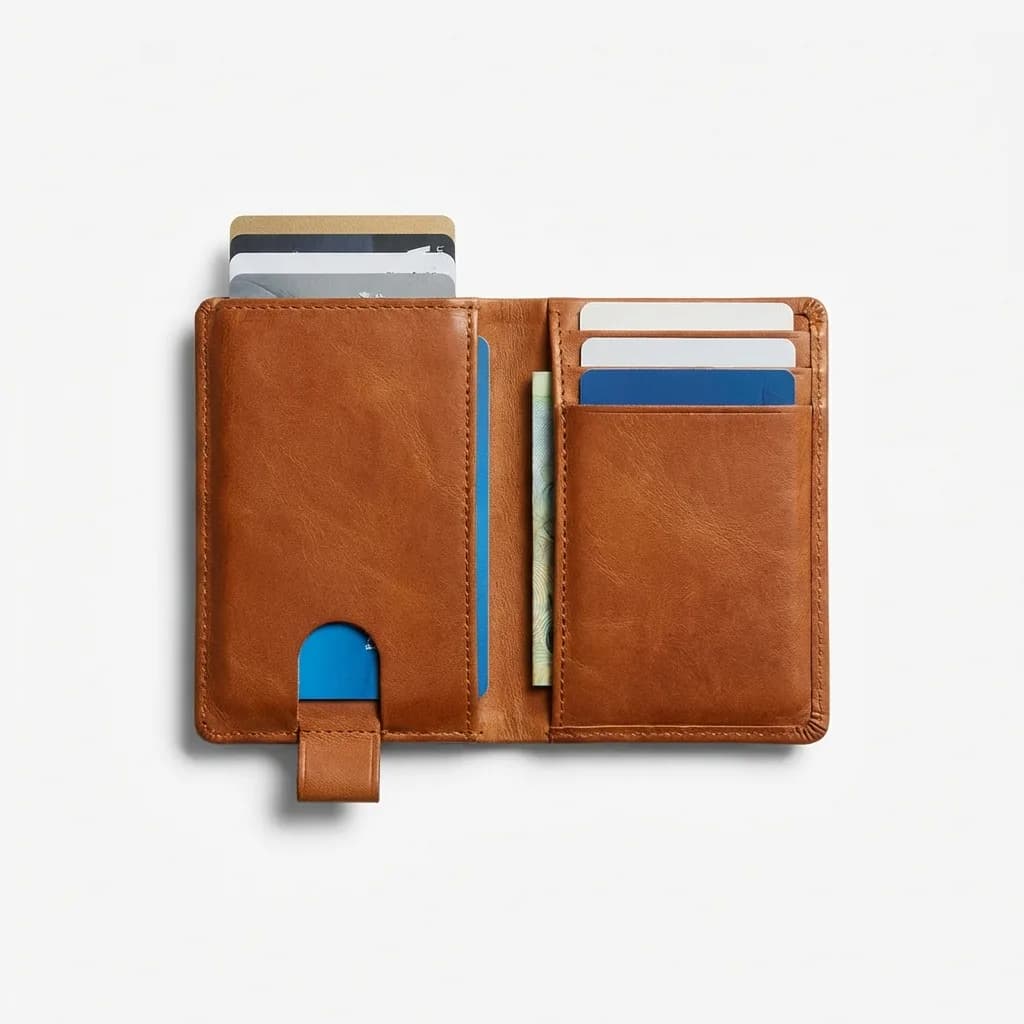
Bellroy Slim Sleeve
$89
Premium leather wallet with pull-tab card access and full-length cash pocket. Holds 4-11 cards, environmentally certified leather, backed by 3-year warranty. 3.5 x 2.5 x 0.3 inches.
The Bellroy Slim Sleeve is the standard recommendation here, and for good reason. The bill pocket runs the full length of the wallet, so you can slide bills in and out without removing cards. The pull-tab lets you access stacked cards without stretching the pocket opening. Torn between Bellroy and a metal clamp? Our Bellroy vs Ridge wallet comparison puts the two styles side by side.
What makes this work for cash carriers is the pocket design. It's slightly wider than the card section, so bills sit flat instead of bowing outward. With four cards and five bills, the wallet stays under 0.4 inches thick. Add more cards and it expands to about 0.5 inches, which is still front-pocket friendly. If RFID shielding matters to you, see our picks for the best RFID blocking wallets.
The leather softens significantly after a month of carry, which some people love and others find too floppy. If you want structure, consider the Note Sleeve version, which uses stiffer leather and includes a wider cash pocket that fits receipts.
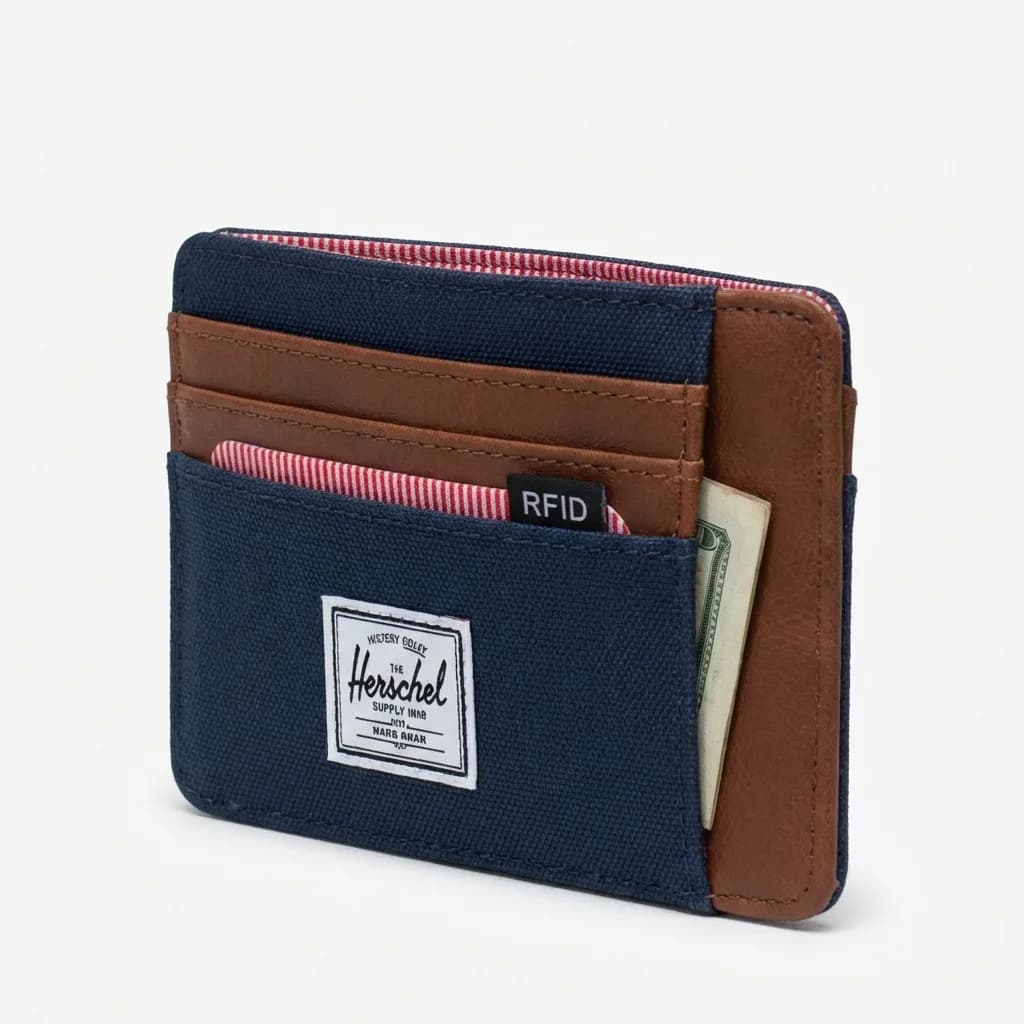
Herschel Charlie Cardholder
$20
RFID-blocking cardholder with cash pocket, Made from durable woven fabric. Holds 4-6 cards, slim profile, available in multiple patterns. 4 x 2.75 x 0.25 inches.
For a budget option that still handles cash properly, the Herschel Charlie includes a center pocket sized for folded bills. The fabric construction means it weighs almost nothing (0.6 ounces) and won't scratch phone screens if you carry both in the same pocket.
The cash pocket is narrower than Bellroy's, so bills need to be folded precisely. But at one-quarter the price, it's worth the minor inconvenience if you're testing whether you actually prefer carrying cash in a minimal wallet. The RFID blocking is a bonus that most money clips don't offer.
Bifold Wallets That Actually Stay Slim
Traditional bifolds get bulky because they stack cards vertically and include unnecessary pockets. But a few designs use horizontal card slots and skip the extra compartments, resulting in bifolds that fold completely flat with cash and cards.
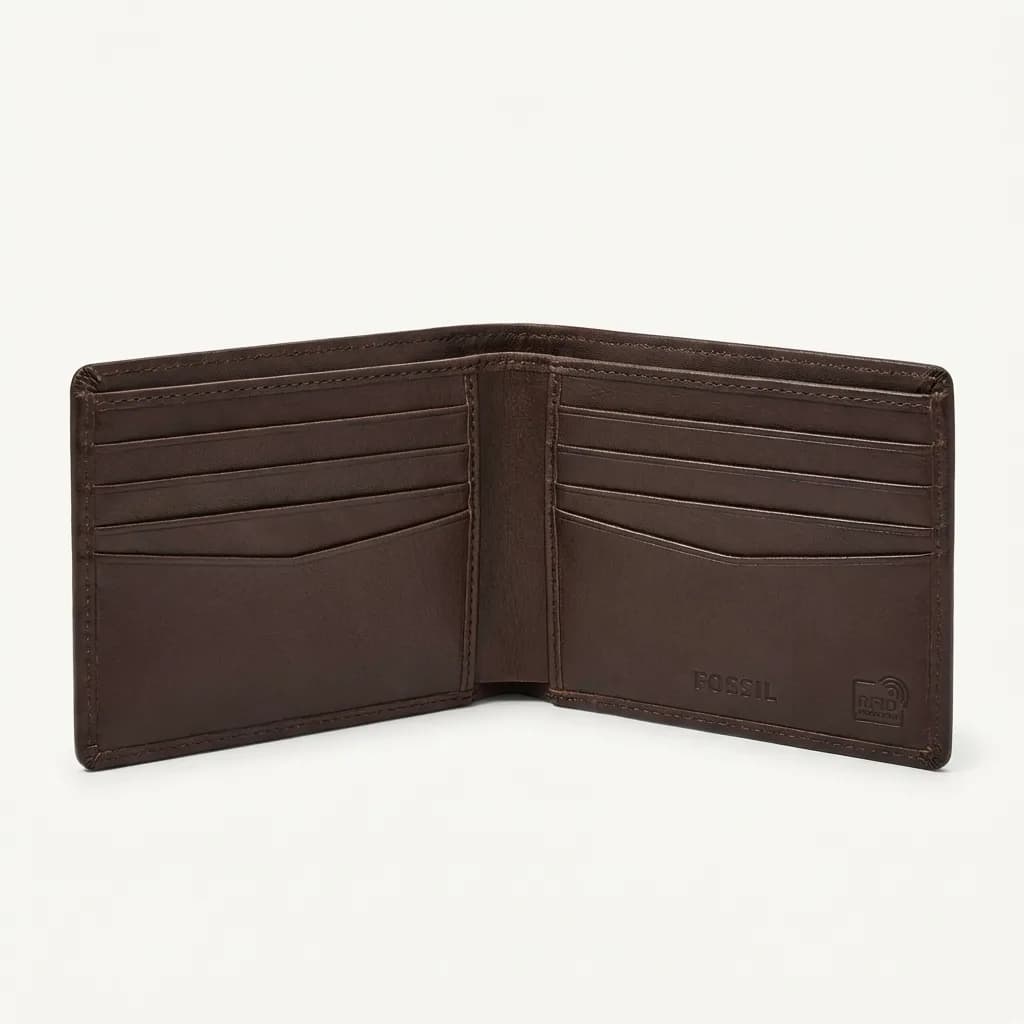
Fossil Derrick Bifold
$35
Leather bifold with 6 card slots, full-length bill compartment, and RFID blocking. Slim profile design with contrast stitching. 4.5 x 3.5 x 0.5 inches.
The Fossil Derrick line proves bifolds can be minimal if designed correctly. It uses thin leather and limits cards to six slots, arranged in two columns of three. This horizontal layout means fully loaded thickness is just 0.6 inches, compared to 1+ inches for standard bifolds.
The bill compartment is full-width with no divider, so cash lays completely flat. The fold line is reinforced to prevent premature creasing, which is where budget bifolds usually fail. After three months, ours shows no signs of the spine weakening.
The main downside is access speed. Bifolds require two hands to open, so if you frequently pull out cash for tips or small purchases, a clip or sleeve will be faster. But if you open your wallet a few times per day and value protection over speed, this strikes a good balance.
How Cash Fold Method Affects Wallet Choice
How you fold bills matters more than most wallet reviews acknowledge. If you fold once lengthwise (hotdog style), you need a wallet at least 3 inches wide. Fold twice and you can use smaller wallets, but bills get creased heavily.
Single-fold lengthwise works best with money clips and sleeve wallets. Bills stay readable and ATMs accept them without issues. The wallet needs to be nearly full US bill width (6.14 inches), so fold-once wallets are typically 3.1-3.5 inches wide.
Double-fold crosswise (fold in half, then half again) creates a square that fits card-sized wallets but damages bills faster. Folding and unfolding the same bills daily concentrates stress on two crease lines, so within a couple of weeks bills can show visible wear along the folds and even small tears. If you rarely use cash this is fine, but daily cash carriers should avoid double-folding.
Some international bills are smaller than US currency, which gives you more wallet options. Euro notes are slightly narrower, and many Asian currencies are smaller still. If you primarily carry non-US cash, you can use more compact wallets without multiple folds.
Material Considerations for Cash Carry
Leather grips bills better than metal or synthetic materials, which matters when you're pulling out a single bill. Metal clips provide more security against accidental drops, but bills can slide if the clip tension loosens over time.
Full-grain leather also protects bills from moisture better than elastic or fabric wallets. In hot, humid conditions, leather tends to keep bills crisp, while fabric options can absorb dampness and elastic wallets can pick up a mildew smell.
The trade-off is break-in time. Leather needs 2-3 weeks to soften and form to your pocket curve. Metal and synthetic wallets work optimally immediately. If you switch wallets frequently or want consistency, non-leather options are more predictable.
What About Rubber Band Wallets?
Rubber bands are the ultimate minimal cash solution, just not a product you buy. Fold bills, wrap with a wide rubber band, add cards. Total cost: zero. Total thickness: under 0.2 inches.
The problem is durability and presentation. Rubber bands break, usually at the worst time. They also look unprofessional if you're in client-facing work. But for camping, travel, or situations where losing an expensive wallet would be stressful, the rubber band method works.
If you like this approach but want something more permanent, check out the Jaimie Jacobs Nano Boy, which is essentially a reinforced fabric band with card pockets. It's not quite as slim as a rubber band but won't snap.
Jaimie Jacobs Nano Boy
$29
Ultra-minimal wallet with single elastic strap and one card slot. Holds 1-10 cards plus folded cash. Made from nylon and elastic, weighs 0.3 ounces. 2.5 x 3.5 inches.
How We Compared Them
Each wallet was compared against realistic loads: four cards (two credit, one debit, one ID) plus 5-10 bills in mixed denominations. The picks were weighed for front and back pocket carry, sitting, driving, and active use (hiking, biking, running errands).
Key evaluation criteria: how quickly can you extract a single bill without pulling cards, does cash affect card access, does the wallet maintain shape with varying cash amounts, and how do materials hold up to sweat and weather.
The Trayvax Contour and Bellroy Slim Sleeve performed best overall, but for different use cases. Trayvax wins for durability and cash access speed, Bellroy wins for capacity and professional appearance. If you carry 10+ bills daily, get the Bellroy. If you carry 1-5 bills but need them instantly accessible, get the Trayvax.
Making the Switch from Traditional Wallets
If you're moving from a full-size wallet to a minimal option, the biggest adjustment is capacity. Most minimal wallets max out at 8-10 cards, and cramming them full defeats the purpose. Before buying, actually count how many cards you carry daily (not occasionally), then pick a wallet sized for that number plus two.
For cash, start by tracking how much you actually carry. If you typically have less than $100 in mixed bills, any of these wallets work. If you regularly carry $200+, you need either a money clip with strong tension or a bifold with a divided bill compartment.
The transition period lasts about a week. You'll reach for cards that aren't there, or forget you have cash because it's more accessible than before. After that adjustment, most people find minimal wallets faster to use than traditional ones, especially for cash.
When Minimal Wallets Don't Work for Cash
If you carry more than 20 bills regularly, need to separate denominations, or keep receipts with cash, traditional bifolds or trifolds are more practical. Minimal wallets optimize for quick access and slim profiles, which means sacrificing organization systems.
Service industry workers who carry significant tip money might also prefer a separate cash band or dedicated tip wallet rather than mixing cash with personal cards. The Trayvax money clip can work here, but something like the Capsule wallet (which is basically just a cash sleeve) makes more sense.
International travel is another edge case. If you're carrying multiple currencies, you need separation that minimal wallets don't provide. Either carry a travel-specific wallet or use the minimal wallet for primary currency and a separate holder for secondary currency.
The Weekly Dispatch
Enjoying this article?
Subscribe and get our best gear picks delivered every Sunday morning.
Related Posts
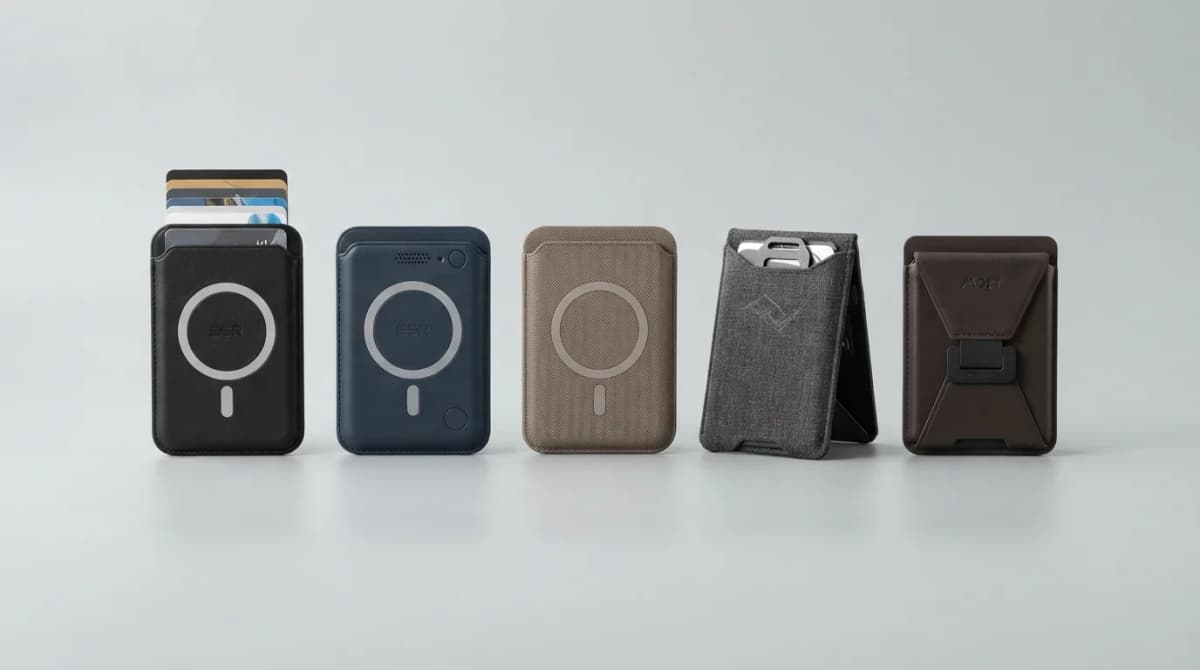
Best MagSafe Wallets 2026: Slim Picks That Stay Put
The best MagSafe wallets for 2026: ESR Classic 5-card, ESR Geo with Find My, Apple FineWoven, Peak Design Mobile Wallet Stand and MOFT Snap-on. Prices at publish, Oct 2026.
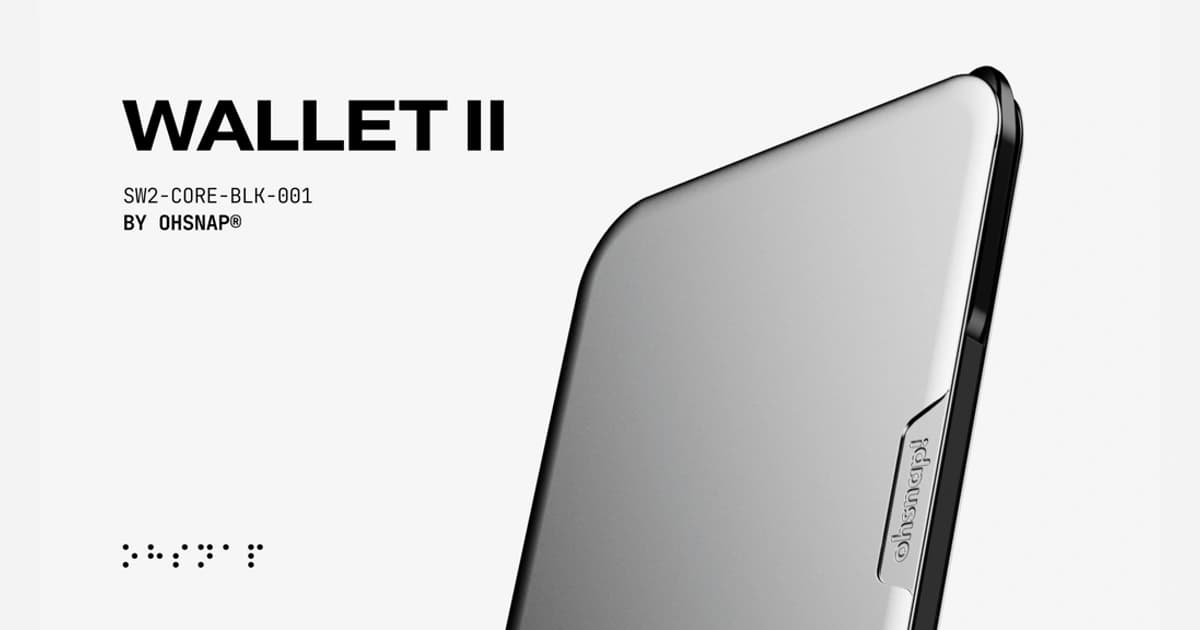
Ohsnap Wallet 2 Kickstarter: MagSafe Pop-Up Wallet
MagSafe wallets are usually a thin sleeve or a pricey titanium tool slab. Ohsnap Wallet 2 is the wallet + SnapGrip / MagStack lane on Kickstarter - pop-up card cores, modular covers, campaign clock ending Sep 26, 2026. Who picks MagStack, who skips crowdfunding risk.
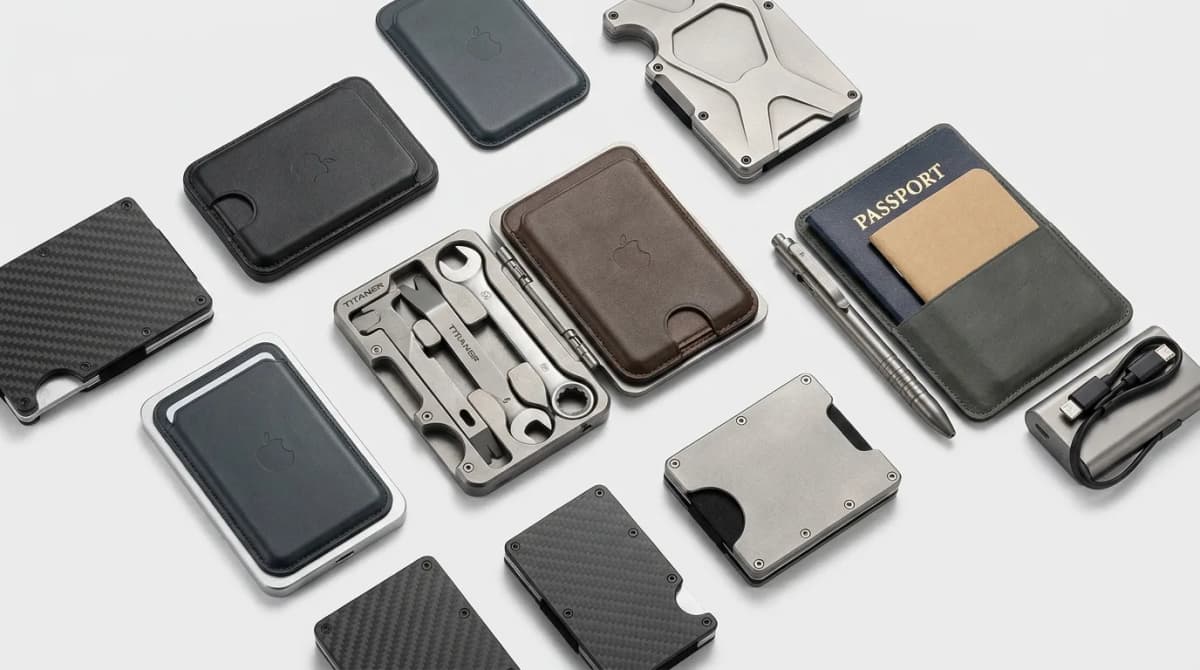
Titaner Verso and the MagSafe Tool-Wallet Trend
MagSafe wallets got expensive fast. Titaner Verso closed at $248-$298 as a Grade 5 Ti tool-wallet - who should buy, plus a travel EDC stack.

Smart Wallets Review: Wallets With Trackers
Smart wallets combine Bluetooth tracking, RFID protection, and app connectivity to prevent loss. We compare battery life, features, and the best models worth buying.