Best Travel Neck Pillow for Long Flights 2026
The right neck pillow turns red-eyes into restful sleep. We compared designs by maker specs and features for head support without the bulk.
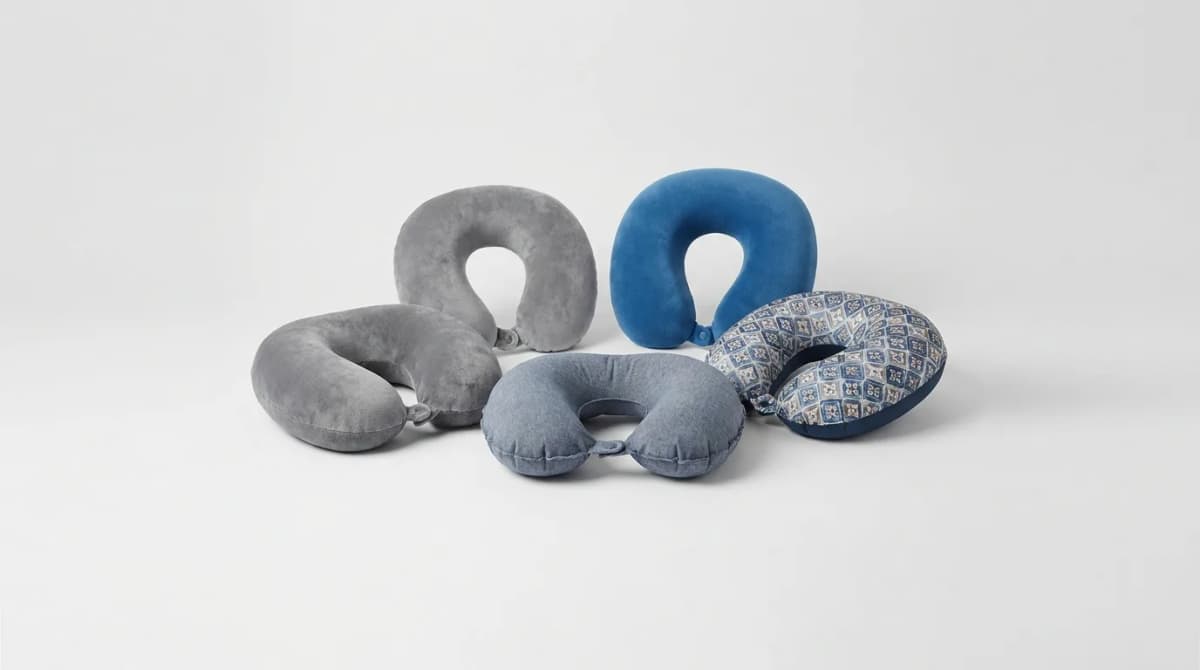
Most travel neck pillows do one thing well: take up space in your carry-on. The classic U-shape pushes your head forward, cuts off circulation, or just flops around uselessly. We compared 20+ options to find the handful that actually work on long-haul flights.
Quick Picks
Our top recommendations at a glance:
- 1
- 2
- 3
- 4
- 5
The problem with traditional neck pillows is simple geometry. A symmetrical U puts equal pressure on both sides of your neck, which sounds balanced until you realize your head naturally tilts to one side when you sleep. The best pillows account for this, either through asymmetric support or entirely different design approaches.
What Makes a Travel Neck Pillow Actually Work
Support matters more than softness. A pillow that compresses completely under your head's weight offers nothing. You need something that holds its shape while still contouring to your neck. Memory foam does this well, but only if it's dense enough. Cheap memory foam bottoms out in minutes.
Size is the eternal compromise. A full-size pillow provides better support but eats luggage space. Inflatable options pack down small but often feel like balloons. The sweet spot is a design that compresses without losing structural integrity, usually achieved through specific foam formulations or clever shapes.
Washability is non-negotiable for frequent travelers. Neck pillows touch your skin for hours in recycled airplane air. Removable, machine-washable covers should be standard, but plenty of budget options skip this. Look for pillows with covers that zip off completely, not those sewn-on sleeves that barely budge.
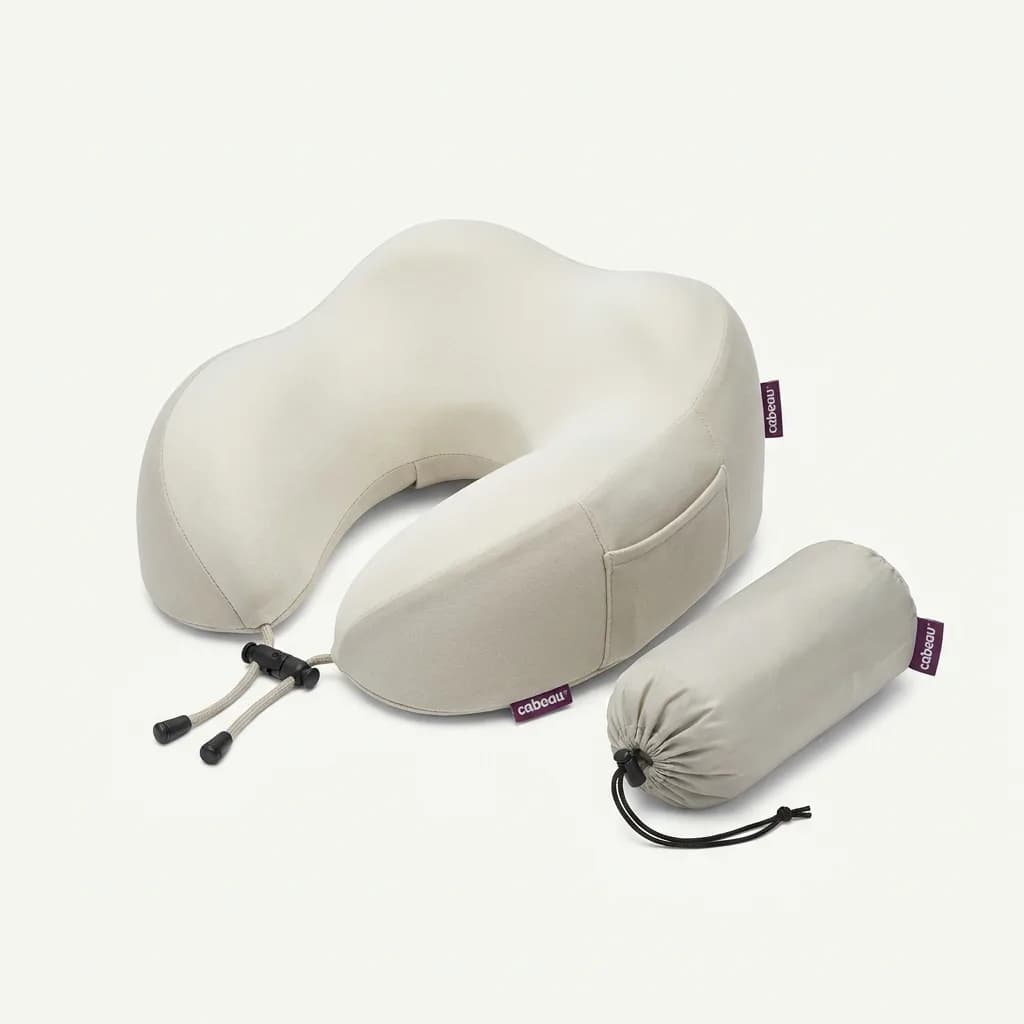
Cabeau Evolution S3 Travel Pillow
$45
Contoured memory foam with raised side supports and adjustable toggles. Machine-washable cover, built-in phone pocket. Compresses to half size with included bag.
Memory Foam vs. Inflatable: The Real Tradeoff
Memory foam pillows deliver superior comfort and consistent support. They mold to your neck without requiring constant adjustment. The downside is bulk. Even compressed, they take up the space of a small sweater in your bag. For travelers who prioritize sleep quality over packing efficiency, this is the right choice.
Inflatable pillows pack down to almost nothing, making them ideal for minimalist packers or those cramming everything into a personal item. The catch is comfort. No matter how many air chambers or ergonomic contours manufacturers add, you're still resting your head on what is fundamentally a balloon. They also deflate slowly on long flights, requiring mid-flight reinflation.
Hybrid designs try to split the difference, using thin foam with air chambers or inflatable cores wrapped in fabric. These rarely satisfy either camp. The foam is too thin to provide real support, and the inflation mechanism adds weight without the packing benefits of pure inflatable designs.
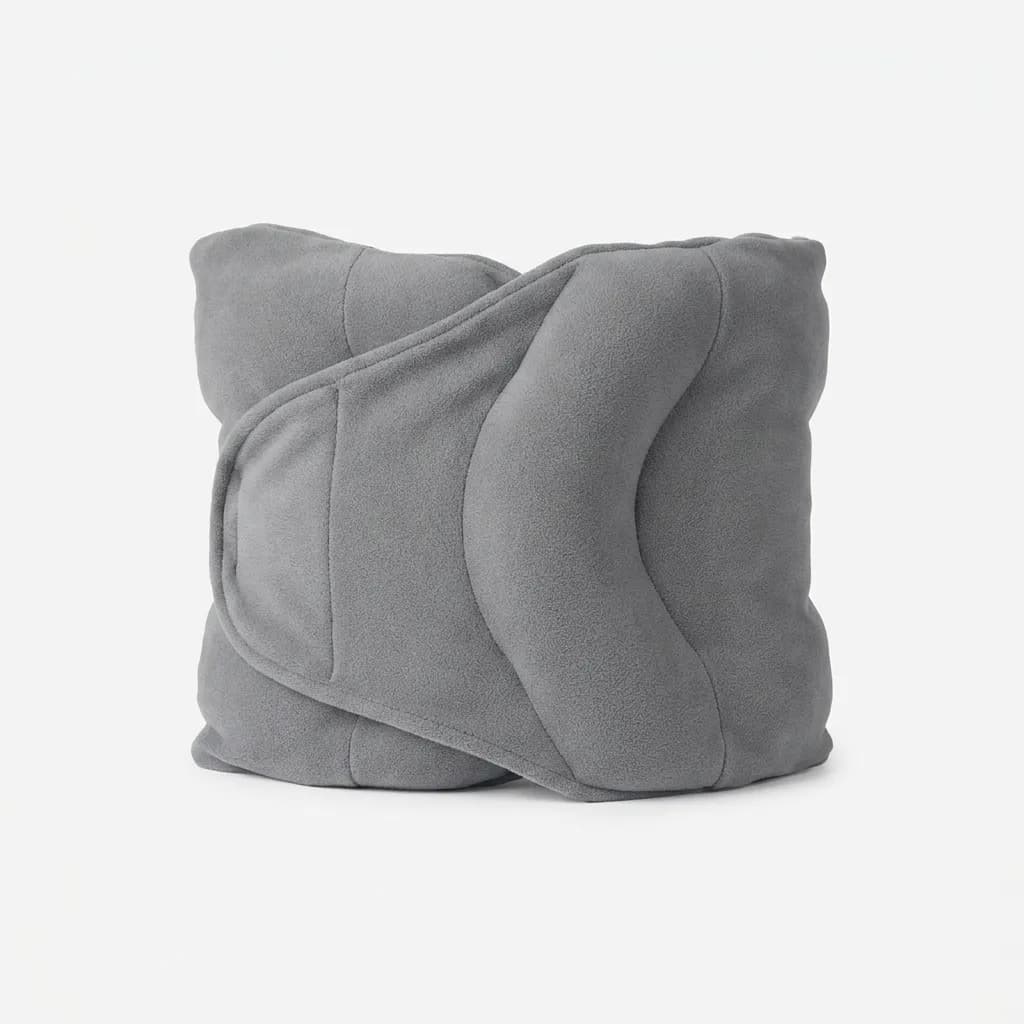
Trtl Pillow Plus
$60
Wrap-style pillow with internal support ribs. Lightweight fleece, scientifically proven neck support. Packs flat, machine washable.
Why the Trtl Design Actually Works
The Trtl pillow looks weird, functions brilliantly. Instead of circling your neck, it wraps like a scarf with an internal ribbed support structure that holds your head at an optimal angle. This asymmetric approach matches how people actually sleep sitting up, with your head tilted to one side.
The support comes from hidden plastic ribs sewn into soft fleece. You position the support on whichever side you plan to lean, wrap the rest around, and secure it with velcro. Your head rests against firm, angled support instead of sinking into foam. It takes one flight to get used to, then you'll never want a traditional U-shape again.
Packing is where Trtl shines. The whole thing folds flat, no thicker than a folded sweater. No compression sacks needed. The fleece material is machine washable, and there's no foam to degrade over time. For frequent flyers, this durability matters. Traditional foam pillows lose support after 20-30 flights.
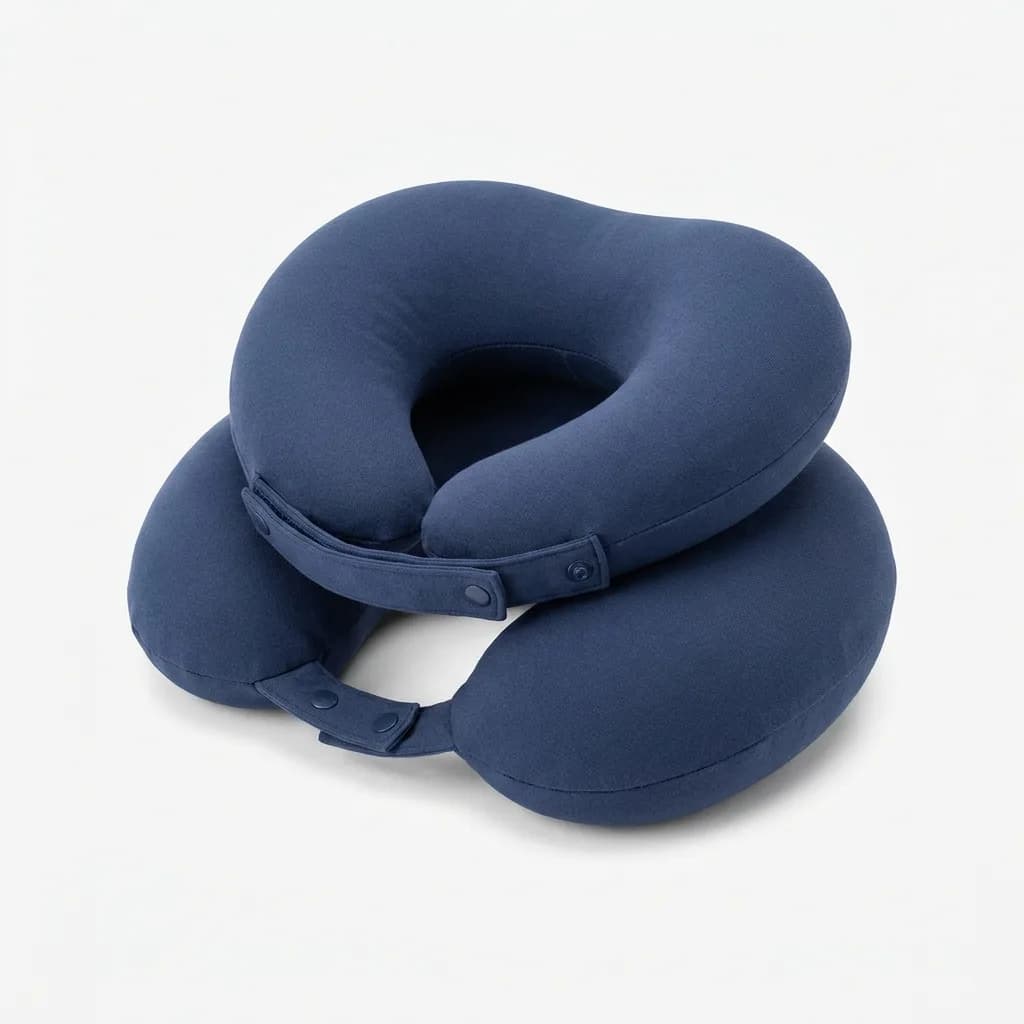
Bcozzy Chin Supporting Travel Pillow
$30
Adjustable double-support design prevents head drop. Snaps into multiple configurations. Washable cover, compact storage.
The Chin Drop Problem and Solutions
Standard U-pillows fail catastrophically if you fall into deep sleep. Your head drops forward, jerking you awake with neck strain. Chin-supporting designs address this by extending support under your chin, physically preventing forward drop.
The Bcozzy uses a bendable, adjustable design that snaps into different positions. You can configure it as a traditional U, a chin cradle, or something in between. The versatility is useful, but the tradeoff is complexity. More moving parts means more bulk and more things to adjust mid-flight.
A simpler solution is a pillow with a raised front section. These look like standard U-shapes but have an extended middle portion that naturally props your chin. Less adjustability, but also less fumbling in a dark cabin trying to find the right snap position.
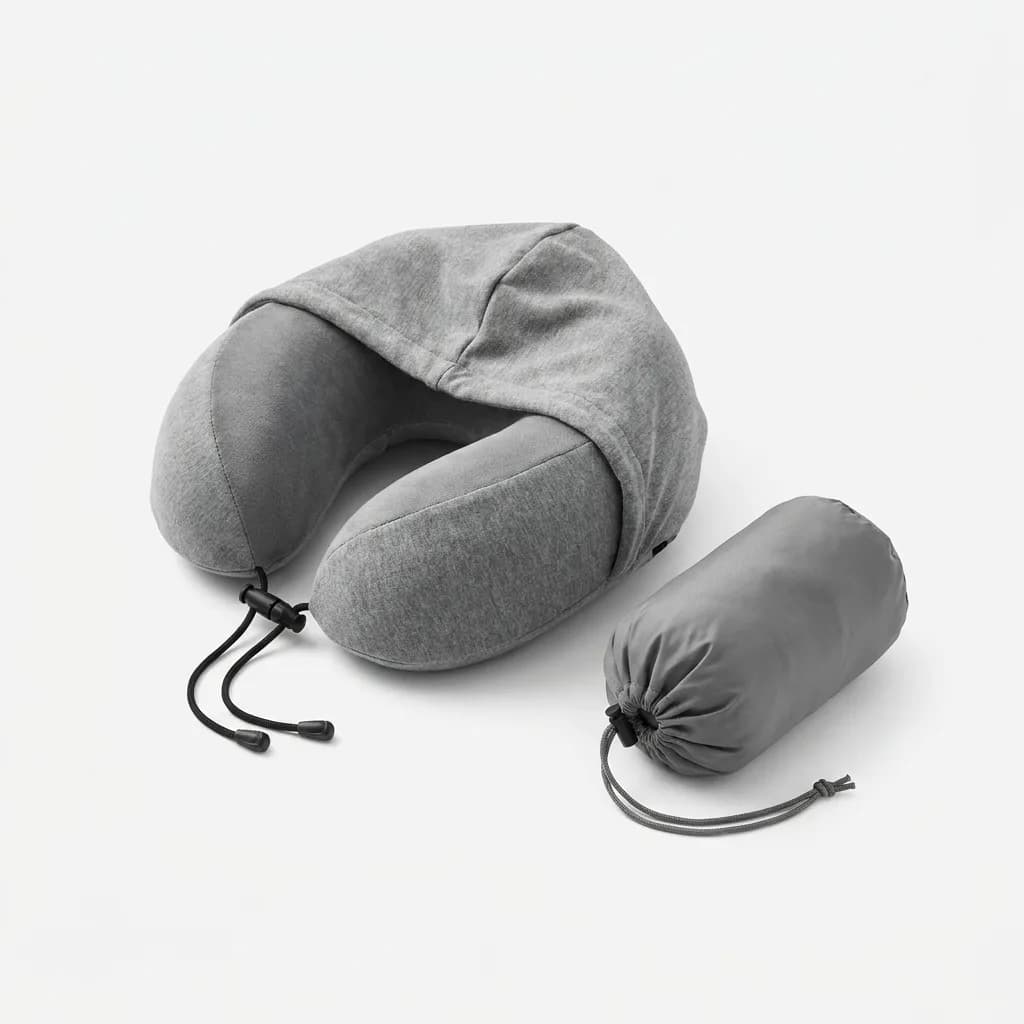
Nod Travel Pillow
$50
Hooded memory foam pillow with adjustable drawstring. Blocks light and peripheral vision while supporting head. Compact compression bag included.
Do Hooded Pillows Justify the Bulk?
Hooded pillows combine neck support with light-blocking fabric that extends over your face. They're basically wearable caves. For light-sensitive sleepers or anyone stuck in a window seat on a sunrise flight, the added darkness makes a measurable difference.
The best hooded designs use adjustable drawstrings so you control how much coverage you want. Full coverage blocks all light but can feel claustrophobic. Partial coverage shields your eyes while leaving your nose and mouth clear. The Nod pillow does this well, with memory foam support and a breathable hood that doesn't trap heat.
The bulk question is real. Hooded pillows don't compress much because the hood material needs structure to stay off your face. You're committing serious luggage space. Only worth it if light exposure genuinely prevents you from sleeping. If you can sleep with an eye mask, save the space.
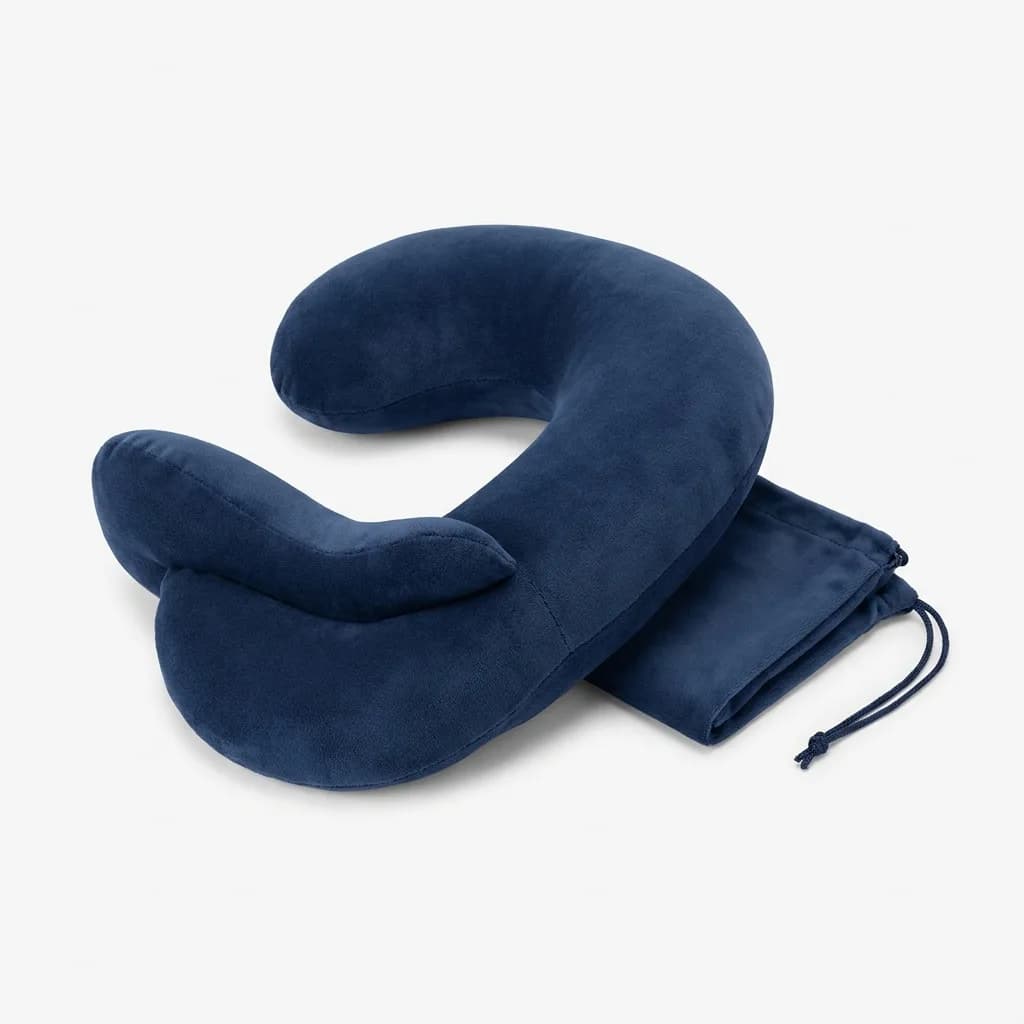
J-pillow Travel Pillow
$35
J-shaped design with chin support and side wing. British invention, holds head at optimal angle. Machine washable, includes carry bag.
Weird Shapes That Actually Make Sense
The J-pillow won British invention awards for good reason. The shape mirrors how your head naturally rests when tilted sideways, with a long side for your head, a chin rest, and a short end that tucks against your shoulder. It looks ridiculous, works exceptionally well.
Positioning takes practice. The J sits asymmetrically, with the chin portion preventing forward drop and the long side cradling your tilted head. Once positioned correctly, it provides more contact points than a U-shape, distributing pressure across a larger surface area. Less pressure means less waking up with a stiff neck.
The awkward shape makes storage tricky. It doesn't compress well and doesn't fit in standard compression sacks. Plan to strap it to the outside of your bag or resign yourself to it occupying bag interior space. The comfort payoff is worth it for flights over six hours.
What About Inflatable Options for Minimalists?
If packing space is your primary concern, inflatable pillows are your only real option. Modern versions have improved significantly over the balloon-on-a-stick designs from a decade ago. Look for models with ergonomic contours and multiple air chambers that prevent total deflation if one section fails.
The Travelrest Nest pillow uses a unique inflatable design that supports your head from the side rather than wrapping around your neck. You lean against it like a miniature pillow against the window. Packs down to fist-size, inflates in 30 seconds. The side-support approach works well for window seat flyers but leaves you without support if you're in an aisle or middle seat.
Valve quality matters more with inflatables than any other feature. Cheap valves leak air slowly or require multiple breaths to inflate. Quality valves inflate with a few strong breaths and hold pressure for 10+ hours. The extra cost for a reliable valve system pays off the first time you don't wake up face-down on your tray table.
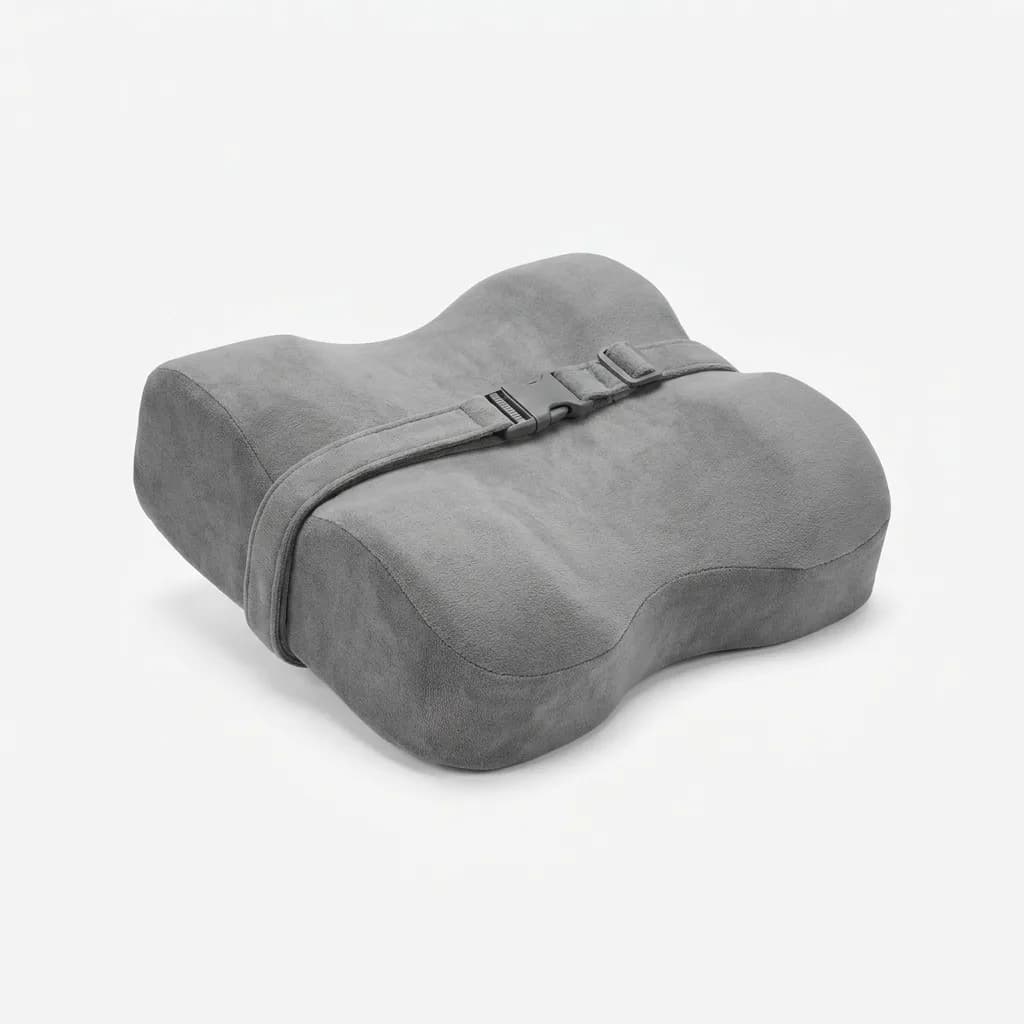
Travelrest Nest Ultimate Memory Foam Pillow
$40
Side-lean memory foam design for window seats. Attaches to tray table or window. Compresses to half size with strap.
How to Actually Sleep with a Neck Pillow
Most people position neck pillows wrong. The U-shape shouldn't sit symmetrically with the opening at the front. Rotate it 45 degrees so one side supports your tilted head and the other braces against the seat. This asymmetric positioning matches your natural sleep posture.
Adjust before takeoff, not after the seatbelt sign turns off. You want everything dialed in while you're alert and can move freely. Trying to adjust a neck pillow while wedged between two sleeping passengers is miserable. Test the position, close your eyes for 30 seconds, adjust again if needed.
Combine your pillow with strategic clothing. A hoodie or scarf between your head and the window prevents cold spots. The pillow handles support, soft layers handle temperature. Together they create a microenvironment that's significantly more comfortable than either alone.
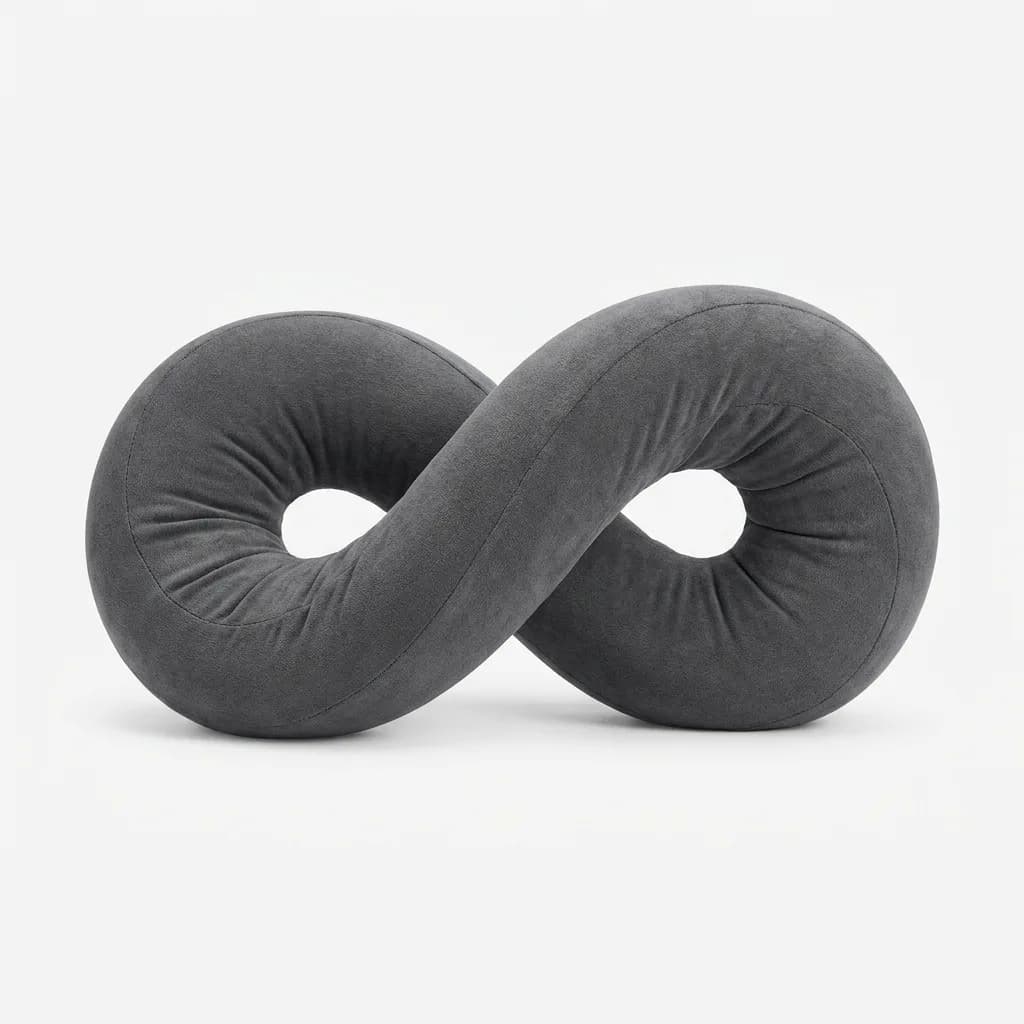
Huzi Infinity Pillow
$35
Convertible design works as neck pillow, lumbar support, or arm rest. Memory foam with washable cover. Twists into multiple configurations.
Do Multi-Use Pillows Work or Just Compromise?
Multi-function travel pillows that convert into lumbar support, arm rests, or leg pillows sound clever. In practice, they're usually mediocre at everything. The Huzi Infinity pillow is the rare exception, with a twist design that actually functions well in multiple configurations.
The infinity loop shape lets you twist it into a neck pillow, wrap it around your arm for side-sleeping against a window, or position it behind your lower back. The memory foam maintains support across all configurations. The catch is learning which twist goes where. First-time users will spend five minutes fumbling before finding the right position.
For travelers who also want office lumbar support or use their pillow for hotel beds, the versatility justifies the learning curve. For those who only need airplane neck support, a dedicated neck pillow will always outperform a jack-of-all-trades design.
The Pillows That Look Great But Fail in Practice
Avoid pillows with attached hoods that don't adjust. Fixed hoods either don't cover enough or trap heat and feel suffocating. No middle ground exists because everyone's head size and preference differs. Adjustable or separate is the only way hoods work.
Skip ultra-plush pillows that look like small bed pillows. Anything that soft compresses completely under your head's weight. You'll wake up with your head tilted at an awkward angle, the pillow squished into a useless wad beside you. Softness feels nice in the store, provides zero support at altitude.
Beaded or microbead-filled pillows shift and settle unevenly. They feel like bean bags wrapped around your neck. The beads migrate to the bottom within an hour, leaving you with fabric tubes and a pile of beads in your lap. Memory foam or structured support only.
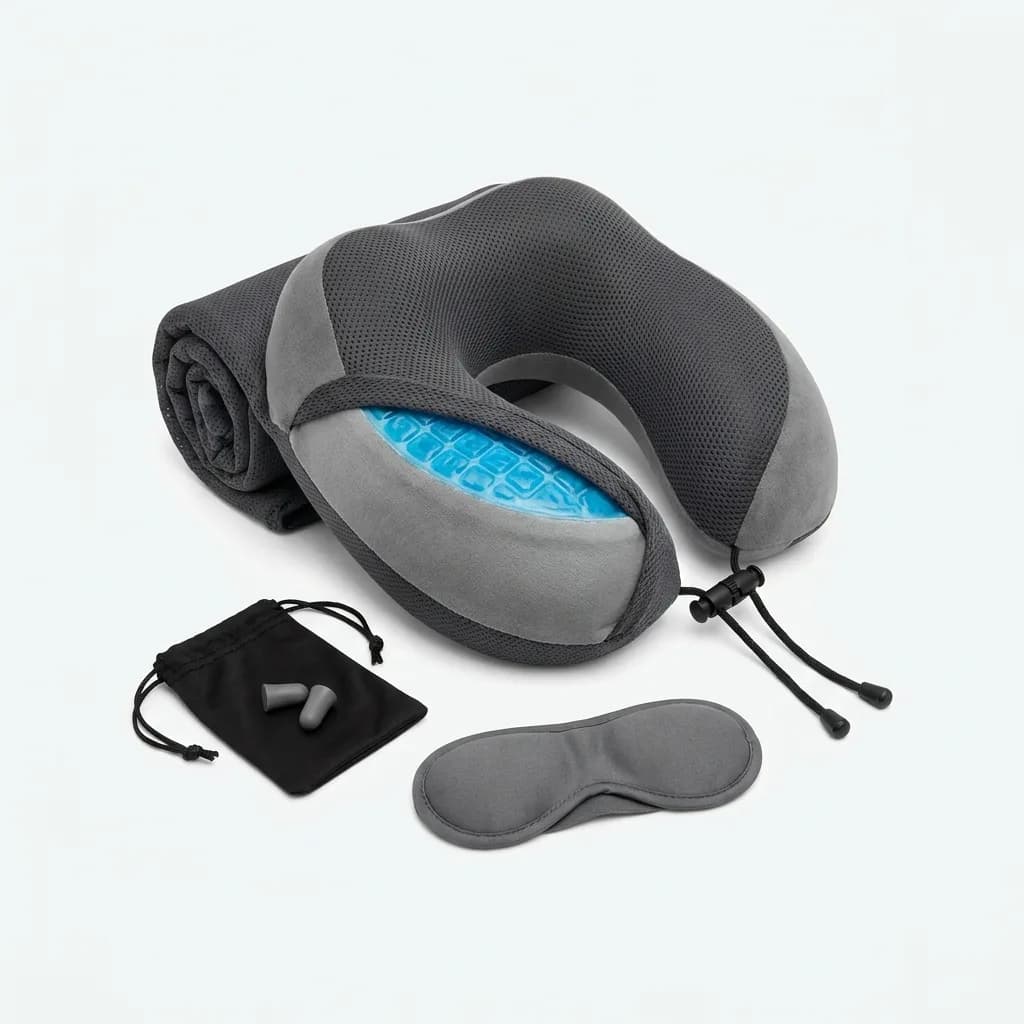
Cabeau Evolution Cool Travel Pillow
$50
Memory foam with cooling gel layer. Breathable mesh prevents overheating. Adjustable clasp, washable cover. Includes earplugs and eye mask.
Cooling Features: Gimmick or Game-Changer?
Temperature regulation matters more than most travelers realize. Standard memory foam traps heat against your neck, making you sweaty and uncomfortable on long flights. Cooling gel layers or breathable mesh covers address this without sacrificing support.
The Cabeau Evolution Cool uses both gel-infused memory foam and a mesh cover for airflow. The difference is noticeable on flights longer than four hours. You stay comfortable without constantly adjusting to find a cool spot. The gel doesn't stay cold, it just doesn't retain as much body heat as standard foam.
Cooling features add cost, usually $10-20 over standard versions. Worth it for tropical destinations or anyone who runs hot. Not essential for most travelers, but once you've used a cooling pillow on an eight-hour flight, going back to standard foam feels stuffy.
What Actually Matters When Choosing
Prioritize support density over softness. Press the pillow firmly with your palm. If it compresses more than halfway, it won't support your head adequately. You want resistance, not plushness.
Match the design to your typical seat position. Window seat flyers benefit from side-lean or asymmetric designs. Middle and aisle seat passengers need wraparound support that works without leaning against anything. One pillow can't optimize for both scenarios.
Consider your packing style realistically. If you're already checking a bag, a full-size memory foam pillow adds negligible hassle. If you're committed to carry-on only and packing light, accept the comfort tradeoff of inflatable or ultra-compact designs. Don't buy a bulky pillow planning to compress it if you've never successfully compressed anything before.
Buy from retailers with good return policies. Neck pillows are impossible to evaluate without using them on an actual flight. What feels supportive in a store might fail at 35,000 feet. Amazon, REI, and other retailers with flexible returns let you test on one flight and return if it doesn't work.
The Weekly Dispatch
Enjoying this article?
Subscribe and get our best gear picks delivered every Sunday morning.
Related Posts
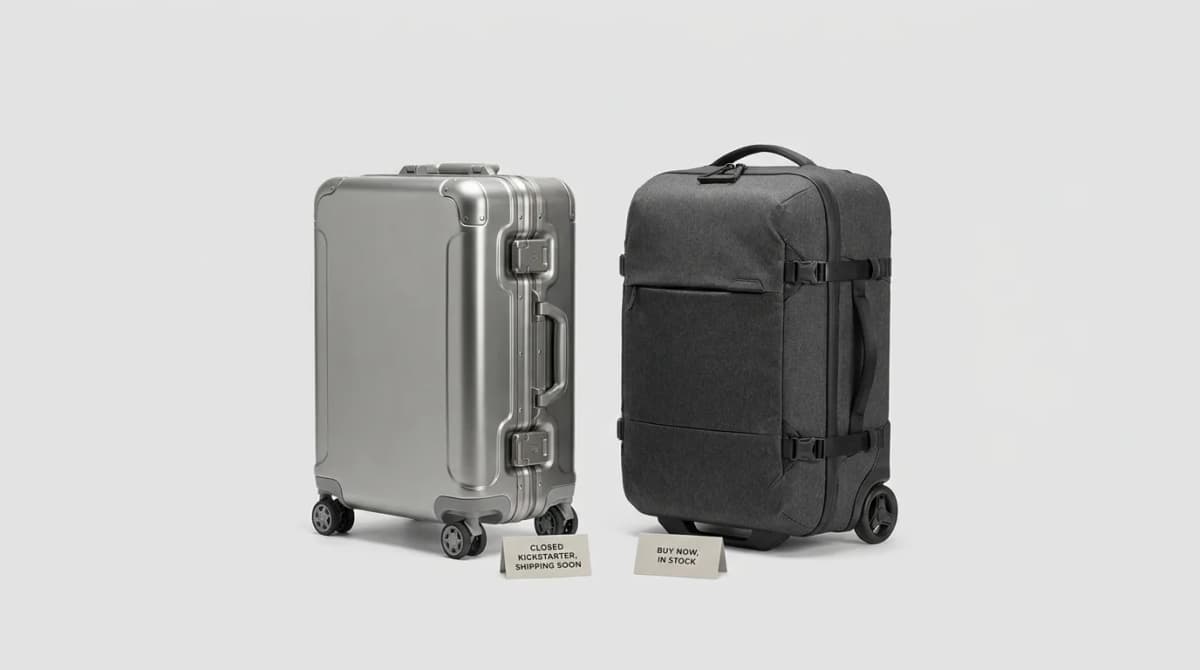
Titaner Voyager vs Peak Design: Titanium Carry-On
Peak Design owns Kickstarter travel bags. Titaner answered with a Grade 1 titanium latch spinner - not another backpack. Closed KS ship watch vs Roller Pro buy-today: who waits for Voyager, who buys Peak now.
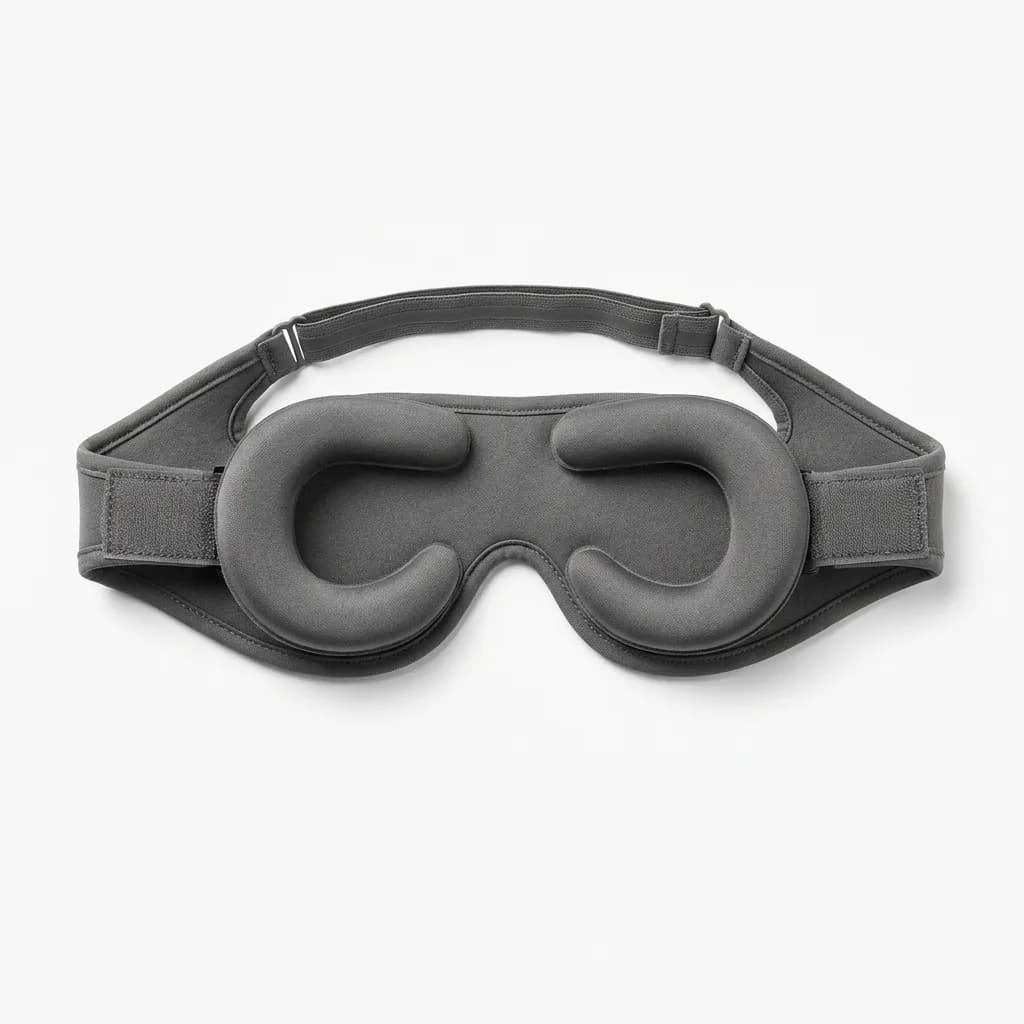
Best Sleep Masks for Flights and Hotels
Foam blocks more? Not always. We compare contoured, silk, and eye-cup sleep masks for flights and hotels so you pick blackout that still packs small.
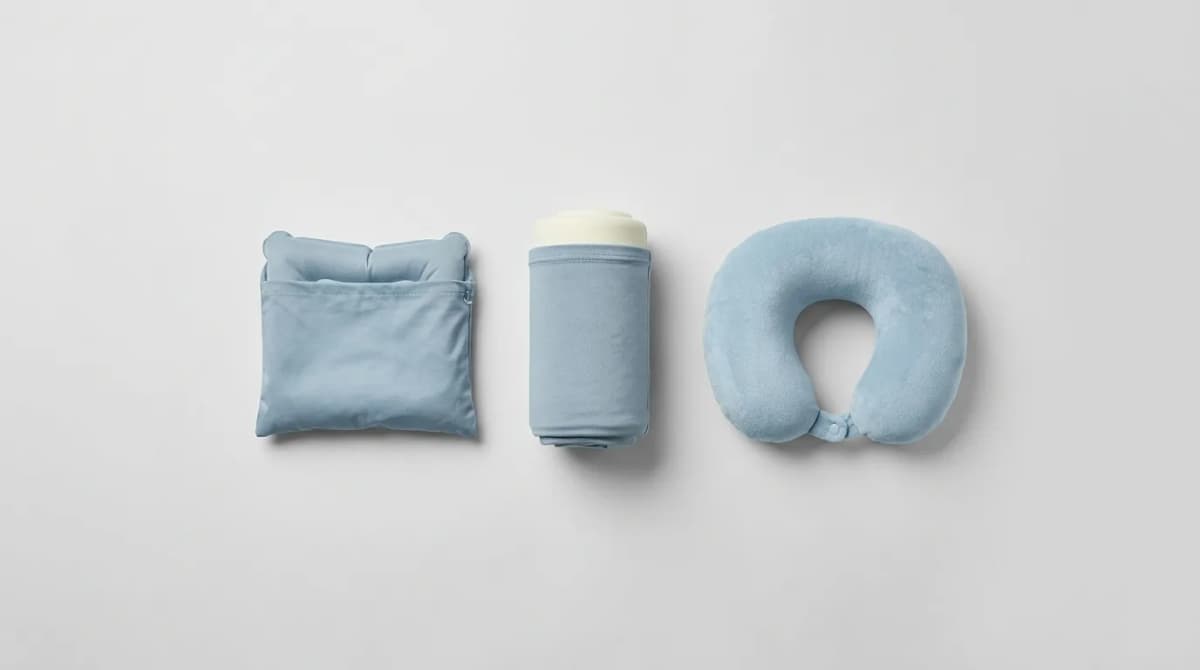
Best Travel Pillows That Pack Small
Compact travel pillows compared: inflatable vs memory foam, what actually supports your neck on flights, and which ones compress small enough to matter.
Earplugs for Travel: Which Type Works Best
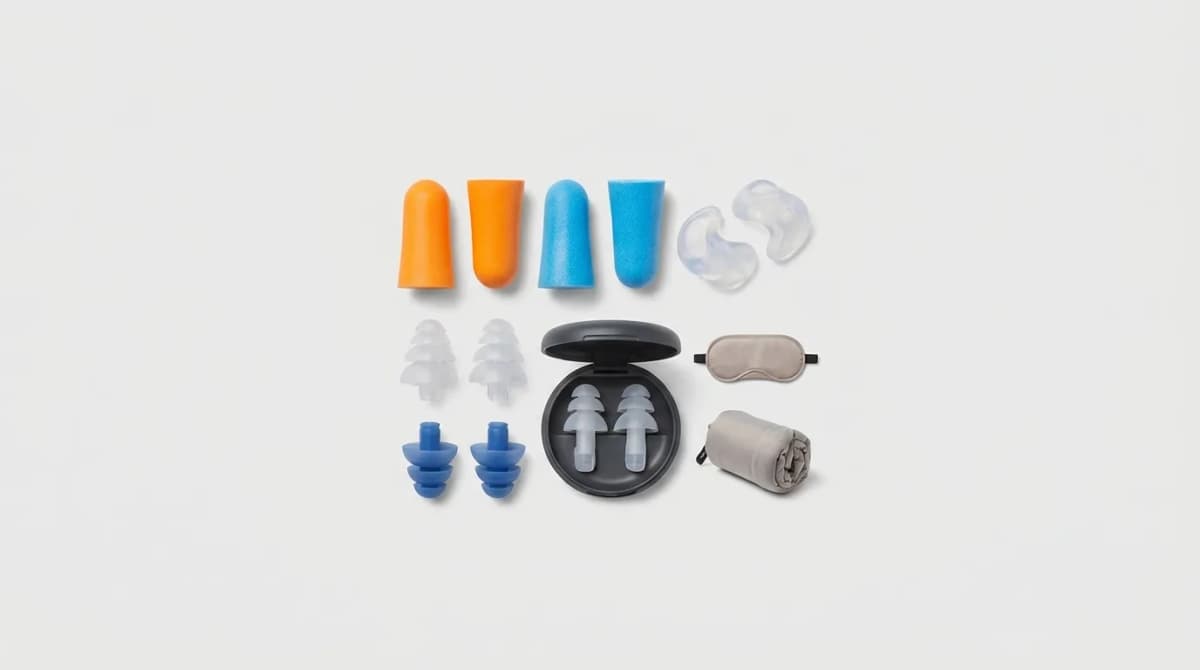
Foam blocks more noise but silicone lasts longer. We compared every type by NRR ratings and materials for flights, hotels and noisy neighbors.