Best Travel Pillows That Pack Small
Compact travel pillows compared: inflatable vs memory foam, what actually supports your neck on flights, and which ones compress small enough to matter.
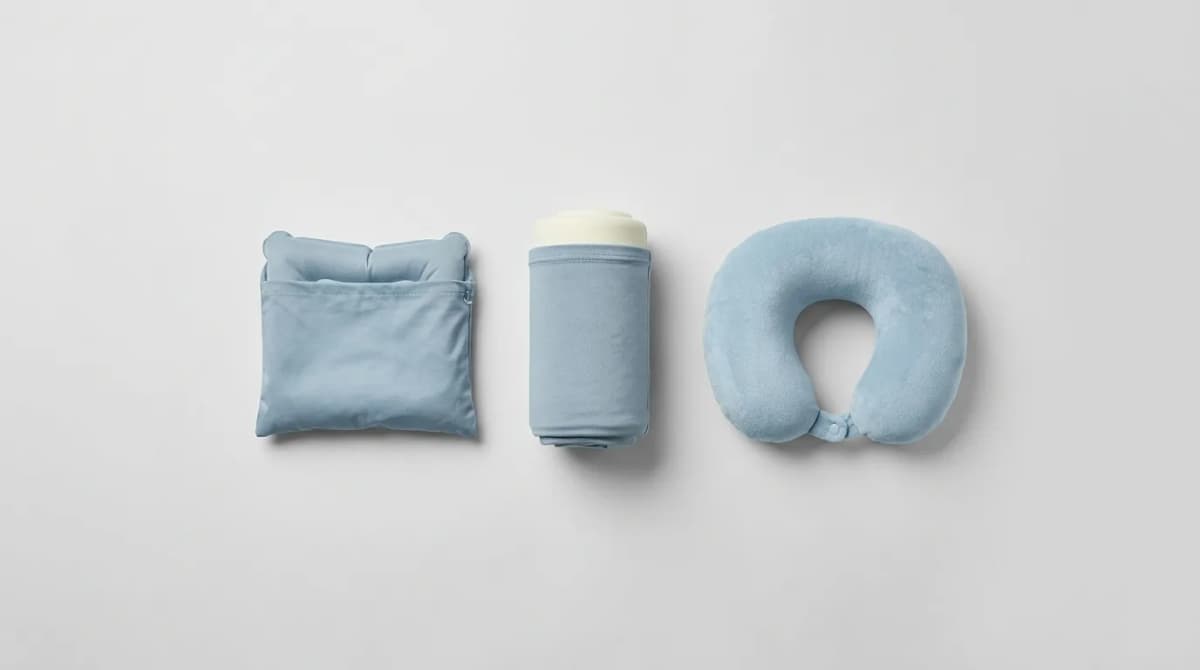
Most travel pillows fail at the one thing that matters: they take up half your bag. The giant U-shaped foam donuts work fine if you clip them to your backpack and don't mind looking like you're wearing a neck brace through the airport. But if you need something that disappears into a carry-on and still keeps your head from bobbing into your neighbor's shoulder on a red-eye, the field narrows fast.
Quick Picks
Our top recommendations at a glance:
- 1
- 2
- 3
- 4
- 5
Pack size matters because travel gear lives in a zero-sum game. Every cubic inch a pillow occupies is space you can't use for a jacket, toiletries, or an extra shirt. The best compact travel pillows compress down to roughly the size of a water bottle or smaller, then expand to provide actual support when you need it. The trick is finding one that doesn't sacrifice comfort for packability.
Inflatable vs Memory Foam: The Real Tradeoff
Inflatable pillows win on pack size. They compress to almost nothing, usually smaller than a soda can. Most weigh under 4 ounces. You blow them up when you board, deflate them when you land. The downside: many feel like resting your head on a beach toy. Thin fabric over air doesn't distribute pressure well, and cheaper models develop leaks.
Memory foam pillows feel better against your skin and mold to your neck shape. But even "compressible" memory foam only shrinks so much. Most compress to about the size of a Nalgene bottle, which is fine for checked bags but tight for minimalist carry-on packers. The foam also adds weight, typically 8-12 ounces.
Here's the short version: inflatable pillows work better for people who sleep upright or lean against a window. Memory foam works better if you need something to wedge between your head and a tray table, or if you're trying to sleep in a middle seat. Your sleep position matters more than the marketing copy.
What Neck Support Actually Means
"Ergonomic neck support" shows up in every travel pillow description, but most don't deliver. Real support means the pillow holds your head at a neutral angle relative to your spine, not tilted forward or sideways. If you wake up with a stiff neck, the pillow failed.
U-shaped pillows wrap around your neck but often push your head forward, especially if they're overstuffed. The better designs have a higher back section and lower front, creating a subtle wedge that lets your head rest back instead of dropping forward. Some models add adjustable toggles or straps to customize the fit.
J-shaped and side-support pillows work differently. They're designed to prop your head to one side, resting against a window or seat back. These work well for side sleepers but are useless in a middle seat. Pack size tends to be smaller because there's less material overall.
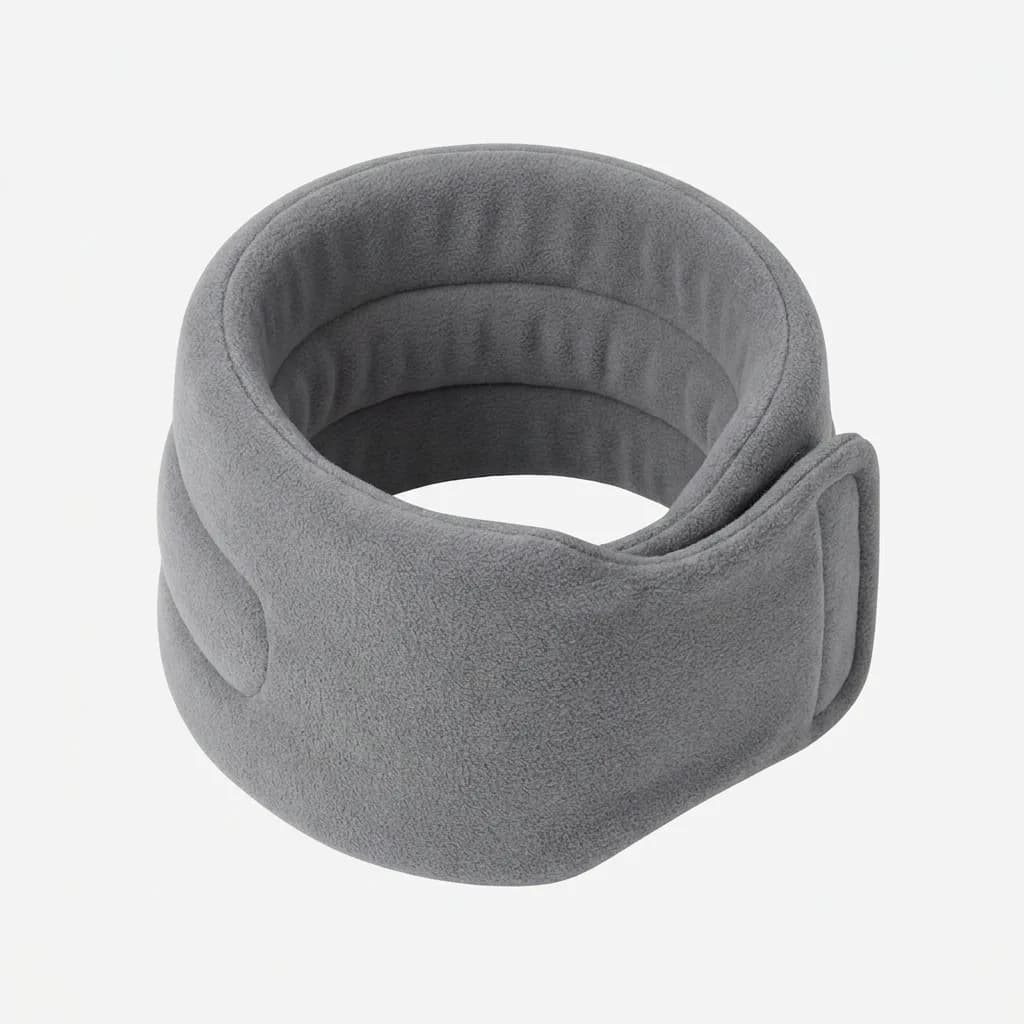
Trtl Pillow Plus
$60
Wrap-around fleece with internal support ribs. Packs to 6x4 inches, weighs 5.6 oz. The rigid structure keeps your head from flopping sideways on long flights.
The Trtl uses a different approach entirely: a fleece wrap with hidden plastic ribs that create a supportive frame. You wrap it around your neck like a scarf, and the ribs hold your chin up. It looks weird but works surprisingly well for upright sleeping. The fleece also doubles as a neck warmer on cold flights.
Inflate-and-Go Models Worth Considering
Modern inflatable pillows improved significantly in the last few years. Better valve designs make inflation easier (10-15 breaths instead of 40), and laminated fabrics reduce the plastic-bag feel. The best ones use a layered construction with a soft outer cover over the air bladder.
The Sea to Summit Aeros is the benchmark. It's a contoured inflatable that packs to 2.5x3.5 inches and weighs 2.3 ounces. The fabric is a 50-denier polyester with a brushed finish that feels closer to cotton than plastic. The valve design is simple: twist to inflate, press to deflate. It stays inflated through entire flights without needing a top-up.
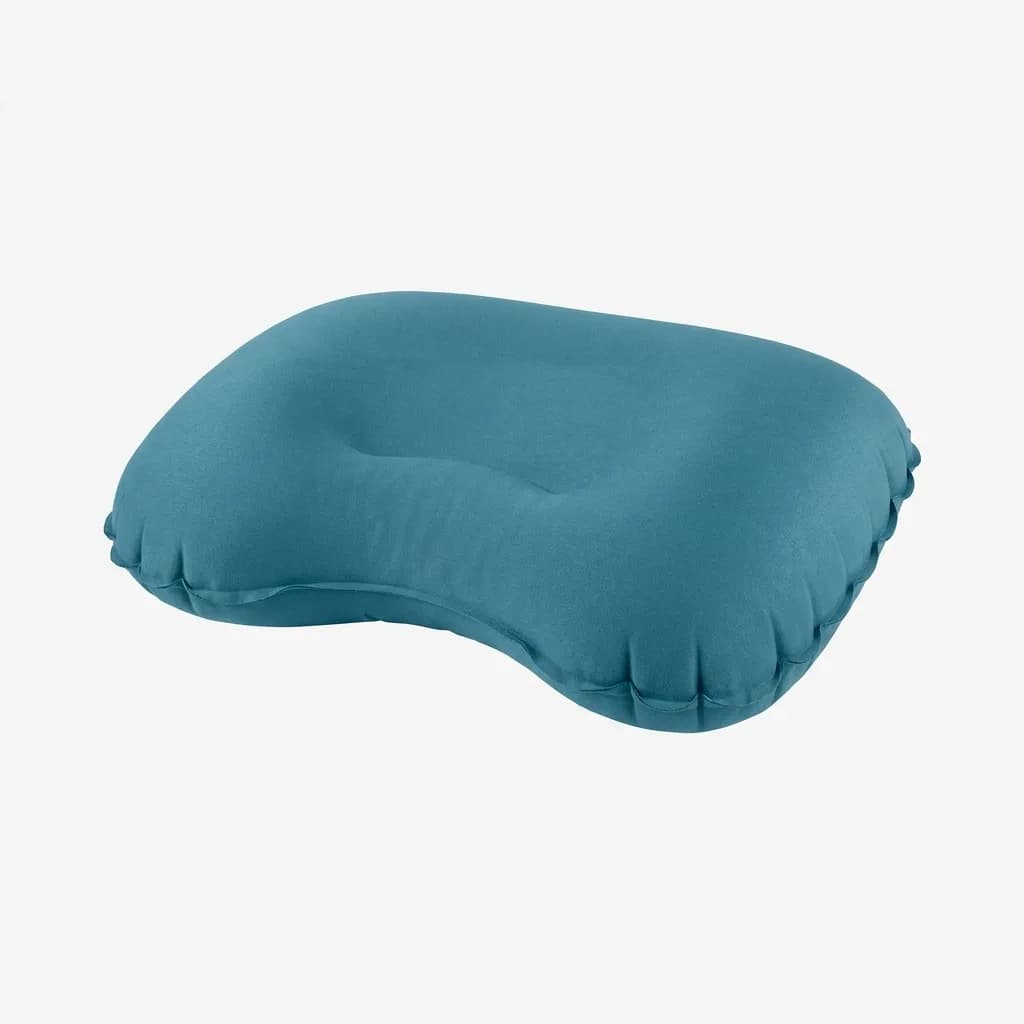
Sea to Summit Aeros Pillow Premium Traveller
$40
Contoured inflatable with brushed polyester cover. Packs to 2.5x3.5 inches, 2.3 oz. Scalloped edges provide better side support than standard U-shapes.
Cabeau's Evolution S3 sits in the middle ground. It's an inflatable core wrapped in memory foam fabric, so you get the pack size of inflatable (4x6 inches compressed) with a softer feel. At 7 ounces it's heavier than pure inflatables but still lighter than solid foam. The raised side supports are taller than most U-shapes, which helps if you sleep with your head tilted.
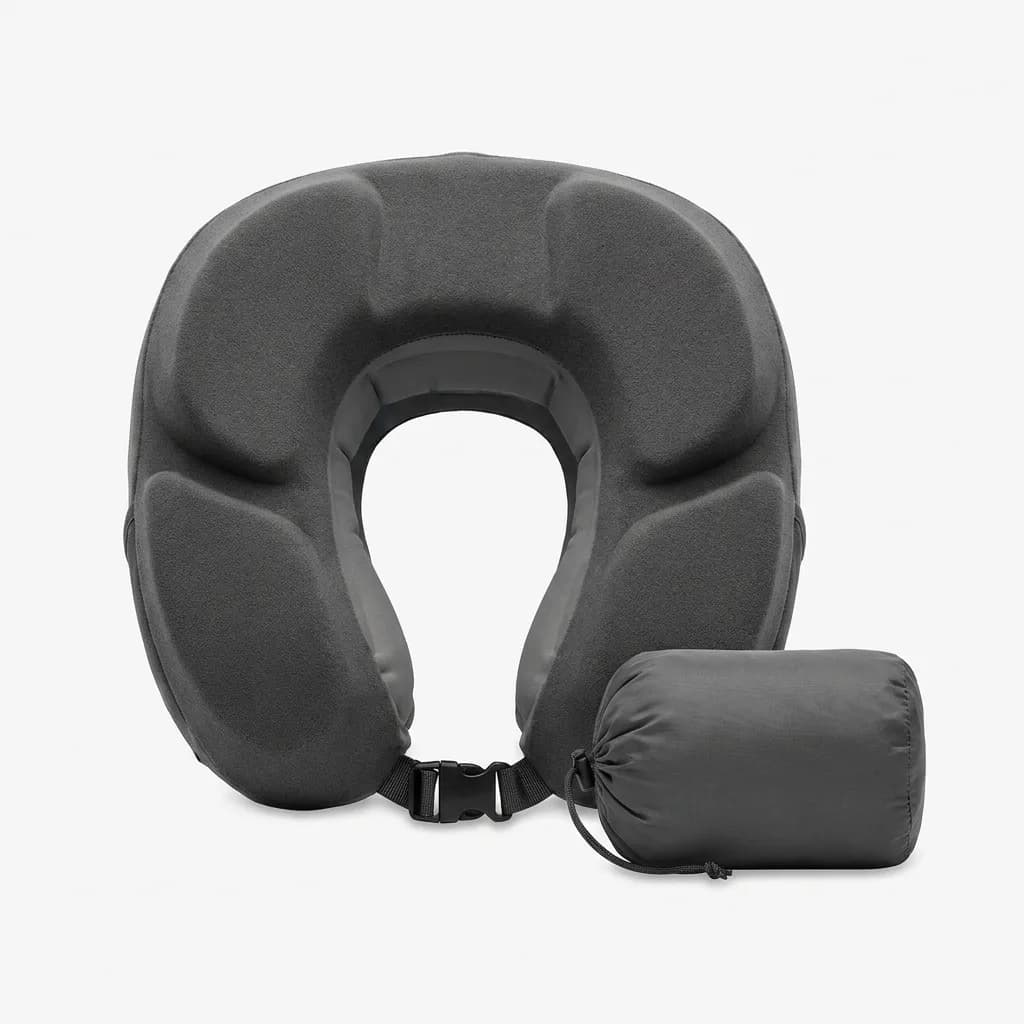
Cabeau Evolution S3 Travel Pillow
$50
Inflatable core with memory foam cover and raised side panels. Compresses to 4x6 inches, weighs 7 oz. Includes adjustable clasp to secure to headrest.
The major weakness of inflatables: they're noisy. Every time you shift position, the fabric crinkles. If you're a restless sleeper or sensitive to sound, the noise will wake you up. Solid foam pillows are silent.
Compressible Foam Options That Actually Compress
Memory foam doesn't compress nearly as much as inflatable, but some designs manage respectable pack sizes. Look for shredded memory foam instead of solid blocks. Shredded foam compresses more because air can escape between the pieces. Solid foam just springs back.
Therm-a-Rest makes a compressible pillow (originally designed for camping) that works well for travel. It's shredded foam in a soft polyester shell, and it compresses to roughly 5x8 inches when you stuff it into the included sack and cinch it down. Packed size is about the same as a rolled-up hoodie. Weight is 8.1 ounces for the medium size.
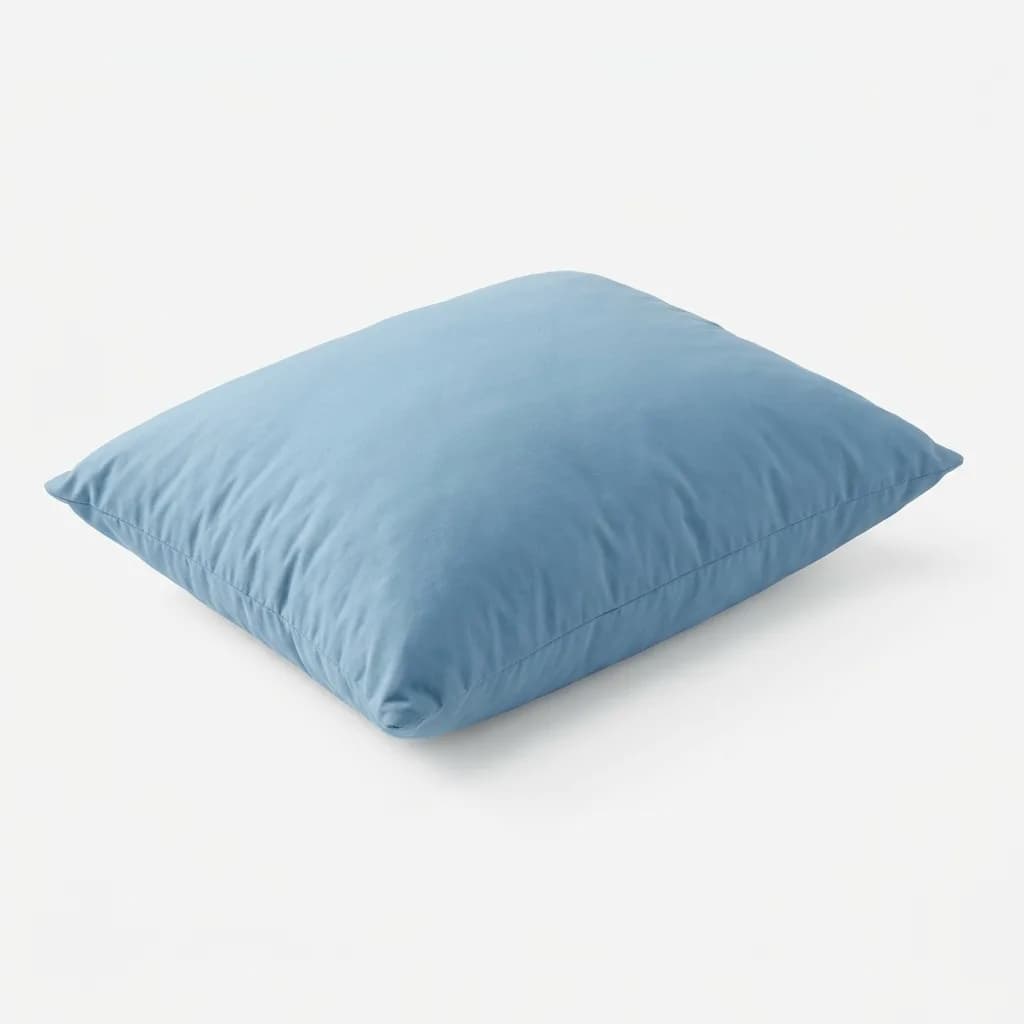
Therm-a-Rest Compressible Pillow Medium
$35
Shredded foam in soft polyester shell. Compresses to 5x8 inches, expands to 14x18 inches. Machine washable. Popular with backpackers and frequent flyers.
The advantage here is versatility. A compressible pillow works on planes, trains, in hotels with bad pillows, or camping. It's not neck-specific like U-shapes, so you can use it however you sleep. The downside: 5x8 inches compressed is still bulkier than most inflatables, and you need to actively stuff and compress it to save space.
Travelrest makes a nest-style pillow that's basically an inflatable tube with a foam bolster on one side. You inflate the tube for structure, then rest your head on the foam side. It compresses to about 6x5 inches and weighs 6.2 ounces. The asymmetric design works better for side sleeping than standard U-shapes.
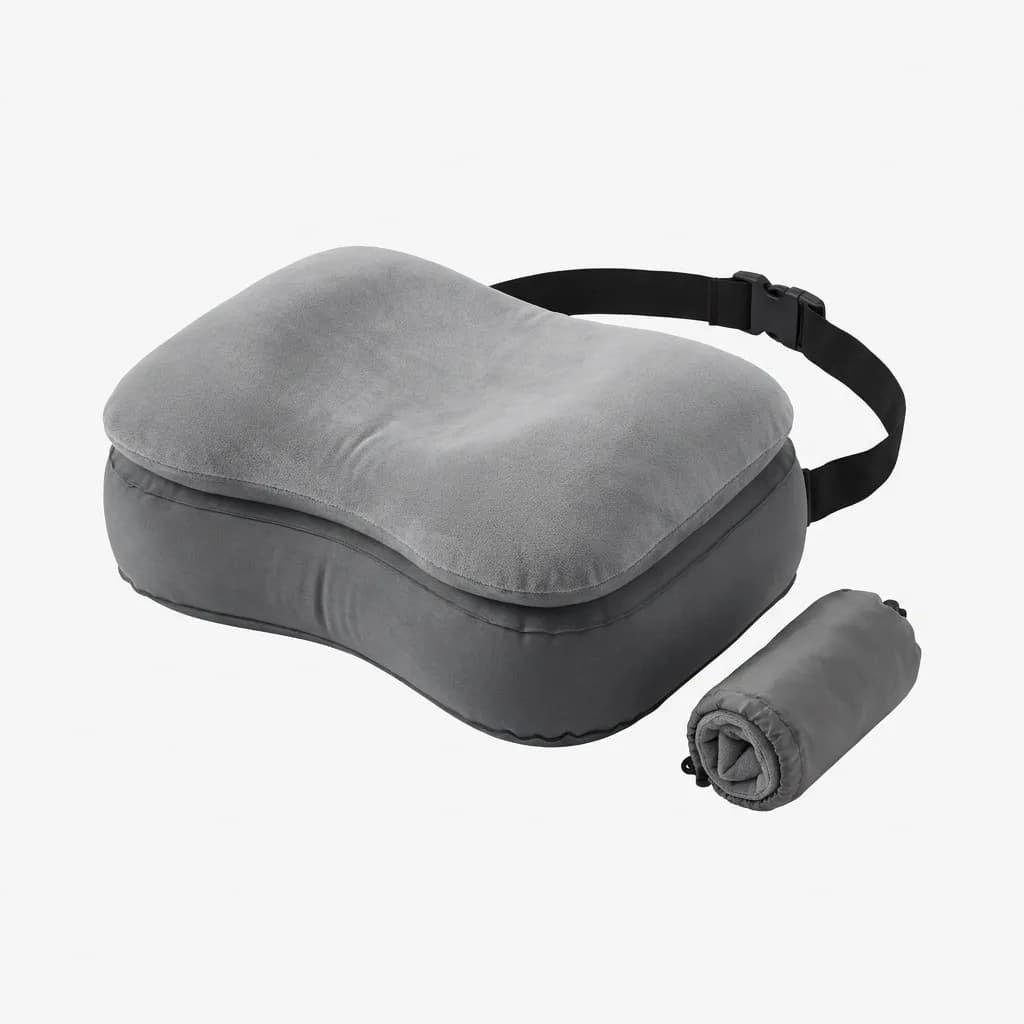
Travelrest Nest Ultimate Memory Foam Pillow
$40
Hybrid design with inflatable support tube and memory foam top. Compresses to 6x5 inches. Attaches to seat back with elastic strap.
The Best for Ultra-Minimalist Packers
If you're trying to fit everything into a 20L backpack or a personal item bag, full-size travel pillows are non-starters. The smallest viable option is the Cocoon Air Core Ultralight. It's a bare-bones inflatable that packs to 3x2 inches and weighs 1.2 ounces. There's no contoured shape, no memory foam cover, just a rectangular air pillow with a soft nylon surface.
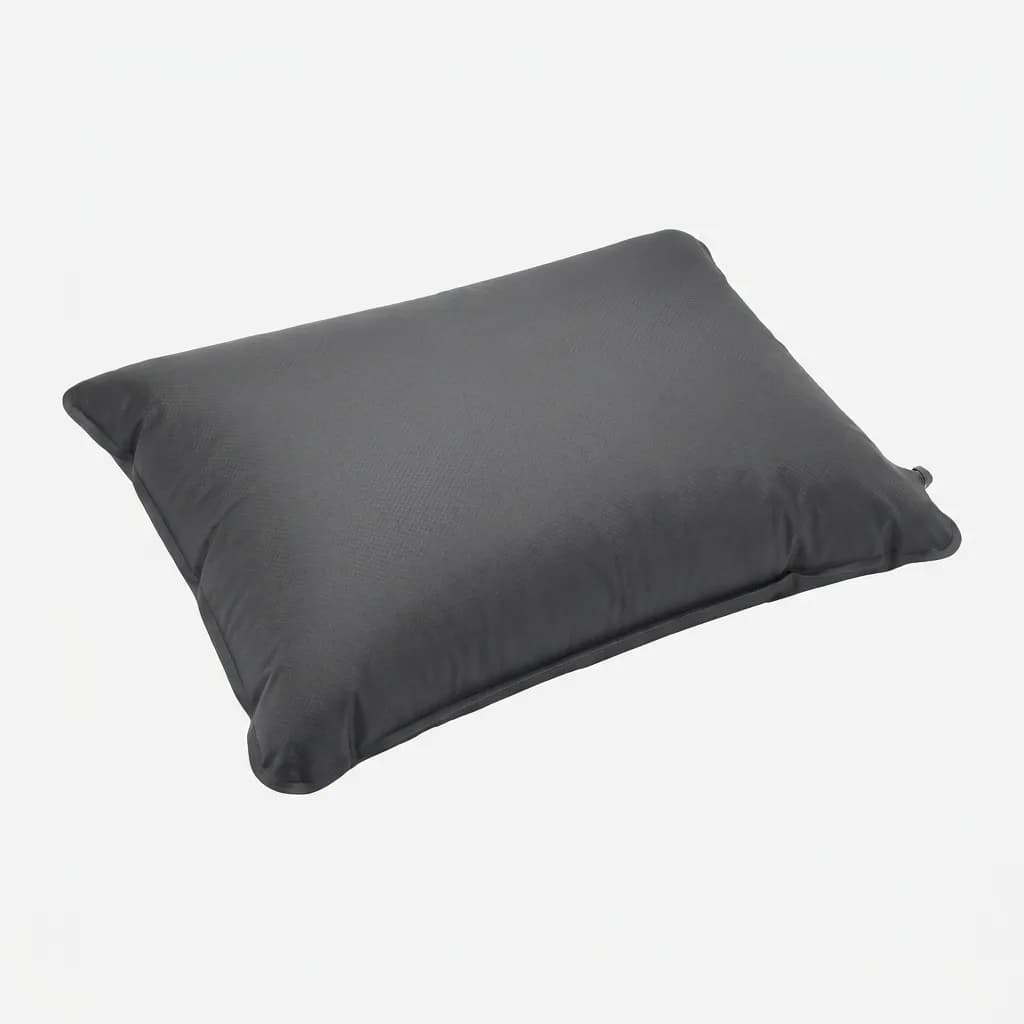
Cocoon Air Core Ultralight Pillow
$25
Minimalist inflatable pillow, 3x2 inches packed, 1.2 oz. Ultralight nylon fabric. No frills, just basic head support for weight-obsessed travelers.
It's not comfortable by normal standards, but it's better than nothing and essentially weightless. You can toss it in a jacket pocket and forget it's there. This is the pillow for people who cut tags off gear to save grams.
Another ultra-compact option is the Nemo Fillo Elite. It's a backpacking pillow that works for travel. The design is a thin inflatable bladder with a small patch of synthetic insulation on top. Packed size is 3x4 inches, weight is 2.4 ounces. The insulation layer helps with the plastic-bag feel, and the fabric is quieter than most inflatables.
What About Inflating Speed and Valve Durability?
Valve design separates good inflatables from frustrating ones. Twist valves are the most reliable: you twist a collar to open, blow air in, twist to close. They rarely leak and they're intuitive. Push valves (press a button to open) are faster but more prone to failure over time. We've had multiple pillows with push valves that started leaking after 10-15 uses.
Inflation speed matters less than you'd think. Most inflatables need 10-20 breaths to reach full firmness. That's about 30 seconds. If saving 15 seconds is critical, buy a battery-powered pump, but that defeats the purpose of a compact pillow.
Some inflatables include a one-way valve so you can blow air in quickly without it escaping between breaths. This is a nice feature but not essential. Standard two-way valves work fine if you keep your thumb over the opening between breaths.
Do Expensive Travel Pillows Justify the Price?
Most travel pillows fall between $25-$60. The expensive ones typically add features like removable washable covers, adjustable firmness, or premium fabrics. These features are nice but not game-changers.
The best value depends on how often you fly. If you travel once or twice a year, a $25 inflatable is plenty. If you're on planes twice a month, spending $50-$60 for something more comfortable makes sense. The durability difference isn't huge, but the comfort gap is.
Avoid pillows over $70 unless they include a specific feature you need (like the Trtl's rigid support frame). Most premium pricing comes from marketing, not better materials or design.
Which One to Actually Buy
For most people flying economy on 3-6 hour flights, the Sea to Summit Aeros is the best balance of pack size, comfort, and durability. It compresses small enough for any bag, inflates quickly, and the fabric doesn't feel like cheap plastic. If you need softer material against your face, the Cabeau Evolution S3 adds a foam cover without too much bulk.
Side sleepers do better with the Travelrest Nest or a J-shaped pillow like the Trtl. The asymmetric designs provide better side support than U-shapes. If you sleep upright or lean back, standard U-shapes work fine.
For overnight flights longer than 6 hours, consider bringing a compressible foam pillow like the Therm-a-Rest even if it takes up more space. The comfort difference over 8-10 hours is worth the extra bulk. You can also use it in your hotel if the provided pillows are terrible.
Ultra-minimalists should default to the Cocoon Air Core or Nemo Fillo Elite. They're not luxurious, but they pack so small you'll barely notice them until you need them.
The reality is no travel pillow replicates sleeping in your own bed. The goal is minimizing neck pain and making sleep possible, not achieving perfect comfort. Pack size matters because gear you leave home doesn't help you. The best compact travel pillow is the one small enough that you'll actually bring it.
The Weekly Dispatch
Enjoying this article?
Subscribe and get our best gear picks delivered every Sunday morning.
Related Posts
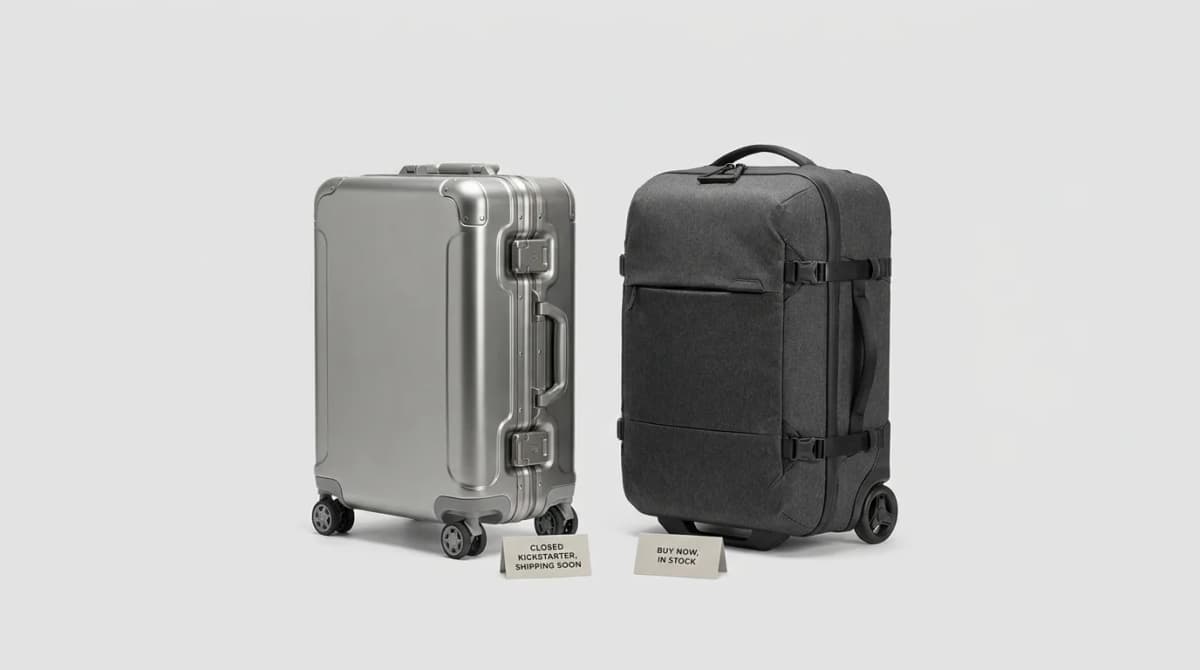
Titaner Voyager vs Peak Design: Titanium Carry-On
Peak Design owns Kickstarter travel bags. Titaner answered with a Grade 1 titanium latch spinner - not another backpack. Closed KS ship watch vs Roller Pro buy-today: who waits for Voyager, who buys Peak now.
Best Sleep Masks for Flights and Hotels
Foam blocks more? Not always. We compare contoured, silk, and eye-cup sleep masks for flights and hotels so you pick blackout that still packs small.
Earplugs for Travel: Which Type Works Best
Foam blocks more noise but silicone lasts longer. We compared every type by NRR ratings and materials for flights, hotels and noisy neighbors.
Travel Coin Solutions for Europe That Actually Work
European coins pile up fast. These pouches, wallets, and daily carry strategies keep change organized without bulk during weeks of travel across the continent.