Best Solar Powered Security Camera No WiFi Needed
Solar security cameras with cellular connectivity eliminate WiFi dependence. We break down the best options for off-grid properties and remote locations.
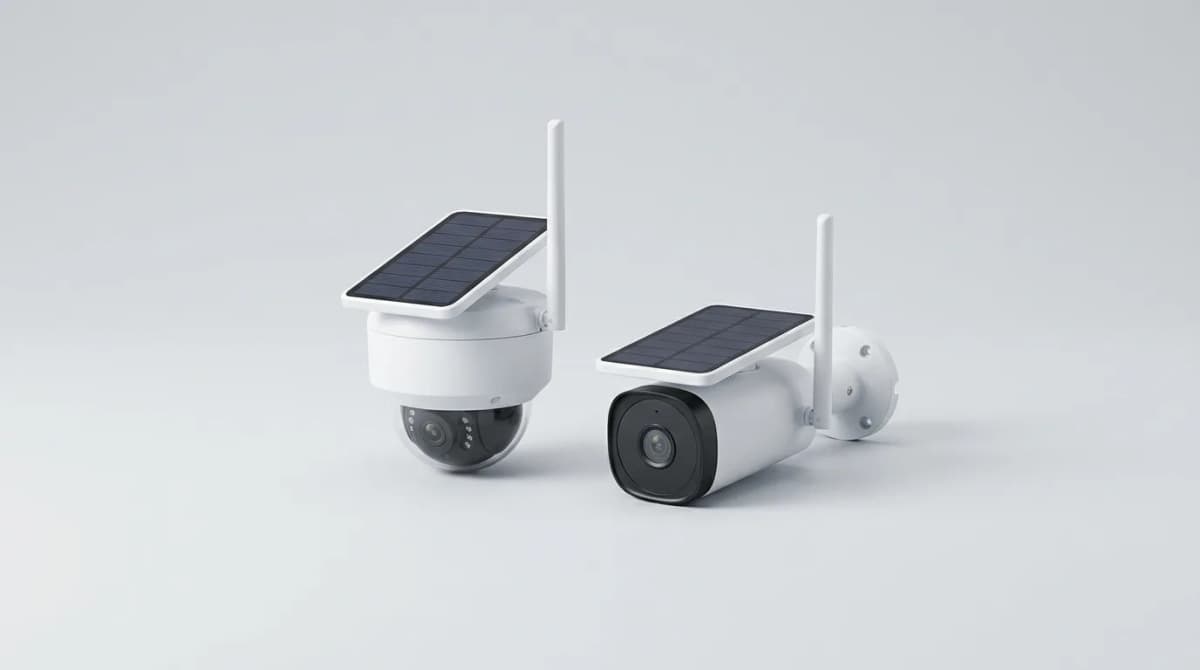
Your cabin is three miles from the nearest power line. Your workshop sits 200 feet from the house, too far for a reliable WiFi signal. Or maybe you just want security coverage without monthly cloud fees or network hassles. Solar-powered cameras with built-in cellular or local storage solve all of these problems.
Quick Picks
Our top recommendations at a glance:
- 1Reolink Go PT Plus with Solar PanelCheck current price
- 2Eufy 4G Starlight Security CameraCheck current price
- 3Soliom S600 Solar Security CameraCheck current price
- 4Defender Phoenixm2 2-Camera SystemCheck current price
Most "wireless" security cameras still need WiFi, which limits where you can place them. True off-grid cameras use 4G LTE cellular connections or store footage locally on microSD cards. Pair that with a solar panel, and you get continuous operation with zero wiring and no internet required.
We compared the leading models for rural properties, construction sites, and edge-of-property installations. Here's what actually works.
What makes a security camera truly WiFi-independent
Three technologies let cameras operate without WiFi: cellular data plans (4G LTE), local storage (microSD cards), or both. Cellular cameras upload clips to the cloud over mobile networks, just like your phone. Local storage cameras record directly to a card you can retrieve later.
Solar charging adds the final piece. A good solar panel with integrated battery keeps the camera running indefinitely, even through cloudy weeks. The panel needs to generate more power than the camera consumes during typical use, which means panel size and battery capacity matter more than megapixel count or fancy AI features.
Most solar cameras use removable batteries you can swap or charge indoors during installation. Look for capacities above 10,000mAh if you expect frequent motion events or live in areas with limited sunlight.
The tradeoff: cellular cameras require a data plan (typically $5-15 per month), while local-only cameras mean physically retrieving the SD card to review footage. Hybrid models offer both options.
Reolink Go PT Plus: Pan-tilt coverage with 4G backup
Reolink's Go PT Plus combines 4G LTE, solar charging, and 355-degree pan with 140-degree tilt. That motorized head lets you cover a full property perimeter from a single mounting point, something fixed cameras can't match.
The 6-watt solar panel keeps the 14,400mAh battery topped off with about 2-3 hours of daily sunlight. Motion events triggered pan-tilt tracking, following subjects across the frame.
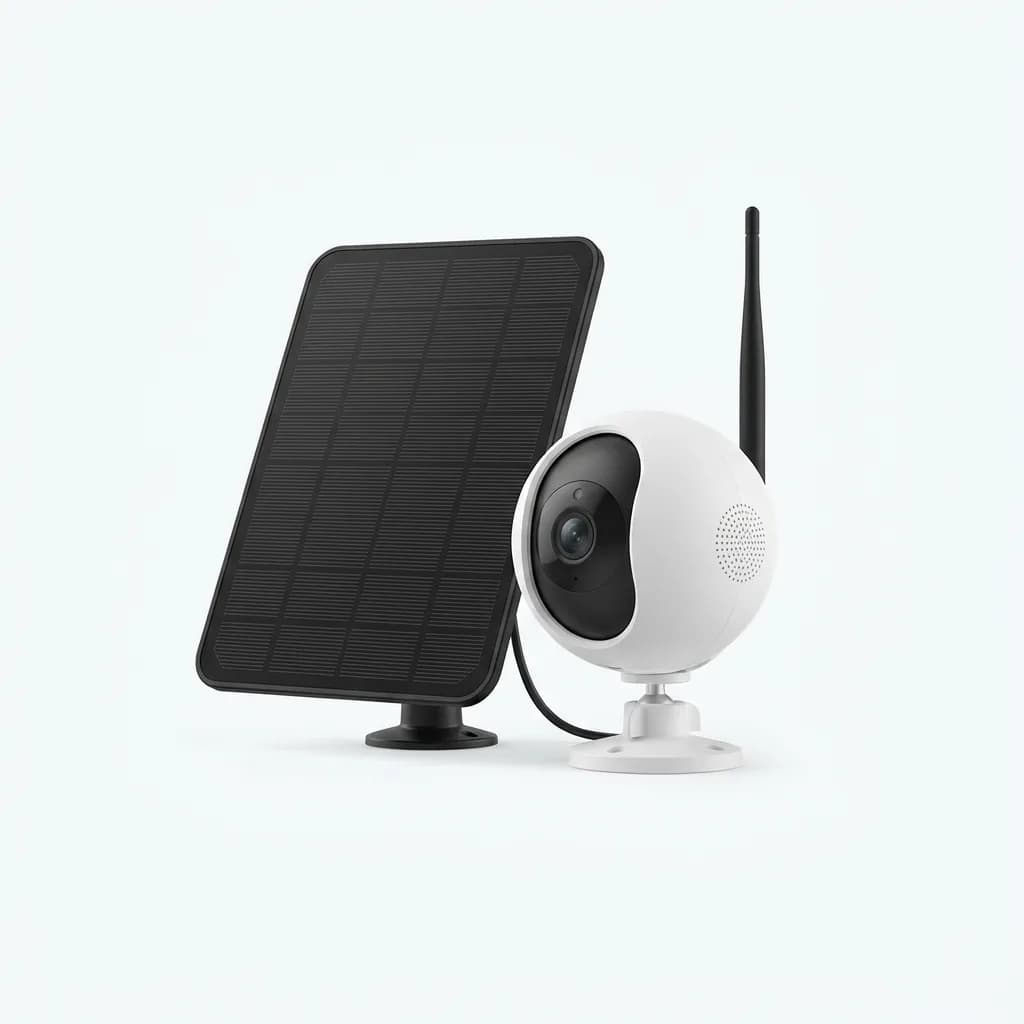
Reolink Go PT Plus with Solar Panel
Check current price
4G LTE security camera with 355-degree pan, 140-degree tilt, and 6W solar panel. 2K resolution with color night vision and two-way audio.
Video quality hits 2K (2560x1440), noticeably sharper than 1080p when you need to identify faces or license plates at distance. Color night vision uses a built-in spotlight rather than infrared, so footage shows actual colors in low light. The spotlight also acts as a deterrent.
The 4G connection requires a SIM card and data plan. Reolink sells their own plan, or you can use any carrier that supports the camera's bands (it's unlocked). Data usage runs 1-3GB per month depending on how many clips you record.
Local storage via microSD (up to 128GB) means you're not locked into cloud subscriptions. The camera records continuously or on motion detection, your choice.
One limitation: the app interface can feel sluggish when viewing live feeds over cellular, especially on slower LTE connections. Recorded clips load faster.
Eufy 4G Starlight: No subscription, local-only option
Eufy built the 4G Starlight for users who refuse monthly fees. It uses a 4G connection only for remote access and alerts - all footage stores locally on a 32GB built-in memory (expandable to 128GB with microSD). No cloud storage, no subscription, ever.
The solar panel is sold separately but integrates cleanly. With the panel connected, the 13,000mAh battery stays charged through normal use. Eufy claims 365 days of standby on a full charge, though real-world use with frequent events drops that to 2-3 months without sun.
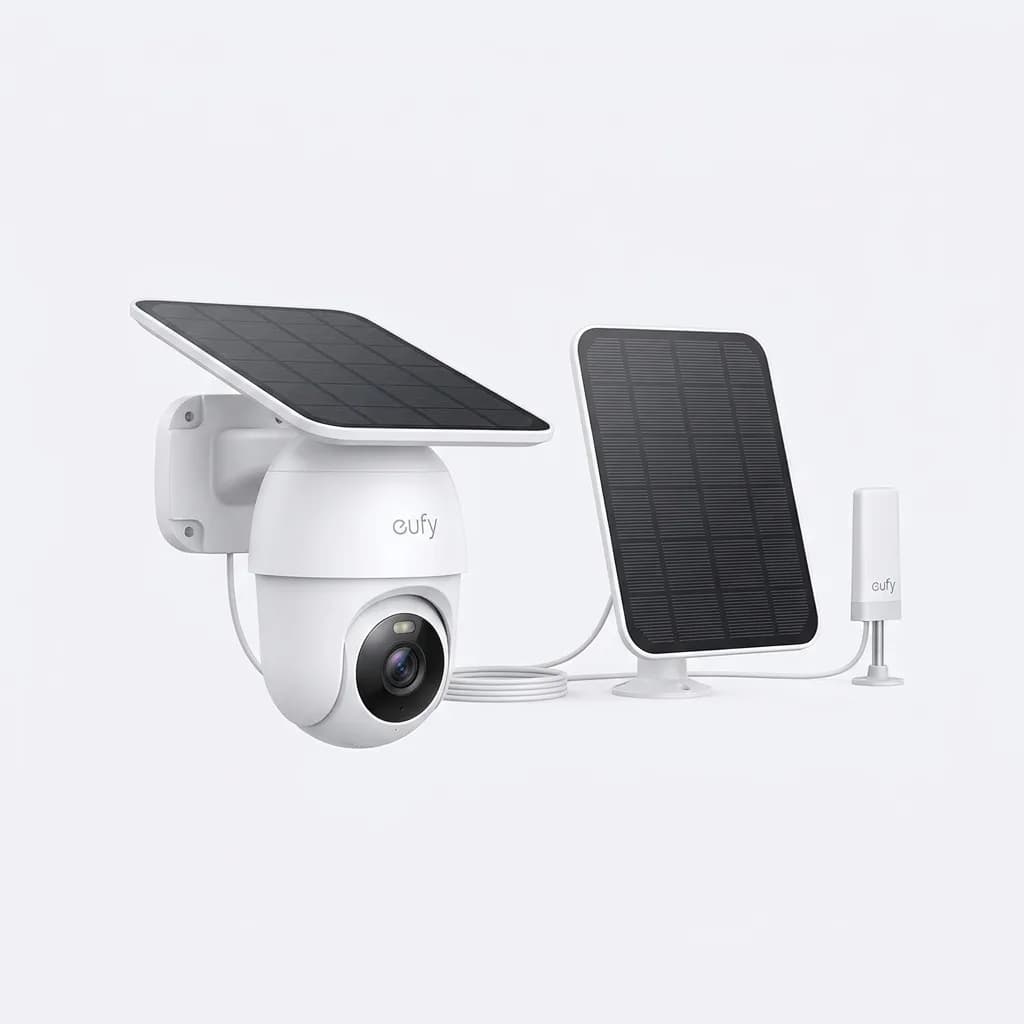
Eufy 4G Starlight Security Camera
Check current price
Subscription-free 4G camera with 32GB local storage, 2K resolution, and AI person detection. Works with optional solar panel for continuous power.
The standout feature: on-device AI that distinguishes people from animals, cars, and wind-blown branches. This cuts false alerts dramatically compared to basic motion detection. You still get a notification, but it tells you what triggered the event.
Video resolution matches the Reolink at 2K, but night vision uses traditional infrared instead of a spotlight. That means black-and-white footage after dark, though the range extends to about 30 feet.
Setup requires a SIM card with data (Eufy partners with T-Mobile for a prepaid option), but data usage stays minimal - under 500MB per month - because video doesn't upload anywhere. The 4G connection only sends thumbnail previews and streams live view when you request it.
The fixed lens covers 135 degrees, wide enough for most installations but limiting compared to pan-tilt models.
Soliom S600: Three-year battery rated for extreme cold
Soliom designed the S600 for harsh climates. It operates in temperatures from -4°F to 122°F, using a battery chemistry that holds charge better in cold than standard lithium cells. The 15,000mAh battery combined with the included 5-watt solar panel is built for low-sunlight winters.
This camera works entirely offline if you want - no WiFi, no cellular, just local microSD recording (supports up to 256GB). For remote access, it offers an optional 4G mode with a SIM slot.
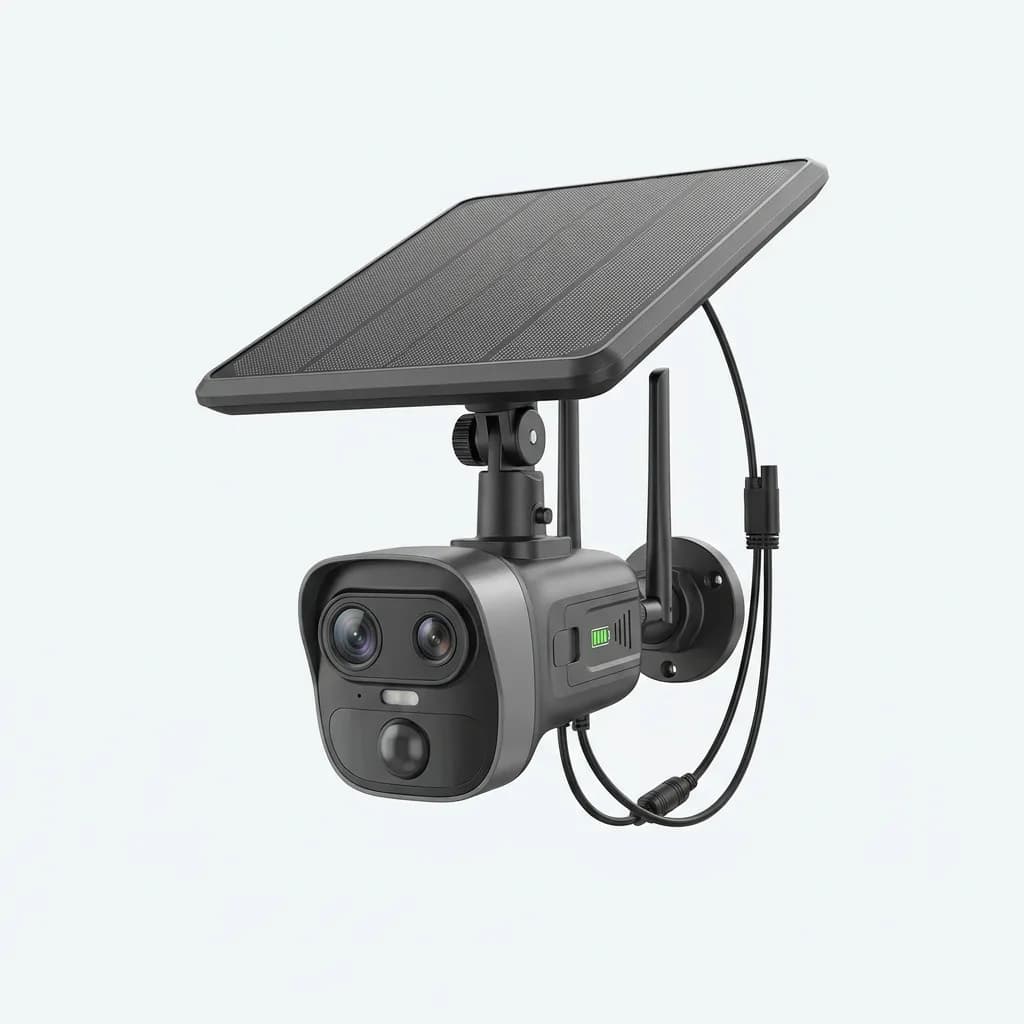
Soliom S600 Solar Security Camera
Check current price
Cold-weather rated camera with 15,000mAh battery, 5W solar panel, and dual connectivity (4G or local-only). PIR motion sensor reduces false alerts.
The PIR (passive infrared) motion sensor triggers recording only when it detects heat signatures, which means animals and people but not shadows or moving branches. This extends battery life significantly compared to pixel-change detection.
Video tops out at 1080p rather than 2K, but the sensor performs well in low light. Two-way audio works over both WiFi (if available) and 4G, with noise cancellation that actually makes conversations intelligible even in wind.
Installation is dead simple: the magnetic mount lets you position the camera, then lock it down with the security screw. The solar panel connects via a weather-sealed cable with about 10 feet of length.
The main downside: the app (available for iOS and Android) feels dated compared to Reolink or Eufy, with fewer customization options for detection zones and notification schedules.
Defender Phoenixm2: Dual-camera setup with local DVR
Defender takes a different approach. Instead of a single all-in-one camera, the Phoenixm2 system includes two wireless cameras and a base station DVR that handles recording. The cameras themselves run on rechargeable batteries, while the DVR requires power but not internet.
Each camera has its own 5-watt solar panel. The DVR sits indoors (or in a weatherproof enclosure), storing footage on a 1TB hard drive - no SD cards, no cloud, no subscriptions. You access footage through the DVR's HDMI output or via the mobile app when connected to the same local network.
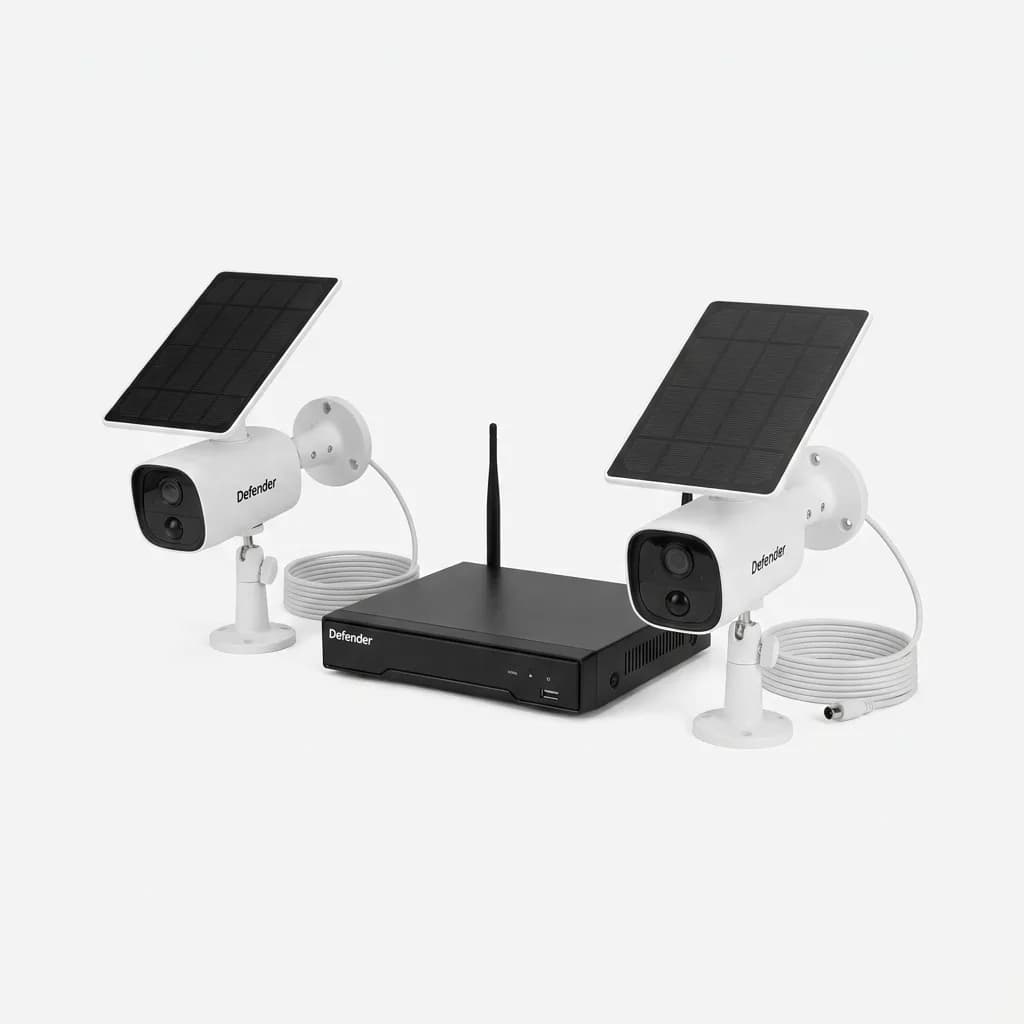
Defender Phoenixm2 2-Camera System
Check current price
Wireless two-camera kit with solar panels and 1TB DVR. No WiFi required, local storage only, 1080p resolution with night vision up to 40 feet.
The advantage: you get two cameras out of the box, enough to cover front and back or two sides of a building. The 1TB hard drive stores weeks of continuous recording, far more than any SD card. And because the DVR handles processing, the cameras sip power - each battery lasts 3-6 months on solar.
The limitation: no remote access unless you add a cellular hotspot or connect the DVR to WiFi. This system targets users who want local-only security without any network connection, or those willing to add their own internet solution.
Video quality hits 1080p with acceptable detail for identifying people within 20-30 feet. Night vision uses infrared with a claimed 40-foot range, though 25-30 feet is more realistic in practice.
How cellular cameras handle data usage
A common worry: will a 4G security camera burn through expensive data? In practice, cellular cameras use 1-4GB per month depending on settings and activity levels.
Recording modes make the biggest difference. Continuous recording uploads constantly, which can hit 10-20GB monthly. Motion-activated clips use far less - typically 100-300MB per event depending on clip length and resolution. Most cameras let you adjust clip length, resolution, and upload frequency to manage data consumption.
Push notifications and live viewing add extra data. Each live view session streams at full resolution, using about 50-150MB per minute depending on quality settings. Checking your camera daily for a few minutes adds up, while just receiving motion alerts uses almost nothing.
Some cameras offer "low data" modes that reduce resolution or frame rate when uploading over cellular. These help on metered plans but sacrifice video quality.
The cheapest data plans come from the camera manufacturers themselves - Reolink, Eufy, and others offer prepaid SIM cards with dedicated security camera plans starting around $6-8 monthly for 1-2GB. Standard carrier plans work too if you have an unlimited plan that allows hotspot/connected devices.
Installation tips for maximum solar efficiency
Solar panels need direct sunlight, which sounds obvious but gets overlooked. Even partial shade from a tree branch or roof overhang cuts charging efficiency by 50% or more. South-facing mounts (in the Northern Hemisphere) capture the most daily sun.
Panel angle matters more than most people think. The optimal tilt equals your latitude - so a property at 40° North should tilt the panel 40° from horizontal. In practice, anywhere between 30-50° works well for year-round charging. Most camera solar panels have adjustable mounts.
Winter operation requires planning. Days are shorter, sun is lower, and storms reduce charging. Size your solar panel for winter conditions, not summer. If a 3-watt panel works in July, you probably need 5-6 watts for reliable December operation in northern climates.
Battery capacity gives you buffer during cloudy stretches. A 15,000mAh battery with a well-positioned solar panel can run a typical camera for 5-7 days without any sun. Smaller 10,000mAh batteries might need recharging after 2-3 overcast days if motion events are frequent.
Clean the panel occasionally. Dust, pollen, and bird droppings block light and reduce output. A quick wipe every few months maintains charging performance.
Local storage vs. cellular: which do you actually need
Local-only cameras (SD card storage, no cellular) work best for properties you visit regularly. Construction sites, vacation cabins, workshops - places where you can retrieve the card every week or two. They cost less upfront and have zero monthly fees, but you can't check footage remotely or get instant alerts.
Cellular cameras make sense for true remote monitoring: farms, vacant land, rental properties, anywhere you need immediate alerts and remote access. The monthly data cost ($6-15) buys convenience and real-time awareness. You know about break-ins or trespassers as they happen, not days later.
Hybrid cameras (local storage plus cellular) offer both options. You can review weeks of footage from the SD card while still getting alerts on your phone. This is the most flexible setup but usually costs more upfront.
Consider your threat model. If you're monitoring wildlife, tracking deliveries, or just want evidence after the fact, local storage works fine. If you need to call police during an active break-in or want to verbally warn off trespassers via two-way audio, cellular connectivity is essential.
Wrapping up
The Reolink Go PT Plus offers the most complete package: pan-tilt coverage, solid 2K video, reliable solar charging, and flexible connectivity (4G plus local storage). It costs more upfront but handles the widest range of scenarios.
For subscription-haters, the Eufy 4G Starlight delivers excellent AI-powered detection and local storage without ongoing fees. The fixed lens limits coverage area, but video quality and battery life both impress.
Soliom's S600 targets extreme climates and off-grid installations where reliability matters more than advanced features. The cold-weather battery and flexible connectivity (4G optional, not required) make it the most resilient option.
The Defender Phoenixm2 suits users who want multi-camera coverage and local DVR storage without any cloud or cellular services. It requires more setup but delivers weeks of footage on a 1TB hard drive.
Whatever your property layout and connectivity needs, solar-powered cellular cameras now match wired systems for video quality and reliability - with none of the trenching or network dependency.
The Weekly Dispatch
Enjoying this article?
Subscribe and get our best gear picks delivered every Sunday morning.
Related Posts
Best Matter Compatible Smart Home Devices 2026
Matter protocol finally delivers on the promise of universal smart home compatibility. Here's what actually works and what's worth buying in 2026.
Smart Locks for Renters: Best No-Drill Options
Installing a smart lock when you rent means finding options that don't require drilling, leave no damage, and come off cleanly when you move out.

Google Nest Doorbell with Gemini AI Review 2026
Google's Nest Doorbell gets a major AI upgrade with Gemini. We break down its intelligence features, package detection and real-time alerts.
Best Smart Thermostat for Energy Savings 2026
Smart thermostats can cut heating and cooling costs by 10-23% annually. We break down which models deliver real savings and which features actually matter.