Best Power Banks for Flights in 2026
TSA allows power banks under 100Wh in carry-on only. We break down the watt-hour limits, safety rules, and top compact models that pass airline security.

TSA rules are clear: power banks belong in your carry-on, never in checked baggage. The limit is 100 watt-hours (Wh) without airline approval, and most travelers don't know how to calculate that number. A 27,000mAh battery at 3.7V equals 99.9Wh, right at the threshold. Go higher and you need permission. Go way higher (above 160Wh) and it's banned completely.
Quick Picks
Our top recommendations at a glance:
- 1
- 2
- 3
- 4
- 5
Most power banks don't print the watt-hour rating on the case. They list milliamp-hours (mAh), which means you're doing math at the gate. Multiply mAh by voltage (usually 3.7V), then divide by 1,000. A 20,000mAh battery works out to 74Wh. That passes. A 30,000mAh unit hits 111Wh, which violates the rule.
The confusion comes from manufacturers advertising capacity in mAh instead of Wh. They know the bigger number sells better. But airlines care about energy density and fire risk, not how many times you can charge your phone.
How TSA and FAA Actually Enforce Power Bank Limits
Security screeners look for lithium-ion batteries during X-ray screening. If your power bank is under 100Wh, you're fine. Between 100Wh and 160Wh, you need airline approval, which means asking at check-in or calling ahead. Most carriers allow two batteries in that range. Above 160Wh, it's a hard no.
The enforcement is inconsistent. We've flown dozens of times with 99Wh power banks and never been questioned. Friends with identical units have been pulled aside and asked to prove the watt-hour rating. If the number isn't printed on the device, you're at the mercy of the screener's interpretation.
This is why we recommend keeping the box or printing the spec sheet. Some power banks engrave the Wh rating on the case. Anker does this on most models. RAVPower and Zendure do it less often. If the number is visible, the interaction takes five seconds instead of five minutes.
Checked baggage is off-limits because lithium-ion batteries can catch fire in the cargo hold where no one can respond. In the cabin, a thermal runaway event can be contained with water or a fire extinguisher. It's rare, but it happens enough that the FAA treats this seriously.

Anker 737 Power Bank (PowerCore 24K)
$150
24,000mAh (86.4Wh) with 140W USB-C output. Charges a MacBook Pro to 50% in 30 minutes. Watt-hour rating engraved on the case.
Best High-Capacity Power Banks Under 100Wh
The sweet spot is 27,000mAh at 3.7V nominal voltage, which works out to 99.9Wh. That's the largest battery you can carry without asking permission. Anker, RAVPower, and Zendure all make versions at this exact capacity because they know the limit.
High-capacity models trade weight for runtime. The Anker 737 weighs 1.4 pounds and fits in a jacket pocket, barely. The Zendure SuperMini 20K is lighter at 11 ounces but only delivers 74Wh. For a week-long trip with heavy phone and laptop use, we'd take the extra weight.
Output power matters as much as capacity. A 100W USB-C port charges a 16-inch MacBook Pro at full speed. A 65W port works for 13-inch models and most Windows laptops. Anything under 45W is fine for phones and tablets but too slow for laptops under load.
Pass-through charging lets you charge the power bank and your devices at the same time. Not every model supports this. The ones that do are more convenient in airport lounges where outlets are scarce. For the thinnest Qi2 option we cover, see our BMX SolidSafe Air 5K power bank breakdown.

Zendure SuperTank Pro
$180
26,800mAh (96.48Wh) with four USB ports including 100W USB-C PD. Pass-through charging and OLED display showing exact percentage remaining.
Compact Power Banks for Minimalist Travelers
If you're only charging a phone and earbuds, a 10,000mAh battery (37Wh) is enough for multiple devices across a full day. These fit in a front pocket and weigh less than a phone. The tradeoff is slower charging speeds and fewer ports.
Anker's PowerCore Slim 10K is 0.55 inches thick and weighs 7.4 ounces. It has one USB-C and one USB-A port, both capped at 12W. That's fine for overnight charging but frustrating if you need juice fast before boarding.
For faster speeds in a small package, the Anker Nano Power Bank (12,000mAh) pushes 30W over USB-C. It's thicker but charges an iPhone 15 Pro to 50% in 28 minutes. That extra wattage matters during short layovers.
Built-in cables are polarizing. Some travelers love not carrying an extra cable. Others hate being locked into Lightning or USB-C when they need both. The iWALK LinkMe Plus has a built-in Lightning cable and a USB-C port, which covers most people.

Anker PowerCore Slim 10000 PD
$35
10,000mAh (37Wh) with 20W USB-C Power Delivery. Ultra-slim design at 0.6 inches thick, weighs just 7.4 ounces.

iWALK Portable Charger 10000mAh
$30
10,000mAh (37Wh) with built-in Lightning and USB-C cables. No extra cords needed. Compact and TSA-friendly for quick charges on the go.
What Happens If Your Power Bank Exceeds 100Wh
Security will confiscate it or ask you to check it, which means throwing it away because checked baggage can't have lithium batteries. Some travelers have convinced gate agents to let oversized batteries through by showing spec sheets, but that's inconsistent and depends on the agent's mood.
International flights are stricter. European and Asian carriers enforce the 100Wh limit more aggressively than U.S. domestic flights. If you travel abroad often, buy a power bank that clearly displays the watt-hour rating.
The 100-160Wh range requires airline approval, which is easier to get than most people think. Call the airline 24-48 hours before the flight and ask for battery approval. Some carriers handle it at check-in. Emirates, Qatar, and Singapore Airlines have streamlined processes for this. Budget carriers are less accommodating.
We don't recommend pushing the limit unless you truly need a massive battery. A 99Wh power bank eliminates the entire problem and still delivers multiple laptop charges.
Power Banks With the Best Build Quality for Frequent Flyers
Cheap power banks fail after six months of travel. The USB ports get loose, the battery cells degrade, and the casing cracks from being tossed in bags. High-quality models use better cells, reinforced ports, and aluminum or polycarbonate shells.
Zendure's SuperTank line uses military-grade construction and automotive-grade cells. The warranty is two years, double the industry standard. Anker's PowerCore III Elite uses high-density cells that hold 90% capacity after 500 charge cycles. Most generic brands drop to 70% in the same timeframe.
Port durability matters. USB-C ports rated for 10,000+ insertions last years. Cheaper models wear out after a few hundred uses. Well-built units from brands like Anker and RAVPower can last years of weekly flights. Generic Amazon brands rarely make it past one year.
LED indicators are standard, but OLED screens showing exact percentage are better. Zendure and some Anker models include this. You know exactly how much charge is left instead of guessing from four LEDs.

RAVPower 20000mAh Portable Charger
$60
20,000mAh (74Wh) with 60W USB-C PD and Quick Charge 3.0. Durable aluminum shell, LED display, and multi-device charging.
How to Calculate Watt-Hours Before You Fly
Find the mAh rating and voltage on the power bank or spec sheet. Most lithium-ion batteries run at 3.7V nominal. Multiply mAh by voltage, then divide by 1,000. A 20,000mAh battery at 3.7V is 74Wh (20,000 x 3.7 / 1,000). That's well under the limit.
Some manufacturers print the Wh rating directly on the case. If it says 99Wh or lower, you're good. If it says 110Wh, you need approval. If it says nothing, calculate it yourself before packing.
Voltage can vary. Cheap batteries claim 5V or list only USB output voltage, which is wrong. The internal cell voltage is what matters. If the spec sheet doesn't list it, assume 3.7V for lithium-ion or 3.85V for lithium-polymer.
The formula is simple: (mAh x Voltage) / 1,000 = Wh. Memorize it or save a screenshot of the calculation for security if they ask.

Baseus 65W Power Bank 20000mAh
$70
20,000mAh (74Wh) with 65W fast charging, digital display, and three-device charging. Clearly marked Wh rating on the case.
Should You Buy a Power Bank Specifically for Flying?
If you already own a 30,000mAh battery that violates the limit, yes, buy a compliant one for flights. If you're starting from scratch, just buy a 99Wh model and avoid the entire problem.
Dual-purpose power banks with AC outlets are popular but often exceed 100Wh. The Anker 757 PowerHouse has a 87,600mAh battery (324Wh), which is banned on flights. Check the specs before buying anything with an AC plug.
Solar power banks are gimmicks for air travel. The solar panel charges too slowly to matter, and the added weight makes them worse than standard models. Skip them unless you're camping after you land.
MagSafe-compatible power banks for iPhones are convenient but lower capacity. Most top out at 5,000-10,000mAh to keep them lightweight. They're fine for day trips but not long flights. For our pick of the magnetic models, see the best Qi2 power banks.
Our Top Pick for International Flights
The Anker 737 (24,000mAh, 86.4Wh) balances capacity, speed, and compliance. It charges a MacBook Pro and two phones, fits in a carry-on side pocket, and has the Wh rating engraved on the case. Security never questions it.
For minimalists, the Anker PowerCore Slim 10K is unbeatable. It's cheap, reliable, and small enough to forget it's in your pocket. The 20W USB-C output handles most phones and tablets at full speed.
If you need maximum capacity, the Zendure SuperTank Pro (26,800mAh, 96.48Wh) is the closest you can get to 100Wh without approval. The OLED screen and 100W output justify the higher price for frequent travelers.
Avoid no-name brands on Amazon. Spend the extra $20 for Anker, RAVPower, or Zendure. The warranty and build quality pay for themselves after one confiscation or failure.
The Weekly Dispatch
Enjoying this article?
Subscribe and get our best gear picks delivered every Sunday morning.
Related Posts
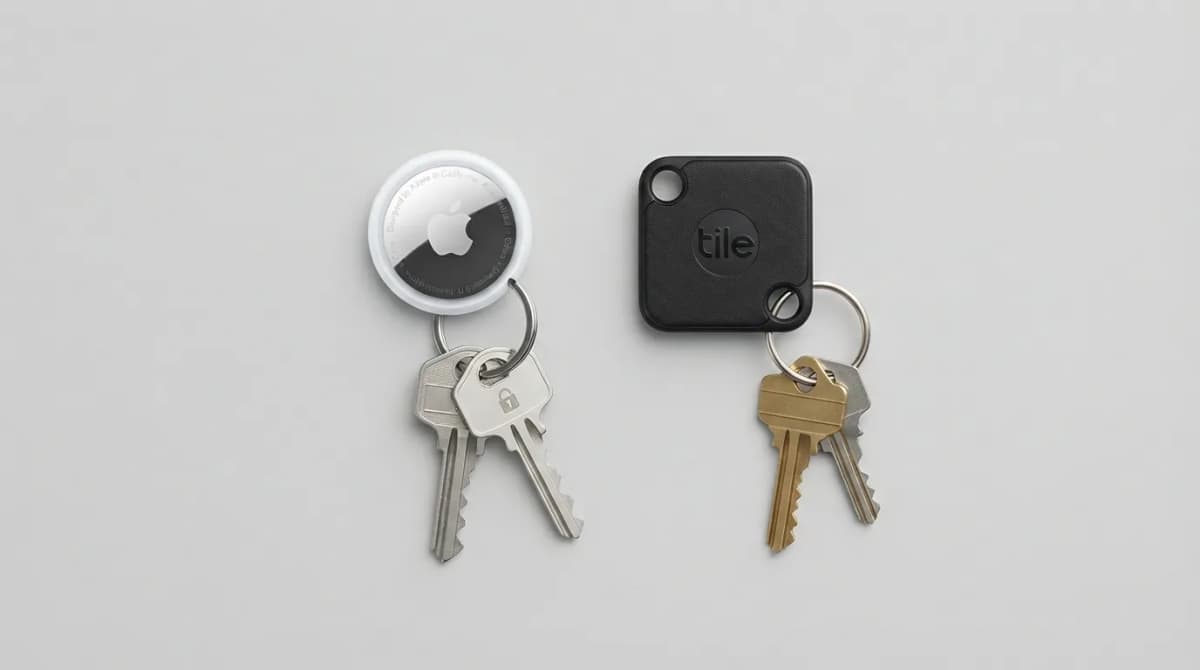
AirTag vs Tile Mate (2026): Which Key Tracker to Buy
Apple AirTag vs Tile Mate for keys: phone compatibility, range, battery and price compared from Apple and Tile maker pages, as of Oct 2026.
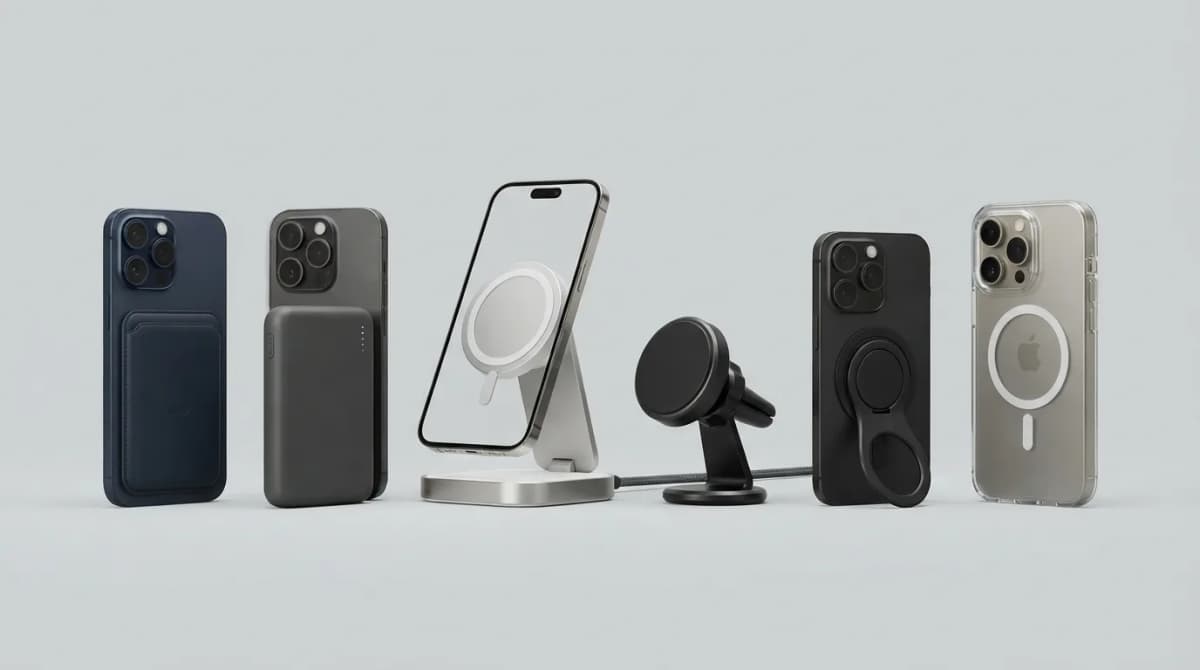
Best MagSafe Accessories for iPhone 18 Pro (2026)
MagSafe and Qi2 accessories for iPhone 18 Pro and Pro Max: wallets, power banks, a dock, car mount, grips, cases, a keyboard, a controller, an SSD and more, with maker specs and prices as of Oct 2026.
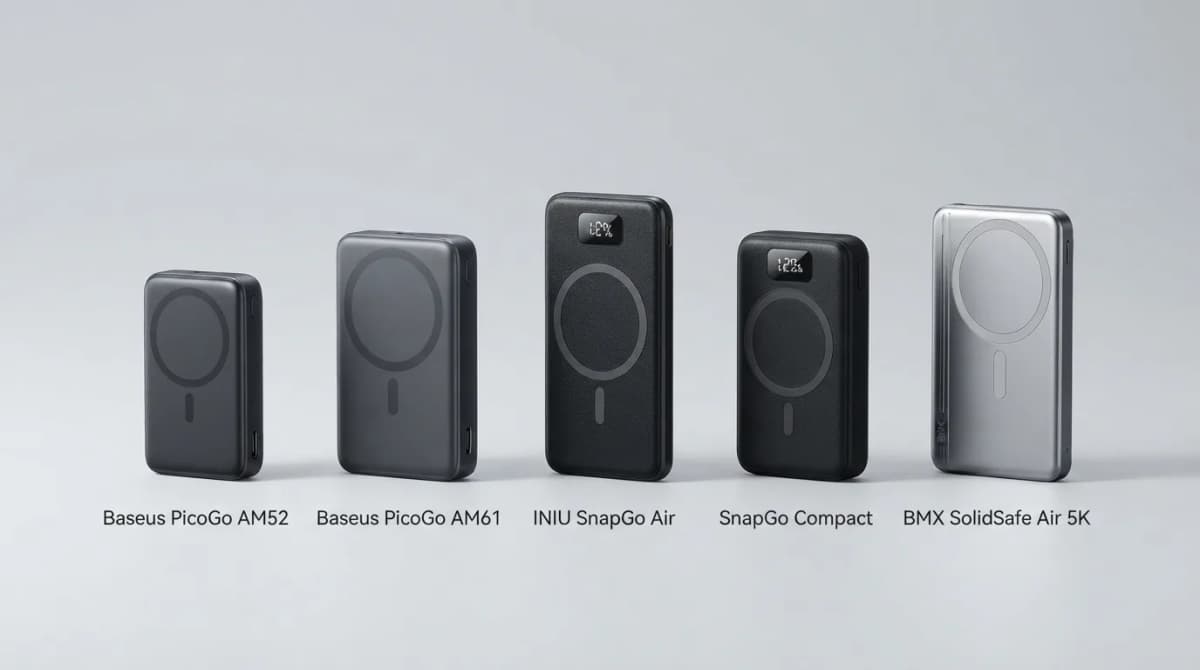
Best Qi2 Power Banks 2026 for iPhone and Android
The best Qi2 and Qi2.2 magnetic power banks for 2026: Baseus PicoGo AM52 and AM61, INIU SnapGo Air and SnapGo Compact, and BMX SolidSafe Air 5K. Prices at publish, Oct 2026.
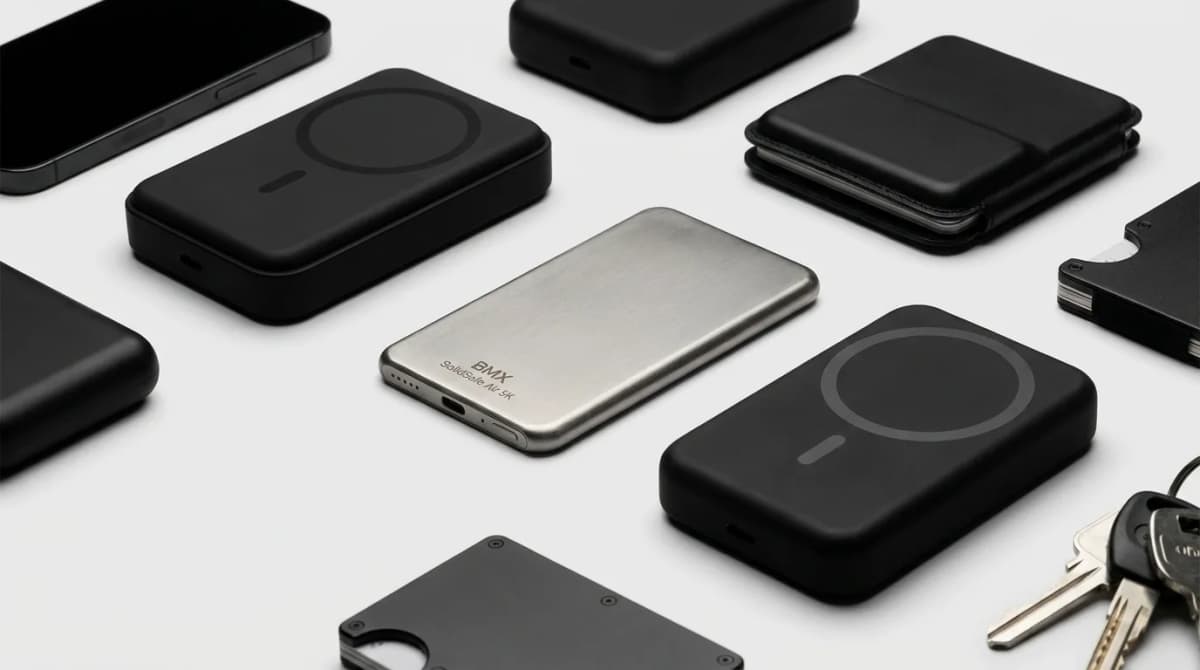
BMX SolidSafe Air 5K: Thinnest Qi2 Power Bank
Thick MagSafe banks die in the bag. BMX SolidSafe Air 5K hits 6.8mm titanium, Qi2 15W, and a semi-solid-state safety pitch — pocket-first EDC power, not another brick. Who buys, who skips.