Best EDC Flashlights 2026: Compact Pocket Lights by Budget
Compact EDC flashlights from $14 to $60, compared on maker lumens, runtime and battery: Sofirn SC18, Olight Baton 4, Fenix E18R V2 and more.

A quality flashlight is one of the most underrated tools you can carry. Whether you're navigating a dark parking lot, searching under furniture, or dealing with an unexpected power outage, a compact EDC flashlight proves its worth over and over again. The modern pocket light market has exploded with options that pack serious output into remarkably small packages - but not all of them are worth your money.
Quick Picks
Our top recommendations at a glance:
- 1
- 2
- 3
- 4
- 5
We compared the most popular compact flashlights on the market on output, build quality, pocket-friendliness, and overall value. Here are the six that earned a spot in our rotation.
Best Budget Pick: Sofirn SC18

Sofirn SC18 Rechargeable EDC Flashlight
$15
1800 lumens from a sub-$20 light sounds too good to be true, but the SC18 delivers. Powered by a single 18650 battery with integrated USB-C charging, it punches well above its price class. The SST-40 LED throws a clean beam out to 217 meters, and IP68 waterproofing means you don't need to baby it.
The Sofirn SC18 is the light we hand to anyone who says "I don't need a flashlight." At this price, there's simply no excuse. The build quality is solid aluminum with knurling that grips well, and the side switch gives you four brightness modes plus strobe. The only trade-off is size - it's slightly larger than some of the more premium options on this list, but it's still very much a pocket light.
Best Compact: Sofirn SC13

Sofirn SC13 Mini Rechargeable Flashlight
$14
The SC13 shrinks things down with an 18350 battery while still delivering 1300 lumens. At just over 3 inches long, it disappears in a coin pocket. The Nichia 519A LED produces a warm, high-CRI beam that renders colors accurately - a genuine advantage when you need to identify things in the dark.
If the SC18 is too chunky for your carry style, the SC13 is the answer. It runs on the shorter 18350 cell, which cuts both length and runtime, but the trade-off is worth it for many carriers. USB-C charging, a magnetic tailcap, and ramping brightness control round out a feature set that has no business being this cheap. The high-CRI Nichia emitter is the real star here - once you see the difference, it's hard to go back to cool white LEDs.
Best Mid-Range: Olight Baton 4

Olight Baton 4 Premium Edition
$55
The Baton 4 is barely larger than your thumb at 2.48 inches, yet it pushes 1300 lumens on turbo and runs for up to 30 days on moonlight mode. The Premium Edition includes a wireless charging case that doubles as a power bank - drop the light in, and it's always topped off.
Olight's Baton series has been a mainstay of the EDC flashlight world for good reason. The Baton 4 refines the formula with a 1300-lumen max output and a 170-meter throw, packed into a body that weighs next to nothing. The magnetic tailcap is genuinely useful for hands-free work, and the proximity sensor automatically steps down brightness when the lens is blocked - a thoughtful safety feature. The wireless charging case eliminates the "I forgot to charge it" problem entirely.
Best All-Rounder: Fenix E18R V2

Fenix E18R V2.0 Rechargeable EDC Flashlight
$60
1200 lumens, six modes including a 1-lumen moonlight, USB-C charging, IP68 waterproofing, and a magnetic base - all in an aircraft-grade aluminum body under 3 inches long. The Fenix E18R V2 checks every box for a do-everything EDC light without compromise.
The Fenix E18R V2 is the light we'd recommend if you could only buy one flashlight. The six-mode interface covers everything from a 1-lumen moonlight mode for reading in a tent to a 1200-lumen turbo for outdoor search tasks. The 16340 battery charges in just 80 minutes via USB-C, and the Type III hard-anodized aluminum body has survived every drop test we've thrown at it. The integrated magnetic base and included pocket clip make it equally at home clipped to a pocket or stuck to an engine bay.
Best for Reliability: Streamlight MicroStream USB

Streamlight MicroStream USB Rechargeable
$39
Streamlight has been building lights for first responders for decades, and the MicroStream brings that professional-grade reliability to EDC. At 3.87 inches and 1.2 ounces, it's pen-sized and virtually disappears in a pocket. Simple two-mode operation - 250 lumens high, 50 lumens low.
Not everyone wants a flashlight with 17 modes and a strobe that could signal the space station. The MicroStream USB is refreshingly simple: click for high, click again for low, click again to turn off. That's it. What you get in return is a light that works every single time, built by a company that stakes its reputation on exactly that. The pen-style form factor with a sturdy pocket clip is ideal for shirt pockets or the small pocket on jeans.
Best for Enthusiasts: Acebeam TAC 2AA

Acebeam TAC 2AA Tactical EDC Flashlight
$50
The TAC 2AA runs on standard AA batteries for universal compatibility or the included USB-C rechargeable lithium battery for maximum performance. Dual fuel flexibility makes it the ideal choice for travel and emergency preparedness - grab AAs from any convenience store and keep going.
The Acebeam TAC 2AA solves a real problem: what happens when your rechargeable light dies and there's no USB port in sight? Its dual-fuel design accepts both standard AA batteries and a dedicated lithium rechargeable cell. On the rechargeable battery, you get the full output. On AAs, you get reduced but perfectly usable brightness. For travel, camping, and genuine preparedness scenarios, this flexibility is unmatched.
What to Look For in an EDC Flashlight
Before picking up any of the lights above, consider these factors:
Output range matters more than max lumens. A light with a useful 1-lumen moonlight mode and a 500-lumen high is more versatile than one that only does 1000 lumens. Multiple modes let you match brightness to the task and conserve battery.
Rechargeable wins for daily carry. USB-C charging has become standard on quality EDC lights. You'll actually keep the light charged if it's as easy as plugging in your phone. Lights with AA/AAA compatibility are better suited to emergency kits.
Size determines whether you'll actually carry it. The best flashlight is the one you have on you. Lights under 3.5 inches and 2 ounces are the most likely to stay in your pocket day after day.
Build quality is non-negotiable. Look for aluminum construction with hard anodizing, IPX-8 or IP68 water resistance, and quality pocket clips. Your EDC light will get dropped, rained on, and generally abused - it needs to handle it.
Related Reading
- How to Build the Perfect EDC Loadout
- The Ultimate Guide to Titanium EDC Pens
- Ti Click EDC Pen: Big Idea Design Titanium Pen Review
- DeckShiv Review: Magnetic Fidget Slider and Utility Knife
- 16 Best EDC Card Tools for Your Wallet
- Carry Less, Do More: Best EDC Multi-Tools Guide
The Weekly Dispatch
Enjoying this article?
Subscribe and get our best gear picks delivered every Sunday morning.
Related Posts
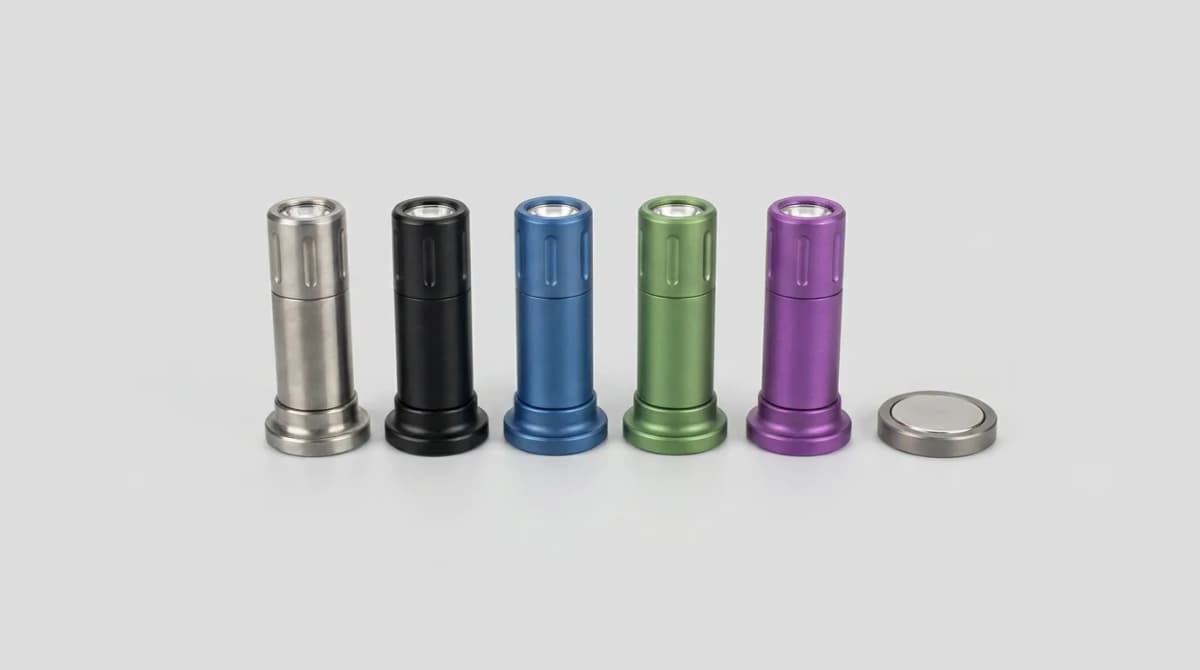
Rodman ED08 2.0: Coin-Size Titanium Light Specs
Rodman's ED08 2.0 is a 36 g Grade 5 titanium keychain light with five colors and a magnetic stand. What changed, what the numbers mean, and who it suits.
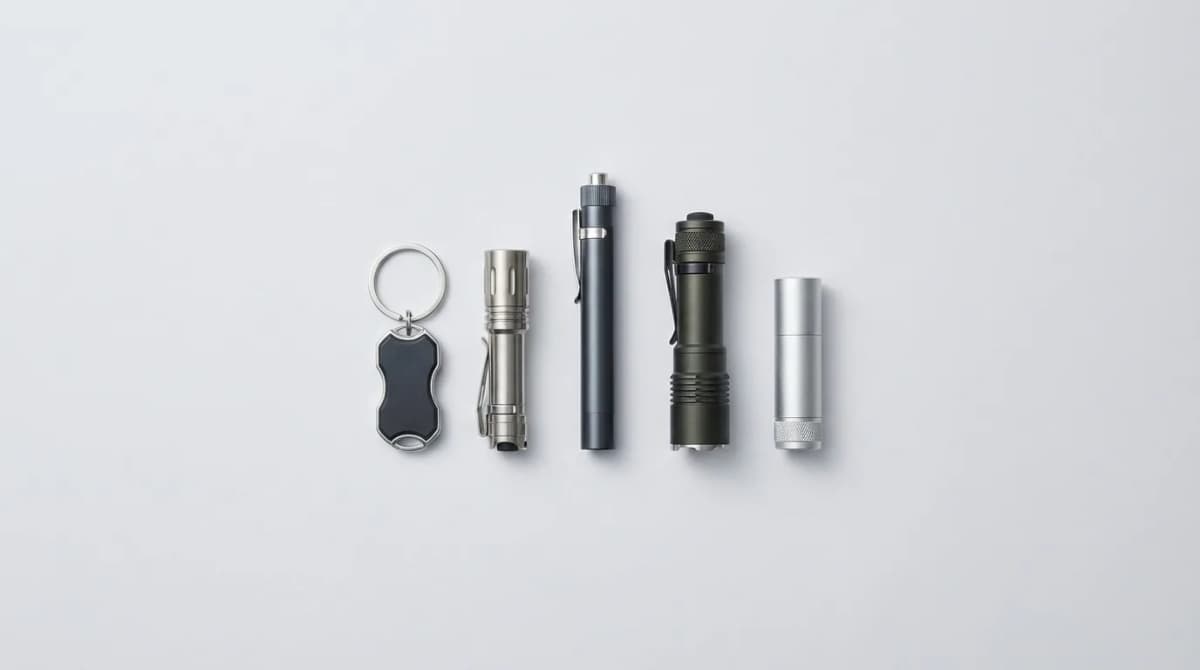
Best Travel Flashlights for Hotel Rooms: Moonlight Picks
Low-lumen moonlight modes for night-time hotel trips, plus enough output for a power cut. Travel flashlights compared by maker specs and carry weight.
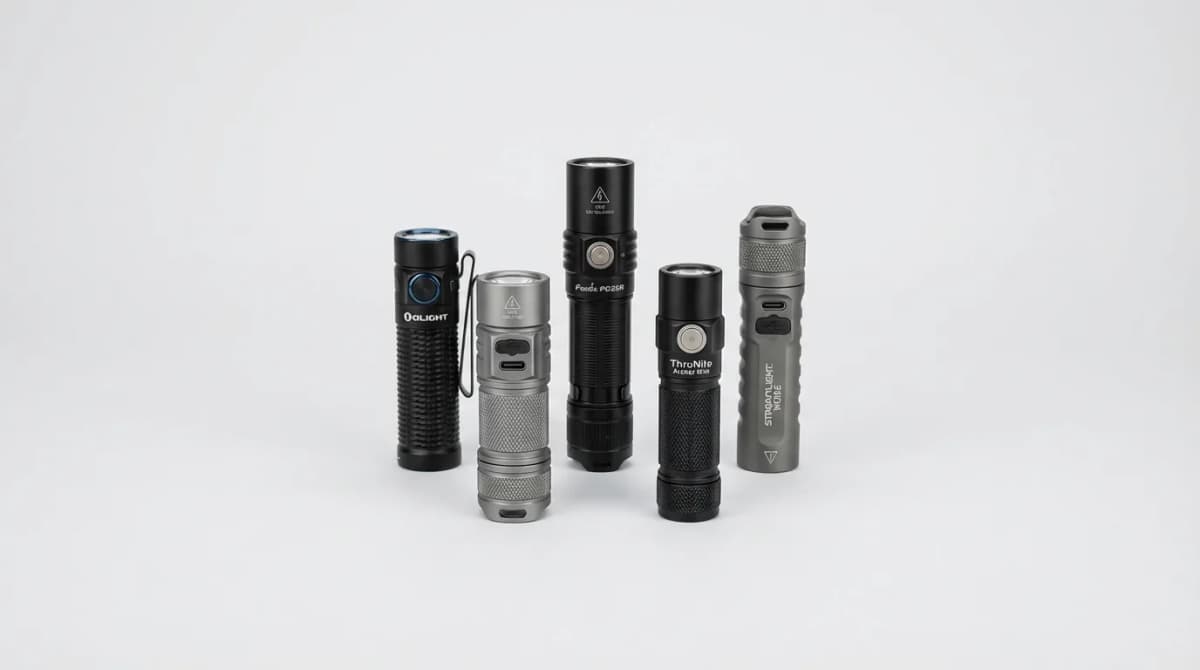
USB-C Rechargeable EDC Flashlights (2026): TIP3, FC11, Wedge
Which EDC flashlights actually charge over USB-C? Nitecore TIP3, Wurkkos FC11 and Streamlight Wedge, plus popular lights that use magnetic chargers instead.
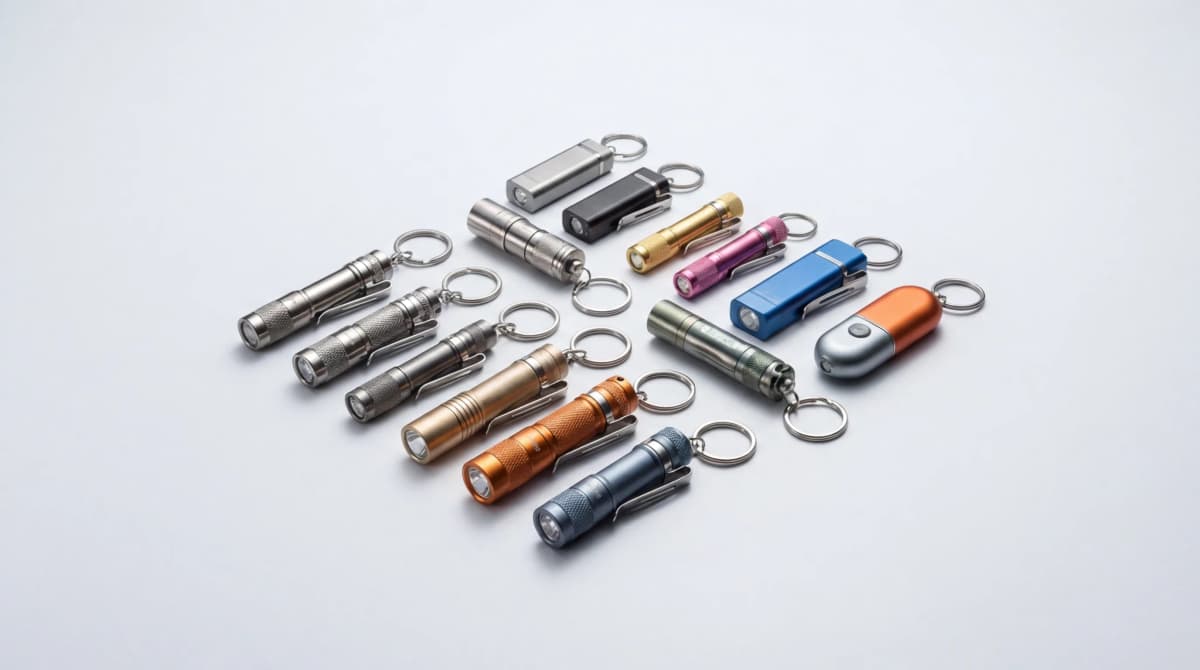
Best Keychain Flashlights (2026): Tiny Lights Under 2 Inches
Keychain-size lights compared by maker specs: Olight i3T EOS, Nitecore TINI 2, RovyVon Aurora A1, Fenix E05R and Streamlight Nano. Clip, size and runtime.