Best EDC Carabiners 2026: Keychain and Gear Clips
The best EDC carabiners and carabiner keychains for 2026: Nite Ize S-Biner and MicroLock, Heroclip Mini, County Comm Key Titan, Maratac GhostLinq and Black Diamond Positron. Gate styles, sizes and real strength needs. Prices at publish, Oct 2026.
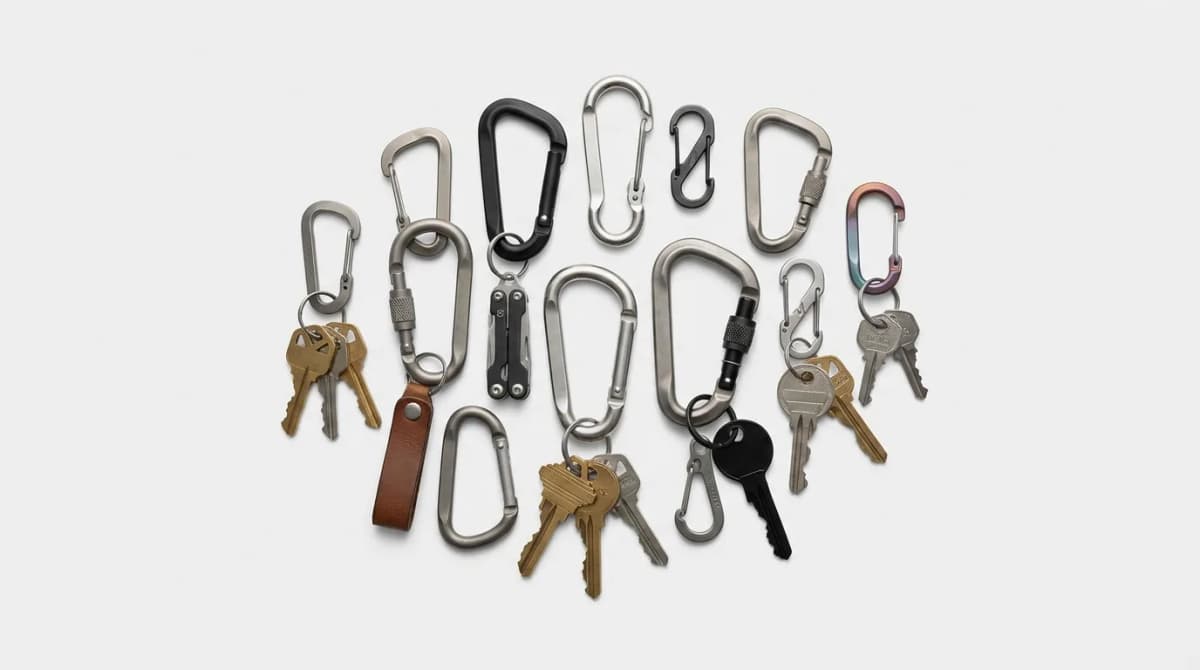
Quick picks: best EDC carabiners (prices at publish, Oct 2026)
Quick Picks
Our top recommendations at a glance:
- 1
Nite Ize S-Biner Stainless Steel #2$3.49, price at publish (Oct 2026)- 2
Nite Ize S-Biner MicroLock Stainless Steel (2-pack)$6.99 (2-pack), price at publish (Oct 2026)- 3
Heroclip Mini$21.95, price at publish (Oct 2026)- 4
County Comm Key Titan$20.95, price at publish (Oct 2026)- 5
Maratac GhostLinq Carabiner$5.95, price at publish (Oct 2026)Advertisement
- Best for keys: Nite Ize S-Biner Stainless Steel #2, 1.9 in, 10 lb rating, $3.49.
- Best locking key clip: Nite Ize S-Biner MicroLock Stainless Steel, 2-pack, $6.99.
- Best for bags: Nite Ize S-Biner Stainless Steel #3, 2.7 in, 25 lb rating, $4.49.
- Best clip-and-hook: Heroclip Mini, holds up to 40 lb, 0.7 oz, $21.95.
- Best titanium: County Comm Key Titan, Grade 5 titanium, up to 5 keys, $20.95.
- Best light aluminum: Maratac GhostLinq, 0.5 oz, 50 lb static, $5.95.
- Best for real loads: Black Diamond Positron Screwgate, 25 kN, $10.95.
Most people buy an EDC carabiner thinking the pound rating matters. It mostly doesn't. Unless you're hanging real weight, a 500-pound rating is marketing. What matters day to day is gate style, size, weight, and whether it catches on your pocket lining every time you reach for your phone. Most bad carabiner keychains fail at the one job they have: letting you detach your keys quickly. They bind up with pocket lint, need two hands, or open by accident in a bag.
| Carabiner | Best for | Key spec (maker) | Price at publish (Oct 2026) |
|---|---|---|---|
| Nite Ize S-Biner Stainless Steel #2 | Keys | Dual gates, 0.8 x 1.9 in, 10 lb rating | $3.49 |
| Nite Ize S-Biner MicroLock Stainless Steel | Locking key carry | Dual wire gates with lock, 2-pack | $6.99 (2-pack) |
| Nite Ize S-Biner Stainless Steel #3 | Bags and belt loops | Dual gates, 1.2 x 2.7 in, 25 lb rating | $4.49 |
| Heroclip Mini | Hanging gear | Clip plus rotating hook, up to 40 lb, 0.7 oz | $21.95 |
| County Comm Key Titan | Premium key carry | Grade 5 titanium, up to 5 keys, suppression ring | $20.95 |
| Maratac GhostLinq | Light bag clip | 6061 aluminum, 2.8 x 1.6 in, 0.5 oz, 50 lb static | $5.95 |
| Black Diamond Positron Screwgate | Real loads | Screwgate, 56 g, 25 kN closed gate, 21 mm opening | $10.95 |
Why Most EDC Carabiners Are Too Big
Many EDC carabiners measure 2.5 to 3 inches. That's fine for a backpack strap or belt loop, but too big for keys. A key ring sits flat, while a carabiner swings. Add three keys, a bottle opener and a USB drive, and you're carrying a flail in your pocket.
Smaller carabiners (1.5 to 2 inches) work better for keys because they keep the weight closer to your pocket. They're easier to work one-handed and don't create the leverage that wears out pocket seams. The trade-off is that smaller gates need more precision to clip, and some tiny carabiners use wire gates that snag on fabric. Go too small, under about 1.5 inches, and you can't fit enough keys on it.
Mid-size carabiners (2 to 2.5 inches) hit the sweet spot for bag attachments and belt carry, and for most people carrying 3 to 7 keys. They're large enough to clip through webbing and D-rings without fumbling, but small enough not to bang your hip every time you sit down. If you carry more keys than that, a key organizer will solve the bulk better than a carabiner.
Best Carabiners for Keys
The S-Biner is everywhere for good reason. Its two spring gates work independently, so you can keep house keys on one end and car keys on the other, then clip the whole set to a belt loop or bag strap. You never have to thread keys onto a closed loop.
Size matters. Nite Ize lists the #2 at 0.8 x 1.9 inches with a 10 lb weight rating, which suits a small key set. The #3 is 1.2 x 2.7 inches and rated to 25 lb, which suits larger key sets, bags and water bottles. The #4 (1.6 x 3.5 inches, 75 lb) is too bulky for pocket carry. For most people the #2 is the one for keys. The stainless #2 is $3.49 each, price at publish (Oct 2026) (Nite Ize, in stock). Stainless resists scratches better than aluminum but adds weight. Nite Ize's aluminum S-Biner currently comes only in #3 and #4 sizes, at $4.99 and $5.99.
One minor annoyance: the gates can pinch skin if you're careless, especially if you have larger hands.

Nite Ize S-Biner Stainless Steel #2
$3.49, price at publish (Oct 2026)
Dual-gate stainless steel carabiner, 0.8 x 1.9 in, 10 lb weight rating (Nite Ize). $3.49 at Nite Ize (price at publish, Oct 2026).
Gate Styles: Wire vs. Solid vs. Screw Lock
Wire gates are lighter and faster to operate, and they bind up less with dirt and cold. The catch is that they snag. Pocket linings, belt loops and backpack straps can all catch on a wire gate, and a snag can open it. They work best for outside attachments, or in dusty, harsh conditions where they resist fouling better than spring gates.
Solid gates (straight or curved) are heavier but smoother. They slide in and out of pockets without catching. The downside is that cheap solid gates use weak springs that lose tension, and a gate that flops open under light pressure defeats the purpose of a carabiner. Gas-station carabiners are the usual culprits.
Screw locks and twist locks add security but slow down access. They suit things you clip once and leave (a water bottle or gear pouch), but they're frustrating for keys you grab 20 times a day. Most people never actually lock a screwgate in daily key use.
Lever and twist-lever locks are rare in EDC sizes but excellent when you find them. The Nite Ize S-Biner MicroLock is the easy example: it pairs two stainless wire gates with a lock that stops accidental opening, and you can leave it unlocked for quick access. Nite Ize sells the stainless MicroLock in a 2-pack for $6.99, price at publish (Oct 2026) (Nite Ize, in stock). A 5-pack is $14.99.
Double-gate designs like the S-Biner offer the best balance of security and convenience. Each gate opens on its own, so one side can stay permanently on a bag or belt loop while you clip and unclip the other.
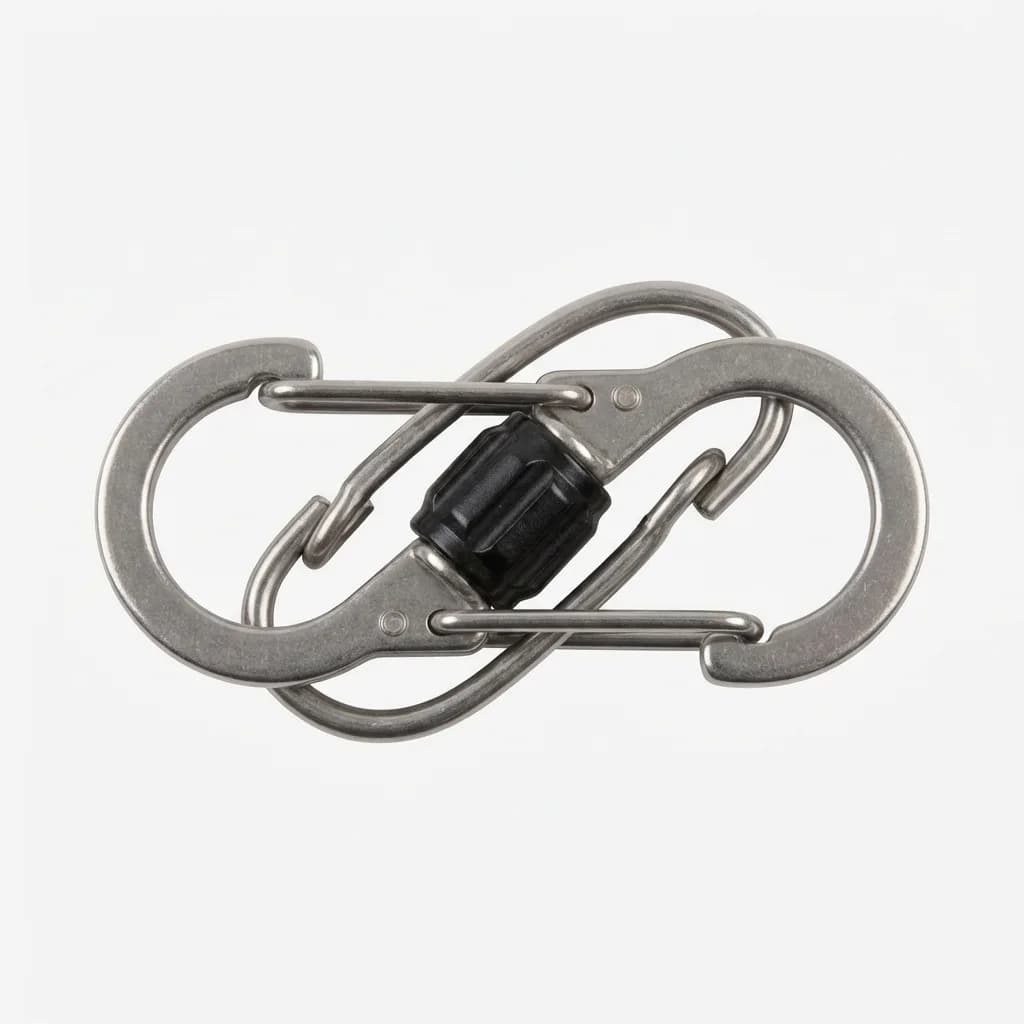
Nite Ize S-Biner MicroLock Stainless Steel (2-pack)
$6.99 (2-pack), price at publish (Oct 2026)
Dual stainless wire gates with a lock to prevent accidental opening. 2-pack. $6.99 at Nite Ize (price at publish, Oct 2026).
Heroclip Mini: when you need a hook
The Heroclip looks overbuilt until you use it the way it's designed. It holds keys, but its real trick is the fold-out hook. Gear Aid says the Mini holds up to 40 lb, rotates 360 degrees, folds compactly and weighs 0.7 oz, with a wider gate than standard clips and a rubber-tipped hook. Use it to hang a bag from a stall door, keep a gym bag off the locker-room floor, or hang a light in a tent. It's $21.95, price at publish (Oct 2026) (Gear Aid, in stock in five colors). Gear Aid marks it "not for climbing."
If you mainly need key duty without the hook, it's overkill. If you often need to hang things in awkward places, the extra cost over a basic carabiner pays off quickly. Anodized finishes scratch where they rub against metal keys, and black shows wear fastest. For magnetic titanium quick-release key systems, see our TiLok vs Titaner comparison.
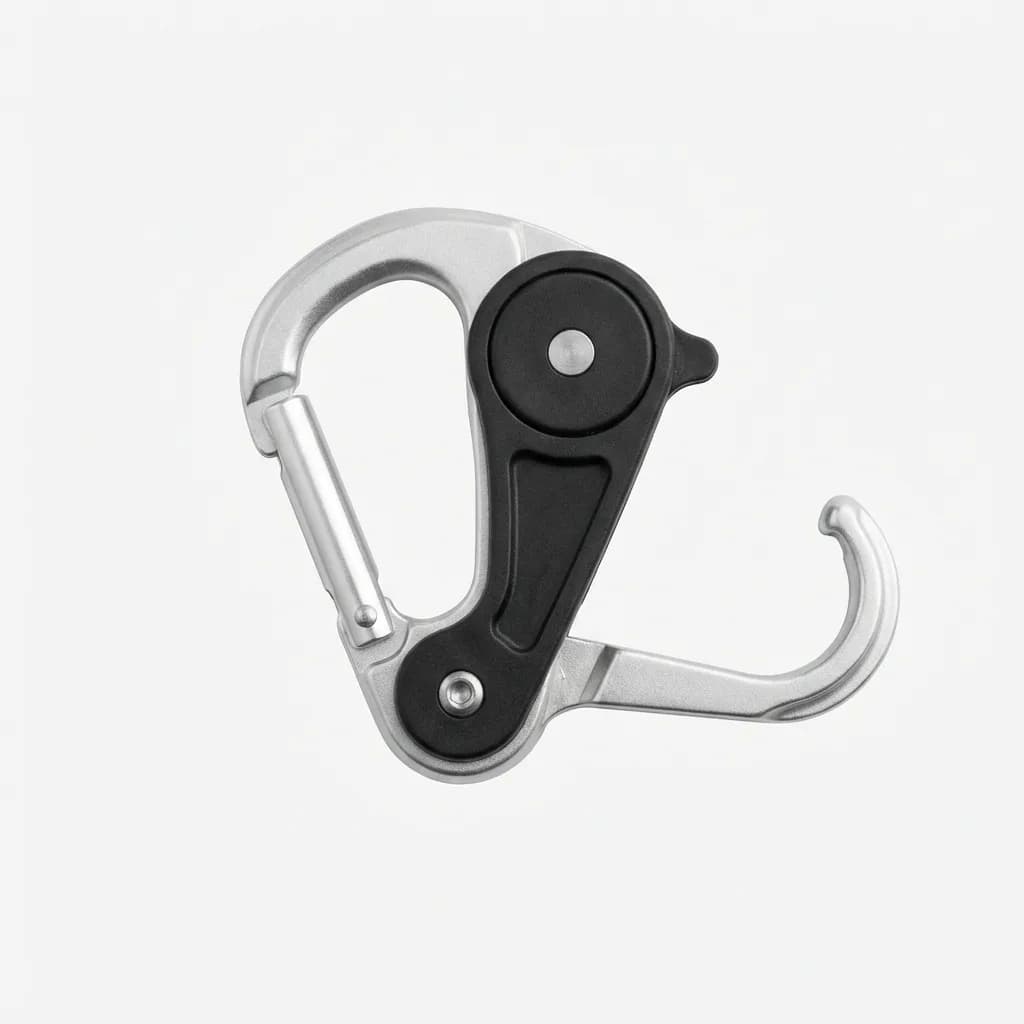
Heroclip Mini
$21.95, price at publish (Oct 2026)
Clip-and-hook hybrid that rotates 360 degrees and folds flat, holds up to 40 lb, 0.7 oz (Gear Aid). $21.95 at Gear Aid (price at publish, Oct 2026).
Material Choices: Aluminum vs. Titanium vs. Stainless Steel
Aluminum is the default: light, affordable and strong enough for EDC loads. Anodizing resists scratches better than bare metal, but any carabiner clipped to keys shows wear within a few months. That's cosmetic, not structural. Bright and natural finishes hide scratches better than black. The Maratac GhostLinq from County Comm is a good light option. County Comm lists it at 2.8 x 1.6 inches and 0.5 oz, machined from 6061 aluminum and rated for a 50 lb static load for non-life-safety gear. It's $5.95, price at publish (Oct 2026) (County Comm, in stock).
Titanium costs several times more than aluminum but doesn't corrode. For a key carabiner that lives in a sweaty pocket, or for marine and humid climates, that's worth something. For a bag clip you attach once, it's overkill, and at keychain sizes the practical benefit over aluminum is small. County Comm's Key Titan is a Grade 5 titanium key carabiner made in the USA. It holds up to 5 keys with a suppression ring that stops them jingling, and it has separate clip zones for keys and a belt loop or bag. It's $20.95, price at publish (Oct 2026) (County Comm, in stock). For a titanium carabiner with a blade, see our Edrin titanium carabiner knife review.
Stainless steel is the heaviest option but the most durable. If you need a carabiner for a workshop, garage or boat, stainless won't bend or corrode, but it can weigh about twice as much as aluminum at the same size. Stainless carabiners with a built-in bottle opener are popular too. See our Dexnor heavy-duty carabiner keychain review for one.
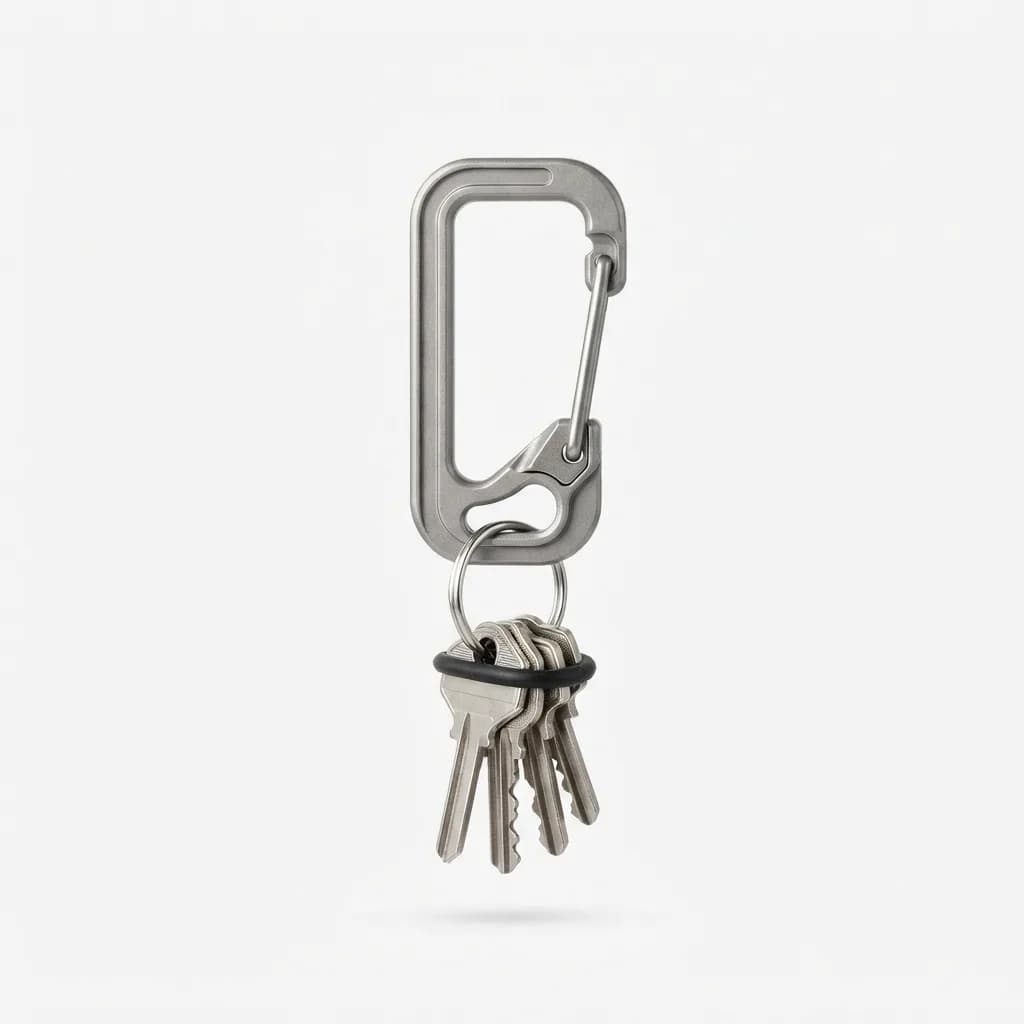
County Comm Key Titan
$20.95, price at publish (Oct 2026)
Grade 5 titanium key carabiner, holds up to 5 keys with a suppression ring, made in the USA. $20.95 at County Comm (price at publish, Oct 2026).
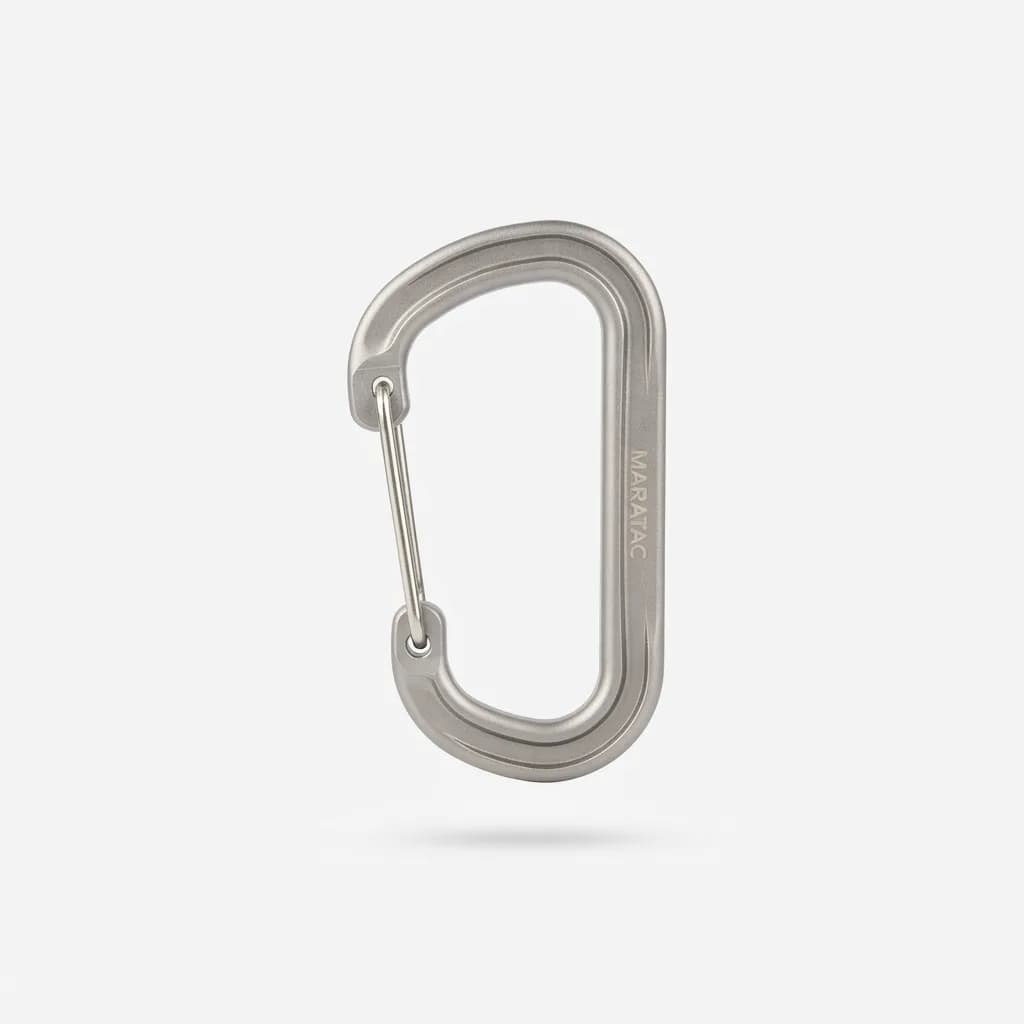
Maratac GhostLinq Carabiner
$5.95, price at publish (Oct 2026)
6061 aluminum carabiner, 2.8 x 1.6 in, 0.5 oz, 50 lb static load for non-life-safety gear. $5.95 at County Comm (price at publish, Oct 2026).
How Much Strength Do You Actually Need?
EDC carabiner ratings run from about 5 lb to several hundred pounds. A keychain weighs a few ounces, and even a full water bottle weighs about two pounds, so you're nowhere near most rated loads. Treat the strength rating as a rough guide to build quality, not a real requirement. A "100-pound" carabiner isn't meant to hold 100 pounds of keys. For keychain duty, a 10 to 25 lb rating is plenty.
Fatigue resistance matters more. A carabiner rated for 200 lb with a weak spring fails at the gate, not the body, when the spring wears out. Look for reviews that mention spring tension over time, not just the strength on the package.
Climbing carabiners are rated in kilonewtons (kN), and EDC clips usually in pounds of static load, so the numbers aren't directly comparable. Climbing biners are certified life-safety gear, and EDC clips are marked "not for climbing" for a reason.
Best Carabiners for Bags and Gear
Bag carabiners need wider gate openings to get through webbing, D-rings and MOLLE loops. Key-size carabiners often open only about a quarter to two-fifths of an inch, which is too narrow for thick straps. Mid-size carabiners open wider and handle most bag attachments. The S-Biner #3 is the easy choice for general bag duty: cheap, widely available, and its two gates connect two items without threading. The stainless #3 is $4.49, price at publish (Oct 2026) (Nite Ize, in stock).
For heavier loads (water bottles, hammocks, tool pouches), step up to a locking carabiner. The Black Diamond Positron Screwgate is a climbing-rated keylock locker small enough for EDC use. Retailer listings give it 56 g (2 oz), 25 kN closed-gate strength, 8 kN open-gate and minor-axis strength, and a 21 mm gate opening. It's overkill for most people, but if you're really hanging weight, it's the baseline. It's $10.95, price at publish (Oct 2026) (Rescue Gear, in stock). A 3-pack is $31.95.
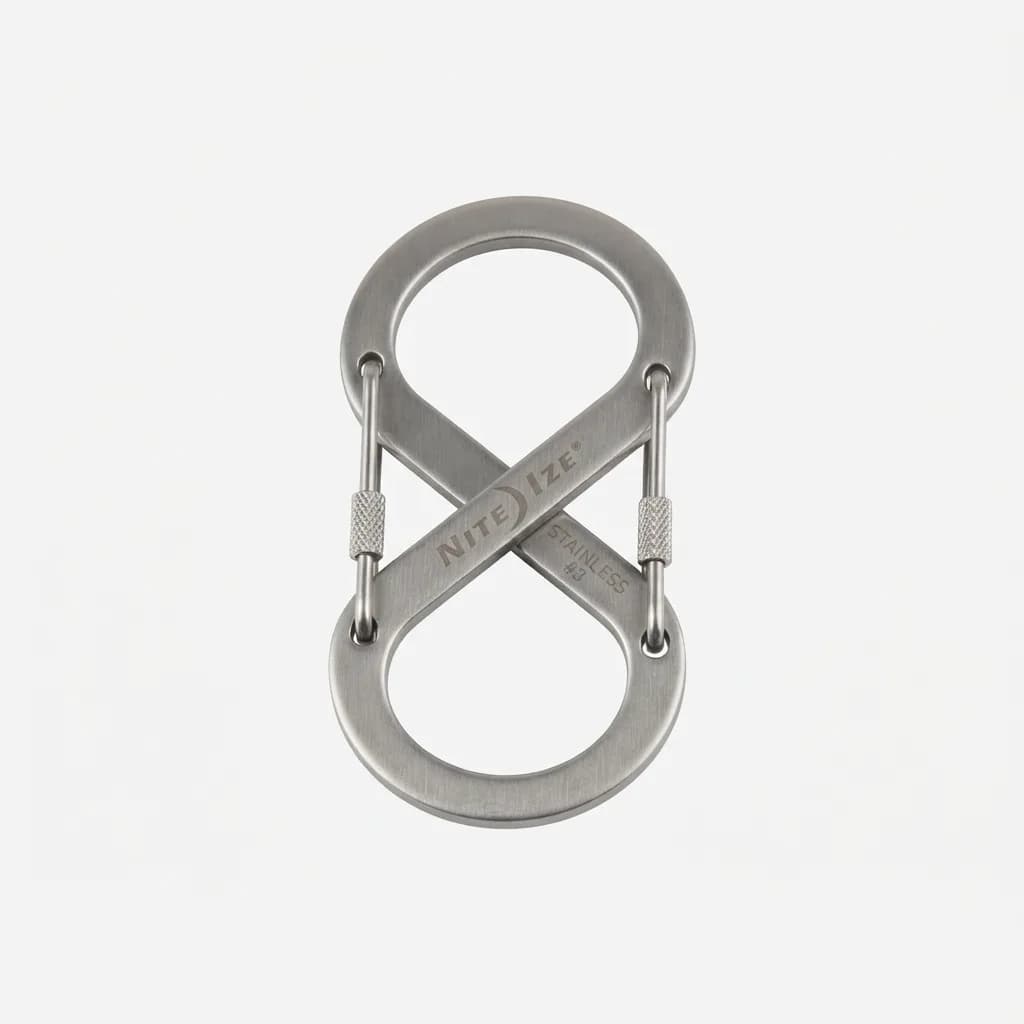
Nite Ize S-Biner Stainless Steel #3
$4.49, price at publish (Oct 2026)
Dual-gate stainless steel carabiner, 1.2 x 2.7 in, 25 lb weight rating (Nite Ize). $4.49 at Nite Ize (price at publish, Oct 2026).
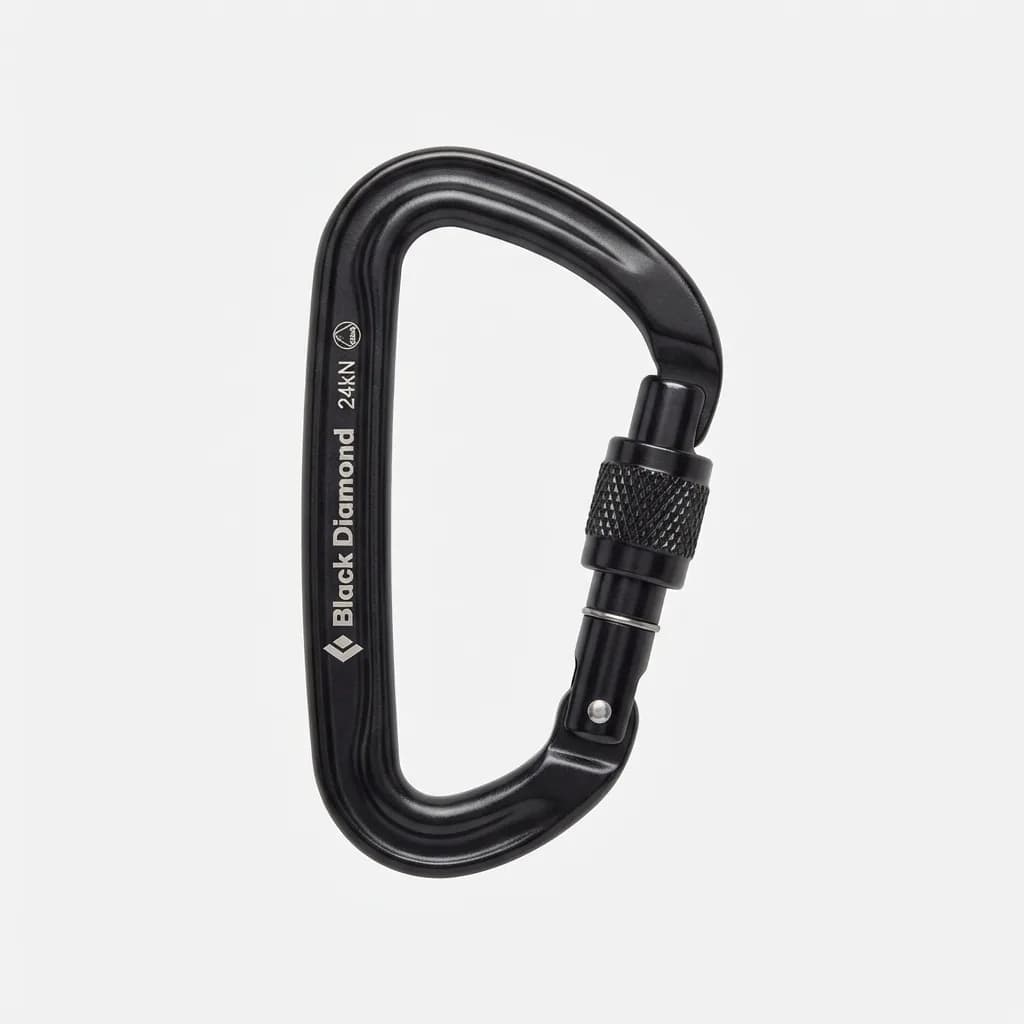
Black Diamond Positron Screwgate Carabiner
$10.95, price at publish (Oct 2026)
Climbing-rated keylock screwgate, 56 g, 25 kN closed gate, 21 mm gate opening. $10.95 at Rescue Gear (price at publish, Oct 2026).
Should you use a climbing carabiner for keys?
Climbing carabiners rated at 20+ kN come up in EDC discussions, but they're the wrong tool for keys. They're heavier and bulkier, and their gate tension is set for safety equipment, not daily convenience. Opening one deliberately is fine on a harness and annoying when you're unlocking a door one-handed while holding coffee. A full-size HMS locker like the Petzl Attache is much heavier than a key-size clip. If you already have climbing carabiners lying around, they'll work, but don't buy one just for keys. Save the Positron-style lockers for real loads.
What About Magnetic Carabiners?
Magnetic carabiners replace the gate with a magnetic closure. They're quick to use and won't pop open from vibration, but they're controversial. Magnets can affect hotel key cards, and a sharp pull at the wrong angle can separate them. The Heroclip uses a mechanical gate, not magnets, for its clip. For most people, a mechanical gate is the safer choice.
How to Avoid Pocket Wear and Tear
Carabiners wear through pocket linings faster than keys or knives, because the curved shape catches on fabric every time you pull out your phone or wallet. There are three fixes:
- Use a dedicated key pocket if your pants have one. It keeps the carabiner away from everything else.
- Go smaller. A 1.5 to 2 inch carabiner has less surface to catch than a 3-inch one.
- Clip to a belt loop instead. This avoids pocket wear entirely, but your keys are easier to snag on door handles and chair arms, and easier for someone else to grab. It's a trade-off.
For clips that hold keys at the top of a pocket instead, see our guide to EDC pocket clips. The KeySmart Nano Clip that earlier versions of this guide listed as a carabiner is really a stainless pocket clip of this kind.
Do You Need a Carabiner at All?
For keys alone, a split ring or key organizer might work better. Split rings are cheaper, thinner and lighter, don't open by accident and don't snag pockets. The downside is that adding or removing keys takes patience and fingernails. If you swap keys often (car shares, loaner keys, seasonal gear), a carabiner is faster.
Key organizers stack your keys like a Swiss Army knife, reducing bulk and jingle. They're less modular than a carabiner, since you can't quickly add a USB drive or bottle opener, but they're better for pure key carry. See our best minimalist keychain organizers and keychain tools you'll actually use.
For bags and gear, carabiners are hard to beat. They're faster than knots, more secure than hooks and easier to move than sewn loops. Just match the size and strength to the real load.
How to choose
- Count your keys. Five or fewer, any pick here works. Up to about seven, choose a 2 to 2.5 inch carabiner. Beyond that, switch to an organizer.
- Match the size to how you carry. Pocket carry wants under about 2.5 inches. Belt loops need a wider gate. Backpacks can take larger clips.
- Choose a material. Stainless for durability and value, aluminum for low weight, titanium for corrosion resistance.
- Decide on extras. A hook (Heroclip) solves "where do I hang this?" Dual gates create a permanent attachment point. Bottle openers add camp and tailgate utility. A plain carabiner is the most reliable.
Real-World Picks: The Bottom Line
For most people, the Nite Ize S-Biner #2 is the right key carabiner: cheap, widely available, and its dual gates solve real problems. Pick the MicroLock if you want a lock, the S-Biner #3 or GhostLinq for bags, the Heroclip Mini if you hang gear often, the Key Titan for a premium titanium key setup, and the Positron when there's real weight on the line. Skip big pound ratings and magnetic gimmicks. If it holds your keys without popping open, it works.
FAQ
What size carabiner is best for keys? About 1.5 to 2.5 inches. The Nite Ize S-Biner #2 is 1.9 inches long according to Nite Ize, which suits most key sets.
Can I use an EDC carabiner for climbing? No. Gear Aid marks the Heroclip "not for climbing," and County Comm says the GhostLinq is for non-life-safety gear. Only certified climbing carabiners like the Black Diamond Positron are made for life-safety use.
Is a titanium carabiner worth it? Only if you want low weight and corrosion resistance for daily pocket carry. For a bag clip, aluminum or stainless is fine and much cheaper.
Wire gate or solid gate? Wire gates are lighter and resist dirt and cold but can snag fabric. Solid gates slide out of pockets more smoothly. For pocket key carry, a dual-gate or locking design is a good middle ground.
Will a carabiner wear out my pockets? It can. Use a smaller carabiner, a dedicated key pocket or belt-loop carry to reduce wear.
Are carabiners with bottle openers any good? They add utility for camping and tailgates. See our Dexnor carabiner keychain review for one example.
The Weekly Dispatch
Enjoying this article?
Subscribe and get our best gear picks delivered every Sunday morning.
Related Posts
Best Keychain Multitools & Tools (2026)
Most keychain tools collect dust, but these compact EDC essentials earn their spot with real utility. From pry bars to USB drives, here's what actually works.
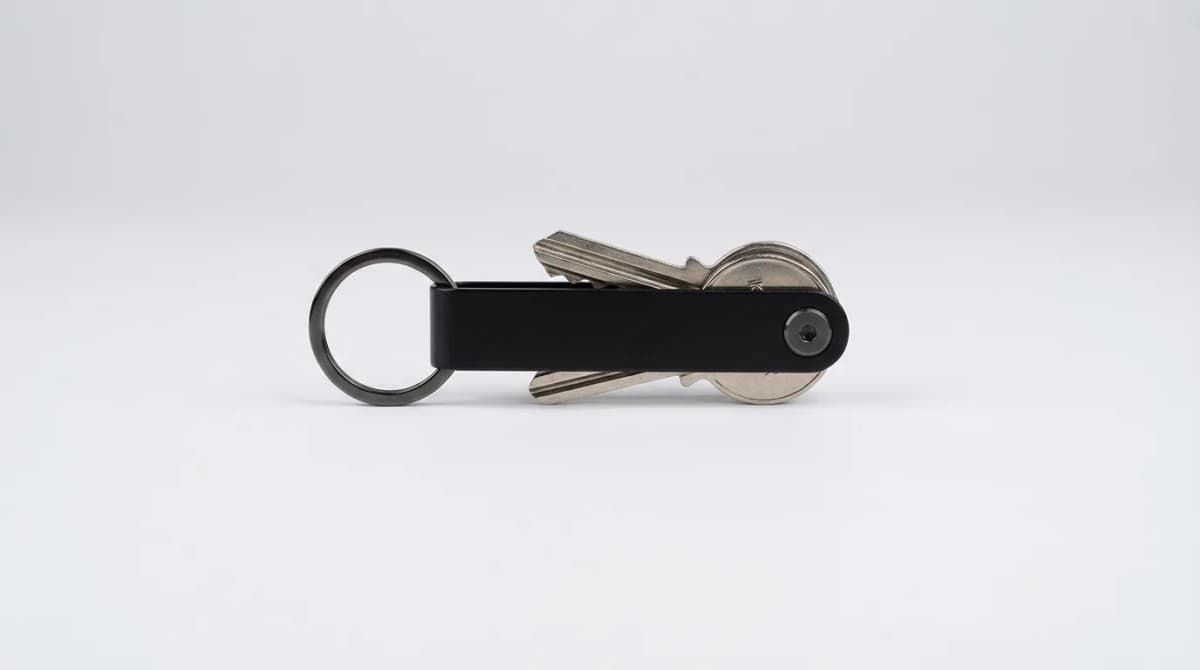
KESTAR Key Chain Review: Business Meets Function
KESTAR car key chain organizer: design, quick-release clasp, key capacity and who it suits, plus KeySmart and Orbitkey alternatives.
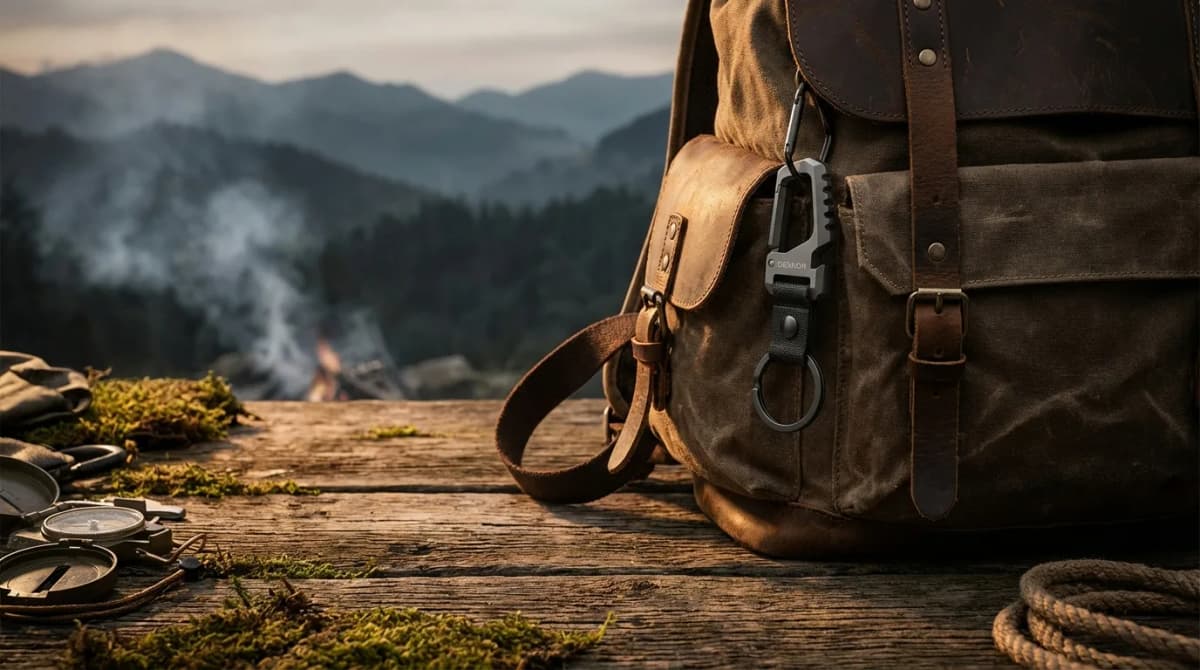
Dexnor Heavy Duty Carabiner Keychain Review
This aerospace-grade stainless steel carabiner keychain combines bottle opener functionality with secure key organization in a compact EDC package.
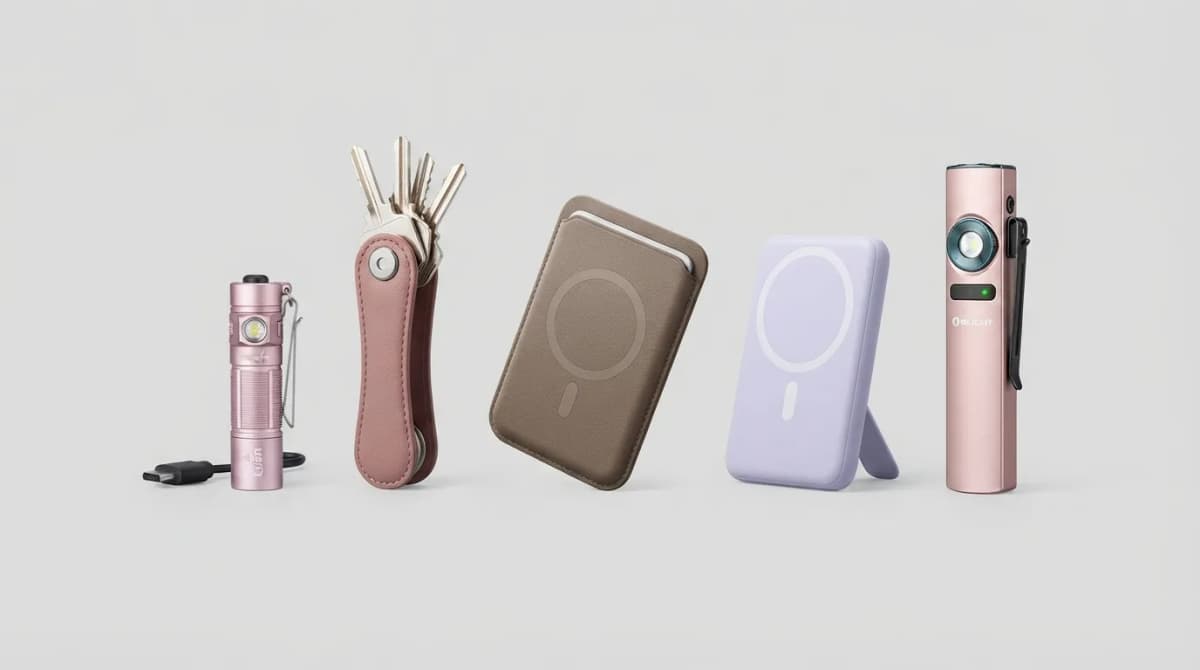
EDC Gifts for Women (2026): Practical Carry Gifts She Will Use
Practical EDC gifts for women: Fenix E05R, Orbitkey Key Organizer, Apple FineWoven Wallet, Anker MagGo 10K and Olight Arkfeld Ultra, with maker specs and prices as of Oct 2026.