Best Bluetooth Trackers 2026: AirTag, Chipolo, Tile and More
AirTag for iPhone, Chipolo ONE Point for Android, Tile Pro for mixed homes, plus Pebblebee and slim wallet cards. Network, battery and price compared, checked Oct 2026.

The best Bluetooth tracker in 2026 is the Apple AirTag (2nd generation) if you use an iPhone ($29), the Chipolo ONE Point if you use Android ($21), and the Tile Pro if your household has both ($34.99). For a wallet, pick a card tracker like the Tile Slim or Pebblebee Card 5. All prices are price at publish (Oct 2026), re-checked on Oct 10, 2026.
Quick Picks
Our top recommendations at a glance:
- 1Apple AirTag (2nd generation)$29 (price at publish, Oct 2026)
- 2Apple AirTag (2nd generation) 4-Pack$99 (price at publish, Oct 2026)
- 3Tile Pro$34.99 (price at publish, Oct 2026)
- 4Tile (Mate)$24.99 (price at publish, Oct 2026)
- 5Chipolo ONE Point$21 (price at publish, Oct 2026)
Quick picks (price at publish, Oct 2026)
- Best for iPhone: Apple AirTag (2nd generation), $29 (4-pack $99). Find My network, UWB Precision Finding.
- Best for Android: Chipolo ONE Point, $21, in stock. Google Find Hub network (formerly Find My Device), replaceable CR2032.
- Best for mixed iPhone/Android homes: Tile Pro, $34.99. Tile network, works on iOS and Android, 500 ft range.
- Best rechargeable: Pebblebee Clip 5, $34.99. Pairs with Apple Find My or Google Find Hub, USB-C charging.
- Best wallet card: Pebblebee Card 5, $39.99, or Tile Slim, $24.99.
- Best for Samsung Galaxy: Galaxy SmartTag2, $29.99 list, sold out at Samsung.com as of Oct 2026. SmartThings Find with UWB on supported Galaxy phones.
The best Bluetooth tracker is the one that uses your phone's own finding network. Specs matter much less than that. Here is how the five main options compare.
| Tracker | Price at publish (Oct 2026) | Works with | Network | Battery | Water rating | UWB precision finding |
|---|---|---|---|---|---|---|
| Apple AirTag (2nd gen) | $29 (4-pack $99) | iPhone/iPad (iOS 26+) | Apple Find My | CR2032, replaceable, 1+ year | IP67 | Yes (2nd-gen UWB) |
| Tile Pro | $34.99 | iOS and Android | Tile (Life360 app) | Replaceable, 1 year | IP68 | No |
| Tile (Mate) | $24.99 | iOS and Android | Tile (Life360 app) | Sealed, 3 years | IP68 | No |
| Tile Slim | $24.99 | iOS and Android | Tile (Life360 app) | Sealed, 3 years | IP68 | No |
| Chipolo ONE Point (Best for Android) | $21 | Android only | Google Find Hub | CR2032, replaceable, ~1 year | IPX5 | No |
| Chipolo CARD Point | $18 | Android only | Google Find Hub | Up to 2 years (renew program) | IPX5 | No |
| Pebblebee Clip 5 | $34.99 | iOS or Android (pick one) | Apple Find My or Google Find Hub | Rechargeable USB-C, up to 12 months | IP66 | No |
| Pebblebee Card 5 | $39.99 | iOS or Android (pick one) | Apple Find My or Google Find Hub | Wireless rechargeable, up to 18 months | IP66 | No |
| Galaxy SmartTag2 | $29.99 list (sold out at Samsung.com as of Oct 2026) | Samsung Galaxy (Android 9+) | SmartThings Find | CR2032, replaceable, up to 500 days | IP67 | Yes, on UWB Galaxy phones |
How to choose: start with your phone
iPhone only? Buy an AirTag. Apple's Find My network is built into every iPhone, and the 2nd-gen AirTag adds a louder speaker and longer Precision Finding range than the original, per Apple. More iPhone gear is in our EDC tech for iPhone users guide.
Android only? Our Best for Android pick is the Chipolo ONE Point ($21), built for Google's Find Hub network (formerly Find My Device). On a Samsung Galaxy phone, the SmartTag2 adds UWB direction finding.
Mixed household? You have two options. Tile works in one app on both iOS and Android, so anyone in the family can see a shared tracker. Pebblebee's Clip and Card pair with Apple Find My or Google Find Hub, so you can match each tracker to whoever carries the item.
After that: pick a replaceable coin cell if you hate charging, or a rechargeable if you hate buying batteries. Then pick the form factor: keyring tag, wallet card or sticker.
Apple AirTag (2nd generation): best for iPhone
Apple released the 2nd-generation AirTag in January 2026, and it's the model Apple sells now. The price is still $29, or $99 for a 4-pack. Apple lists a second-generation Ultra Wideband chip for Precision Finding, Bluetooth for proximity finding, NFC for Lost Mode, IP67 water and dust resistance, and a user-replaceable CR2032 that lasts more than a year. It needs an iPhone running iOS 26 or later, so it isn't an Android option.
Expanded Precision Finding works with iPhone 15 or later and iPhone Air (except iPhone 16e and 17e), and with Apple Watch Series 9, Ultra 2 or later. AirTag has no keyring hole, so budget for a holder. Our minimalist keychain organizer guide covers key setups that fit one.

Apple AirTag (2nd generation)
$29 (price at publish, Oct 2026)
Apple Find My network, 2nd-gen UWB Precision Finding, IP67, user-replaceable CR2032 (1+ year). Requires iPhone with iOS 26 or later (Apple specs, Oct 2026).

Apple AirTag (2nd generation) 4-Pack
$99 (price at publish, Oct 2026)
Four 2nd-gen AirTags for keys, wallet, bag and luggage. Same specs as the single (Apple, Oct 2026).
Tile Pro, Tile and Tile Slim: best for mixed households
Tile is now owned by Life360, and the trackers run in the Life360 app on iOS and Android. They use Tile's own finding network, not Apple's or Google's. All three current models list IP68 and a built-in SOS button that alerts your Life360 Circle.
- Tile Pro: 500 ft (152 m) range, 110 dB+ ring, 1-year replaceable battery, 12 g.
- Tile (the old Mate): 350 ft (106 m) range, 100 dB+, 3-year sealed battery, 8 g. Life360 now sells it simply as "Tile."
- Tile Slim: card-shaped (85.4 x 53.9 x 2.5 mm), 350 ft range, 104 dB+, 3-year sealed battery.
Tile networks are smaller than Apple's and Google's, so it's the compromise pick. You give up some network reach so that every phone in the house works with it.

Tile Pro
$34.99 (price at publish, Oct 2026)
iOS and Android via the Life360 app. 500 ft range, 110 dB+ ring, 1-year replaceable battery, IP68, SOS button (Life360 specs, Oct 2026).

Tile (Mate)
$24.99 (price at publish, Oct 2026)
Budget keyring tracker for iOS and Android. 350 ft range, 3-year sealed battery, IP68, 8 g (Life360 specs, Oct 2026).
Chipolo ONE Point: Best for Android
The ONE Point is an Android-only tracker on Google's Find Hub network. Chipolo lists a 200 ft (60 m) Bluetooth range, IPX5 splash resistance and a replaceable CR2032 that lasts up to a year. Pairing requires Android 9 or later with Google Play Services. It has a built-in keyring hole, so you don't need a holder.
If you want one tracker that works on either platform, Chipolo also sells versions for Apple Find My (the "Spot" line) and models that pair with either network. Buy the version that matches your phone.

Chipolo ONE Point
$21 (price at publish, Oct 2026)
Google Find Hub tracker for Android 9+. 200 ft range, IPX5, replaceable CR2032 up to 1 year, keyring hole (Chipolo specs, Oct 2026).
Pebblebee Clip 5: best rechargeable
Pebblebee's Clip 5 works with Apple Find My or Google Find Hub. You choose one when you set it up, so it suits iPhone and Android owners alike. Pebblebee lists a USB-C rechargeable battery rated for up to 12 months per charge (cable not included), IP66, up to 500 ft (150 m) Bluetooth range, LEDs plus a buzzer, and a double-press to ring your phone. It weighs 10 g.

Pebblebee Clip 5
$34.99 (price at publish, Oct 2026)
Works with Apple Find My or Google Find Hub. USB-C rechargeable, up to 12 months per charge, IP66, up to 500 ft range (Pebblebee specs, Oct 2026).
Samsung Galaxy SmartTag2: best for Galaxy phones
The SmartTag2 runs on Samsung's SmartThings Find network and works only with Galaxy phones and tablets on Android 9 or later. UWB direction finding needs a UWB-enabled Galaxy phone. Samsung lists IP67, Bluetooth 5.3 with up to 120 m range, and a replaceable CR2032 rated for up to 500 days. NFC Lost Mode shows your contact details on any finder's phone.
It's $29.99 list, sold out at Samsung.com as of Oct 2026. Check a retailer for current stock before you buy.

Samsung Galaxy SmartTag2
$29.99 list (sold out at Samsung.com as of Oct 2026)
SmartThings Find for Galaxy phones (Android 9+). UWB on UWB Galaxy models, IP67, replaceable CR2032 up to 500 days (Samsung specs, Oct 2026).
Wallet card trackers
A round tag makes a bulge in a card slot, so wallets need a card-shaped tracker. You have three good options:
- Tile Slim ($24.99): iOS and Android, 2.5 mm thick, 3-year sealed battery.
- Chipolo CARD Point ($18): Android/Find Hub only, 2.4 mm thick, IPX5, up to 2 years, with a renew-and-recycle program when the battery is done.
- Pebblebee Card 5 ($39.99): Find My or Find Hub, wireless rechargeable, up to 18 months per charge, IP66, 15 g.
Check your wallet's slot depth first. Our minimalist wallet guide and smart wallets with trackers review cover wallets that fit a card tracker or have a built-in AirTag pocket.

Tile Slim
$24.99 (price at publish, Oct 2026)
Card-size tracker for iOS and Android. 2.5 mm thick, 350 ft range, 3-year sealed battery, IP68 (Life360 specs, Oct 2026).

Pebblebee Card 5
$39.99 (price at publish, Oct 2026)
Wallet card for Apple Find My or Google Find Hub. Wireless rechargeable, up to 18 months per charge, IP66, 15 g (Pebblebee specs, Oct 2026).

Chipolo CARD Point
$18 (price at publish, Oct 2026)
Android wallet card on Google Find Hub. 2.4 mm thick, IPX5, up to 2-year battery with renew program (Chipolo specs, Oct 2026).
Anti-stalking and unknown tracker alerts
Every tracker in this guide sits on a network with anti-stalking protections. Apple and Google now support cross-platform unknown tracker alerts. If someone else's compatible tracker moves with you over time, your iPhone or Android phone can warn you and let you play a sound on it to find it. Trackers separated from their owner can also make a sound on their own.
If you get an alert:
- Use the alert to play a sound and find the tracker.
- On Android, check Find Hub's unknown tracker scan, or tap the tracker with NFC (AirTag and SmartTag2 support this) to see its details.
- Contact local law enforcement if you think you're being tracked, and keep the tracker's details as evidence.
The same protections affect legitimate use. A tracker in a borrowed bag or shared car can trigger alerts on someone else's phone. For travel, see our smart luggage and tags guide.
Battery: coin cell or rechargeable
Replaceable CR2032 trackers (AirTag, Tile Pro, ONE Point, SmartTag2) keep working as long as you swap the cell. Sealed trackers (Tile, Tile Slim, CARD Point) last up to two or three years before you replace the whole unit. Rechargeables (Pebblebee) get rid of coin cells, but you have to remember to charge them. For a keychain tracker, a coin cell is the lowest-effort choice. For wallets, the card-shaped ones are all sealed or rechargeable.
Building a broader tech carry? See smart EDC: trackers, wallets and charging and budget EDC tech under $50.
FAQ
What is the best Bluetooth tracker in 2026?
For iPhone owners, the Apple AirTag (2nd generation) at $29, because it uses Apple's Find My network and has UWB Precision Finding. For Android owners, our Best for Android pick, the Chipolo ONE Point ($21), on Google's Find Hub network. For mixed households, Tile Pro ($34.99) or a Pebblebee that you pair to each person's network.
AirTag vs Tile: which should I buy?
AirTag if everyone who needs to find the item has an iPhone: Find My is built in and it adds UWB Precision Finding. Tile if you need Android support or want to share a tracker between iPhone and Android users, since the Life360 app runs on both. Tile Pro also has a longer listed range (500 ft) and an IP68 rating.
What is the best tracker for Android?
Our Best for Android pick is the Chipolo ONE Point ($21), which runs on Google's Find Hub network (formerly Find My Device). For a wallet, the Chipolo CARD Point ($18) uses the same network. On Samsung Galaxy phones, the Galaxy SmartTag2 adds UWB direction finding on supported models. Pebblebee Clip 5 and Card 5 also work with Find Hub if you want rechargeable.
Does AirTag work with Android?
No. AirTag requires an iPhone or iPad on iOS/iPadOS 26 or later to set up and track. Android phones can detect an unknown AirTag traveling with them, but they can't own one.
Which tracker is best for a wallet?
A card-shaped tracker: Tile Slim (iOS and Android, $24.99), Chipolo CARD Point (Android, $18) or Pebblebee Card 5 (Find My or Find Hub, $39.99). An AirTag works in a wallet only if the wallet has a dedicated AirTag pocket.
Do Bluetooth trackers need a subscription?
No. AirTag, Chipolo, Pebblebee and SmartTag2 basic finding is free. Tile also works without a subscription. Life360 sells optional paid plans that add extra features.
Does Tile work with iPhone and Android?
Yes. Tile trackers use the Life360 app, which runs on both iOS and Android, so one Tile can be shared between iPhone and Android users. That's the main reason we pick the Tile Pro ($34.99) for mixed households.
What is the best Tile tracker for Android?
The Tile Pro ($34.99) has the longest listed range of the Tile line (500 ft), a replaceable battery and an IP68 rating. If you want a sealed tracker with a listed 3-year battery, the Tile (Mate) is $24.99, and the Tile Slim ($24.99) fits a wallet. All three work on Android through the Life360 app.
What is the best Bluetooth wallet tracker?
For iPhone or Android, the Pebblebee Card 5 ($39.99) pairs with Apple Find My or Google Find Hub and recharges wirelessly. The Tile Slim ($24.99) works on both phone platforms in one app. On Android only, the Chipolo CARD Point ($18) is the cheapest card here.
Comparing just the two best-known trackers? See AirTag vs Tile Mate for a head-to-head on phones, range and battery.
The Weekly Dispatch
Enjoying this article?
Subscribe and get our best gear picks delivered every Sunday morning.
Related Posts
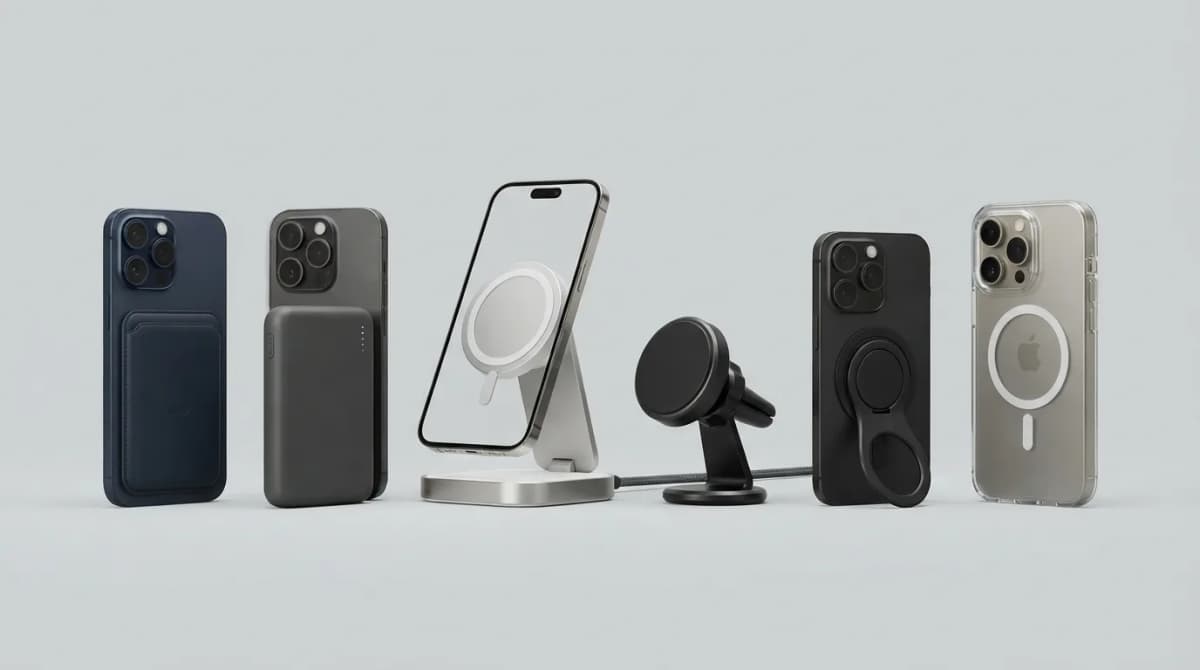
Best MagSafe Accessories for iPhone 18 Pro (2026)
MagSafe and Qi2 accessories for iPhone 18 Pro and Pro Max: wallets, power banks, a dock, car mount, grips, cases, a keyboard, a controller, an SSD and more, with maker specs and prices as of Oct 2026.
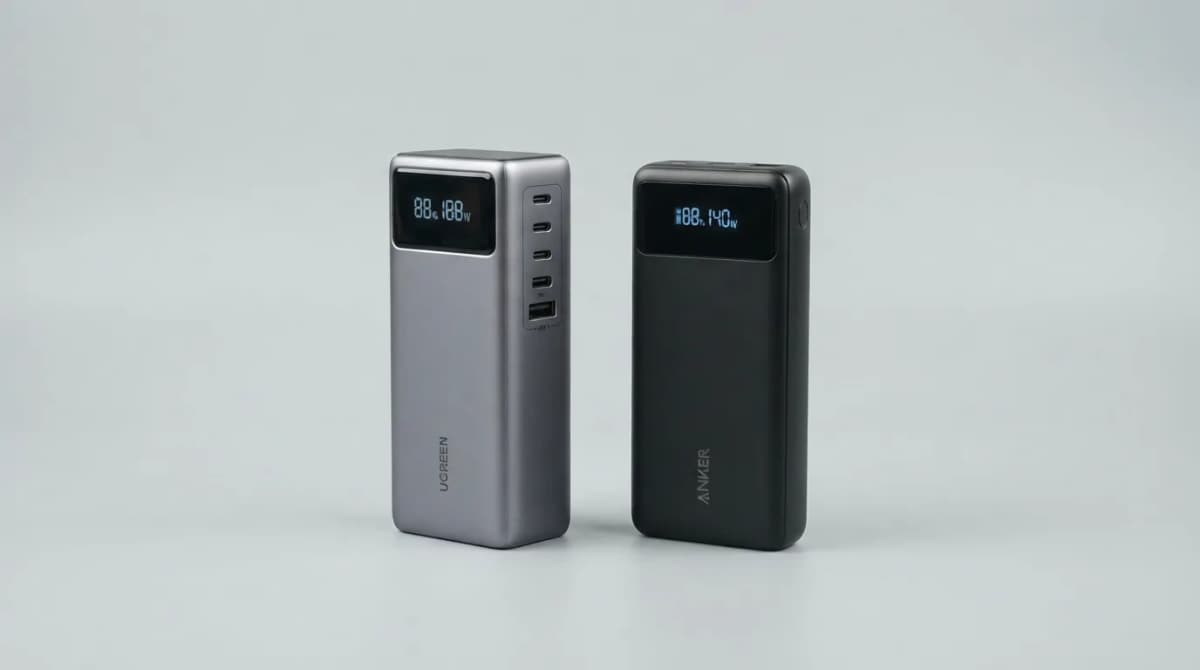
UGREEN Nexode 25000 vs Anker 737 Power Bank (2026)
UGREEN Nexode 25000mAh 200W vs Anker 737: two 140W laptop power banks compared on capacity, ports, recharge speed and weight from maker specs (Oct 2026).
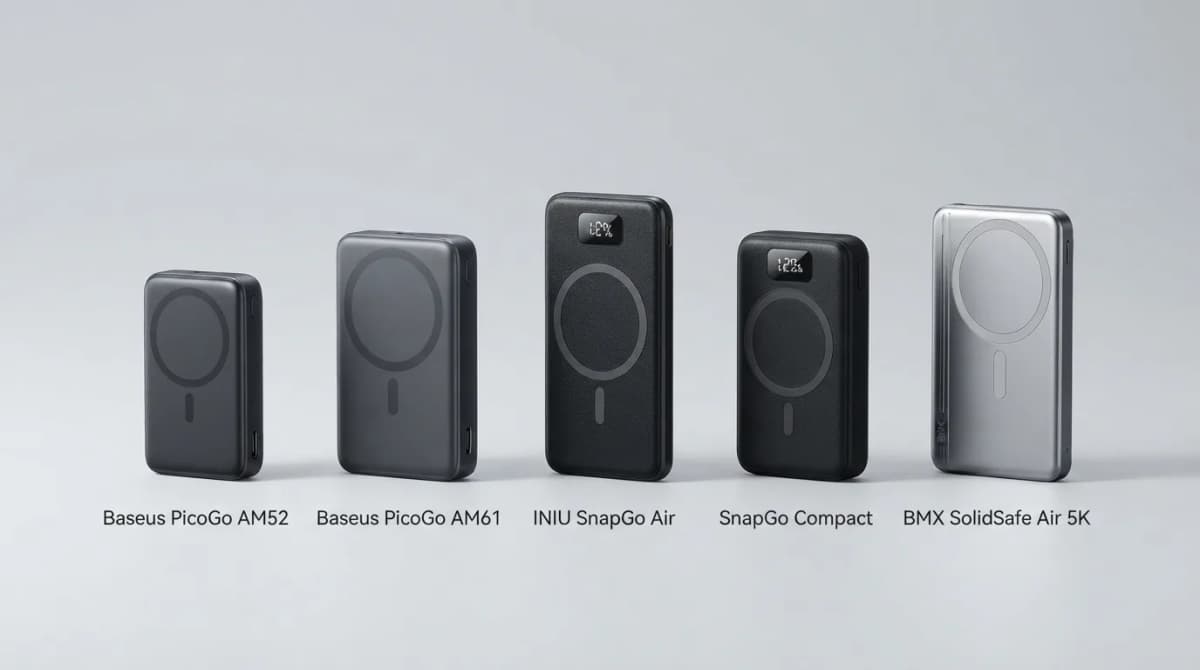
Best Qi2 Power Banks 2026 for iPhone and Android
The best Qi2 and Qi2.2 magnetic power banks for 2026: Baseus PicoGo AM52 and AM61, INIU SnapGo Air and SnapGo Compact, and BMX SolidSafe Air 5K. Prices at publish, Oct 2026.
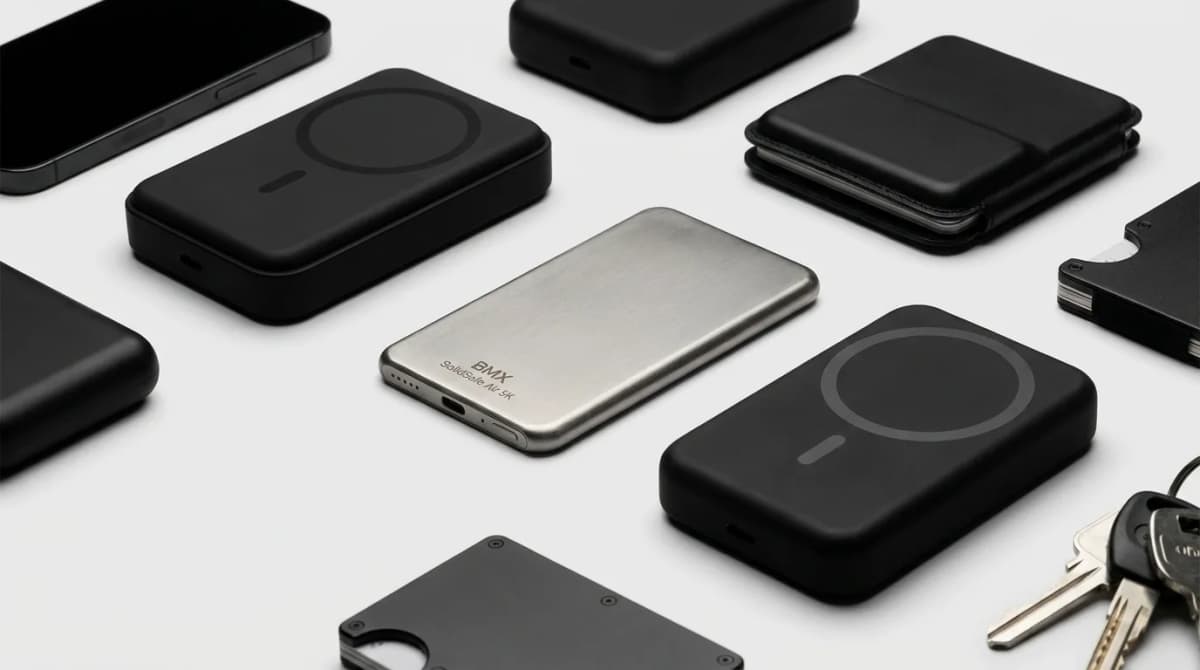
BMX SolidSafe Air 5K: Thinnest Qi2 Power Bank
Thick MagSafe banks die in the bag. BMX SolidSafe Air 5K hits 6.8mm titanium, Qi2 15W, and a semi-solid-state safety pitch — pocket-first EDC power, not another brick. Who buys, who skips.