RFID Blocking: Do You Need It in Your Wallet?
RFID blocking wallets claim to protect your cards from digital theft. But is the threat real, or is it marketing hype? Here's what actually matters.
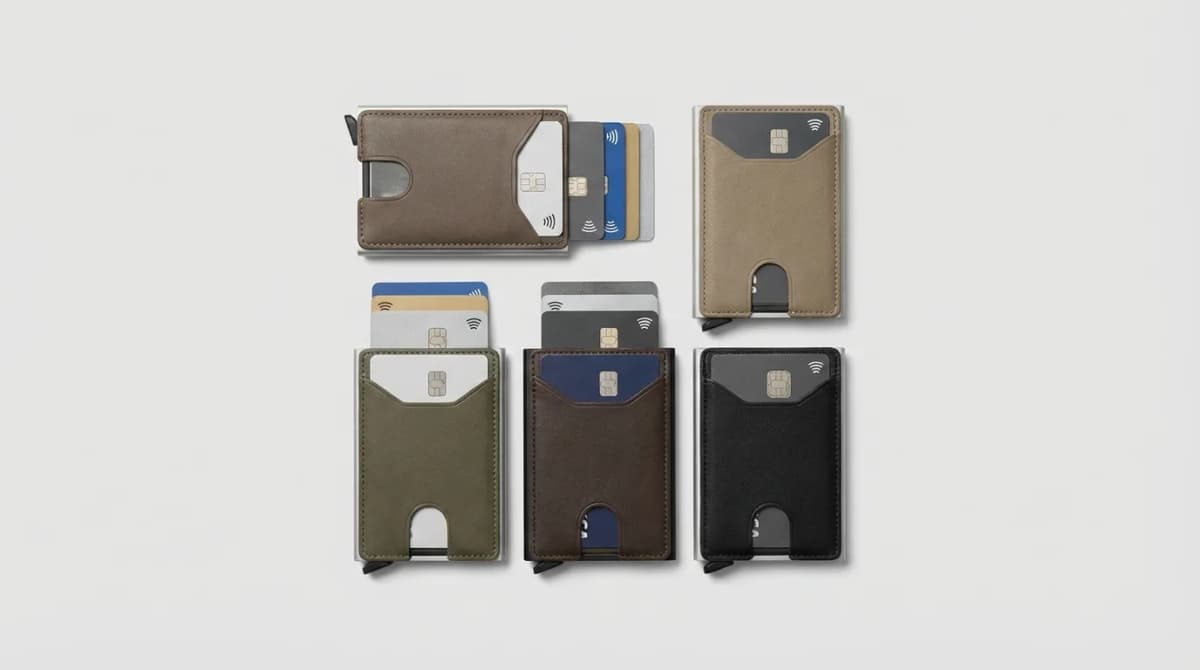
Walk into any wallet section and you'll see "RFID blocking" stamped on half the products. The pitch sounds scary: thieves with handheld scanners stealing your credit card data while you're standing in line at Starbucks. But is this a real threat worth paying extra for, or clever marketing that preys on vague fears?
This guide looks at documented cases of RFID skimming, how blocking wallets work with contactless cards, and what security researchers say. The answer isn't as simple as yes or no. It depends on what cards you carry, where you travel, and how you think about risk.
How RFID Skimming Actually Works
RFID (Radio Frequency Identification) technology lets your credit cards, passport, and some ID cards communicate wirelessly with readers. When you tap your card at a payment terminal, it uses RFID or the related NFC (Near Field Communication) technology to complete the transaction without swiping.
The theoretical threat is this: someone with an RFID reader could walk past you on the street and skim data from your cards through your wallet or bag. They'd capture your card number, expiration date, and maybe your name. That's enough information to make fraudulent online purchases at sites that don't require the CVV code.
Here's what makes this threat mostly theoretical. Modern contactless credit cards generate a unique transaction code for each payment. Even if someone intercepts the data, they can't reuse that code for another purchase. The card number alone isn't enough for most fraud without the CVV and billing address.
Your passport is different. It contains more static information that doesn't change with each scan, including your name, date of birth, nationality, and passport number. That data could theoretically be collected and used for identity theft.
The bigger problem? Documented cases of RFID skimming in the wild are incredibly rare. Security researchers have demonstrated it's possible in controlled settings, but actual theft using this method almost never happens. Criminals have easier, more profitable methods like phishing, data breaches, and old-fashioned card skimmers at ATMs.
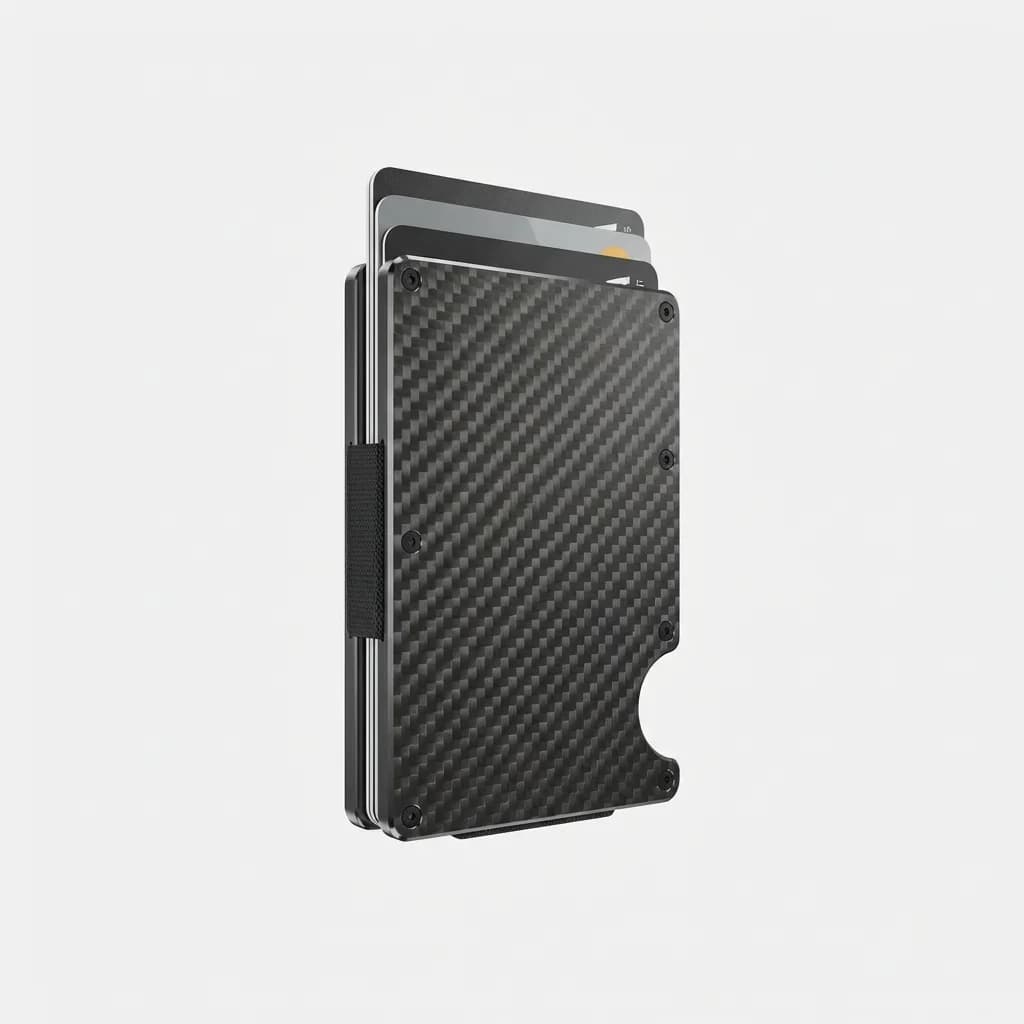
Ridge Wallet
$75-$115
Aluminum or carbon fiber body blocks RFID by default. Holds 1-12 cards with elastic band for cash. Compact, durable, lifetime warranty.
What RFID-Blocking Wallets Actually Do
RFID-blocking wallets use materials that create a Faraday cage, a barrier that blocks electromagnetic fields. The most common materials are metal (aluminum, stainless steel, titanium) or fabric with metallic threads woven in. Some wallets use a thin metallic lining sandwiched between fabric layers.
When your cards are inside an RFID-blocking wallet, readers can't communicate with them. Tap your wallet against a payment terminal and nothing happens. You have to remove the card first. That's the tradeoff: protection against a rare threat in exchange for slightly less convenience.
The blocking effectiveness varies. Metal wallets offer complete protection because the entire structure acts as a shield. Fabric wallets with RFID-blocking material work well if the material covers all sides and there are no gaps. Cheap implementations might have exposed edges or incomplete coverage that leaves your cards vulnerable.
Solid metal wallets block reads when there are no gaps. Quality fabric wallets with full RFID lining also block consistently. Budget wallets with thin or partial RFID material are less reliable and may allow partial reads.
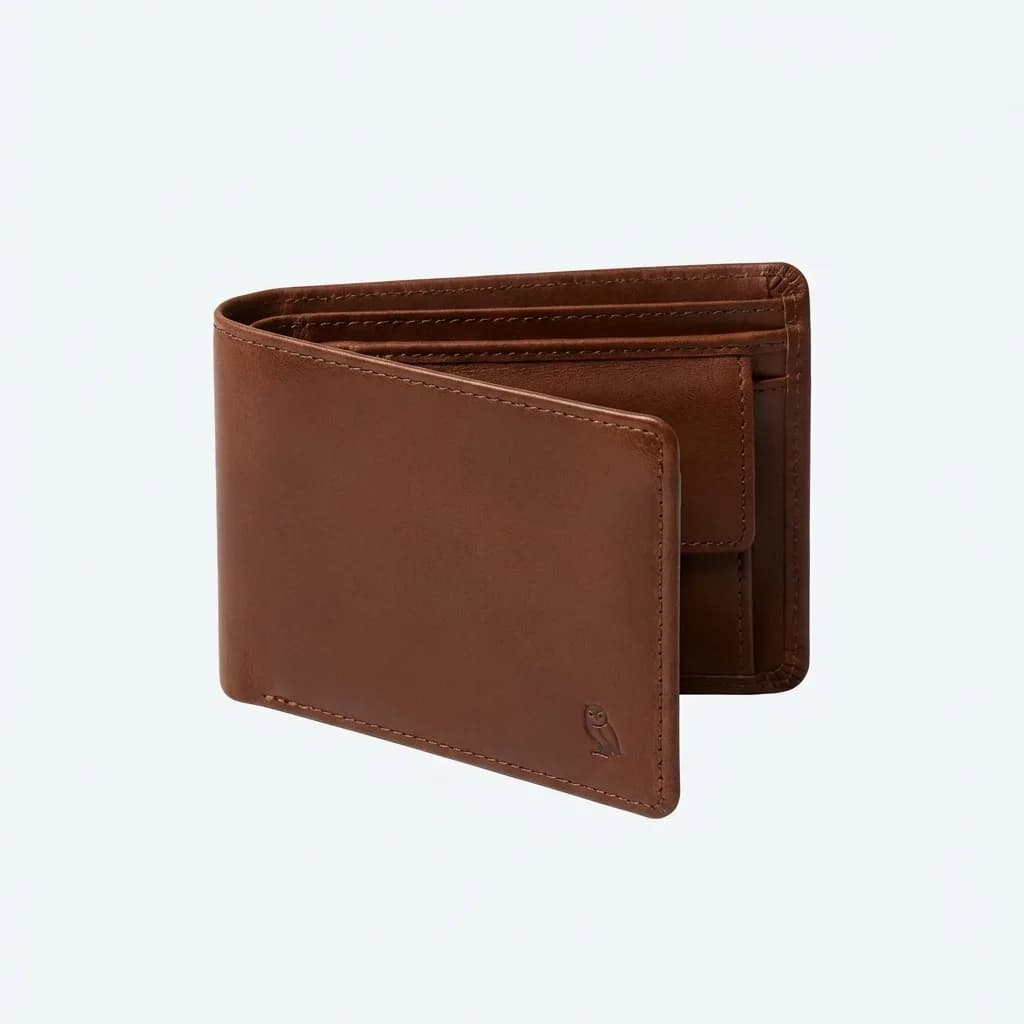
Bellroy Hide & Seek Wallet RFID
$99
Premium leather bifold with RFID-blocking material in card slots. Holds 5-8 cards, bills, coins. Slim profile, available in multiple colors.
Should You Protect Your Passport?
Your passport has more reason to be protected than your credit cards. The chip in your passport (if it was issued after 2007) contains your biographical data and a digital copy of your photo. It uses RFID to communicate with border control readers.
The risk isn't financial fraud, it's identity theft. If someone skims your passport data, they can't clone your passport, but they could use your information to create fake documents, open accounts, or commit fraud in your name. The cryptographic signatures in the passport chip make full cloning nearly impossible, but the basic data is still worth protecting.
Most countries design passports with basic RFID shielding built into the cover. When the passport is closed, a metallic layer in the cover blocks unauthorized reads. This works reasonably well but isn't foolproof, especially if the passport is damaged or the cover is bent.
For international travel, an RFID-blocking passport holder adds a second layer of protection. It's a low-cost, zero-inconvenience solution that addresses a small but real risk. Unlike credit cards, where blocking is arguably overkill, passport protection makes more practical sense.
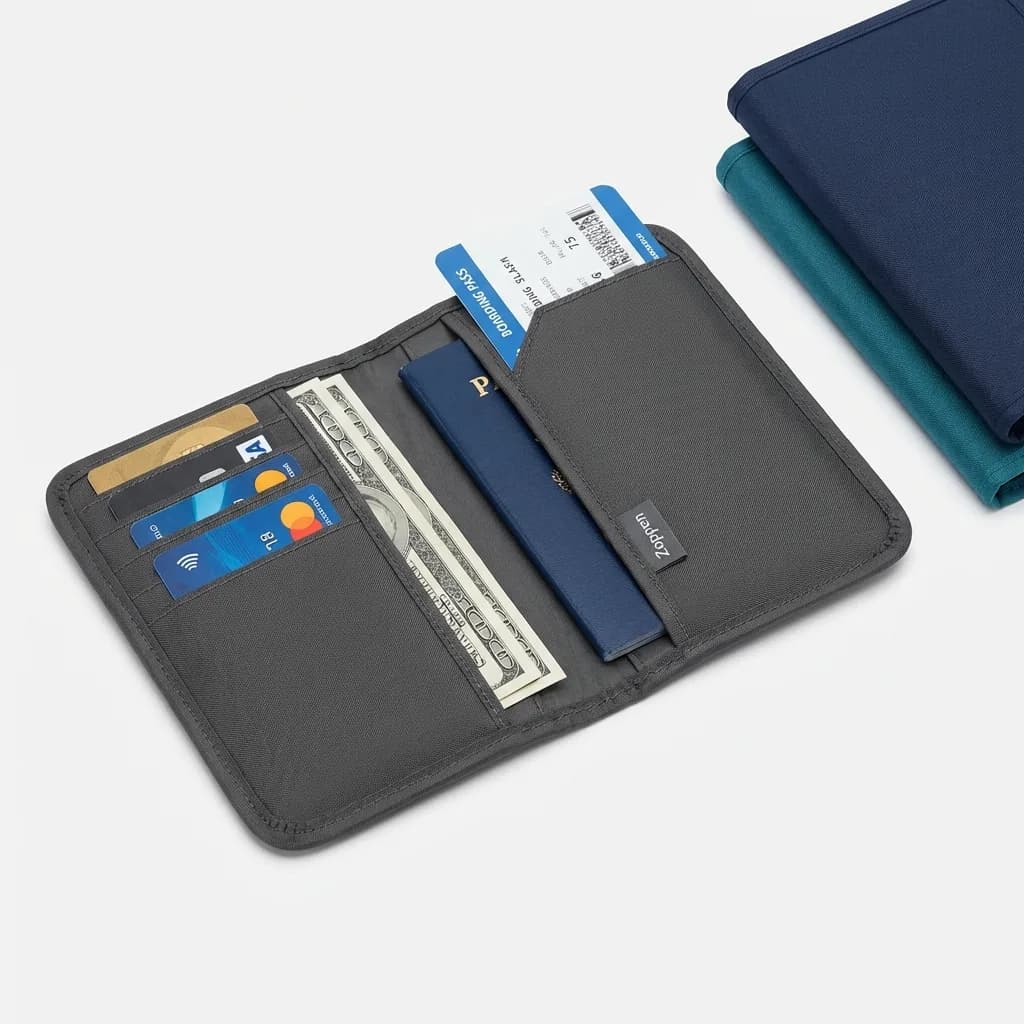
Zoppen RFID Travel Passport Wallet
$14
Holds passport, cards, cash, boarding passes. Full RFID blocking on all slots. Water-resistant nylon, multiple colors, two-year warranty.
Assessing If the Threat Is Real for You
The honest answer is that RFID skimming ranks low on the list of security threats you actually face. You're far more likely to lose your wallet, have your card number stolen in a data breach, or fall victim to a phishing email than to be targeted by an RFID skimmer.
That said, some situations make RFID protection more relevant. If you travel internationally to regions with high rates of pickpocketing and sophisticated theft operations, the extra layer can't hurt. Crowded public transit, tourist areas, and large events are the most plausible scenarios where someone could get close enough to attempt a skim.
If you carry access cards for secure buildings or hotel key cards, those often use RFID and aren't protected by the same security features as credit cards. Someone skimming your access card could gain entry to restricted areas. That's a more realistic concern in corporate or government settings.
For most people in everyday situations, RFID blocking is security theater. It addresses a threat that sounds scary but rarely materializes. The choice comes down to whether you want peace of mind and are willing to accept the slight inconvenience of removing cards to tap for payments.
Here's a practical middle ground: if you're buying a new wallet anyway and two similar options exist, one with RFID blocking and one without, go with the RFID version if the price difference is small. Don't pay a significant premium for the feature alone, but don't avoid it either.
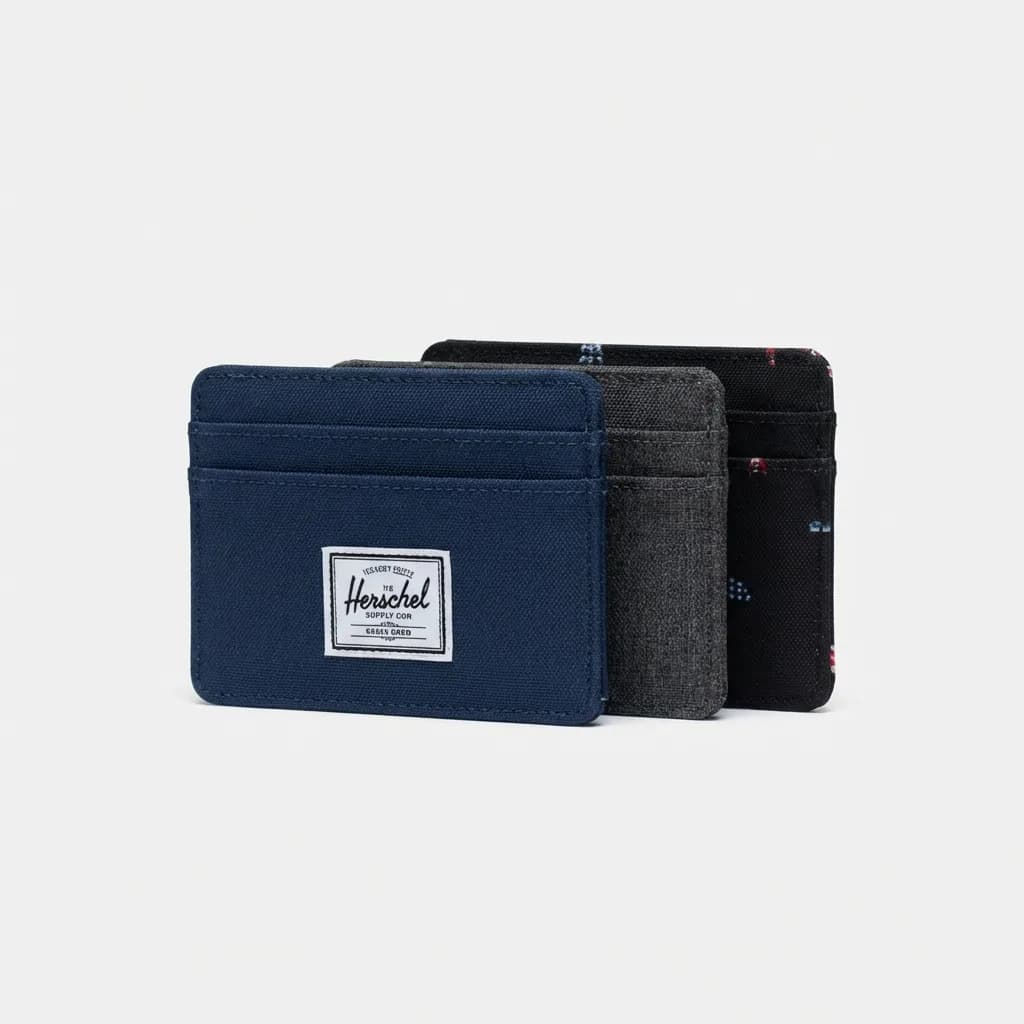
Herschel Charlie Slim Wallet RFID
$25
Fabric card holder with RFID-blocking lining. Holds 6-8 cards. Ultra-slim design fits front pocket. Multiple patterns and colors.
Top RFID Wallet Picks by Use Case
If you've decided RFID blocking is worth having, here's what to look for based on how you carry your wallet and what matters most to you.
For maximum protection and durability, metal wallets can't be beaten. The Ridge Wallet pioneered this category and remains the benchmark. The solid aluminum or carbon fiber body provides complete RFID blocking with zero chance of wear or failure over time. It forces you to carry minimal cards (1-12 depending on model) and cash goes under an elastic band rather than in a traditional bill fold. It's bulky for a front pocket but indestructible.
Leather traditionalists who want RFID protection without changing wallet styles should look at bifolds with integrated blocking. The Bellroy Hide & Seek is our top pick here. It looks and functions like a normal leather wallet but has RFID-blocking material layered into the card slots. You get the classic feel and layout with modern protection. The leather breaks in beautifully and Bellroy's build quality means it'll last for years.
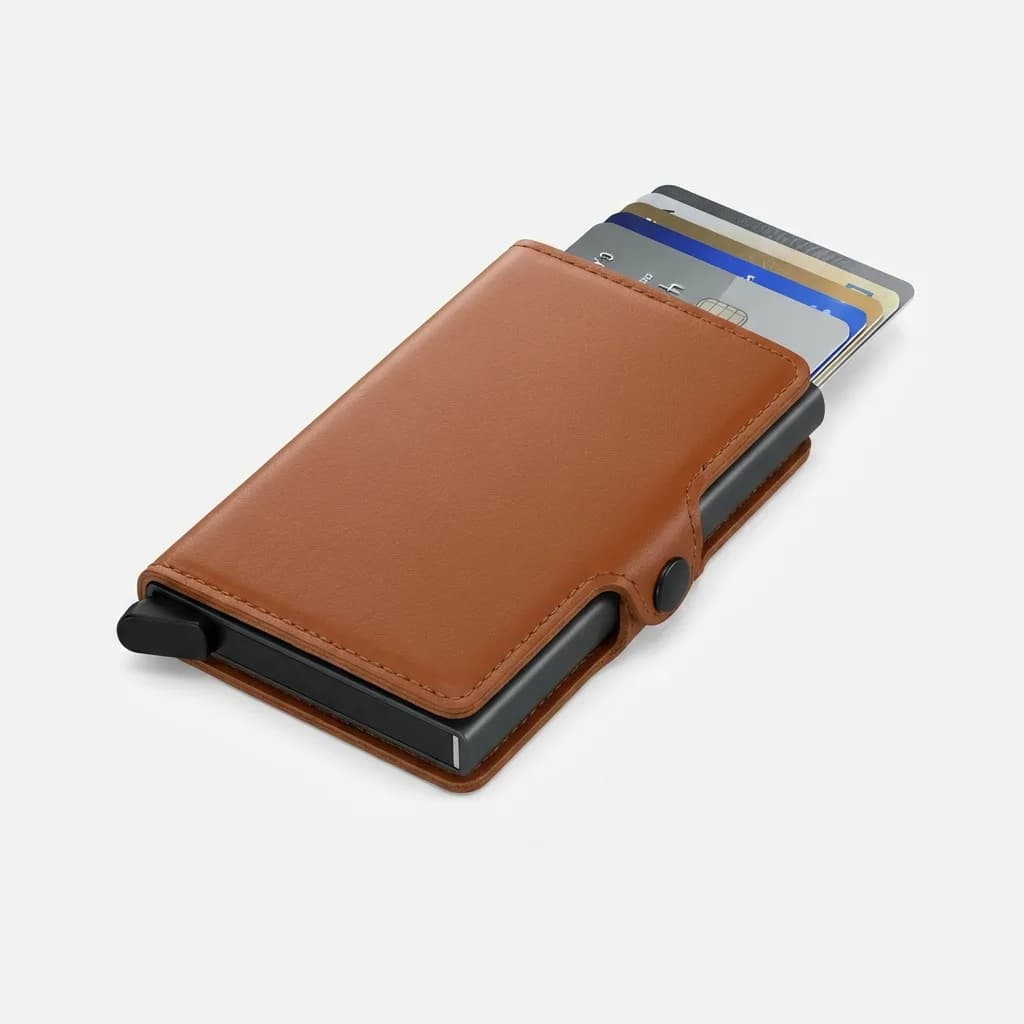
Secrid Slimwallet
$65-$95
Dutch design with aluminum card protector and leather exterior. RFID blocking, quick-access mechanism ejects cards with one motion. Compact and clever.
For travel, prioritize passport protection and organization over everyday carry size. The Zoppen travel wallet is hard to beat at its price point. It holds your passport, cards, cash in multiple currencies, boarding passes, and a pen. Full RFID blocking covers everything. It's too large for daily use but perfect for airport and hotel security.
Minimalists who want the thinnest possible profile should consider the Herschel Charlie or similar fabric card holders. These are barely thicker than the cards themselves. RFID blocking is woven into the fabric, so there's no added bulk. They hold 6-8 cards comfortably, and you can fold a few bills behind the cards. No coin pocket, no extra features, just cards and protection. If you'd rather carry your cards on the back of your iPhone, see our best MagSafe wallets.
The Secrid Slimwallet offers a unique middle ground. The core is an aluminum card protector (full RFID blocking, holds 4-6 cards) with a leather exterior that expands for a few more cards and cash. Press a tab and your cards slide out in a cascading stack for easy selection. It's clever, compact, and distinctively designed. More expensive than basic options but worth it if you value the mechanism.
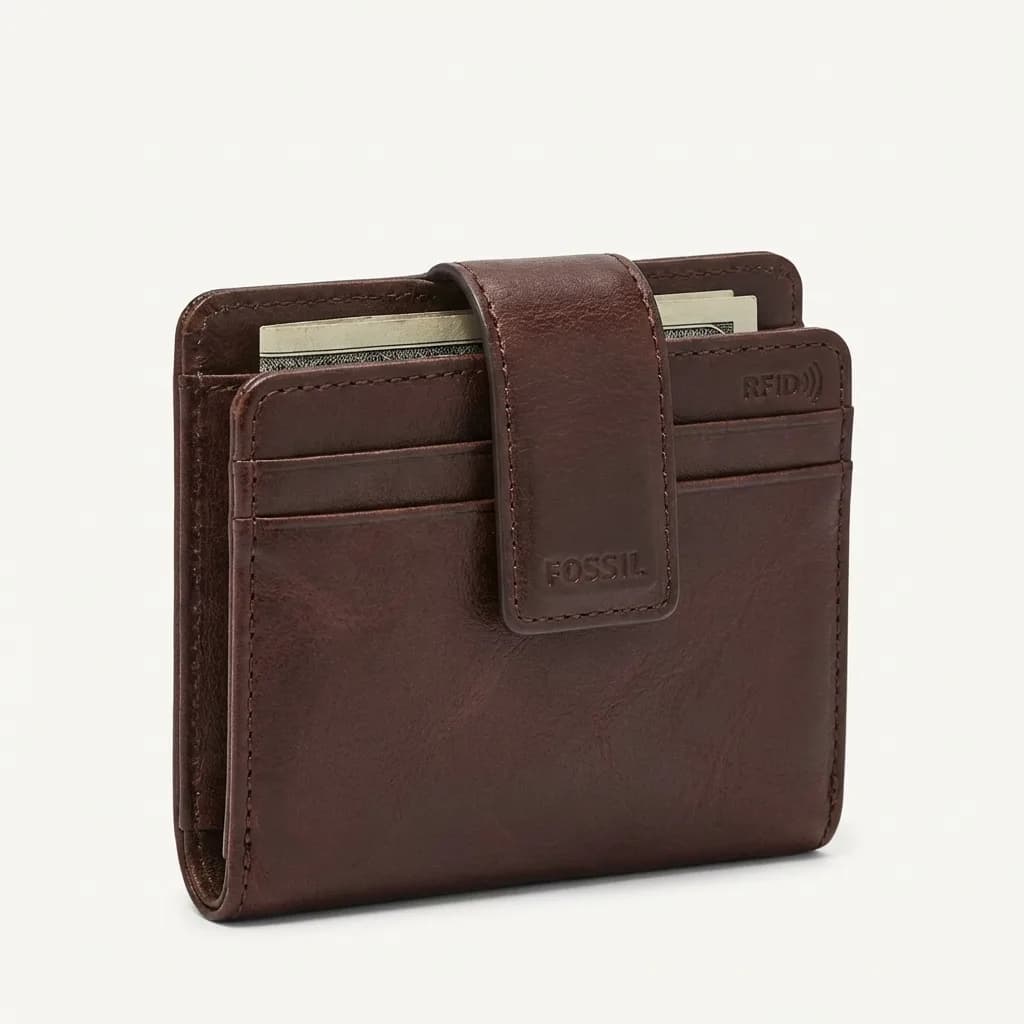
Fossil Derrick Magnetic Card Case RFID
$30
Leather front-pocket wallet with magnetic closure. RFID protection, holds 4-5 cards and folded bills. Classic Fossil styling, multiple leather finishes.
Making the Right Choice
RFID blocking isn't essential for most people, but it's not pure snake oil either. The threat is real in the sense that the technology to skim cards exists and works in demonstrations. It's overblown in that actual documented theft using this method is vanishingly rare.
If you're buying a wallet and RFID protection is included without much price premium, there's no reason to avoid it. Think of it like a screen protector - you might never experience the specific damage it prevents, but having it doesn't hurt.
Skip the premium if you're paying significantly extra solely for RFID blocking. Your money is better spent on a higher-quality wallet with better materials, construction, and design. Good leather or solid stitching will serve you longer than protection from a threat that may never materialize.
Do consider RFID protection seriously if you travel internationally, especially to regions where organized theft is common. Pack an RFID passport holder regardless of your everyday wallet choice. It's cheap insurance against a low-probability but high-impact risk.
The best approach is to understand what RFID blocking actually does, assess your real risk level, and make an informed choice based on your situation rather than fear-based marketing. Your wallet should work for how you live, and for most of us, RFID skimming isn't keeping us up at night.
The Weekly Dispatch
Enjoying this article?
Subscribe and get our best gear picks delivered every Sunday morning.
Related Posts
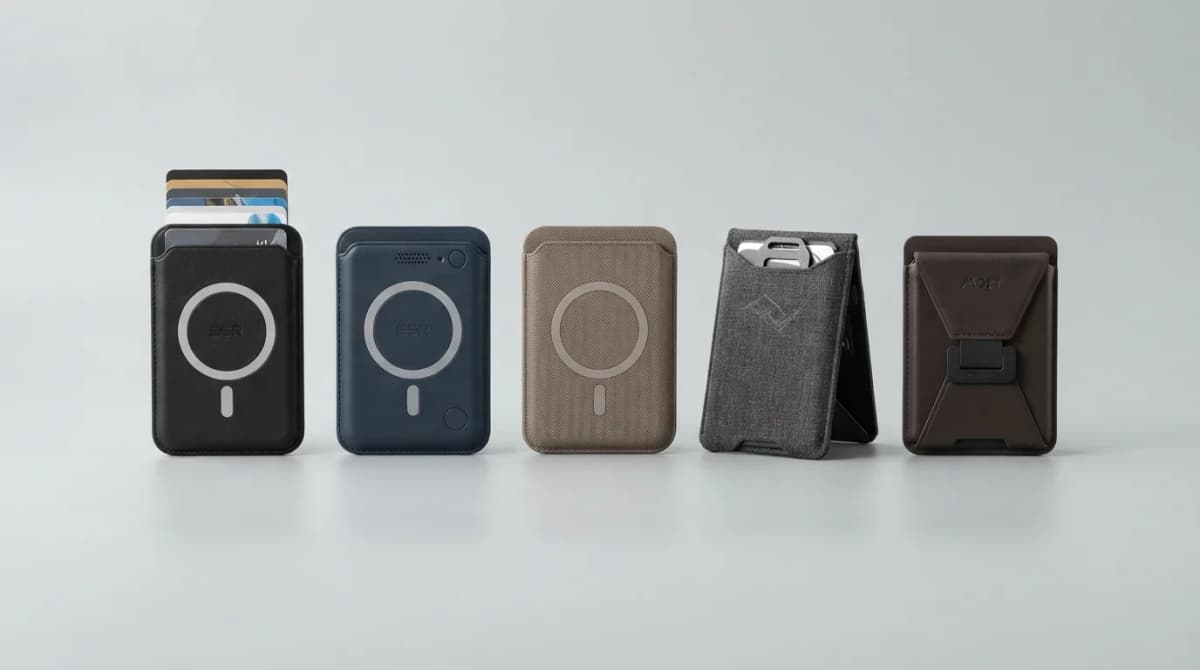
Best MagSafe Wallets 2026: Slim Picks That Stay Put
The best MagSafe wallets for 2026: ESR Classic 5-card, ESR Geo with Find My, Apple FineWoven, Peak Design Mobile Wallet Stand and MOFT Snap-on. Prices at publish, Oct 2026.
Ohsnap Wallet 2 Kickstarter: MagSafe Pop-Up Wallet
MagSafe wallets are usually a thin sleeve or a pricey titanium tool slab. Ohsnap Wallet 2 is the wallet + SnapGrip / MagStack lane on Kickstarter - pop-up card cores, modular covers, campaign clock ending Sep 26, 2026. Who picks MagStack, who skips crowdfunding risk.
Titaner Verso and the MagSafe Tool-Wallet Trend
MagSafe wallets got expensive fast. Titaner Verso closed at $248-$298 as a Grade 5 Ti tool-wallet - who should buy, plus a travel EDC stack.

Smart Wallets Review: Wallets With Trackers
Smart wallets combine Bluetooth tracking, RFID protection, and app connectivity to prevent loss. We compare battery life, features, and the best models worth buying.