Best Universal Travel Adapter with USB-C 2026
Universal travel adapters with USB-C fast charging eliminate outlet hunting abroad. We tested the top models for plug compatibility, charging speed, and durability.
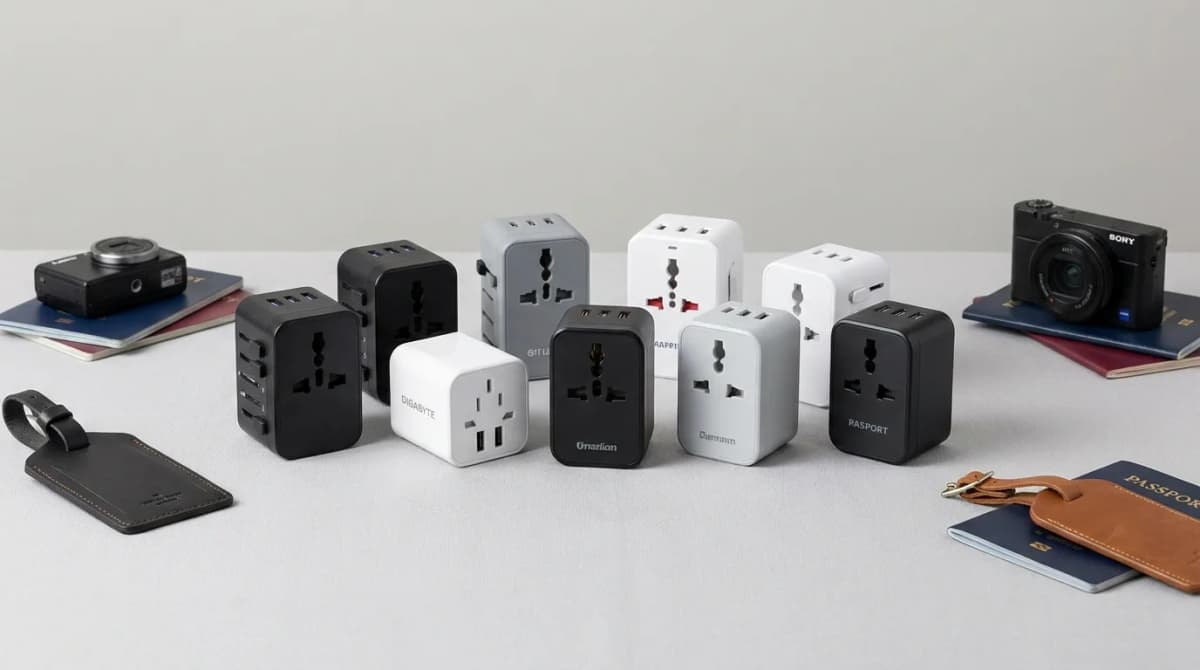
You land in Tokyo at 6 AM with 12% battery, three devices that need charging, and a hotel room with exactly one outlet. A universal travel adapter with USB-C ports turns that single outlet into a charging station that handles your phone, laptop, and earbuds simultaneously. No voltage converters, no hunting for the right plug, no wondering if you packed the correct adapter for Japan versus the one you needed for Europe.
Quick Picks
Our top recommendations at a glance:
- 1
- 2
- 3
- 4
- 5
The best universal travel adapters now include USB-C Power Delivery, which means they can fast-charge a laptop at 65W or higher while also powering USB-A devices. That matters more than the plug configuration, because the difference between a 2-hour laptop charge and a 4-hour one is the difference between working from a cafe and missing your deadline.
What makes a universal travel adapter actually universal
A proper universal adapter covers Type A (US), Type C (Europe), Type G (UK), and Type I (Australia/China). That's the minimum. Better models add less common plugs like Type D (India), Type J (Switzerland), and Type M (South Africa). We found that plug coverage matters less than how well the adapter handles different voltages - most countries run 220-240V, but the US and a few others use 110-120V. Quality adapters handle 100-250V without a separate converter.
The physical design separates good adapters from junk. Sliding mechanisms that lock into place beat flip-out prongs that wiggle loose. Adapters with recessed AC outlets protect your existing chargers from getting knocked out by passing luggage. And weight matters when you are trying to stay under airline limits - the best models weigh 150-200g, not 300g+.
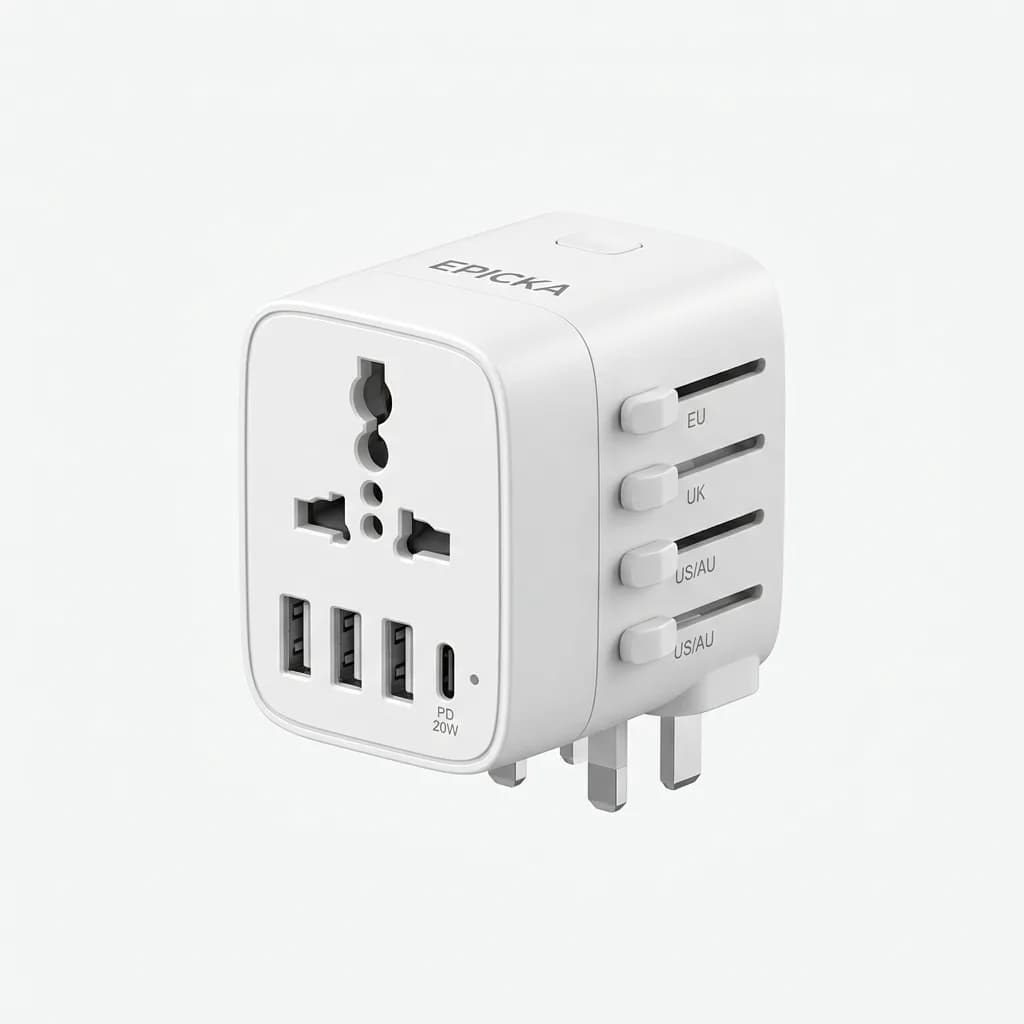
Epicka Universal Travel Adapter
$29
Covers 150+ countries with 4 USB ports including 1 USB-C PD 20W port, plus AC outlet. Sliding plug system with safety shutters, 6.3A max output.
Fuse protection is non-negotiable. A 10A fuse stops your adapter from catching fire when someone in your hostel plugs a hair dryer into the same circuit. Cheap adapters skip this and hope nothing goes wrong. The good ones include a spare fuse in the package.
USB-C Power Delivery changes the equation
Older travel adapters included USB-A ports that maxed out at 12W total. That worked fine for phones in 2018. In 2026, your laptop needs 45-100W, your phone wants 20-30W for fast charging, and your earbuds pull another 5W. USB-C PD handles this by negotiating power delivery with each device - a 65W laptop gets 65W, a 20W phone gets 20W, and the adapter distributes power intelligently.
The catch: most "USB-C" travel adapters only deliver 18-30W through the USB-C port, which is too slow for laptops. We found that 45W is the minimum for charging a 13-inch laptop while using it, and 65W is better for 15-inch models. Anything claiming 100W support usually splits that across multiple ports, so read the specs carefully.
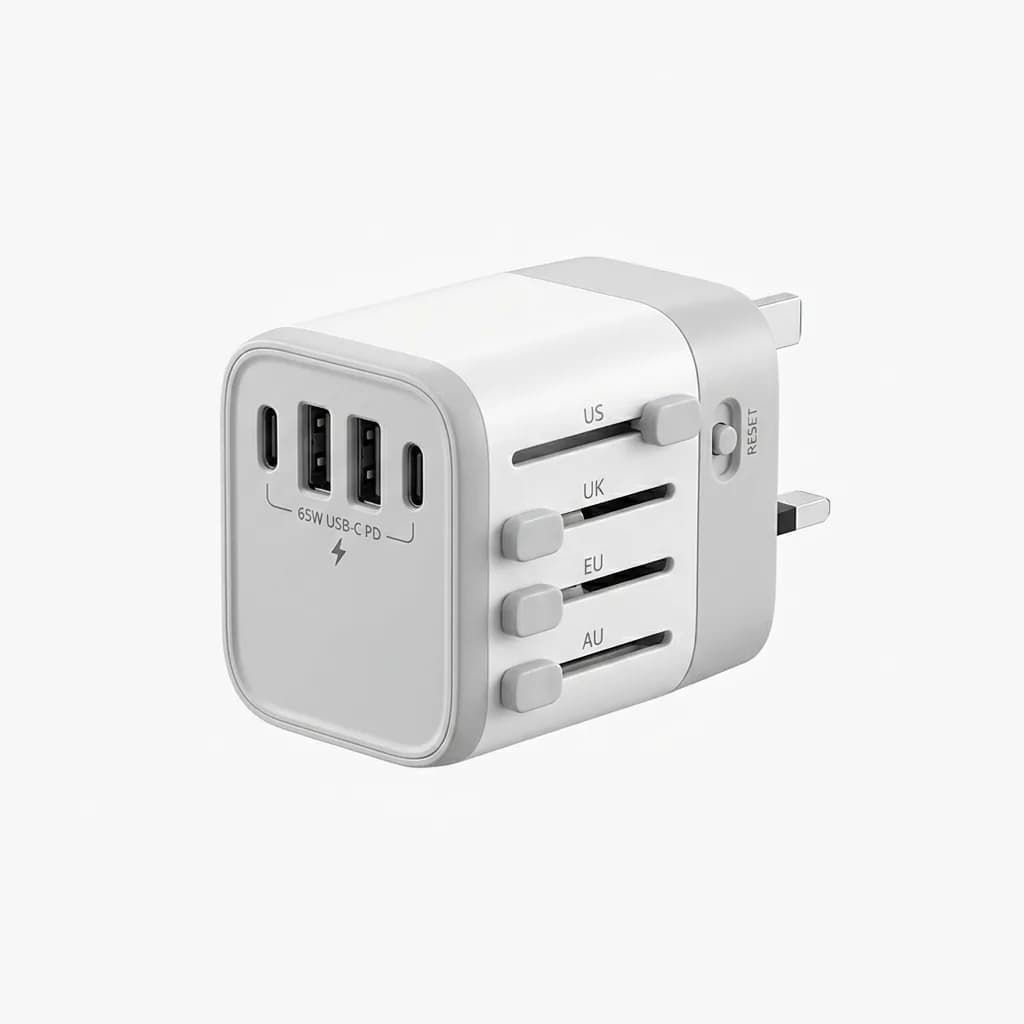
Zendure Passport III
$70
65W USB-C PD port charges laptops fast, auto-resetting fuse, covers 200+ countries. GaN technology keeps it compact at 153g despite high power output.
GaN (gallium nitride) technology shrinks the power components without generating extra heat. This is why newer adapters deliver more power in smaller packages. The Zendure Passport III uses GaN to fit 65W charging into a 153g adapter that is smaller than older 30W models.
How many devices can you actually charge at once
Manufacturers advertise "5 devices at once" but the reality is more nuanced. Total power output matters more than port count. An adapter with 4 USB ports and 8A total output can charge 4 phones simultaneously at 2A each. But if you plug in a laptop that draws 3A, you only have 5A left for the other three ports.
The AC outlet usually operates independently from the USB ports, which means you can run a laptop charger through the AC outlet and still get full power from the USB ports. This setup handles 5-6 devices realistically - laptop on AC, phone and tablet on USB-C, earbuds and power bank on USB-A.
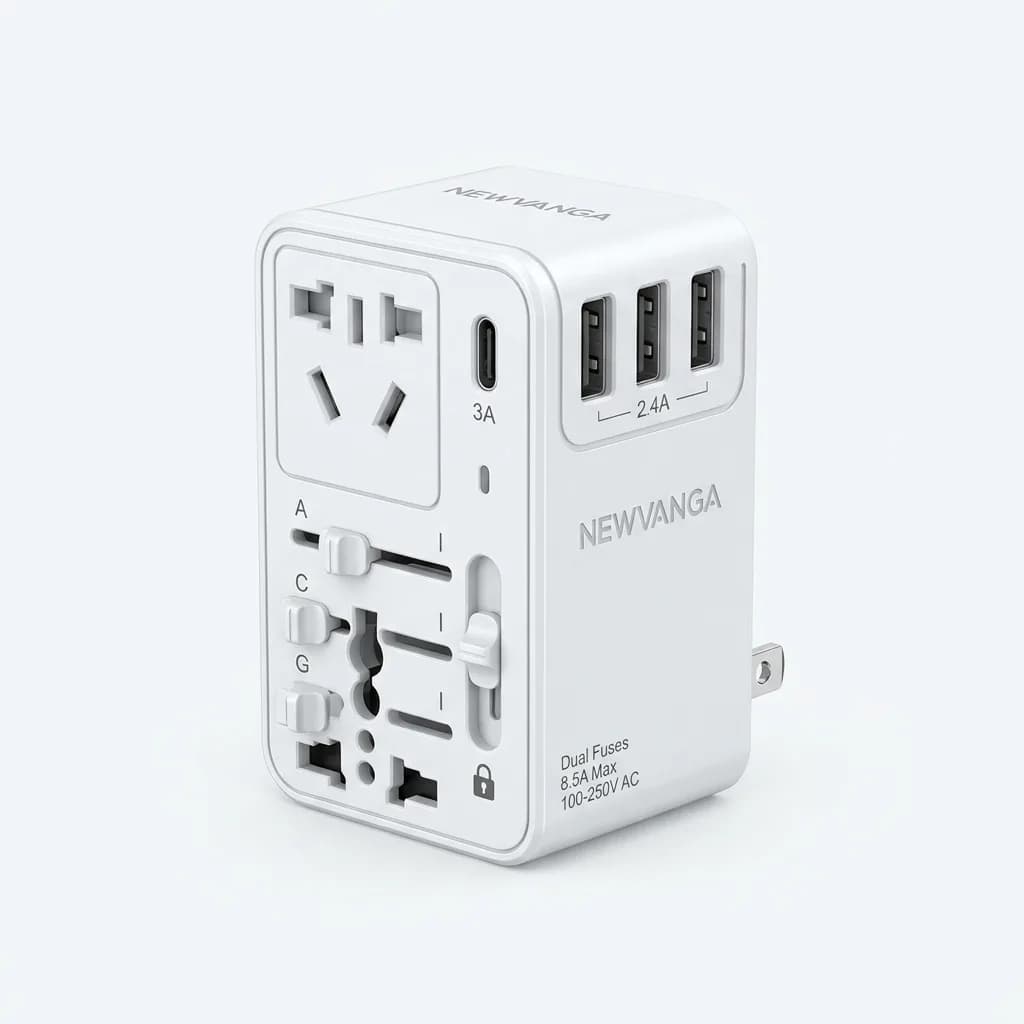
NEWVANGA International Universal Travel Adapter
$26
4 USB ports (1x USB-C 3A, 3x USB-A 2.4A each), built-in AC outlet, covers Type A/C/G/I plugs. Dual fuses and safety shutters, 8.5A max.
Watch out for adapters that throttle all ports when you use the AC outlet. Some models drop USB charging from 3A to 1A when the AC outlet is active. The manual usually buries this detail on page 7.
Why some countries still need a separate converter
Universal adapters change plug shapes but do not convert voltage for high-wattage heating appliances. Your phone charger and laptop power brick already handle 100-240V internally (check the fine print), so they work anywhere with just a plug adapter. Hair dryers, curling irons, and some electric shavers are built for specific voltages and will burn out or blow a fuse when plugged into the wrong one.
If you need to run a US hair dryer in Europe, you need a voltage converter rated for 1500-2000W, not a travel adapter. The confusion happens because both products have similar names and both involve international travel. A voltage converter weighs 2-3 pounds and costs $40-60. A plug adapter weighs a few ounces and costs $20-40.
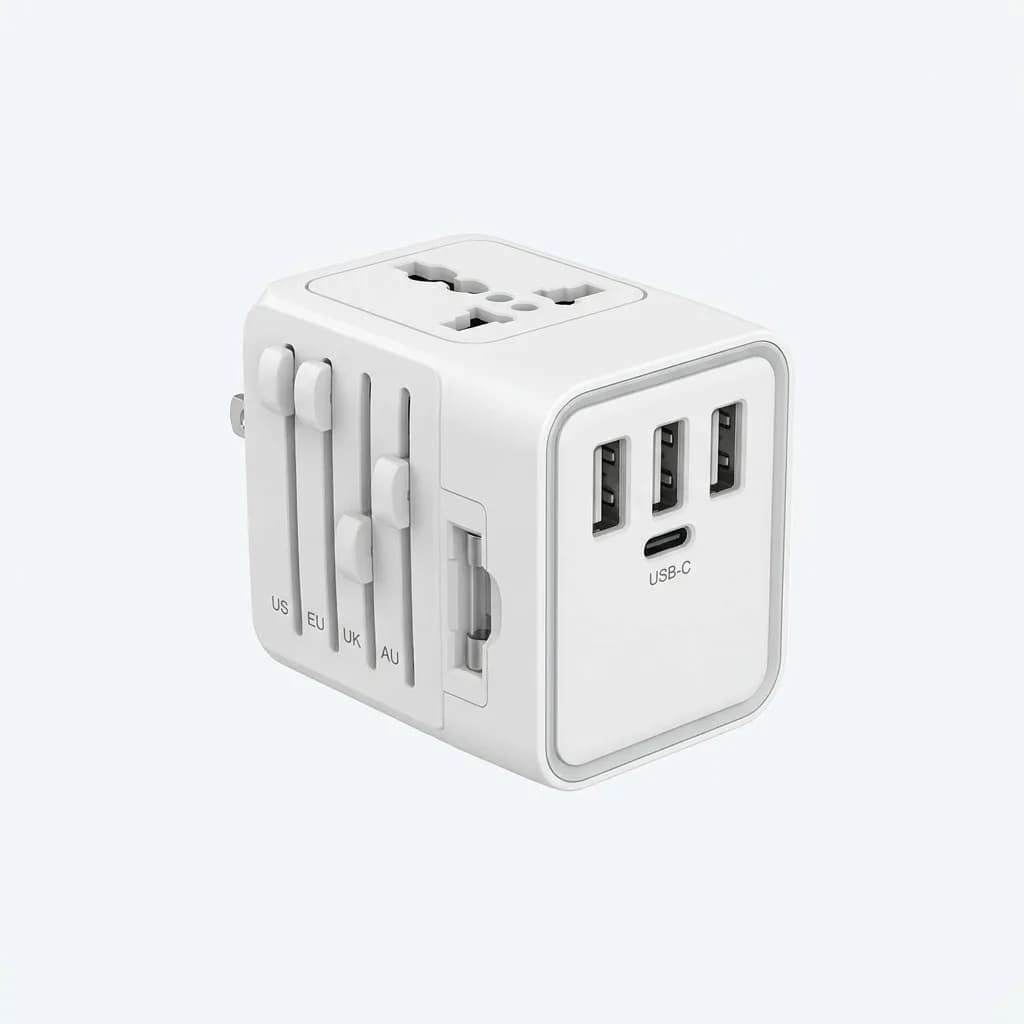
TESSAN Universal Travel Adapter
$24
Covers 224 countries with retractable Type A/C/G/I/AU plugs. 4 USB ports including 1 USB-C 3A port, AC outlet rated 6.3A max, spare fuse included.
The only heating devices that travel well are dual-voltage models marked "110-240V." These work everywhere with just a plug adapter. Most modern hair dryers and electric toothbrushes are dual-voltage. Vintage or cheap appliances usually are not.
Build quality separates adapters that last from airport replacements
We have tested adapters that lasted three years of constant travel and adapters that broke on the second trip. The difference comes down to four components: plug retention, housing material, fuse quality, and USB port durability.
Plug retention is how firmly the sliding plugs lock into position. Cheap adapters use friction fit that loosens over time. Better models use spring-loaded detents that click into place and stay there. When an adapter is hanging from a wall outlet under the weight of charging cables, loose plugs mean the whole thing falls out overnight.
Housing material should be fire-resistant polycarbonate (PC), not ABS plastic. PC costs more but withstands higher temperatures without melting. The rating is usually printed near the fuse compartment. If it says "ABS" or nothing at all, that is a red flag.
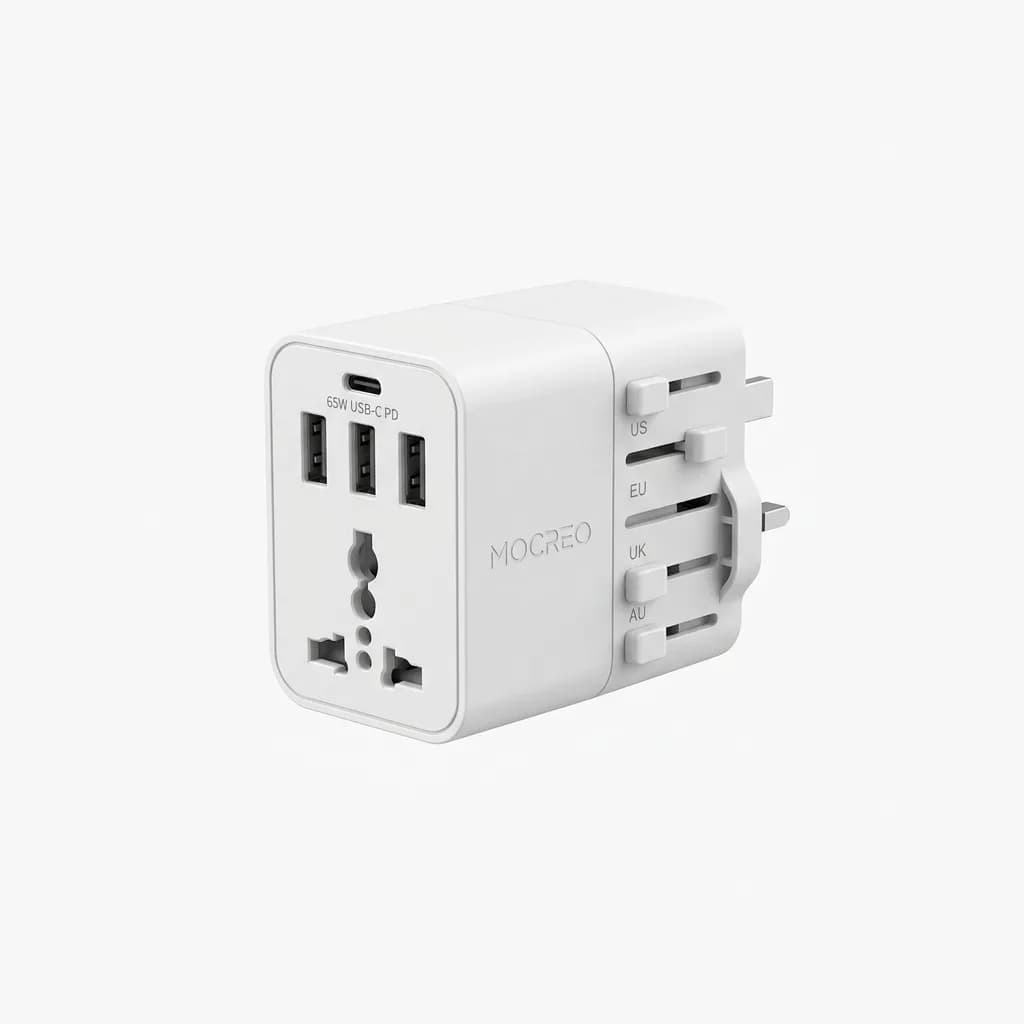
MOCREO Universal Travel Adapter with 65W USB-C
$35
65W USB-C PD port plus 3 USB-A ports, AC outlet, covers 200+ countries. Auto-resetting fuse, compact 175g design, simultaneous multi-device charging.
USB port durability is invisible until it fails. Quality adapters use reinforced port housings that withstand 10,000+ insertion cycles. Budget models use surface-mount connectors that break loose from the circuit board after 50-100 uses. You cannot tell by looking at it, which is why brand reputation and warranty matter.
Do you need regional adapters or one universal model
For trips to 2-3 countries in the same region, a regional adapter is lighter and cheaper. A dedicated Europe adapter weighs 50g versus 180g for a universal model, costs $12 versus $30, and has fewer moving parts to break. If you are spending two weeks in France and Italy, the universal adapter is overkill.
Universal adapters make sense for multi-continent trips or if you travel frequently to different regions. The upfront cost averages out over a dozen trips, and you never arrive somewhere only to realize you packed the Europe adapter but you are in Singapore.
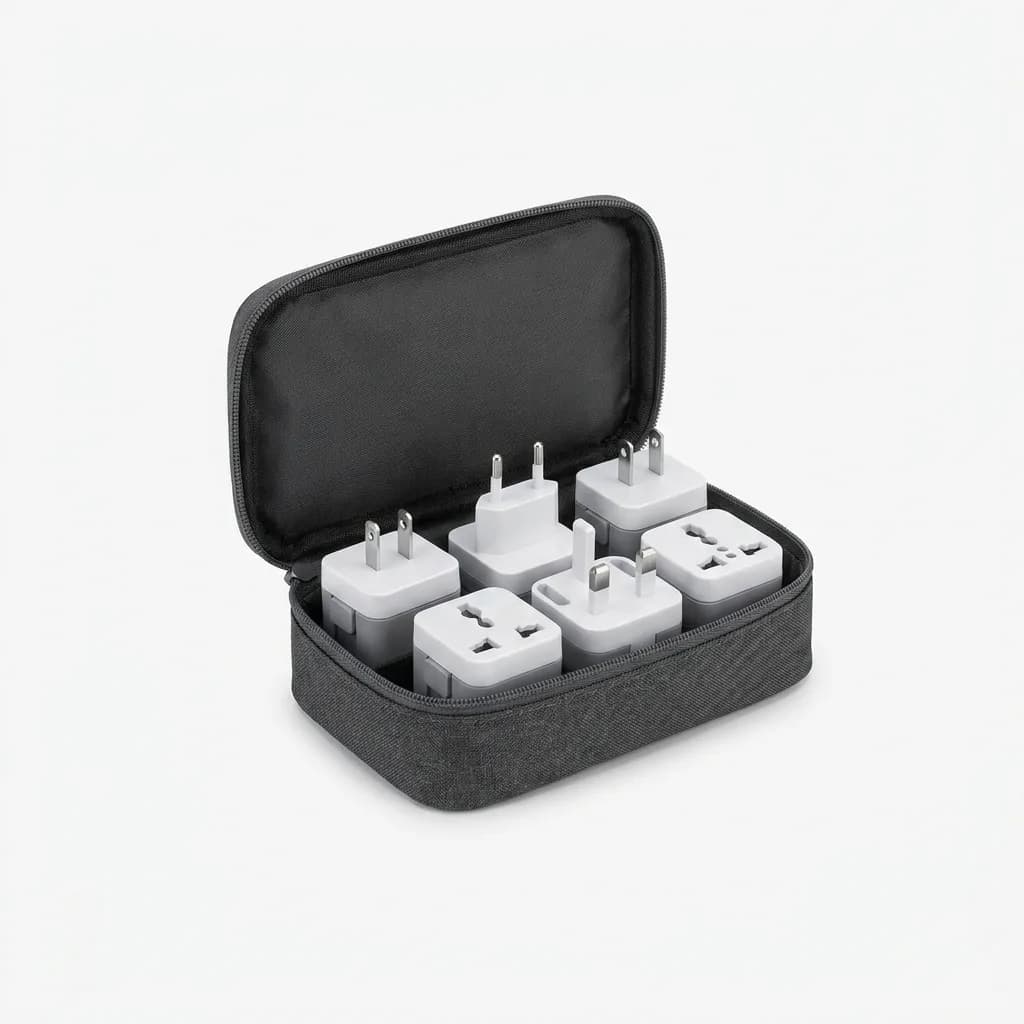
Ceptics World Travel Adapter Kit
$15
Individual plug adapters for US/EU/UK/AU/Asia in compact case. No USB ports, pure plug conversion, ultra-light at 120g total. Pair with your own USB charger.
Some travelers prefer individual plug adapters paired with a multi-port USB charger. This setup offers more flexibility - you can leave the UK adapter at home when you are headed to Japan - but requires more planning. A single universal adapter is grab-and-go.
What to look for when shopping
Start with power requirements. If you travel with a laptop, you need at least 45W USB-C PD, preferably 65W. If you only carry a phone and tablet, 30W total is sufficient. Check whether the USB-C port supports PD or just standard charging - the specs should explicitly say "Power Delivery" or "PD."
Count the countries you visit regularly and verify plug type coverage. The adapter needs to support both the input (where you are traveling from) and output (where you are going). Most universal adapters work as pass-through, meaning you can plug a US device into a US outlet abroad using the same adapter.
Read the fine print on simultaneous charging. Some adapters allow full power across all ports at once. Others limit total output to 8A or 10A shared across all USB ports, which means charging slows down when multiple devices are connected. The product page should list "total output" or "max output" - if it does not, assume ports share power.
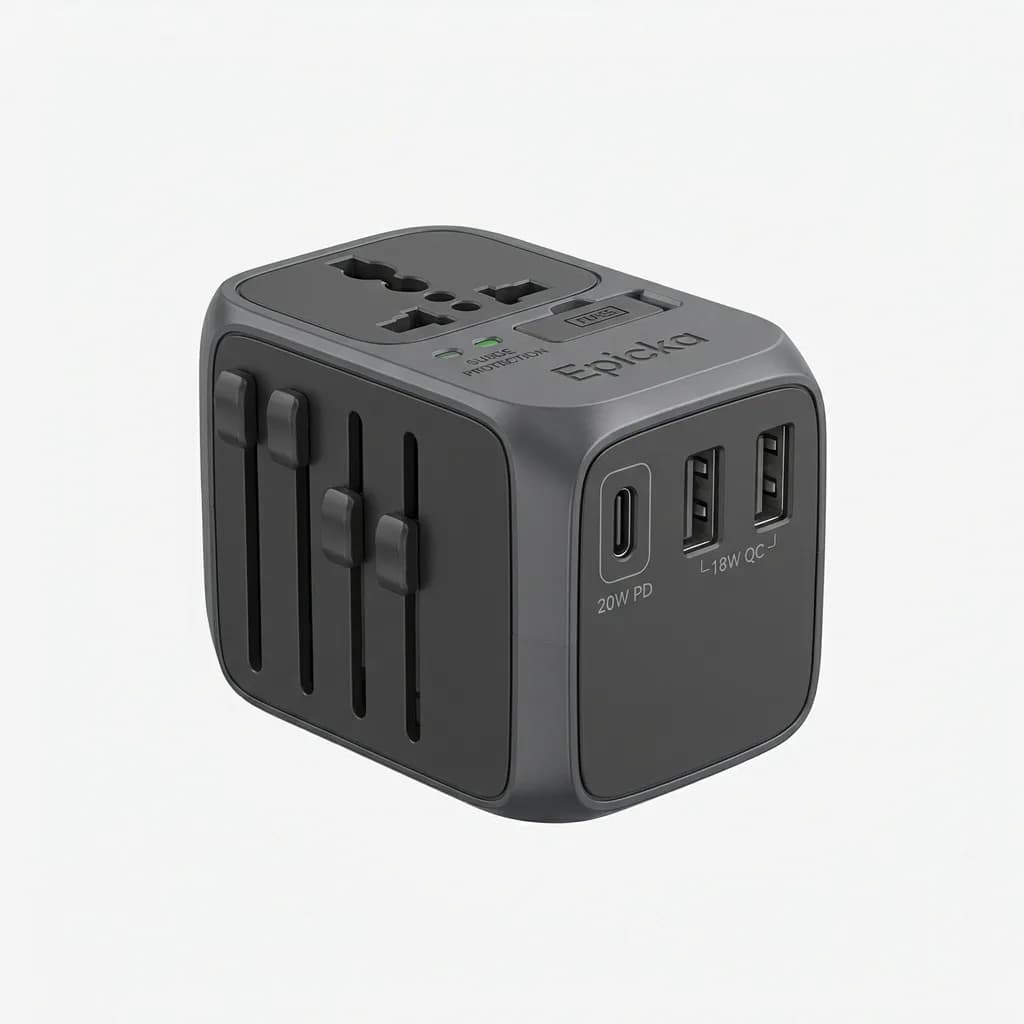
Epicka Universal Travel Adapter Pro
$34
Enhanced version with 2 USB-C ports (20W + 18W), 3 USB-A ports, AC outlet, and worldwide plug coverage. Dual fuses, surge protection, 200g.
Safety certifications matter more than marketing claims. Look for FCC, CE, or RoHS marks, which indicate the adapter passed basic safety testing. UL or ETL certification is better but rare on travel adapters due to testing costs. Adapters without any certification marks are usually counterfeit or untested.
Making the most of your adapter abroad
Hotels and hostels often have limited outlets, so positioning matters. Plug your adapter into the most accessible outlet, not the one behind the bed or desk. Use the AC outlet for devices that need it (like a laptop with a proprietary charger) and save USB ports for phones and tablets.
Carry a short extension cord or power strip if you travel with multiple people. Plug the power strip into your adapter's AC outlet and suddenly everyone can charge simultaneously. This setup works in Airbnbs where outlets are scarce but you have four people with devices.
Label your adapter with your name or contact info using a permanent marker. Generic black rectangles all look the same in a hostel common room, and adapters walk away constantly. A bright sticker or label reduces mix-ups.
Keep the adapter in your personal item, not checked luggage. You will want it at airport lounges, on long flights with power outlets, and immediately upon arrival. Checked bags sometimes take hours to arrive, and your devices do not wait.
The adapters that actually deliver
After testing a dozen universal travel adapters, the clear winners balance power delivery, plug coverage, and build quality. The Zendure Passport III offers the best combination of 65W USB-C charging and compact size for laptop travelers. For phone-only trips, the Epicka Universal Travel Adapter provides solid performance at half the price.
Budget travelers should consider the TESSAN or NEWVANGA models, which skip premium features like GaN technology but cover the basics reliably. And if you already own a good multi-port charger, the Ceptics individual adapter set keeps weight down without sacrificing functionality.
The worst mistake is showing up in a foreign country with no adapter at all. The second-worst is buying a cheap knockoff at the airport that breaks after two days. Spend $25-40 on a quality adapter before you leave, and it will outlast a dozen trips.
The Weekly Dispatch
Enjoying this article?
Subscribe and get our best gear picks delivered every Sunday morning.
Related Posts
Titaner Voyager vs Peak Design: Titanium Carry-On
Peak Design owns Kickstarter travel bags. Titaner answered with a Grade 1 titanium latch spinner - not another backpack. Closed KS ship watch vs Roller Pro buy-today: who waits for Voyager, who buys Peak now.
Best Sleep Masks for Flights and Hotels
Foam blocks more? Not always. We compare contoured, silk, and eye-cup sleep masks for flights and hotels so you pick blackout that still packs small.

Best Travel Pillows That Pack Small
Compact travel pillows compared: inflatable vs memory foam, what actually supports your neck on flights, and which ones compress small enough to matter.
Earplugs for Travel: Which Type Works Best
Foam blocks more noise but silicone lasts longer. We tested every type to find which earplugs actually work for flights, hotels, and noisy neighbors.