Best Trekking Poles for Bad Knees 2026
Discover which trekking poles reduce knee strain most effectively with shock absorption, proper length adjustment, and grip comfort for long-distance hiking.
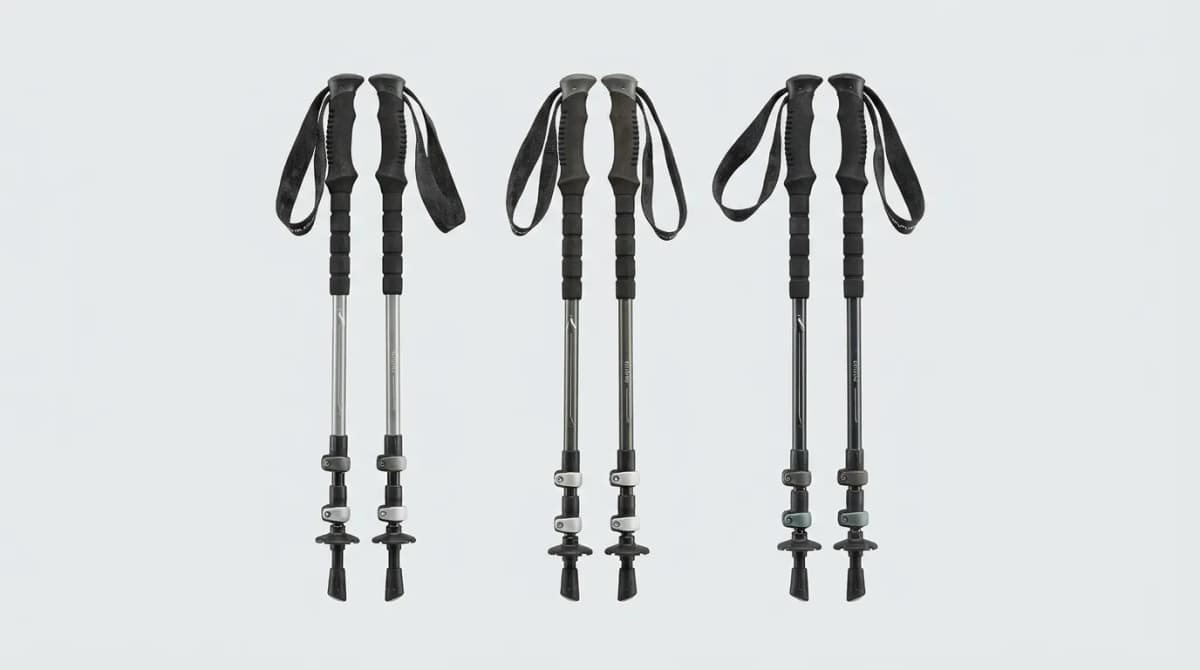
Your knees take roughly 5-8 pounds of force per step when hiking downhill without poles. With properly adjusted trekking poles, you can cut that impact by 25-30%. If you deal with knee pain, arthritis, or previous injuries, that difference turns a painful descent into a manageable one.
The best trekking poles for knee protection share three traits: effective shock absorption, quick and reliable length adjustment, and comfortable grips that don't fatigue your hands. Weight matters less than you might think. A slightly heavier pole with better shock dampening will save your knees more than a featherweight model that transmits every impact straight to your joints.
What makes a trekking pole knee-friendly?
Shock absorption is the single most important feature. Internal spring systems reduce impact by 20-40% compared to rigid poles. Some poles use anti-shock mechanisms with springs, others use cork or rubber components that dampen vibration. The spring-based systems work better for severe knee issues, but they add 2-4 ounces per pole.
Length adjustment matters more than most hikers realize. Your poles should be shorter going uphill (elbows at 100-110 degrees) and longer going downhill (elbows at 70-80 degrees). Twist-lock mechanisms are more reliable long-term than lever locks, but lever locks let you adjust faster mid-hike. For knee problems, the ability to lengthen poles quickly before descents is crucial.
Grip comfort affects knee strain indirectly. If your hands hurt, you'll grip the poles incorrectly or use them less, which defeats the purpose. Cork grips mold to your hands and wick moisture better than foam or rubber. Extended grips below the main handle let you choke up on steep terrain without adjusting length.
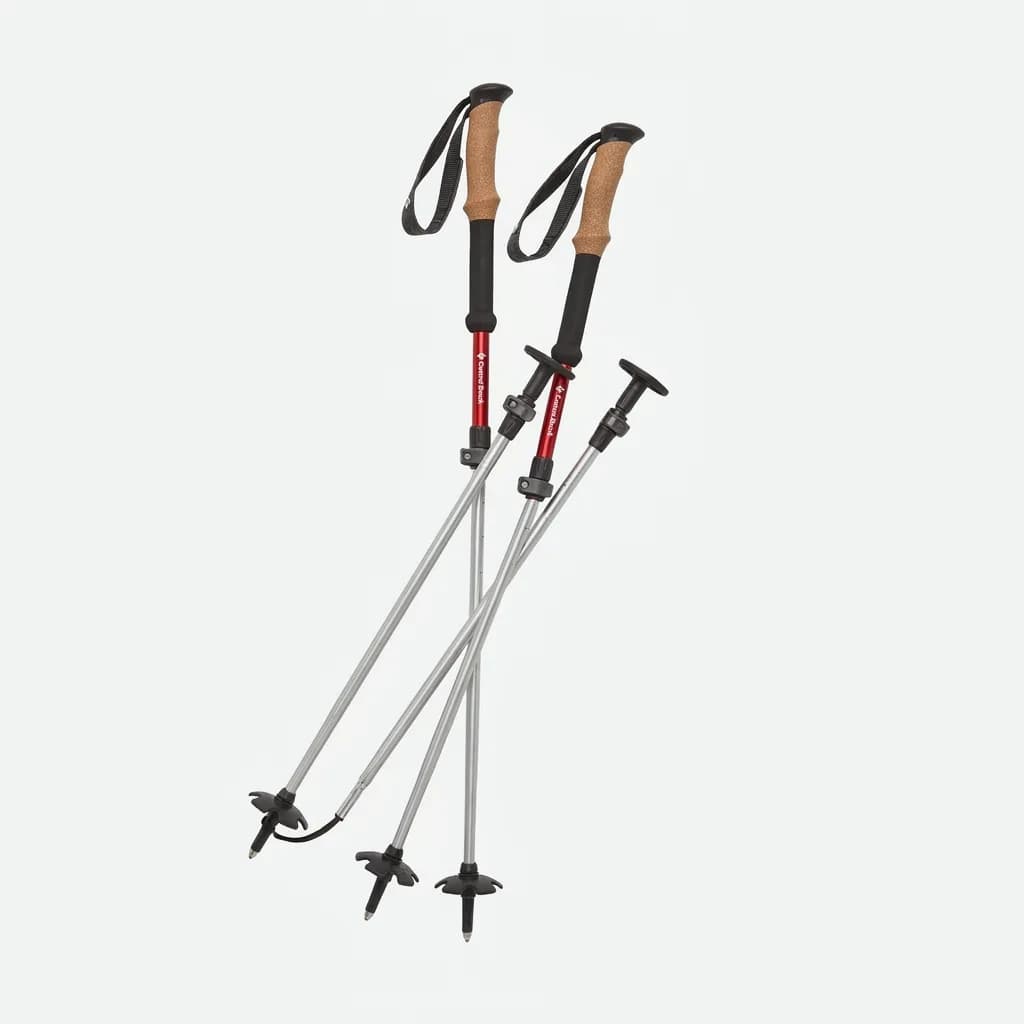
Black Diamond Trail Pro Shock Trekking Poles
$170
Three-section aluminum poles with Control Shock Technology absorbing up to 40% of impact. FlickLock adjustments and dual-density cork grips with extended foam sections.
Best overall: Black Diamond Trail Pro Shock
The Trail Pro Shock combines Black Diamond's proven three-section aluminum construction with their Control Shock Technology. The internal spring system is user-adjustable, so you can increase dampening for steep descents or turn it off entirely to save weight on flat terrain.
FlickLock adjusters are easier to operate with gloves than twist locks, and they don't loosen gradually the way cheaper lever locks do. The poles adjust from 24 to 55 inches in one-inch increments. We tested these on a week-long trip through the White Mountains, and the locks never slipped once, even on rocky descents where we were leaning hard on the poles.
The dual-density cork grips stay comfortable for 8-plus-hour days. Extended foam grips run six inches down the shaft, giving you options on steep switchbacks. At 19 ounces per pole, they're heavier than ultralight models, but that weight includes the shock system that actually protects your knees.
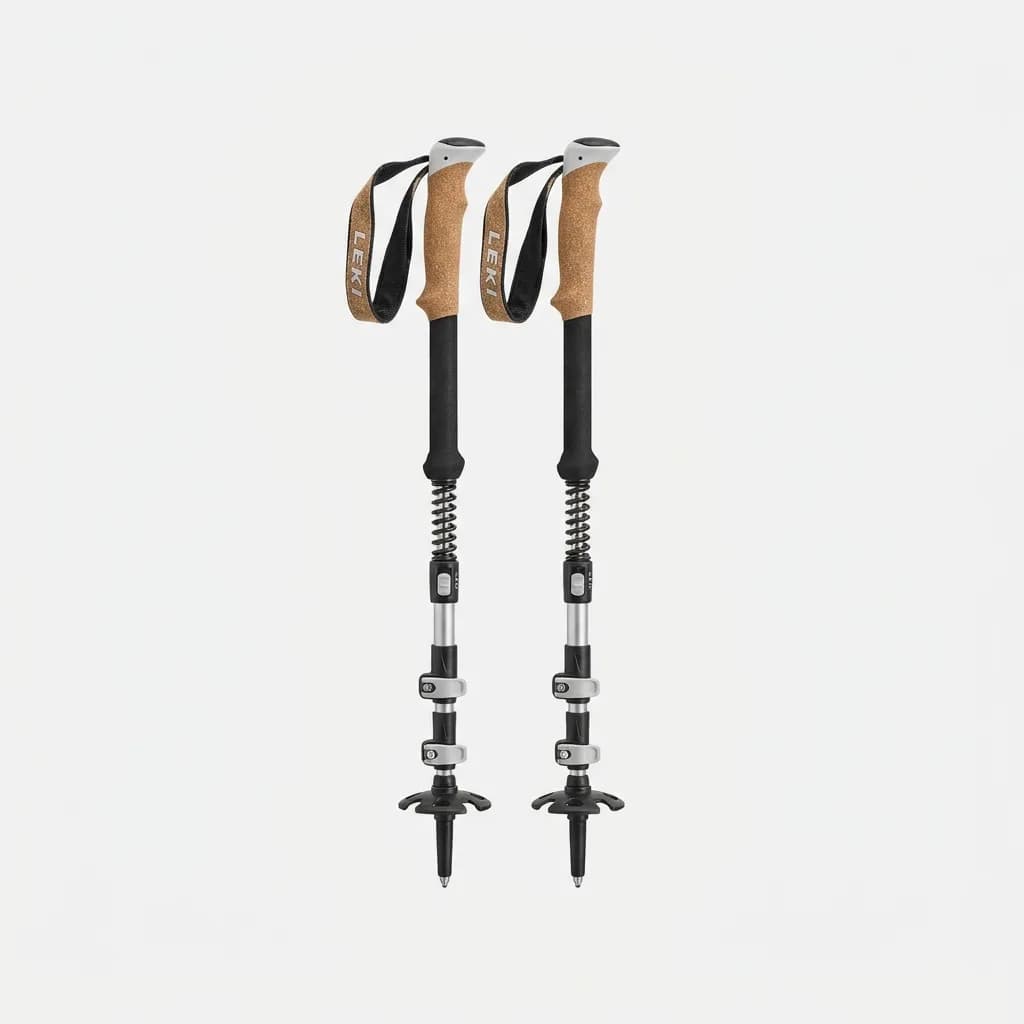
Leki Makalu Lite COR-TEC AS Trekking Poles
$140
Lightweight aluminum poles with COR-TEC grips designed for extended comfort. Anti-shock spring system with on/off switch. SpeedLock 2 lever adjustment system.
Best mid-range: Leki Makalu Lite COR-TEC AS
Leki's Makalu Lite splits the difference between premium features and reasonable pricing. The anti-shock system uses a simple spring mechanism you can toggle on or off with a twist. It's less sophisticated than Black Diamond's adjustable system, but it still reduces impact noticeably.
The COR-TEC grips are Leki's proprietary cork-EVA blend. They're slightly softer than pure cork, which some people prefer for long distances. The grips include a positive-angle design that aligns with your wrist's natural position, reducing strain when you're planting poles repeatedly.
SpeedLock 2 adjusters work well, though they're not quite as bombproof as FlickLock. We had one lock loosen slightly after a full day of hiking, requiring a quick tighten with the adjustment screw. Not a dealbreaker, but worth noting. At 17.5 ounces per pole, they're lighter than the Trail Pro Shock while maintaining good shock absorption.
Best budget option: Cascade Mountain Tech Carbon Fiber Quick Lock
If you need shock absorption on a tight budget, Cascade Mountain Tech's carbon fiber poles punch above their price point. They use a basic anti-shock spring system that's not adjustable, but it still dampens impact better than rigid poles.
Quick Lock lever adjustments are simple and generally reliable, though we wouldn't trust them on technical terrain the way we would FlickLocks. The cork grips are smaller diameter than premium options, which works well for smaller hands but can feel cramped after several hours for larger-handed hikers.
Carbon fiber construction keeps weight at 7.6 ounces per pole. The tradeoff is durability. Carbon doesn't bend like aluminum, it breaks. These poles are fine for maintained trails, but if you hike in areas where you're wedging poles between rocks frequently, aluminum is safer.
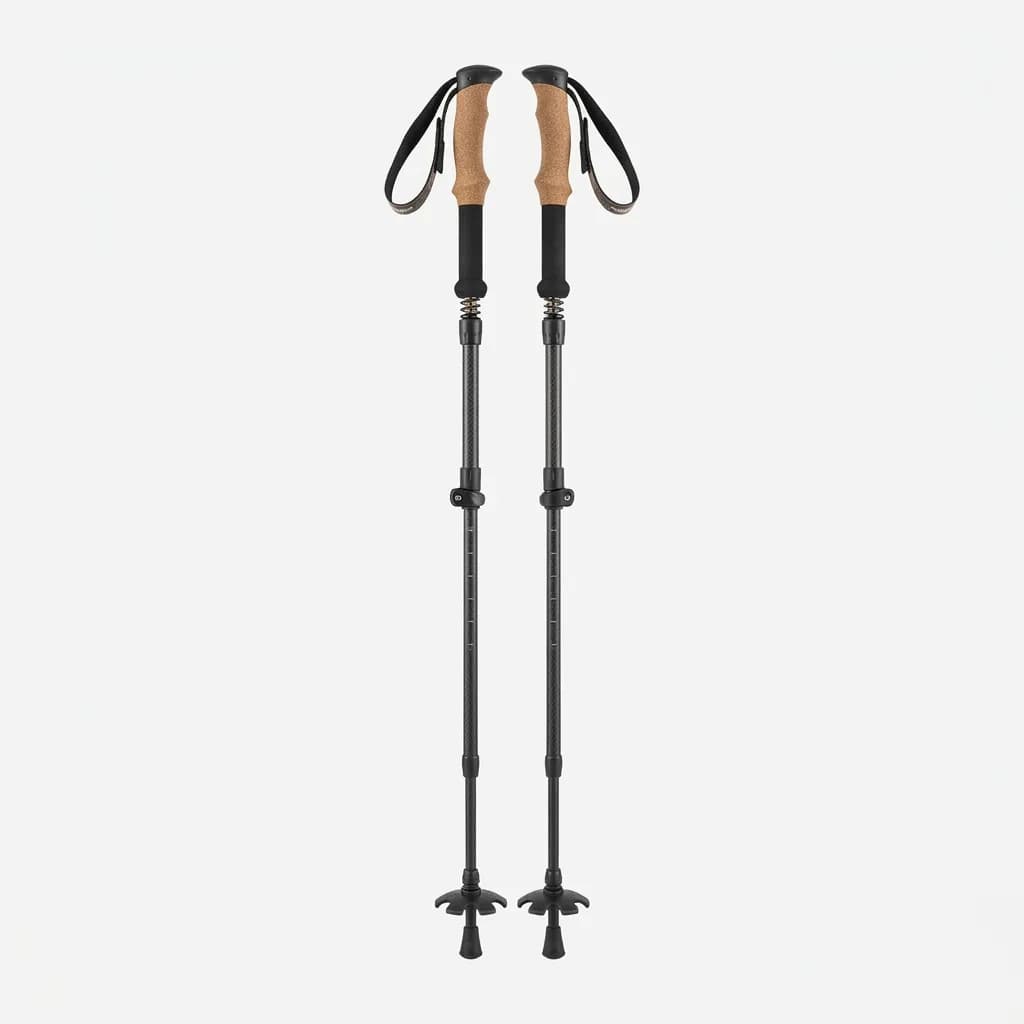
Cascade Mountain Tech Carbon Fiber Quick Lock Trekking Poles
$35
Lightweight carbon fiber with basic anti-shock spring system. Quick Lock lever adjustments, cork grips. Adjustable from 24.5 to 54 inches.
How to use trekking poles correctly for knee protection
Pole length changes everything. Stand straight with poles planted. Your elbows should be at 90 degrees on flat ground. Going uphill, shorten poles by 2-3 inches so you're not reaching up with each plant. Going downhill, lengthen by 2-3 inches to shift more weight onto the poles and off your knees.
Plant poles ahead of your opposite foot. Right pole plants as left foot steps forward. This creates a four-point stability pattern that distributes weight constantly. Many beginners plant poles alongside their feet, which does almost nothing for knee relief.
Use wrist straps correctly. Your hand should come up through the bottom of the loop, then grip the pole handle and strap together. This lets you push down on the strap with each plant, using your arm weight without squeezing the handle tightly. Wrong strap use leads to hand fatigue, which reduces how much weight you actually transfer to the poles.
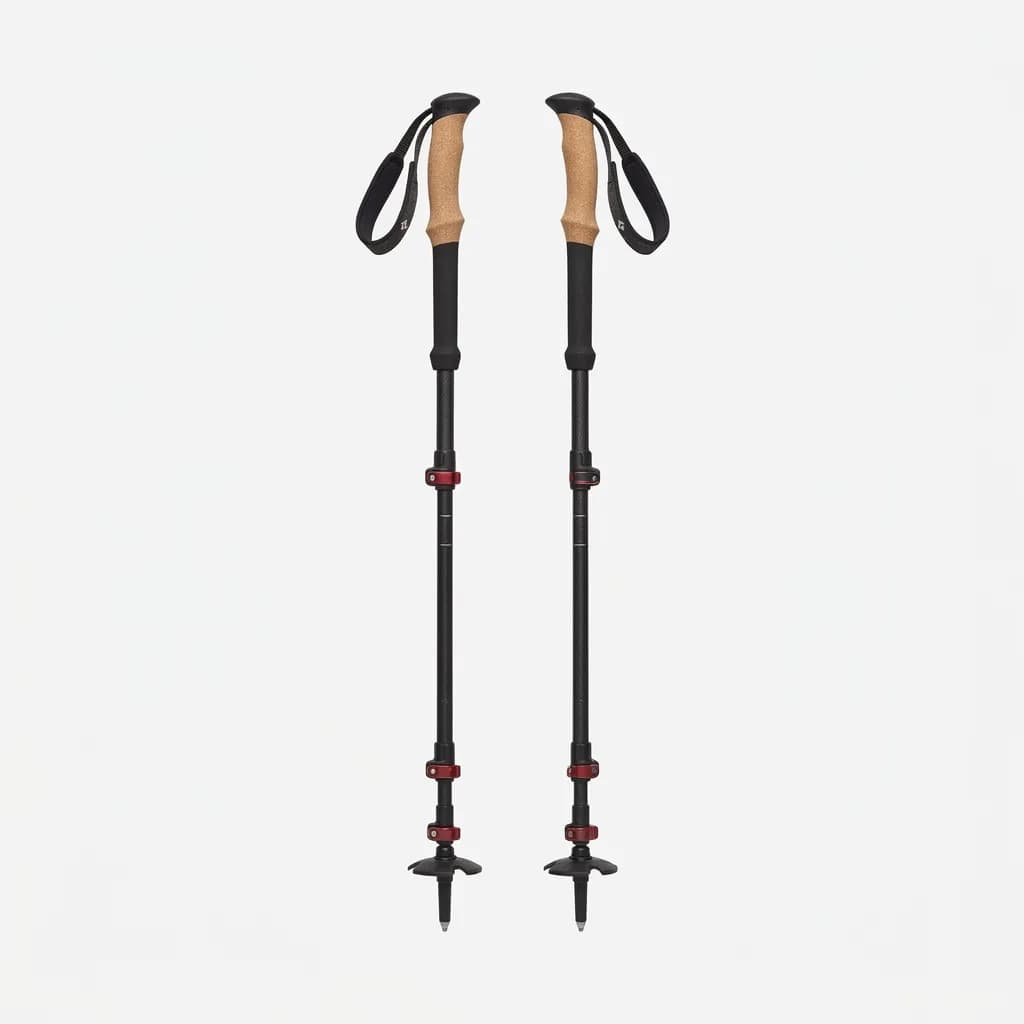
Black Diamond Alpine Carbon Cork Trekking Poles
$180
Three-section carbon fiber construction with FlickLock Pro adjustments. Natural cork grips with extended foam sections. No shock absorption system for lighter weight.
When to skip shock absorption
Not everyone with knee problems needs shock-absorbing poles. If you hike mostly on flat or gently rolling terrain, the extra weight and mechanical complexity aren't worth it. Shock systems help most on sustained descents of 1,000-plus feet where your knees are taking repeated impacts.
Some physical therapists argue that shock absorption can reduce proprioception - your body's awareness of joint position. For mild knee issues, rigid poles that provide feedback might help you develop better movement patterns. For moderate to severe arthritis or post-surgery knees, shock absorption is the better choice.
Carbon fiber poles without shock systems transmit more vibration than aluminum, but they're significantly lighter. If your knee problems stem from general leg weakness rather than joint damage, lighter poles might help more than shock absorption by reducing overall fatigue.
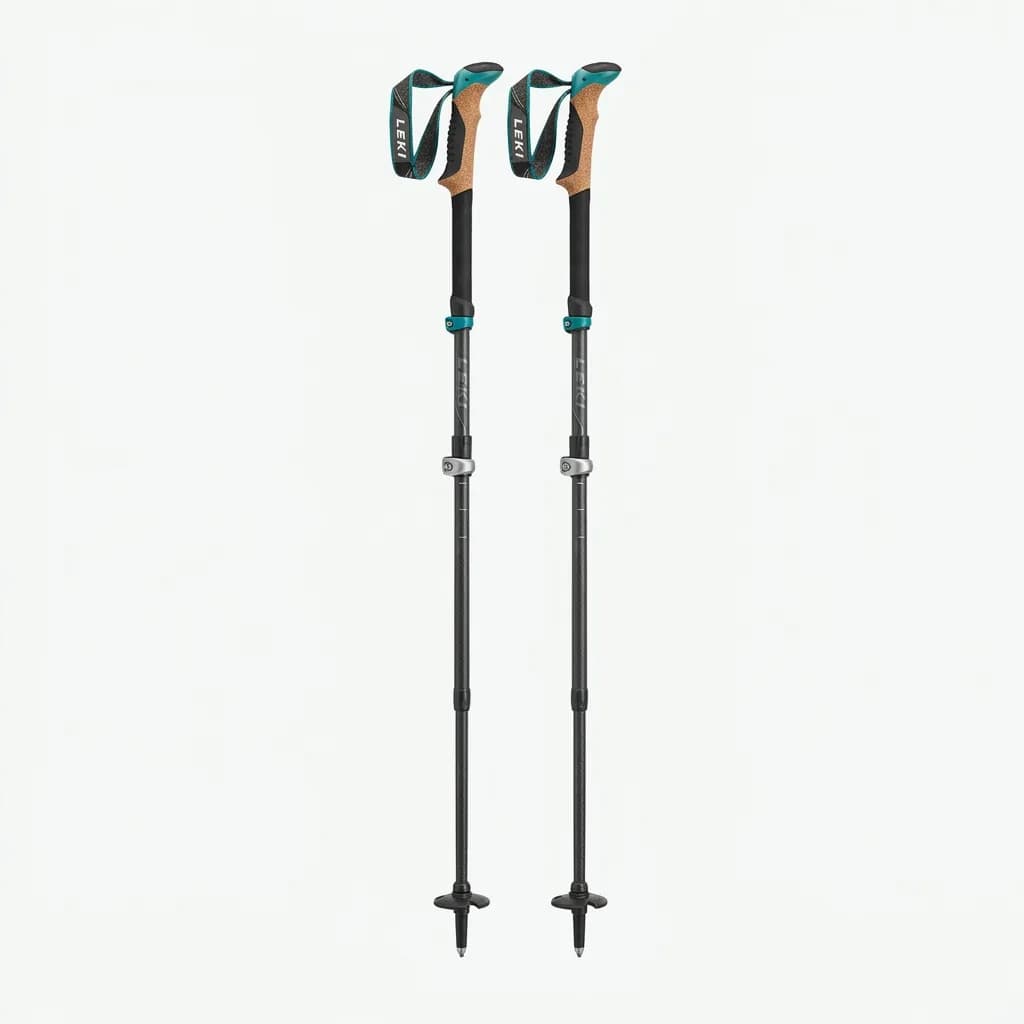
Leki Cressida FX Carbon AS Women's Trekking Poles
$160
Women-specific carbon poles with anti-shock system and shorter collapsed length. Aergon COR-TEC grips sized for smaller hands. DSS anti-shock dampening.
Women-specific options worth considering
Women's trekking poles aren't just marketing. They typically have smaller-diameter grips, shorter minimum lengths (important if you're under 5'4"), and sometimes different strap designs. Leki's Cressida FX Carbon AS includes all of these plus an anti-shock system.
The Aergon COR-TEC grips are angled 8 degrees forward, matching the natural wrist angle when your arms are at your sides. This reduces wrist strain over long distances. The grips are also 10mm smaller in circumference than standard models, which makes a real difference if you have smaller hands.
At 16.5 ounces per pole with shock absorption, these are competitive weight-wise with unisex models. The 39-inch collapsed length fits in most airline carry-ons without removing sections, which is convenient for hiking trips.
Do trekking poles actually prevent knee damage?
Research shows trekking poles reduce force on knees by 25-30% on descents. A 2019 study in the Journal of Sports Sciences found that poles decreased patellofemoral joint stress by an average of 27% during downhill walking at a 15-degree grade.
Poles don't prevent all knee problems. If you have severe osteoarthritis or acute injuries, poles help manage symptoms but won't reverse damage. They're most effective as a preventive tool - reducing cumulative stress that leads to overuse injuries over time.
The knee-saving benefits only work if you use poles consistently. Carrying them strapped to your pack helps nothing. Many hikers skip poles on easy terrain, then can't find a rhythm when the trail gets steep. If you deal with knee issues, use poles from the start of every hike to build the habit.
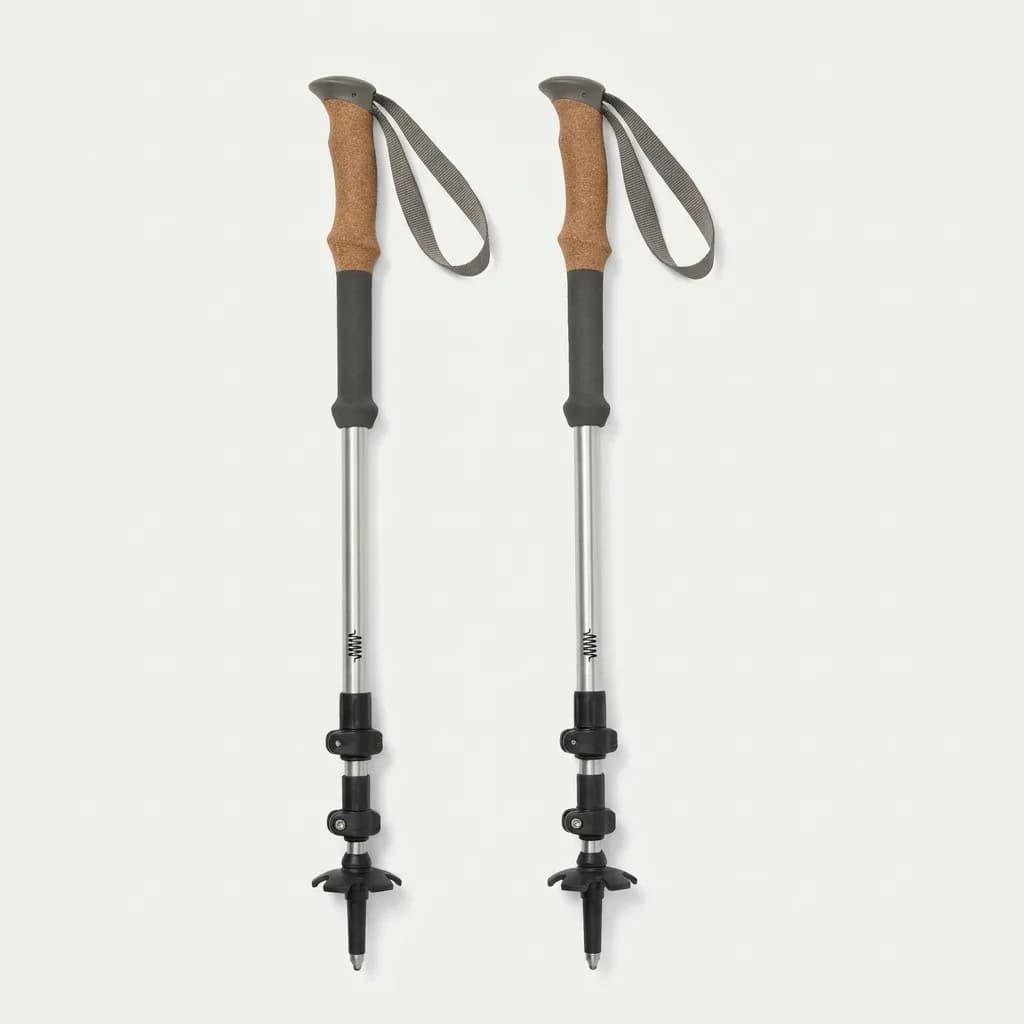
REI Co-op Trailmade Trekking Poles
$80
Aluminum construction with twist-lock adjustments and basic shock absorption. Cork grips with extended EVA foam sections. REI's lifetime satisfaction guarantee.
Maintenance tips for shock-absorbing poles
Anti-shock mechanisms need occasional cleaning. Dirt and moisture inside the pole sections can gum up springs or cause corrosion. Every 20-30 hikes, unscrew the shock assembly (if user-serviceable) and wipe down springs and internal components with a dry cloth.
Twist-lock sections should be cleaned more frequently than lever locks. Grit between the pole sections causes slippage. Remove sections, wipe down with a damp cloth, and let dry before reassembling. Don't use oil or lubricants - they attract more dirt.
Check shock system responsiveness before long hikes. Plant the pole hard on concrete and listen for a clear spring compression and rebound. If it feels mushy or makes no sound, the shock system may need service or replacement. Most manufacturers sell replacement shock cartridges for $20-30.
What about Z-fold poles for bad knees?
Z-fold poles collapse quickly and don't require adjustments, but they're not ideal for knee problems. You can't change length mid-hike, which matters when terrain varies. Most Z-fold designs don't accommodate shock absorption systems due to their fixed-length sections.
The one exception is Black Diamond's Distance FLZ line, which offers fixed-length carbon poles in multiple sizes. If you know exactly what length works for you and hike terrain that doesn't require length changes, they work fine. But for most people dealing with knee issues, the adjustability of telescoping poles is worth the slight weight penalty and longer packed length.
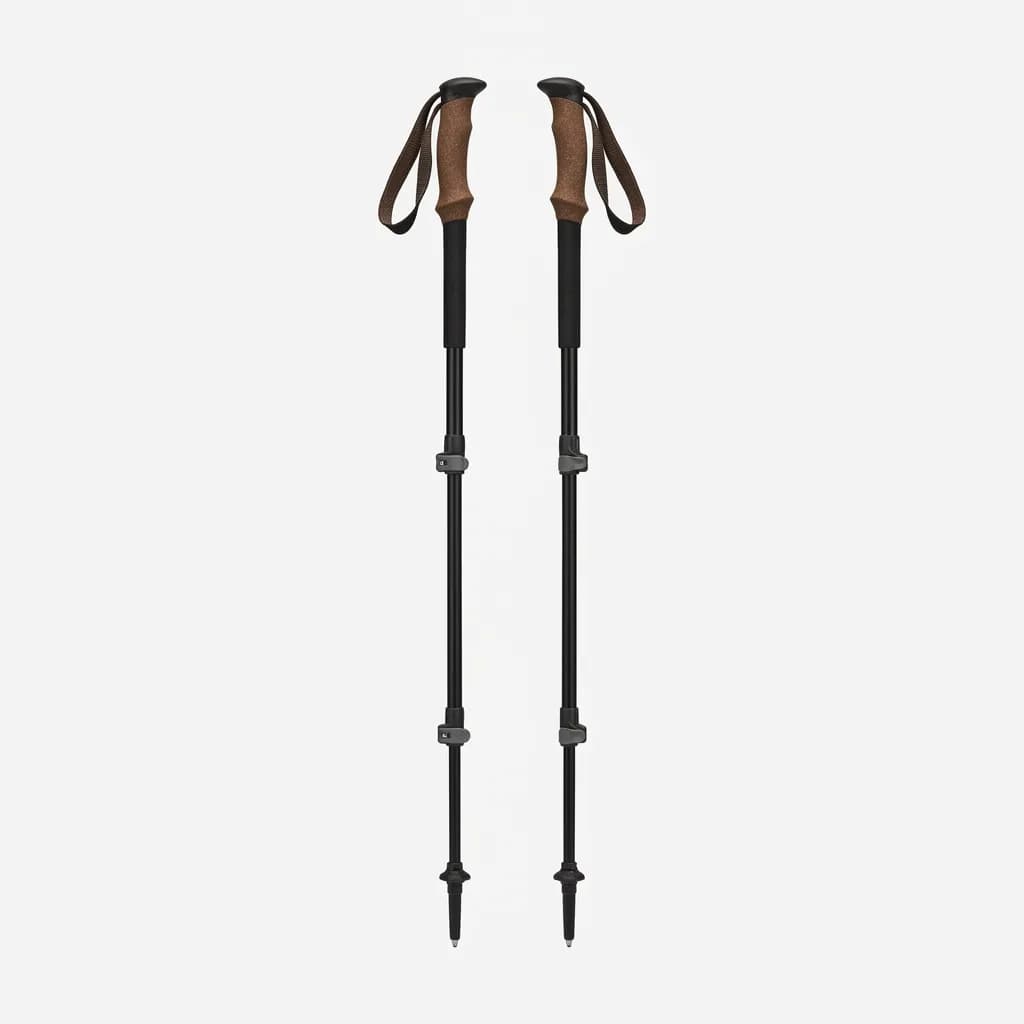
Black Diamond Trail Back Trekking Poles
$80
Economical aluminum three-section poles with FlickLock adjustments. Cork grips and no shock absorption for lightweight simplicity. Solid entry-level option.
Final recommendations by use case
For severe knee arthritis or post-surgery recovery, get the Black Diamond Trail Pro Shock. The adjustable shock system and bulletproof FlickLocks justify the price and weight. Your knees will thank you on every descent.
For moderate knee pain on multi-day trips, the Leki Makalu Lite COR-TEC AS offers excellent shock absorption and comfort at a more reasonable price. The SpeedLock adjusters are good enough for most situations, and the lighter weight helps on longer treks.
For budget-conscious hikers with mild knee issues, Cascade Mountain Tech's carbon fiber poles deliver basic shock absorption for $35. They're not as durable or refined as premium options, but they'll reduce knee strain significantly compared to no poles at all.
If you want to try trekking poles before committing to a shock-absorbing model, start with a simple aluminum pair like the Black Diamond Trail Back or REI Trailmade. Use them for a few hikes to confirm poles help your specific knee issues, then upgrade to shock-absorbing models if you find they make a difference.
The Weekly Dispatch
Enjoying this article?
Subscribe and get our best gear picks delivered every Sunday morning.
Related Stories
Best Ultralight Backpacking Gear Checklist 2026
Cut pack weight without cutting corners. Here's what actually matters when building an ultralight backpacking kit for multi-day trails.

Best Rechargeable Headlamps for Night Hiking
Rechargeable headlamps eliminate the battery anxiety that ruins night hikes. We compare beam patterns, runtime, and charging speed across top models.

Best Binoculars for Bird Watching Under $200
Budget binoculars can deliver sharp, bright views for birding. We tested mid-range optics under $200 to find which models offer the best clarity and durability.