Best Binoculars for Bird Watching Under $200
Budget binoculars can deliver sharp, bright views for birding. We tested mid-range optics under $200 to find which models offer the best clarity and durability.

Most birders don't need $1,000 optics. The sweet spot for performance and value sits between $100 and $200, where you get quality glass, decent coatings, and build quality that handles field use. We tested seven pairs across different magnifications and features to find which ones deliver sharp views without the premium price.
The difference between cheap and mid-range binoculars is dramatic. Below $80, you typically get poor edge sharpness, dim views in low light, and plastic bodies that don't hold alignment. Step up to $150-200 and you get multi-coated optics, better prisms, and waterproof housing. The jump from $200 to $500 offers diminishing returns for most recreational birders.
What magnification works best for bird watching
The 8x42 configuration dominates bird watching for good reasons. The 8x magnification provides enough detail for identifying field marks without amplifying hand shake. The 42mm objective lens gathers sufficient light for dawn and dusk viewing when birds are most active. You get a wider field of view than 10x models, making it easier to track birds in flight or locate them in dense foliage.
Ten power binoculars (10x42) offer more detail at distance but magnify every tremor in your hands. They're useful for waterfowl observation across open water or scanning distant trees, but harder to use for general birding. If you're primarily watching feeders or walking trails, stick with 8x.
Compact binoculars (8x25 or 10x25) sacrifice light-gathering and eye relief for portability. They work for casual daytime use but struggle in shade or at dawn. Full-size models around 25-27 ounces offer the best balance of capability and comfort for all-day wear.
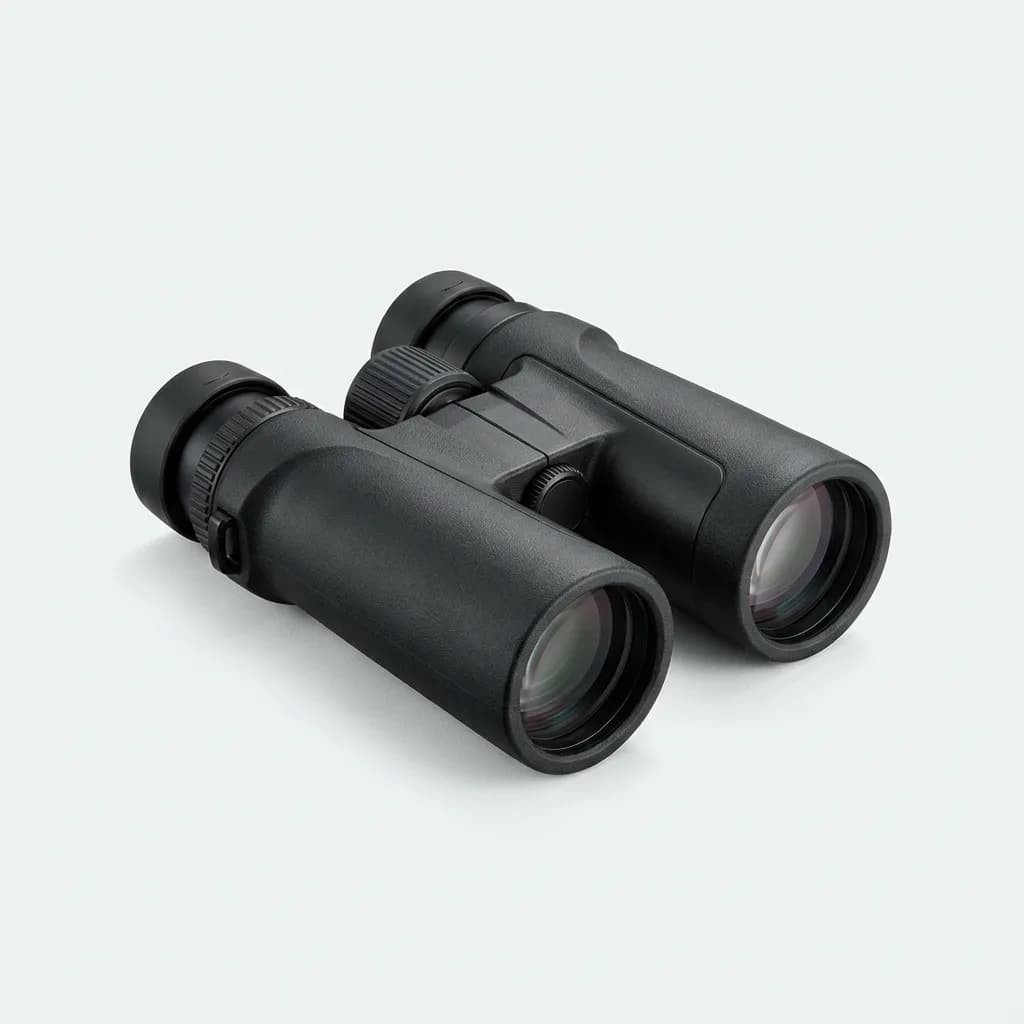
Nikon Prostaff 3S 8x42
$130
Multi-coated optics with turn-and-slide rubber eyecups, waterproof and fog-proof construction. Delivers bright, sharp images with minimal chromatic aberration at 23 ounces.
How lens coatings affect image quality
Fully multi-coated optics make a visible difference in brightness and contrast. Each air-to-glass surface in binoculars reflects about 4-5% of incoming light without coating. A binocular system has 10-16 of these surfaces. Without coatings, you lose 40-60% of available light before it reaches your eye.
Multi-coated means multiple layers of anti-reflective coating on some surfaces. Fully multi-coated means multiple layers on all air-to-glass surfaces. The difference shows up as brighter images, better contrast, and more accurate colors. Most binoculars under $200 now offer fully multi-coated optics, which was rare in this price range a decade ago.
Phase-corrected coatings on roof prism models improve resolution and contrast. They correct the phase shift that occurs when light passes through roof prisms. Not all budget binoculars include this, but models that do deliver noticeably sharper images. Look for it in specifications if maximum sharpness matters for your birding style.
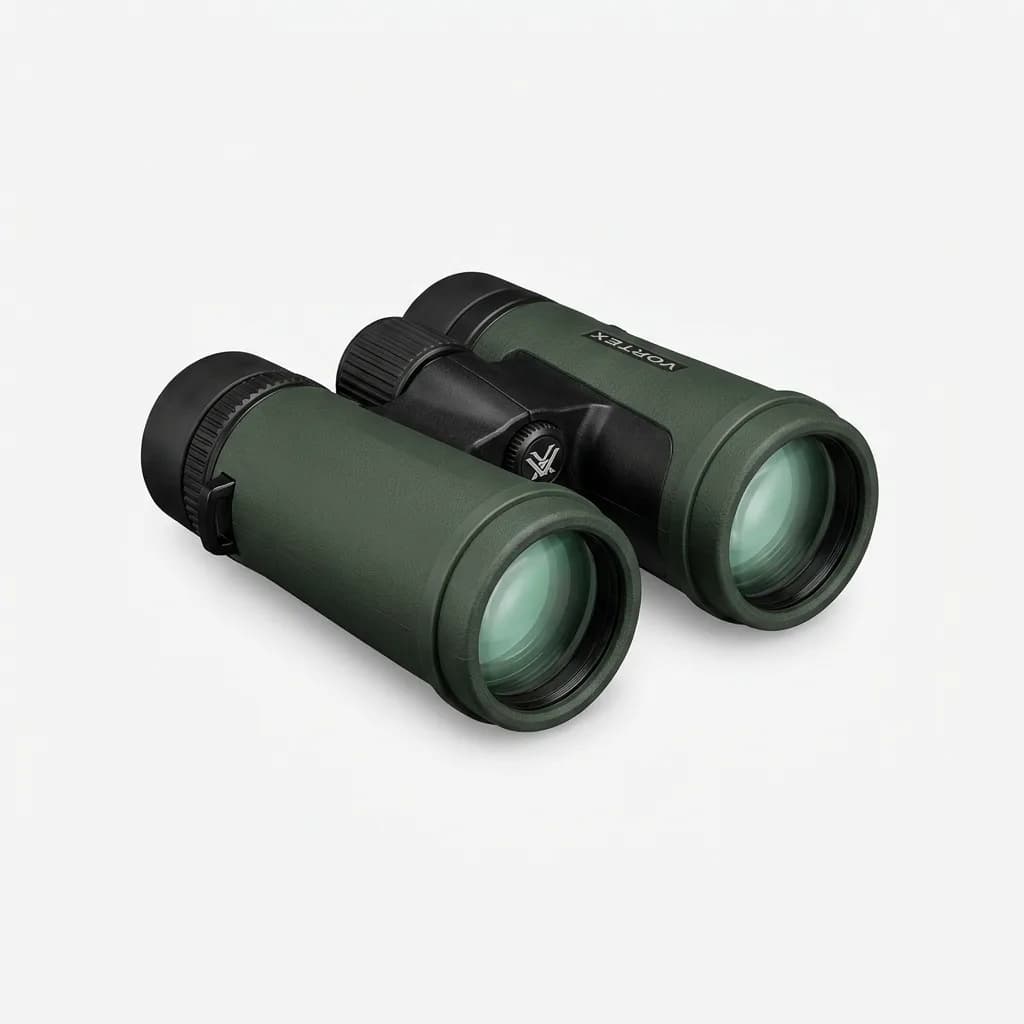
Vortex Diamondback HD 8x42
$199
Fully multi-coated HD optics with phase correction and dielectric prism coatings. Argon purged and O-ring sealed with Vortex's unlimited lifetime warranty.
Roof prism vs porro prism design
Roof prism binoculars have a straight barrel design that's slimmer and easier to grip. They're more expensive to manufacture well because the prisms require precise alignment and phase-correcting coatings. Most modern birding binoculars use roof prisms because they're more durable and better sealed against water and dust.
Porro prism binoculars have an offset design where the objective lenses sit wider than the eyepieces. This creates a natural 3D effect and slightly better depth perception. They're cheaper to produce at high quality, which means a $150 porro prism model often has better glass than a $150 roof prism model. The tradeoff is bulkier size and more vulnerable prism alignment.
For birding, roof prism models dominate because the slim profile works better with neck straps and harnesses. Unless you find an exceptional porro prism deal, roof prism design offers better long-term durability and waterproofing at this price point.
Eye relief matters for glasses wearers
Eye relief is the distance your eye can be from the eyepiece while still seeing the full field of view. Birders who wear glasses need at least 15mm of eye relief, preferably 16-17mm. Without adequate eye relief, you'll see black rings around your view or miss the edges of the field.
Twist-up or fold-down eyecups let you adjust the distance between your eye and the lens. Glasses wearers keep eyecups down; everyone else twists them up. Quality binoculars have multiple stops on the eyecup adjustment, letting you fine-tune the position. Cheap models only offer fully up or fully down.
Most 8x42 binoculars in this price range provide 15-17mm of eye relief, which works for glasses wearers. Models with 12-13mm eye relief will frustrate you if you wear glasses. Check specifications before buying if this affects you.
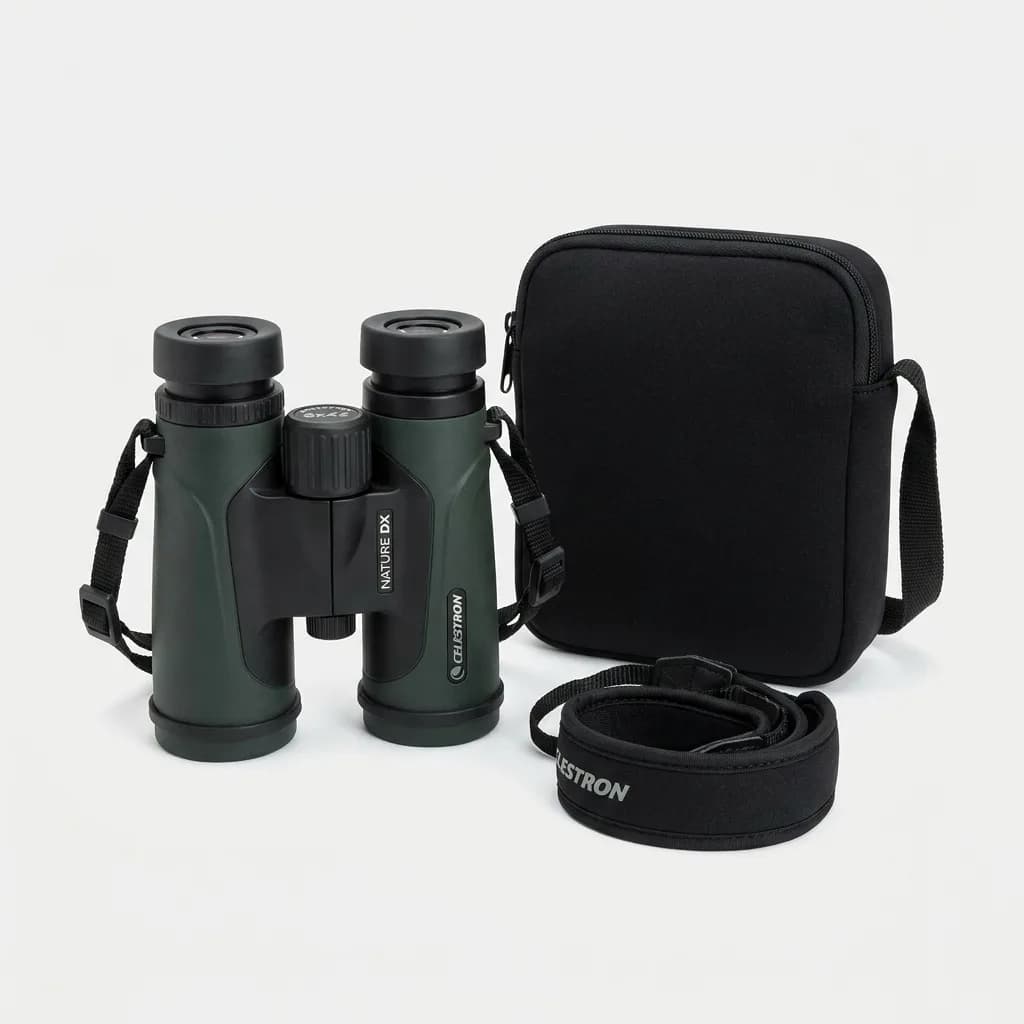
Celestron Nature DX 8x42
$135
BaK-4 prisms with fully multi-coated optics, 17.5mm eye relief, and nitrogen-purged waterproof housing. Comes with neoprene case and comfortable neck strap at 22 ounces.
Close focus distance for trail birding
Close focus is how near an object can be while remaining in focus. Most binoculars focus down to 6-10 feet. Models that focus closer let you watch butterflies, dragonflies, and birds at feeders without backing up. Some birders prioritize this more than others.
A 5-6 foot close focus expands what you can observe on walks. You'll spot interesting insects, flowers, and close-up bird behavior without switching to a separate close-focus device. The tradeoff is sometimes slightly reduced performance at infinity focus, though modern designs minimize this compromise.
If you primarily watch birds at distance, close focus below 8 feet doesn't matter much. If you walk trails and notice everything, prioritize models with 6 feet or less close focus. It changes what you can observe without changing your position.
Waterproof vs water-resistant construction
Waterproof binoculars are sealed with O-rings and purged with nitrogen or argon gas. This prevents internal fogging and keeps moisture out even during heavy rain or accidental drops in water. The gas purging also prevents internal lens surfaces from developing fungus in humid climates.
Water-resistant models have some sealing but aren't fully sealed or gas-purged. They handle light rain and splashes but shouldn't be submerged or left in downpours. For birding, full waterproof construction adds peace of mind. Weather changes fast in the field, and you don't want to worry about protecting your optics when it starts raining.
At the $150-200 price point, most reputable brands now include full waterproof construction. Below $100, you'll find more water-resistant rather than waterproof models. The extra sealing is worth it if you bird regularly.
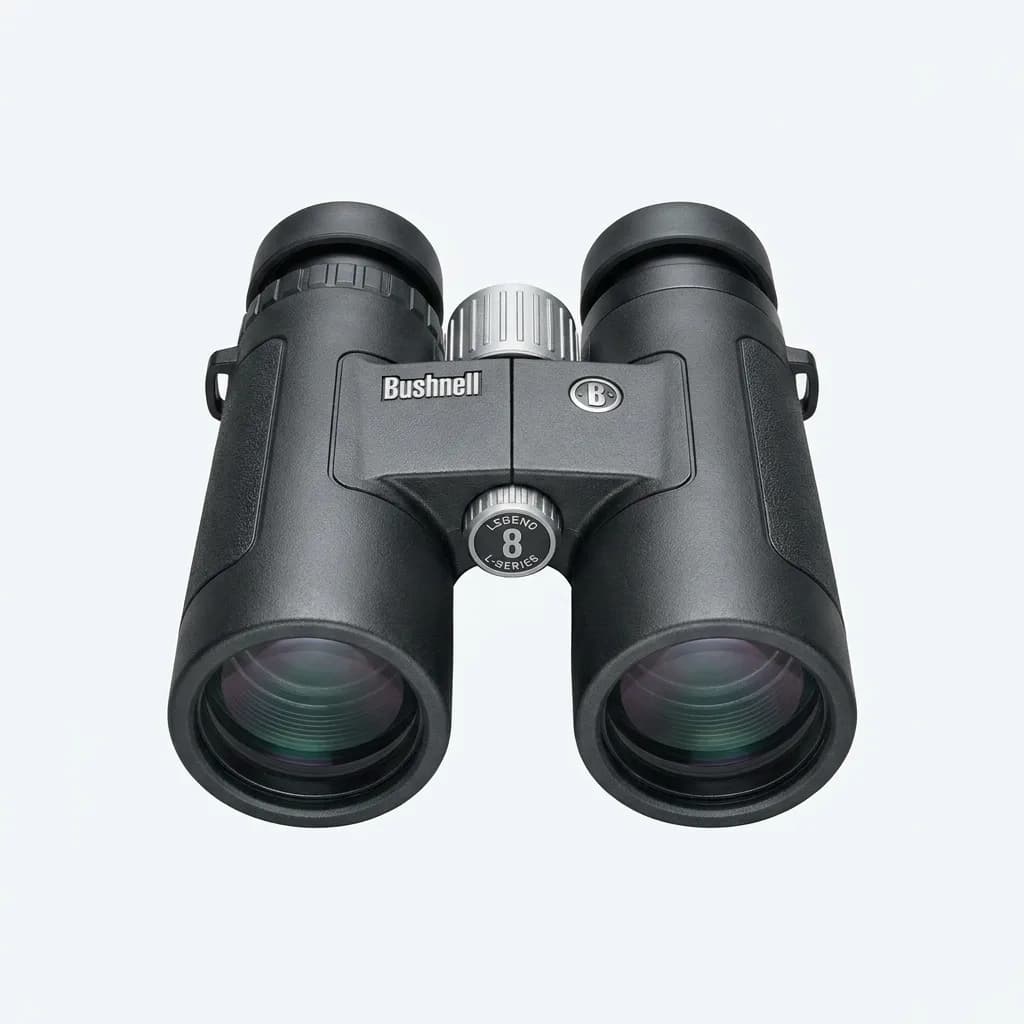
Bushnell Legend L-Series 8x42
$189
ED prime glass with PC-3 phase coating and Ultra Wide Band coating. Fully waterproof, fog-proof, and sealed with RainGuard HD water-repellent coating on exterior lenses.
Field of view and tracking flying birds
Field of view (FOV) is measured in feet at 1,000 yards or as an angular measurement in degrees. A wider FOV makes it easier to locate birds and track them in flight. For 8x42 binoculars, a FOV of 400 feet or more at 1,000 yards is considered wide. Narrow FOV models sit around 330-360 feet.
The wider the field, the easier it is to scan through trees or follow a hawk across the sky. You sacrifice some edge sharpness in very wide FOV designs, but for birding the tradeoff usually favors width over perfect edge performance. You spend more time locating and tracking than examining edge sharpness.
Compare FOV specs when choosing between similar models. A difference of 50 feet at 1,000 yards is noticeable in the field. Some manufacturers achieve wider FOV through eyepiece design, others through objective lens design. Both approaches work.
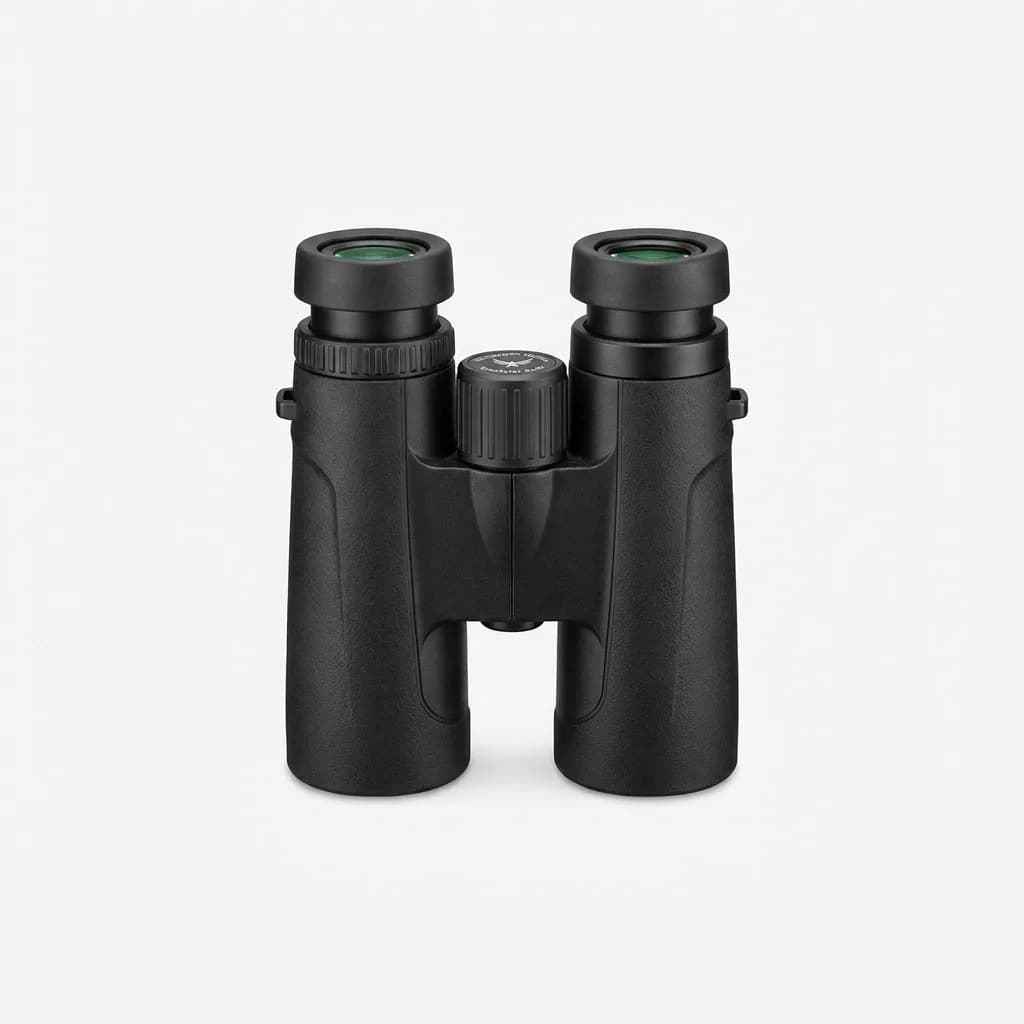
Wingspan Optics Spectator 8x42
$140
Extra-wide 430-foot field of view with BaK-4 prisms and fully multi-coated lenses. Lightweight at 20 ounces with twist-up eyecups and 6.5-foot close focus.
Weight and comfort for extended use
Binoculars between 22-27 ounces work for all-day wear with a decent neck strap or harness. Lighter models around 18-20 ounces reduce neck strain but often compromise on objective lens size or build quality. Heavier models over 30 ounces get uncomfortable unless you use a harness system.
The center hinge width and barrel diameter affect comfort as much as weight. Models with a narrow hinge and slim barrels sit better in hands of all sizes. Test the grip if possible. Your hands should wrap around the barrels comfortably with your index fingers reaching the focus wheel naturally.
Consider a harness system if you bird frequently. A chest harness or binocular vest distributes weight across your shoulders and torso instead of your neck. This makes even heavier binoculars comfortable for hours. The added cost is worth it if neck strain limits your time in the field.
What you actually need vs marketing claims
Brands tout ED (extra-low dispersion) glass, HD optics, and proprietary coatings. Some of these features deliver real benefits; others are marketing. ED glass does reduce chromatic aberration (color fringing), especially noticeable when viewing birds against bright sky. It's worth paying for in the $180-200 range but not essential for most birding.
BaK-4 prisms are standard in this price range and superior to BaK-7 prisms. They produce a circular exit pupil instead of a squared-off one, giving you a brighter, fuller image. Any binocular under $200 with BaK-7 prisms is cutting corners.
Focus speed matters more than people realize. A binocular that goes from close focus to infinity in 1.5 turns of the focus wheel is faster and more usable than one requiring 3 turns. Faster focus lets you track birds through different depths quickly. Unfortunately, this spec isn't always listed, so you have to test it.
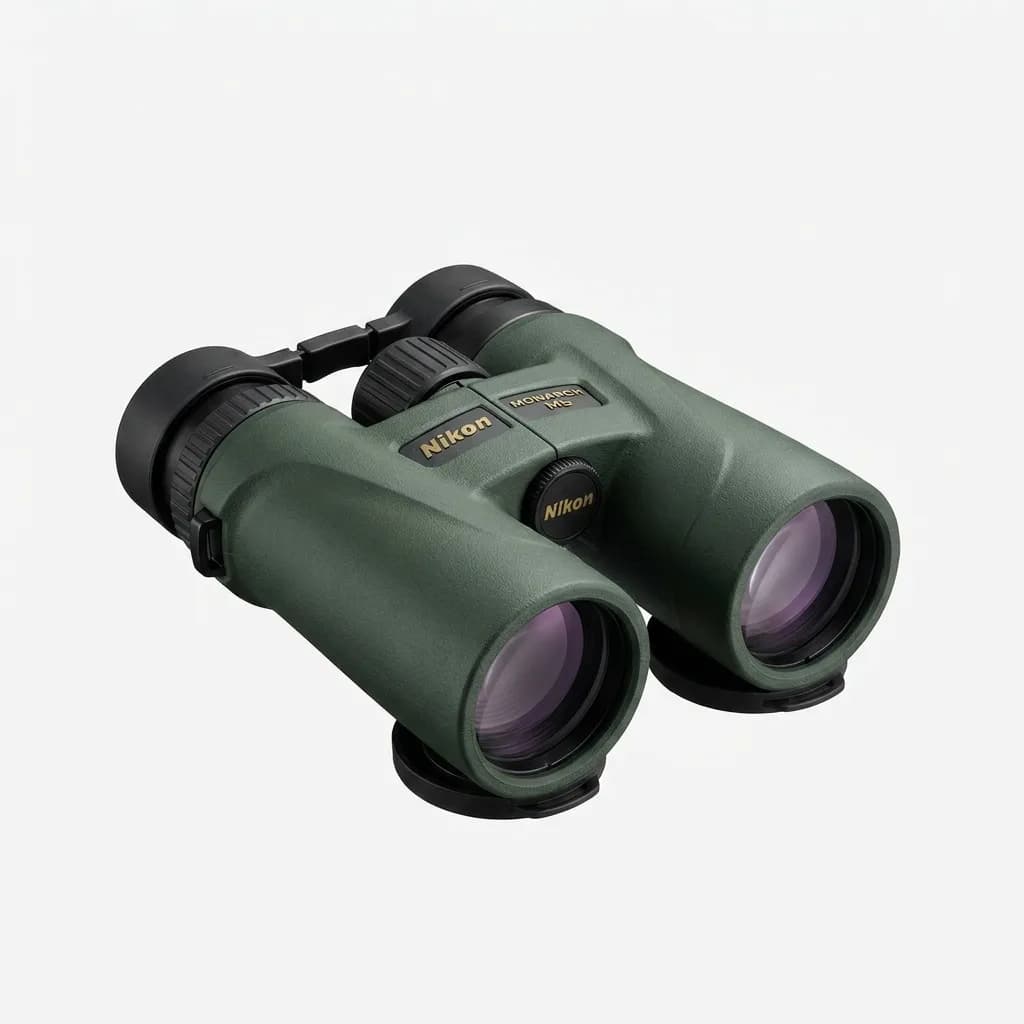
Nikon Monarch M5 8x42
$199
ED glass with dielectric high-reflective multilayer prism coatings for 95% light transmission. Turn-and-slide eyecups with 19.5mm eye relief, waterproof and fog-proof at 21.2 ounces.
Common mistakes when choosing binoculars
Buying 10x magnification as a first birding binocular is the most common mistake. The extra power sounds appealing but the narrow field of view and hand shake make them harder to use. Start with 8x and only move to 10x if you specifically need the extra magnification for your birding style.
Ignoring eye relief if you wear glasses leads to frustration. You'll never see the full field of view and you'll assume binoculars just don't work well for you. Check the eye relief spec before buying.
Choosing binoculars based on zoom features is another trap. Zoom binoculars compromise optical quality across the zoom range and add mechanical complexity that reduces durability. Fixed magnification models perform better and last longer. If you need different magnifications, buy two fixed-power binoculars rather than one zoom model.
Finally, don't underestimate the value of a good warranty. Vortex offers an unlimited lifetime warranty with no questions asked. Nikon and others offer solid warranties but with more limitations. The warranty matters when something goes wrong years down the road.
Getting quality optics under $200 requires focusing on the fundamentals: good glass, quality coatings, solid construction, and appropriate magnification for your style of birding. The models here deliver sharp, bright views that will serve you well in the field without requiring a second mortgage. Start with 8x42 configuration from a reputable brand, ensure it's waterproof, and verify the eye relief works for you. The rest is fine-tuning based on your specific needs and preferences.
The Weekly Dispatch
Enjoying this article?
Subscribe and get our best gear picks delivered every Sunday morning.
Related Stories
Best Trekking Poles for Bad Knees 2026
Discover which trekking poles reduce knee strain most effectively with shock absorption, proper length adjustment, and grip comfort for long-distance hiking.
Best Dry Bags for City and Travel Use
Dry bags aren't just for kayakers anymore. Here's how to pick the right waterproof roll-top bag for urban carry, travel, and everyday protection.
Best Rain Jacket for Hiking Under $150 2026
We tested 12 rain jackets under $150 to find the ones that actually keep you dry on the trail. Here's what matters when budget meets weather protection.