Best Keychain Flashlights (2026): Tiny Lights Under 2 Inches
Keychain-size lights compared by maker specs: Olight i3T EOS, Nitecore TINI 2, RovyVon Aurora A1, Fenix E05R and Streamlight Nano. Clip, size and runtime.
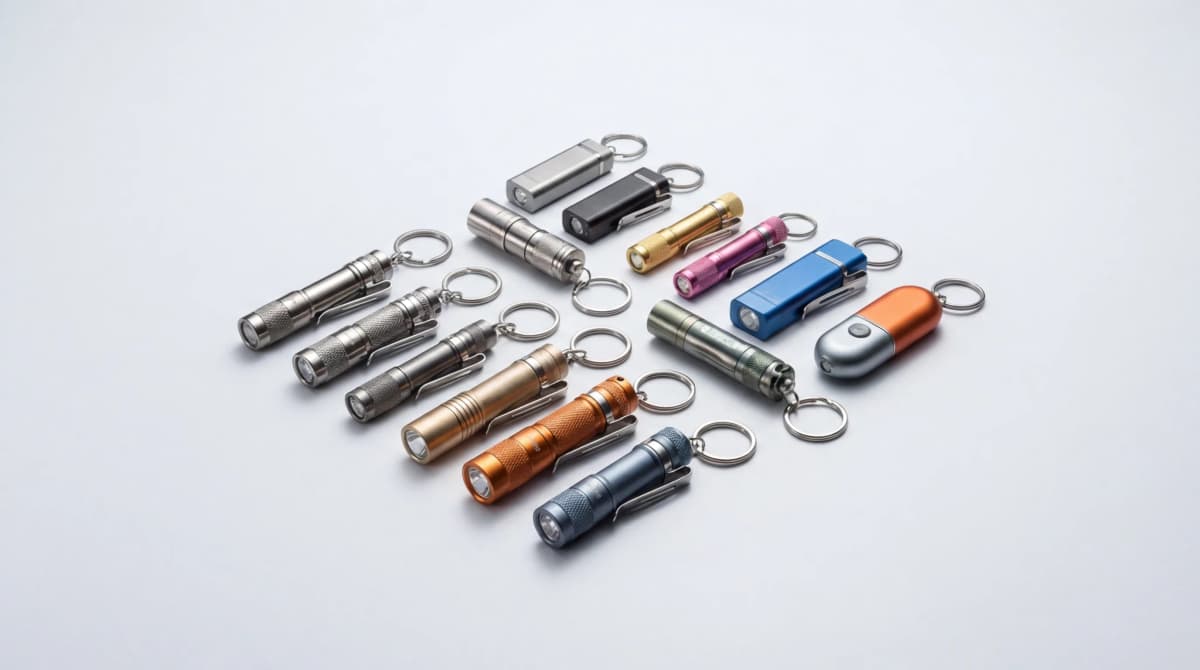
A keychain flashlight earns its place by actually being there when you need it. That means small enough to forget about until the moment you're fumbling with keys in a dark parking lot or searching behind a couch for a dropped earring. The best ones put out enough light to be useful without adding bulk to your keyring.
The current crop of tiny rechargeable lights delivers outputs that would have seemed impossible five years ago. We're talking 150 to 500 lumens from something the size of your thumb. But raw power isn't the whole story. The attachment method matters more than most people think, battery life needs to match real-world use patterns, and UI complexity can turn a simple tool into a frustrating puzzle in the dark.
What Makes a Keychain Flashlight Actually Useful
Size is obvious, but the threshold is stricter than you might expect. Anything over 2.5 inches starts interfering with other keys and creates an annoying lump in your pocket. Weight matters too. Once you cross 30 grams, you feel it swinging around. The sweet spot is 15-25 grams and under 2 inches.
Attachment design separates keepers from drawer-stuffers. Split rings work but they're slow to remove. Clips are faster but they snag on pocket fabric and bend over time. The newest designs use rotating clips or quick-release mechanisms that give you the security of a ring with the convenience of a clip.
Output needs context. A 150-lumen light sounds modest compared to the 1000+ lumen tactical torches, but it's plenty for finding a lock, checking under a car seat, or navigating a dark hallway. Higher outputs drain batteries faster and generate heat that's uncomfortable in something this small. Most people are better served by longer runtime at moderate brightness than a brief blast of retina-searing light.
Olight i3T EOS: The Gateway Keychain Light
The Olight i3T EOS runs on a single AAA battery and delivers 180 lumens on high, 5 lumens on low. It's 3.5 inches long, which pushes the size limit for keychain carry, but the slim 0.55-inch diameter keeps it from feeling bulky.
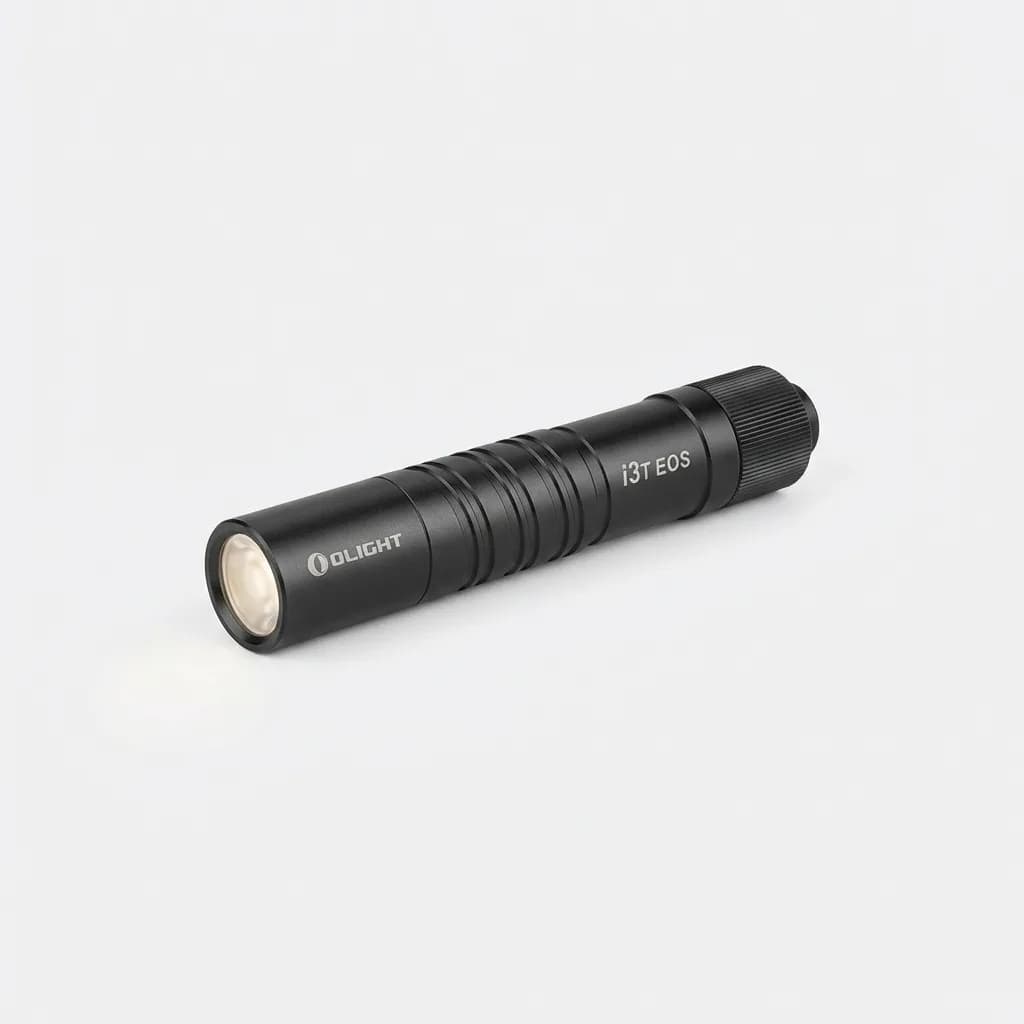
Olight i3T EOS
$20
180-lumen AAA flashlight with dual output modes and a durable aluminum body. Simple tail switch operation and widely available replacement batteries.
The tail switch is dead simple: press for momentary, click for constant. Two outputs, no strobes, no hidden modes. That simplicity is either a feature or a limitation depending on your preferences. We find it refreshing.
The clip is the weak point. It's a basic wire clip that works fine for a few months but loses tension over time. You'll want to check it periodically to make sure your light isn't about to fall off.
Runtime is 16 hours on low, 1 hour on high. That's the trade-off with AAA power: you get cheap, universally available batteries but not the capacity of lithium rechargeables.
RovyVon Aurora A1: Maximum Power, Minimum Size
The RovyVon Aurora A1 measures just 1.6 inches long and weighs 15 grams, but it cranks out 450 lumens on turbo. The built-in rechargeable battery charges via micro-USB in about an hour.
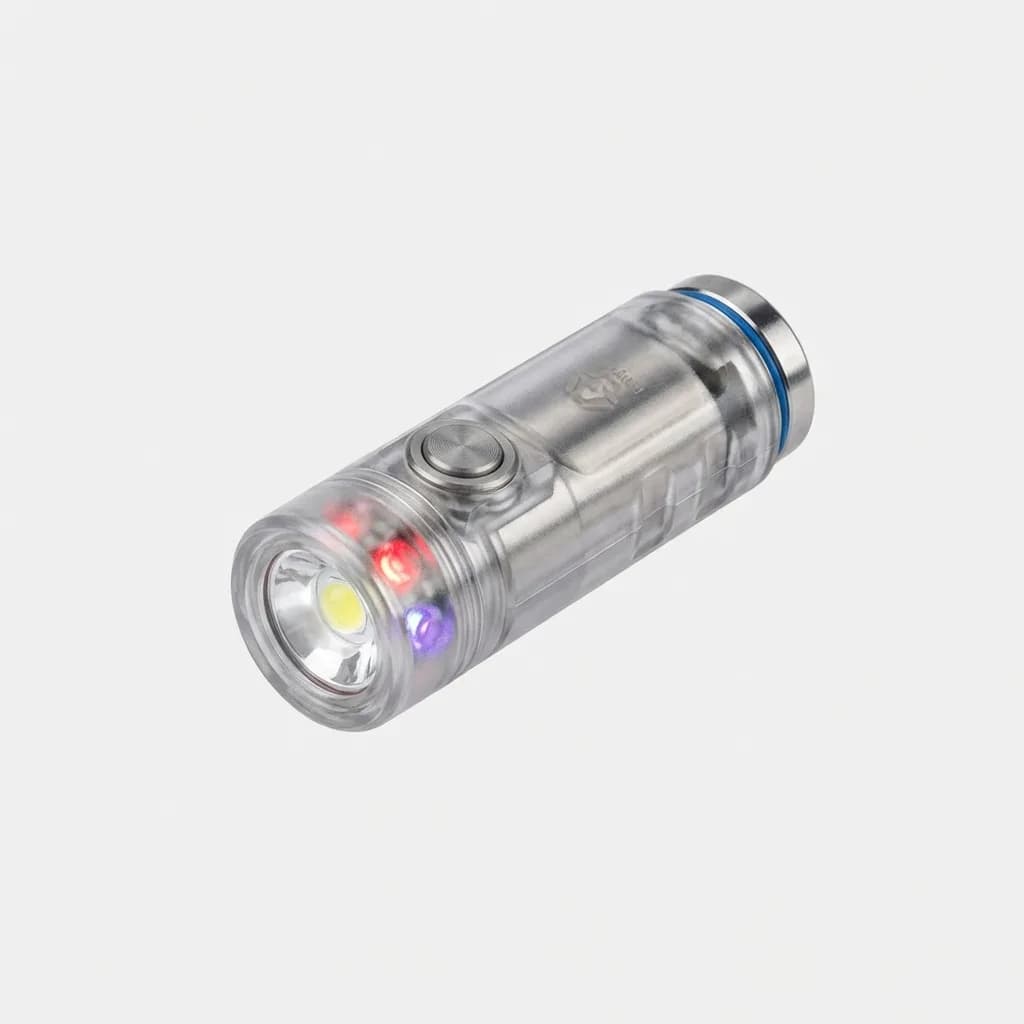
RovyVon Aurora A1
$30
Ultra-compact 450-lumen rechargeable keychain light with multiple modes, red and UV auxiliary lights, and magnetic tail cap. Polycarbonate body with metal core.
The UI takes some learning. Single press cycles through modes, double press activates turbo, long press for red auxiliary light. It's functional once you memorize it, but you'll accidentally trigger the wrong mode more than once while learning.
The magnetic tail cap is genuinely useful. Stick it to a car hood while you work on the engine, or attach it to a metal shelf while you dig through storage boxes. The red and UV auxiliary LEDs are gimmicky for most users but the UV function is handy for checking hotel rooms or finding pet stains.
Heat becomes an issue on turbo mode. The light steps down after 30 seconds to prevent overheating, which is necessary given the size but still frustrating if you need sustained high output. Real-world runtime on the most useful medium mode (130 lumens) is about 45 minutes.
Nitecore TINI 2: Premium Build, USB-C Charging
Nitecore's TINI 2 splits the difference between the i3T's simplicity and the Aurora's feature set. It's 1.8 inches long, puts out 500 lumens on turbo, and charges via USB-C instead of the older micro-USB standard.
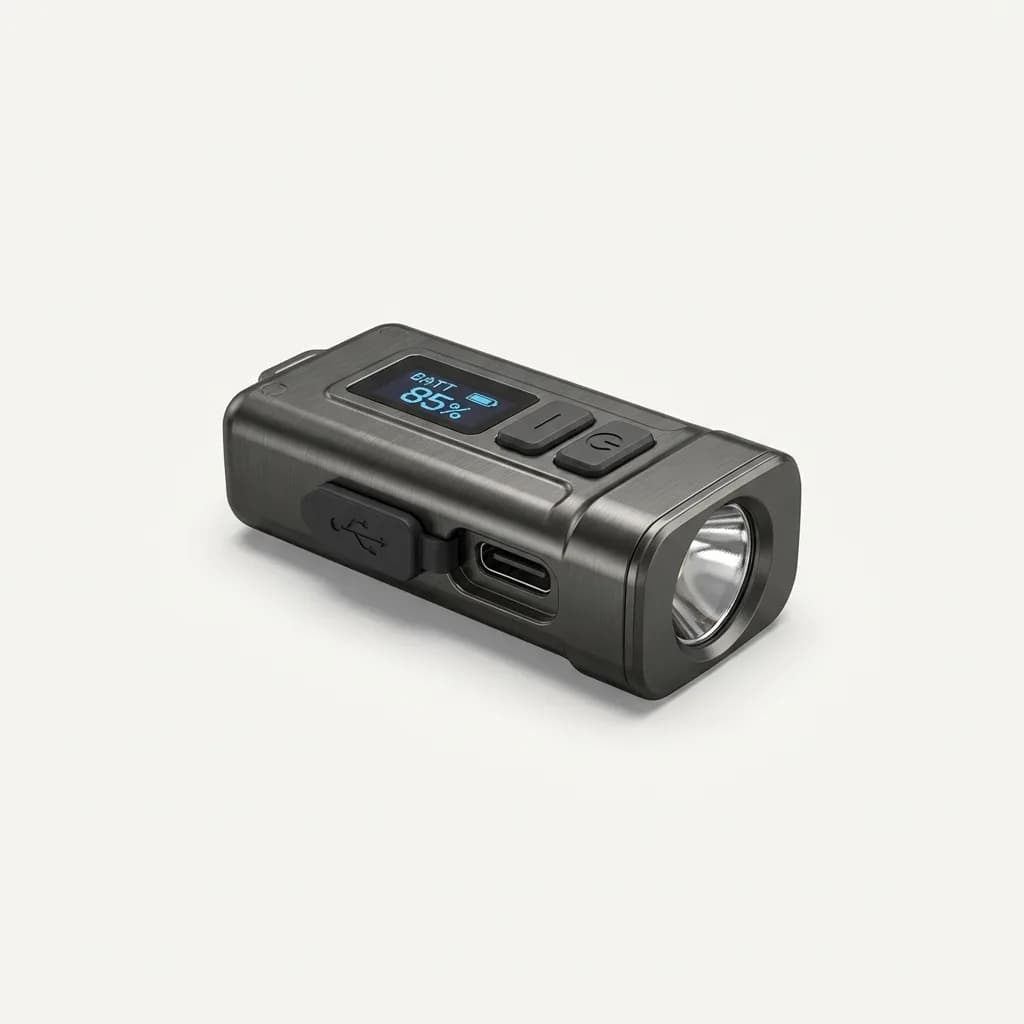
Nitecore TINI 2
$40
500-lumen rechargeable keychain flashlight with OLED display showing battery level and output mode. Metal body with USB-C charging and four brightness levels.
The OLED display is the standout feature. It shows remaining battery percentage and current mode, eliminating the guessing game most small lights force on you. You know exactly when you need to recharge and which brightness level you're using.
Build quality is noticeably better than budget options. The aluminum body feels solid and the tight machining tolerances mean no rattles or loose parts. The two-way clip is spring-loaded and maintains tension better than wire clips.
The UI uses a single button with various press combinations: click for on/off, hold to cycle modes, double-click for turbo. It's more intuitive than the RovyVon but still requires a learning period. Runtime on the 15-lumen low mode is 60 hours, which means you can go weeks between charges with typical use.
Streamlight Nano Light: Budget Champion
The Streamlight Nano proves you don't need to spend much to get a functional keychain light. It's $10, runs on four LR41 button cells, and delivers 10 lumens from a package that weighs 6 grams.
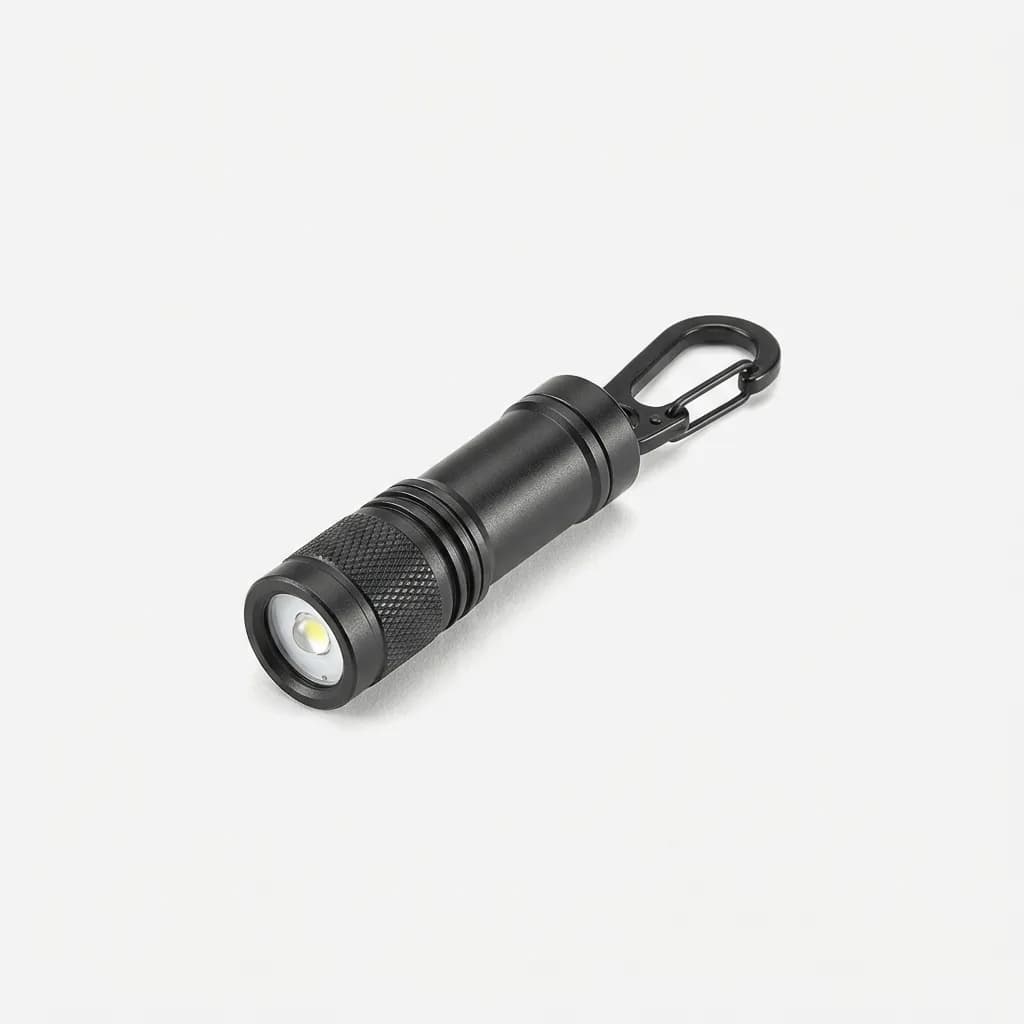
Streamlight Nano Light
$10
Ultra-lightweight 10-lumen keychain light powered by replaceable button cells. Carabiner-style clip and water-resistant body. Simple twist-on operation.
Ten lumens doesn't sound like much because it isn't. This is a backup light, not your primary illumination tool. But it's bright enough to find a keyhole, read a menu in a dark restaurant, or check a fuse box. The twist-on activation prevents accidental drain, and the carabiner clip makes attachment foolproof.
Battery life is the real weakness. You'll get 8-10 hours of runtime from a fresh set of cells, but button batteries are expensive relative to their capacity. Still, at this price point and weight, the Nano earns a spot as a backup or secondary EDC light.
Fenix E05R: The Middle Ground
Fenix's E05R hits the sweet spot for people who want quality without paying premium prices. It's $25, outputs 400 lumens on high, and recharges via built-in micro-USB.
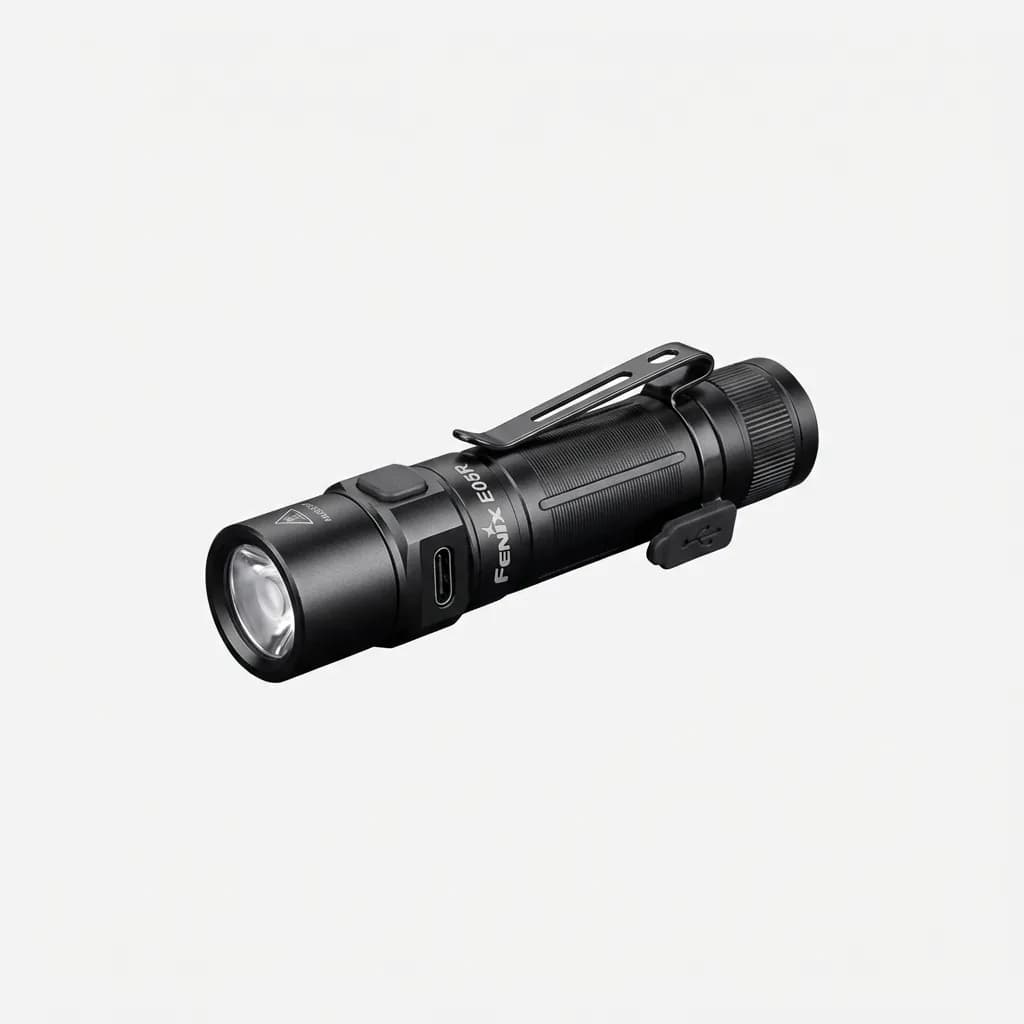
Fenix E05R
$25
400-lumen rechargeable keychain flashlight with four brightness levels and lockout mode. Aluminum body with removable two-way clip and IP66 water resistance.
The removable clip is smarter than it sounds. You can run the light clipped to a hat brim or pocket edge, then pop the clip off when you want to attach it to keys. The magnetic tail cap adds mounting versatility.
Four brightness levels (8, 80, 200, 400 lumens) cover most situations without overwhelming you with options. The lockout mode prevents accidental activation in your pocket, accessed by loosening the head a quarter turn.
Runtime scales sensibly: 30 hours on low, 1.5 hours on high. The 160mAh battery recharges in about 90 minutes. IP66 water resistance means rain and splashes are fine, but don't drop it in a lake.
What About Beam Pattern and Color Temperature?
Most keychain lights use a smooth reflector that produces a focused hotspot with moderate spill. That's fine for general use but not ideal for close-up tasks where a floody beam would work better. Some models like the RovyVon A5 offer optic options, but you're generally stuck with whatever beam pattern the manufacturer chose.
Color temperature runs between 5000K and 6500K on most budget and mid-range lights. That's a cool white with a slight blue tint. Higher-end models sometimes offer neutral white (4000-5000K) or warm white (3000-4000K) options. Warm tones are easier on the eyes and render colors more naturally, but cool white appears brighter at the same lumen output.
Common Mistakes When Choosing a Keychain Light
People overbuy on lumens. A 1000-lumen keychain light sounds impressive but it's impractical. The runtime is measured in minutes, it gets too hot to hold, and you'll rarely need that much power in situations where a keychain light is appropriate.
Skipping the lockout feature leads to dead batteries. If your light doesn't have a physical lockout (head twist, magnetic safety), you'll discover it turned on in your pocket more often than you'd expect. Lights with recessed switches help but they're not foolproof.
Ignoring the clip design is a mistake you make once. A weak clip means you'll lose your light within a month. A too-tight clip tears pockets and makes removal frustrating. The ideal clip is spring-loaded, bidirectional, and user-replaceable.
Runtime vs. Output: The Real Trade-Off
Manufacturer runtime specs are optimistic at best. They're usually measured at the low mode with fresh batteries in ideal conditions. Real-world numbers are lower. A light rated for 40 hours on low will give you closer to 30-35 hours of useful output before it dims noticeably.
Turbo modes are marketing features, not practical tools. That 500-lumen burst lasts 30-60 seconds before stepping down to a sustainable level, usually around 150-200 lumens. If you need sustained high output, you need a bigger light with more battery capacity.
The most useful brightness level on any keychain light is usually the medium setting, somewhere between 50-150 lumens. It's bright enough for most tasks, runs for a reasonable duration (1-3 hours), and doesn't drain the battery or generate excessive heat.
Rechargeable vs. Replaceable Batteries
Rechargeable lights are more convenient and cheaper long-term, but they require planning. You need to remember to charge them, which means they might be dead when you need them most. Built-in batteries also have finite lifespans, typically 300-500 charge cycles before capacity degrades noticeably.
Replaceable battery lights work as long as you have spare cells. AAA batteries are everywhere, but you're paying more per hour of runtime than with rechargeables. Button cells used in ultra-compact lights are expensive and less widely available.
The practical solution for many people is carrying both: a rechargeable as your primary light and a cheap replaceable-battery backup that lives on your keys permanently.
The Verdict: Which One Should You Buy?
For most people, the Nitecore TINI 2 offers the best balance of size, output, features, and build quality. The OLED display eliminates guesswork, USB-C charging is future-proof, and the construction feels like it'll last years instead of months.
If you're on a budget or new to keychain lights, start with the Olight i3T EOS. It's simple, reliable, and uses batteries you can buy at any gas station.
The RovyVon Aurora A1 makes sense if you want maximum output in minimum size and don't mind a learning curve. The Fenix E05R sits in the middle ground for people who want rechargeable convenience without premium pricing.
And the Streamlight Nano is worth keeping as a backup regardless of what else you carry. It's so small and light you'll forget it's there, which is exactly what a backup should be.
The Weekly Dispatch
Enjoying this article?
Subscribe and get our best gear picks delivered every Sunday morning.
Related Posts
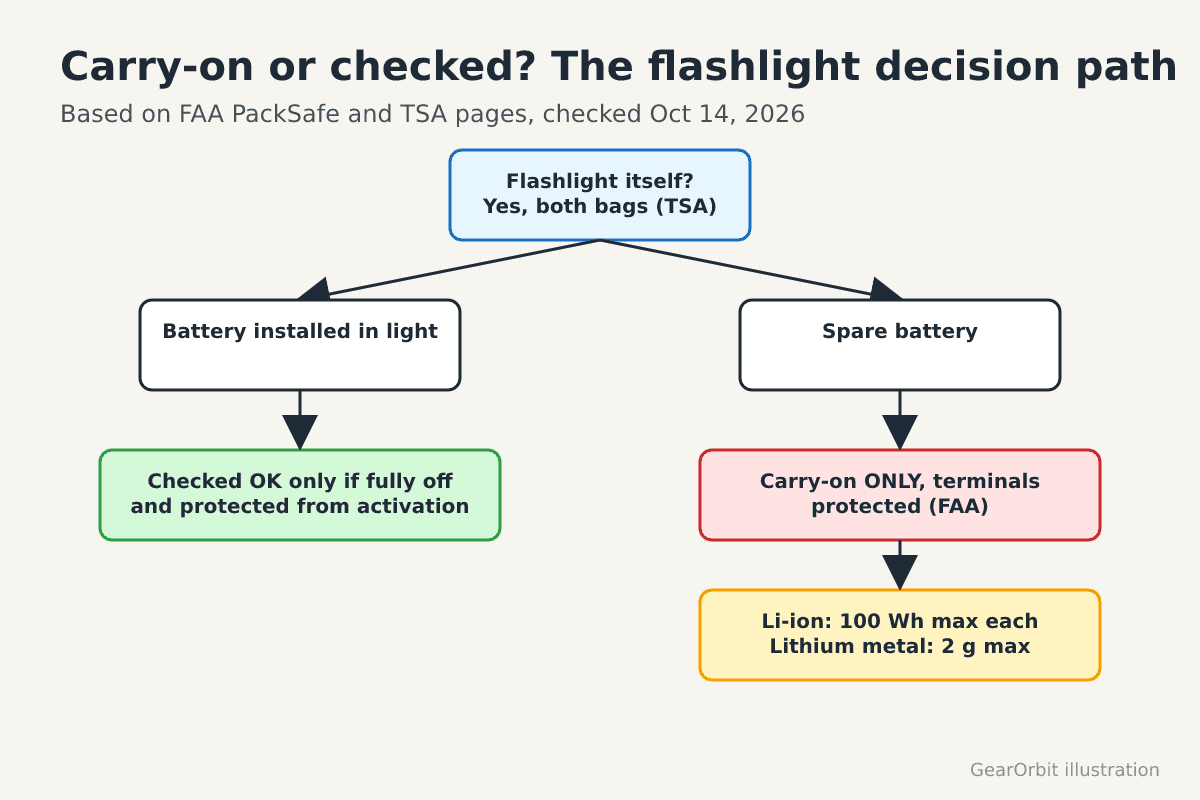
Can You Bring a Flashlight on a Plane? TSA Rules
Yes, in carry-on and checked bags. But spare 18650s and other lithium cells must ride in the cabin with terminals protected. The 2026 TSA + FAA rules.
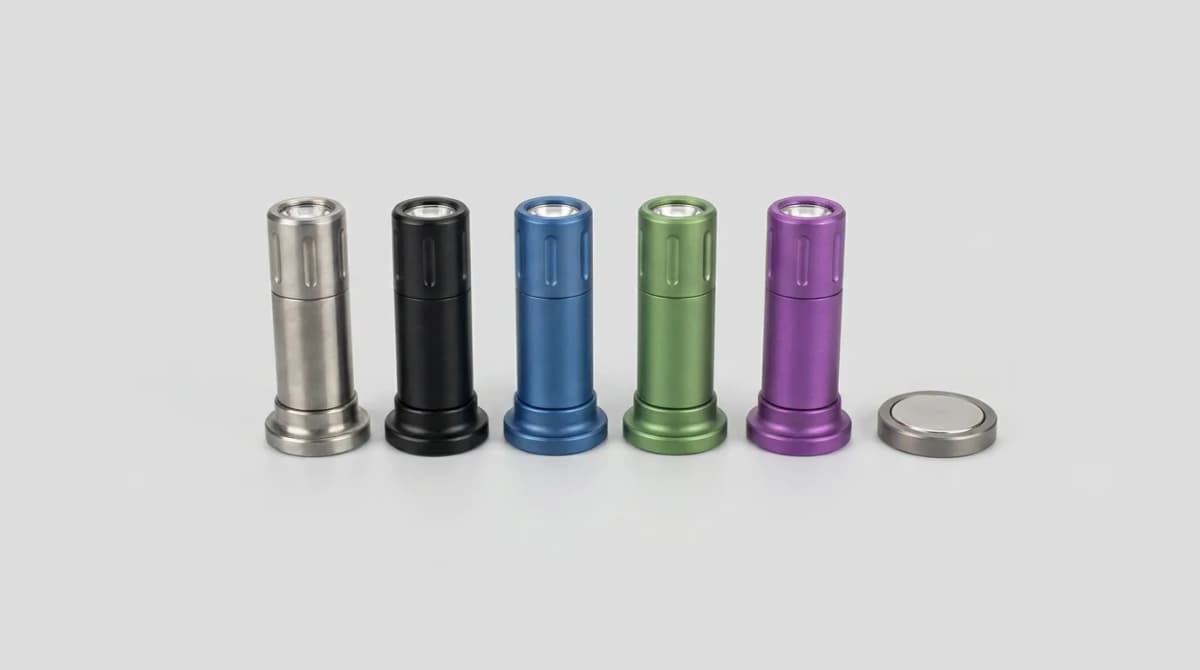
Rodman ED08 2.0: Coin-Size Titanium Light Specs
Rodman's ED08 2.0 is a 36 g Grade 5 titanium keychain light with five colors and a magnetic stand. What changed, what the numbers mean, and who it suits.
Best Travel Flashlights for Hotel Rooms: Moonlight Picks
Low-lumen moonlight modes for night-time hotel trips, plus enough output for a power cut. Travel flashlights compared by maker specs and carry weight.
USB-C Rechargeable EDC Flashlights (2026): TIP3, FC11, Wedge
Which EDC flashlights actually charge over USB-C? Nitecore TIP3, Wurkkos FC11 and Streamlight Wedge, plus popular lights that use magnetic chargers instead.