Best Portable Power Stations for Camping (2026)
From weekend trips to extended off-grid stays, these portable power stations deliver reliable energy without the noise or fumes of gas generators.

You're three days into a backcountry camping trip when your phone dies. No problem if you planned ahead with a portable power station. These rechargeable battery packs have replaced gas generators for most campers, and for good reason: they're silent, emit no fumes, and work inside your tent without poisoning you.
Quick Picks
Our top recommendations at a glance:
- 1
- 2EcoFlow DELTA 2$999
- 3Anker 757 PowerHouse$1,399
- 4Bluetti AC200P$1,799
- 5Goal Zero Yeti 1000X$1,200
The market exploded over the past few years. Every brand claims theirs is the best, but the differences matter more than the marketing suggests. Battery chemistry affects lifespan and safety. Output ratings determine what you can actually run. Solar compatibility decides whether you can stay off-grid indefinitely or just stretch a weekend into four days.
We compared seven models across different price points and capacity ranges. Some excel at running high-draw appliances like electric coolers and CPAP machines. Others prioritize weight and portability for backpacking. A few hit the sweet spot for car camping where you need serious capacity without breaking your budget or your back.
What capacity do you actually need for camping?
Most people overestimate. A 500Wh power station will charge your phone 40 times, run a small electric cooler for 10 hours, or power LED camp lights for days. That covers a long weekend for two people with typical gear.
Jump to 1000Wh and you can run a 12V fridge continuously for 20 hours, plus charge all your devices. This range works for week-long trips or groups of 3-4 people. Beyond 1500Wh, you're looking at extended off-grid living or powering high-draw appliances like portable AC units, which most campers don't need.
The catch: capacity adds weight. A 500Wh unit weighs 12-15 pounds. A 1000Wh model hits 22-25 pounds. At 2000Wh, you're lugging 40+ pounds. If you're hiking more than 100 feet from your car, smaller is smarter.
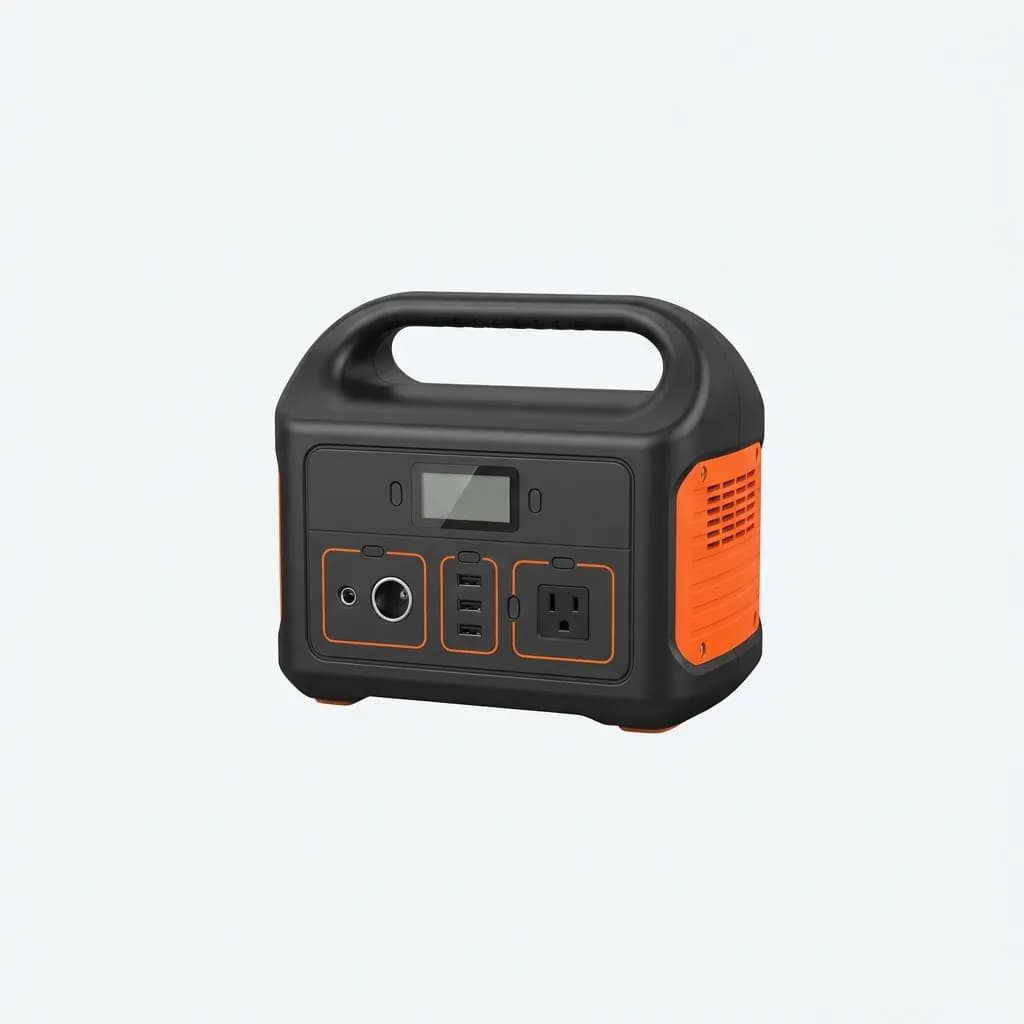
Jackery Explorer 500
$500
518Wh LFP battery, 500W continuous output. Weighs 13.3 pounds with pure sine wave inverter. Charges fully in 7.5 hours from wall outlet or 9.5 hours with 100W solar panel.
LiFePO4 vs NMC: battery chemistry matters more than brands admit
Lithium iron phosphate (LiFePO4 or LFP) batteries last 3000-4000 charge cycles before dropping to 80% capacity. Nickel manganese cobalt (NMC) batteries last 800-1000 cycles. That's the difference between 10 years of regular use and 3 years.
LFP batteries are also safer. They don't thermal runaway like NMC cells, which means they won't catch fire if damaged or overheated. This matters when you're storing 1000+ watt-hours of energy in a tent or vehicle.
The tradeoff: LFP batteries are heavier for the same capacity. An NMC-based 1000Wh unit weighs around 22 pounds. The LFP version hits 27-28 pounds. For car camping, take the extra weight. For backpacking, you might accept shorter lifespan to save 5 pounds.
Most brands don't advertise which chemistry they use. Check the spec sheet for "LiFePO4" or "LFP." If it just says "lithium-ion," it's probably NMC. The cycle count tells the story: anything over 2000 cycles is LFP.
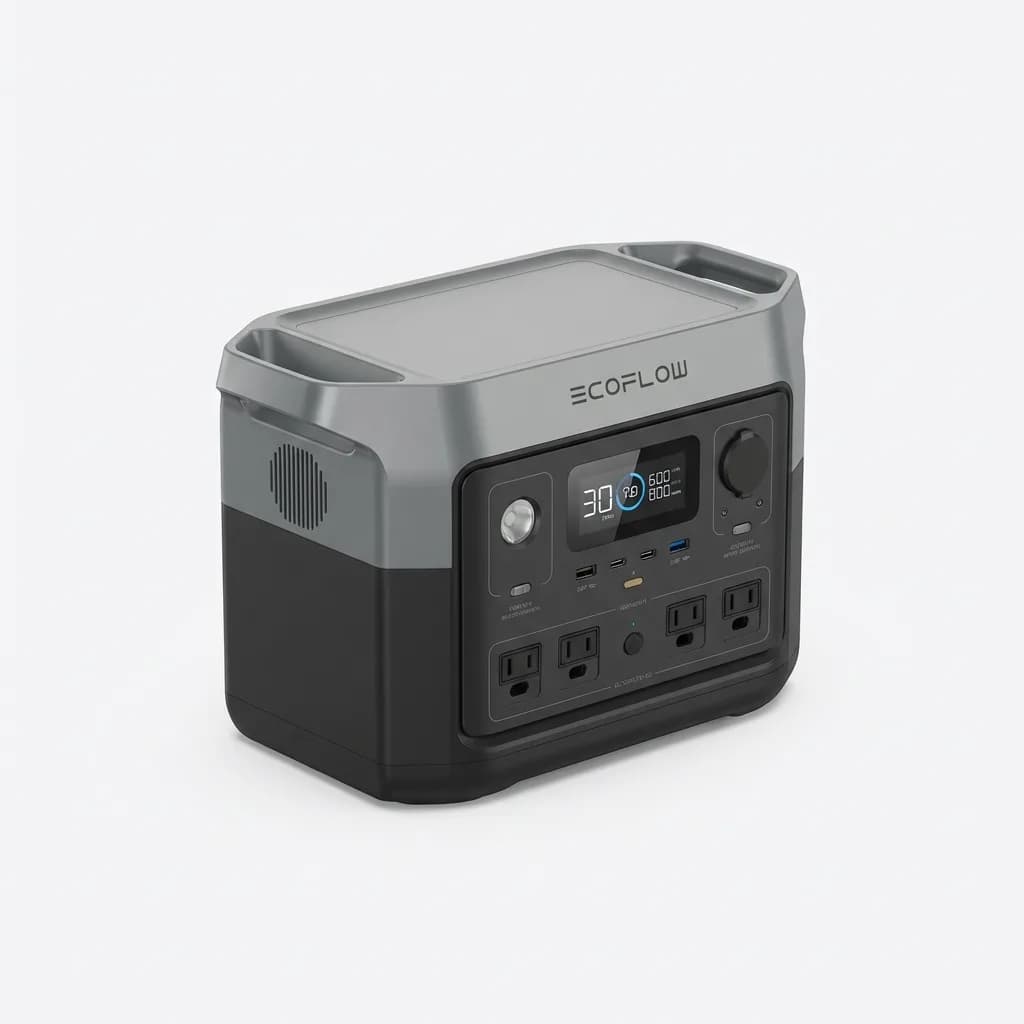
EcoFlow DELTA 2
$999
1024Wh LFP battery with 1800W AC output and X-Stream fast charging (80% in 50 minutes). Expandable to 3040Wh with extra battery. Weighs 27 pounds.
Output ratings: continuous vs surge watts
A power station rated for 500W continuous can handle devices that draw 500 watts constantly, like a mini-fridge or electric blanket. The surge rating (typically 1000W for a 500W unit) covers brief startup spikes when motors kick on.
This trips people up with coolers and fridges. A 12V compressor cooler might draw 45 watts while running, but it pulls 150 watts for 2-3 seconds at startup. Your power station needs to handle that surge or it'll shut down before the cooler even starts.
Most camping gear stays under 100W. Phones charge at 10-20W. Laptops need 45-65W. LED lights use 5-15W. A 500W power station handles all of this easily. Where you need more capacity is running multiple devices simultaneously or powering 120V appliances.
CPAP machines are the exception. They draw 30-60W continuously all night. A 500Wh battery gives you 8-10 hours, which barely covers one night. CPAP users should target 1000Wh minimum for multi-night trips.
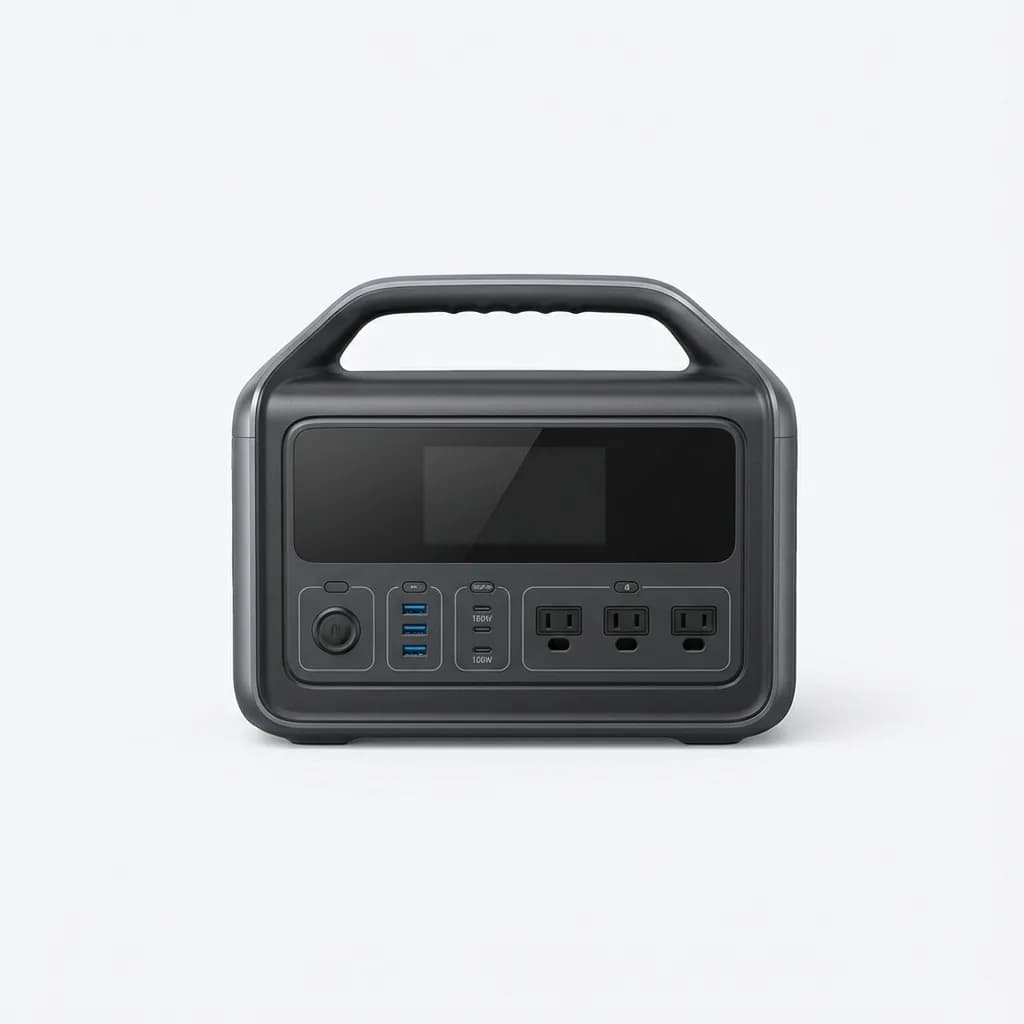
Anker 757 PowerHouse
$1,399
1229Wh LFP battery with 1500W output (2400W surge). InfiniPower technology for 3000+ cycles. Features 13 ports including 2 USB-C at 100W each. Weighs 43 pounds.
Solar charging: the math nobody explains
A 100W solar panel produces 100 watts in perfect conditions: direct sunlight, perfect angle, cool temperatures, no shade. In real-world camping, expect 60-70 watts average during peak sun hours.
Most locations get 4-6 peak sun hours daily, depending on season and latitude. A 100W panel generates 240-420 watt-hours per day in practice. To maintain a 500Wh power station while using 200Wh daily, you need 200Wh of solar input, which one 100W panel can provide.
But if you're using 400Wh daily from a 1000Wh battery, one 100W panel only generates 240-420Wh. You're still depleting the battery, just slower. You'd need two 100W panels (or one 200W panel) to break even, plus extra capacity for cloudy days.
This is why solar works better for extending trips than enabling indefinite off-grid living. A 1000Wh battery with 200W of solar lets you camp for 5-7 days instead of 2-3. True off-grid requires oversized solar arrays (300W+) and careful power management.
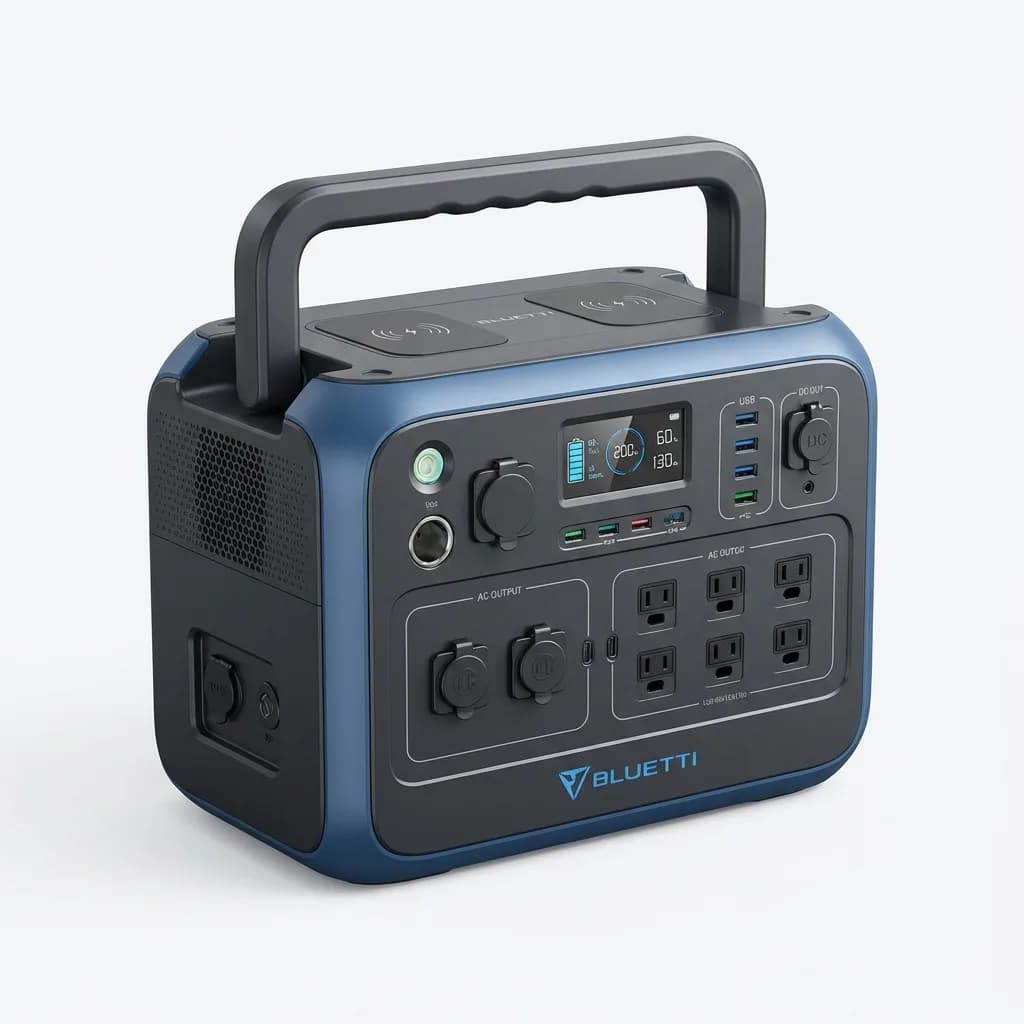
Bluetti AC200P
$1,799
2000Wh LFP battery with 2000W inverter. Accepts up to 700W solar input through dual charge controllers. Features 17 output ports and wireless charging pad. Weighs 60 pounds.
Port selection: USB-C PD changes everything
Older power stations force you to use the AC inverter for everything. That's inefficient. Converting DC battery power to AC, then back to DC through your device's wall adapter, wastes 15-20% as heat.
USB-C Power Delivery (PD) ports deliver DC power directly at voltages your devices need. A 100W USB-C PD port charges laptops, tablets, and phones at full speed without touching the inverter. This extends runtime significantly on smaller power stations.
Look for at least two USB-C PD ports rated 60W or higher. Some newer models offer 100W or 140W ports that fast-charge the latest MacBooks and gaming laptops. Regular USB-A ports are fine for older devices but max out at 18W.
12V car ports matter if you're running 12V appliances like coolers, fans, or tire inflators. These draw directly from the battery without conversion losses. A quality power station includes at least one regulated 12V port plus the standard cigarette lighter socket.
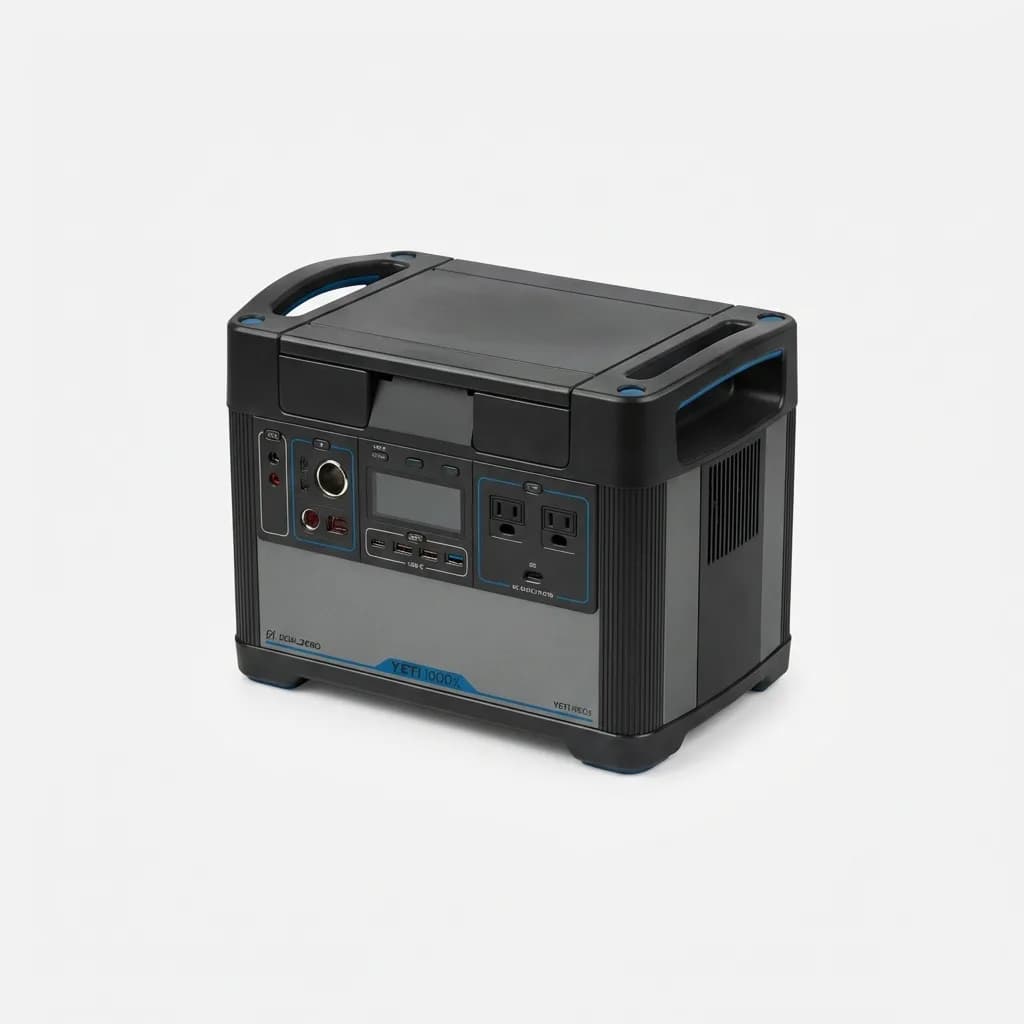
Goal Zero Yeti 1000X
$1,200
983Wh NMC battery with 1500W inverter (3000W surge). Features USB-C PD 60W, WiFi app control, and modular solar input up to 600W. Weighs 39 pounds with 500-cycle lifespan.
Charge time: why fast charging costs more
Budget power stations take 7-10 hours to charge from a wall outlet. Mid-range models cut this to 4-6 hours. Premium units with fast charging hit 80% in under an hour.
Fast charging requires beefier internal components and more sophisticated battery management systems. It's not just marketing. The charge controller, cooling system, and even the AC adapter all need upgrades to handle high input power safely.
For weekend camping, slow charging is fine. Plug it in Friday morning, it's ready Friday evening. For frequent use or emergency backup, fast charging matters. Being able to top up during a lunch break or between storms makes the difference between staying powered and going dark.
Solar charging is always slow. Even with 200W of panels, you're looking at 5-10 hours for a full charge depending on conditions. This is why expandable battery systems make sense for extended trips - charge one battery while using another.
Weight and portability for different camping styles
Backpacking demands ruthless weight cuts. If you need power beyond what a 10,000mAh phone battery provides, look at ultralight power banks (20,000-30,000mAh range) instead of power stations. True power stations start at 13 pounds empty, which kills any backpacking trip over five miles.
Car camping removes weight constraints. A 60-pound power station is fine when you're parked 20 feet from your tent. Prioritize capacity and features over portability. Built-in handles and solid construction matter more than shaving pounds.
Overlanding and van life sit between these extremes. You want maximum capacity without wasting cargo space. Stackable designs, flat tops for mounting gear, and tie-down points become important. Some units mount permanently to vehicle walls or floors.
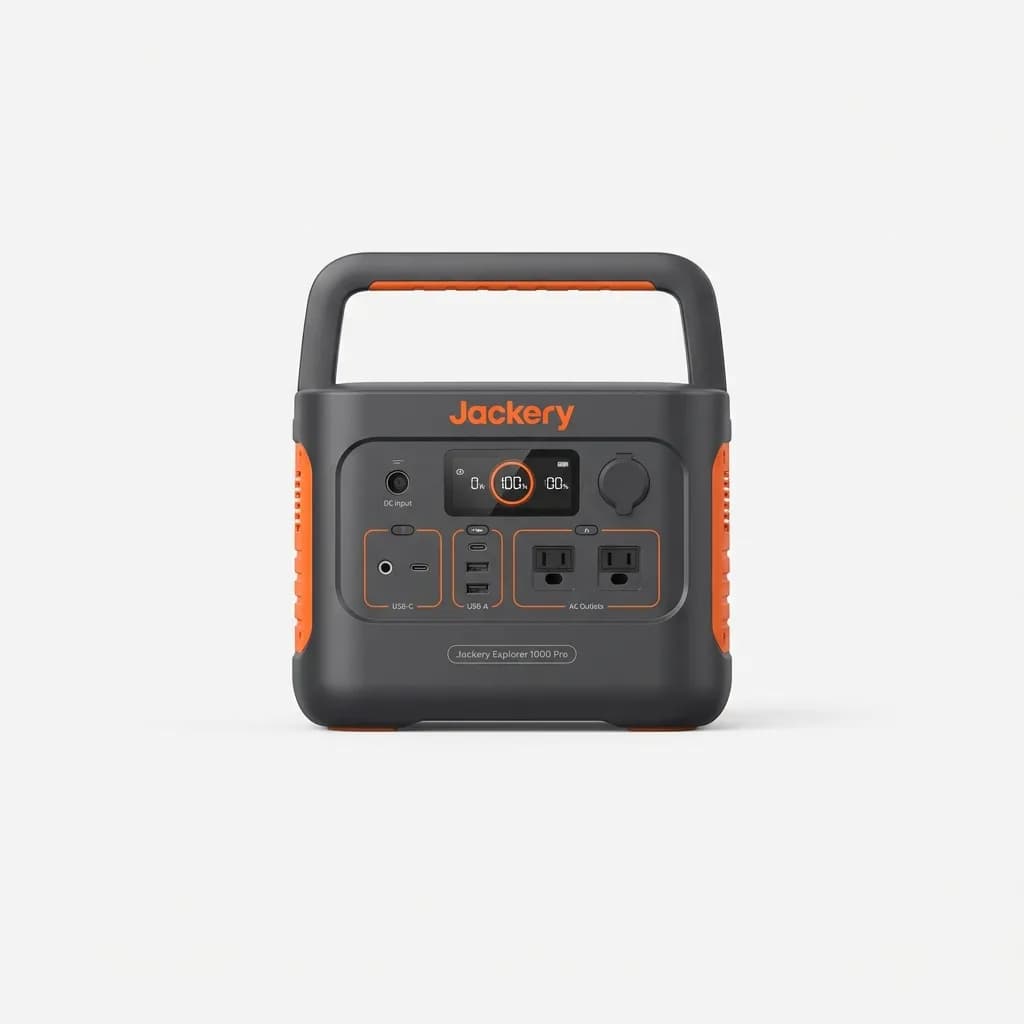
Jackery Explorer 1000 Pro
$1,099
1002Wh NMC battery with 1000W output. Ultra-fast charging at 1800W input (80% in 1.8 hours). Dual 100W USB-C ports and improved heat management. Weighs 25.4 pounds.
Temperature performance: the spec nobody checks
Lithium batteries lose capacity in cold weather. At 32°F, expect 20-30% reduction. At 0°F, you're down 40-50%. This matters for winter camping, ski trips, and high-altitude adventures.
Some power stations include heating pads that draw power to warm the battery before use. This works but consumes 50-100Wh of your capacity. LFP batteries handle cold better than NMC, but neither chemistry loves freezing temperatures.
Heat is worse. Charging or discharging lithium batteries above 104°F accelerates degradation. Leaving a power station in a hot car all summer will cut its lifespan significantly. Most units shut down automatically at 120-140°F to prevent damage, which isn't helpful when you need power during a heat wave.
Store power stations indoors when possible. If you must leave them in vehicles, keep them out of direct sunlight and check the internal temperature before use. Some models report battery temp through their app.
Noise levels and cooling systems
Power stations are silent during discharge - the battery itself makes no noise. The fan only runs during charging or under heavy load when heat dissipation matters.
Budget models use loud, cheap fans that sound like a small hair dryer. Mid-range units implement better fan curves that only spin up when necessary. Premium models use larger, slower fans or even passive cooling for quieter operation.
This matters most during AC charging in camp. If you're charging from a portable generator or vehicle inverter, the last thing you want is the power station's fan adding to the noise. Some units let you limit charge rate through an app, which keeps fans quieter.
During normal use (charging phones, running lights), most power stations stay cool and silent. Push 1000W through the inverter for an hour and you'll hear the fan. That's normal and necessary to prevent overheating.
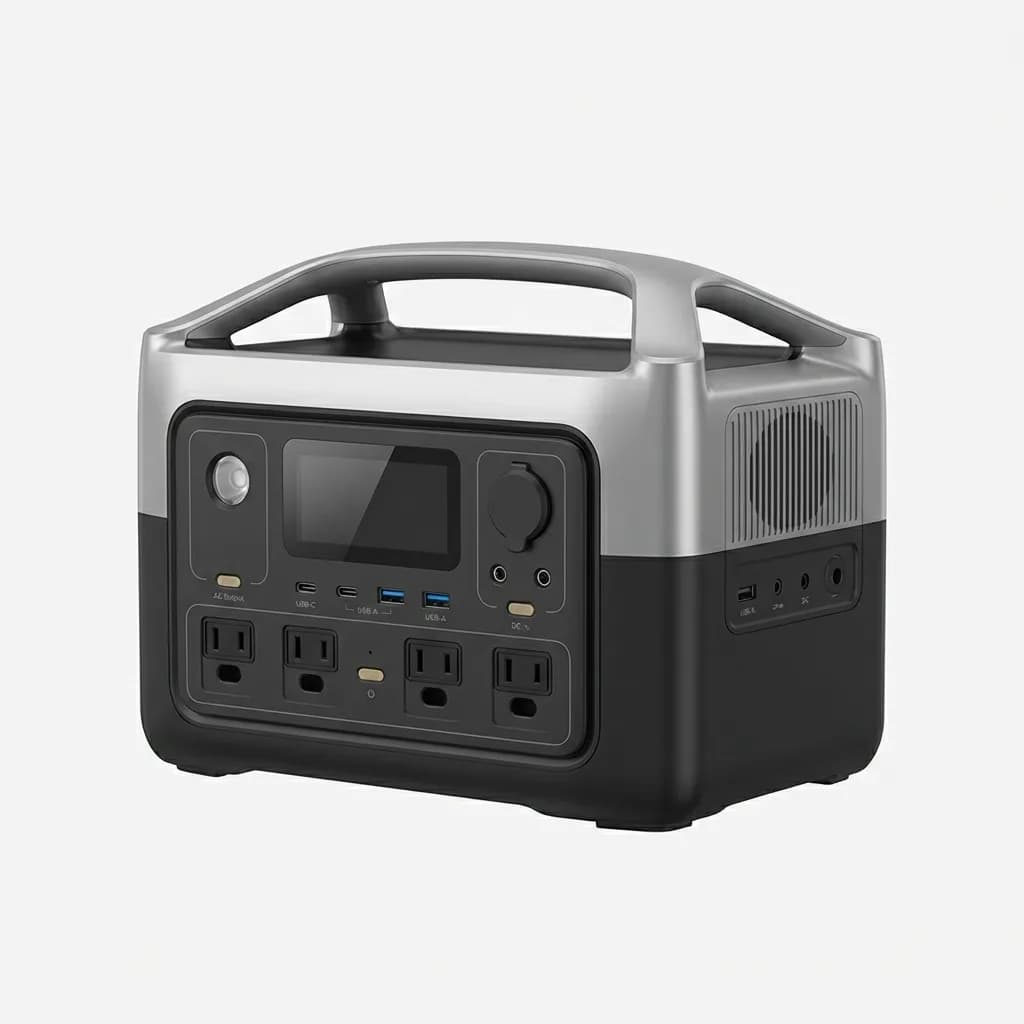
EcoFlow River 2 Pro
$649
768Wh LFP battery with 800W output (1600W X-Boost surge). Full charge in 70 minutes with fast AC charging. Weighs just 17.2 pounds with 3000+ cycle lifespan.
Pass-through charging: useful or overrated?
Pass-through charging lets you charge the power station while simultaneously powering devices from it. Sounds useful, but it stresses the battery and generates extra heat.
The battery management system must balance incoming charge current, outgoing discharge current, and heat dissipation all at once. This accelerates battery wear. Some manufacturers void warranties if you abuse pass-through charging.
That said, it's occasionally necessary. If you're running a CPAP all night while charging from solar during the day, pass-through is unavoidable. Just avoid it for casual use. Fully charge the station first, then use it. Your battery will last longer.
Higher-end models handle pass-through better with smarter BMS systems and better cooling. Budget units often lack the hardware to do it safely for extended periods.
Expandability: buying capacity later
Several brands now offer modular battery systems. Buy a 1000Wh base unit, add a 1000Wh expansion battery later when budget allows. This costs more than buying 2000Wh upfront but spreads the expense.
Expansion batteries also mean redundancy. If one unit fails, you still have power. For critical applications like medical devices or communications gear, this matters.
The downside: proprietary connectors. You can't mix brands. If the manufacturer discontinues your model, expansion batteries might become unavailable. This locks you into one ecosystem, which feels risky for a $1000+ investment.
For most campers, buying the right size initially makes more sense than planning for expansion. But if you're unsure about your needs or want to start small and test, expandable systems offer flexibility.
Monitoring and apps: how much control do you need?
Basic power stations have an LCD showing battery percentage, input/output watts, and time remaining. That's enough for most camping. You check it once or twice a day and that's it.
Advanced models add WiFi or Bluetooth apps with detailed metrics: individual port loads, battery temperature, charge/discharge history, firmware updates. You can also control settings like AC frequency (50Hz vs 60Hz), charge speed, and standby behavior.
This appeals to data nerds but isn't necessary for casual camping. Where apps help is remote monitoring - checking your power station from inside your sleeping bag without unzipping the tent, or monitoring solar charging while you're hiking.
The risk: apps require the manufacturer's cloud servers. If the company goes under or stops supporting the model, your fancy app-enabled power station becomes a basic power station with a broken app.
Common mistakes that drain batteries faster
Leaving the AC inverter on when nothing's plugged in wastes 8-15 watts. That's 100-200Wh per day just idling. Turn off unused outputs.
Charging devices to 100% repeatedly stresses batteries. Stop at 80% for daily charging, only go to 100% before trips. Some power stations enforce this automatically.
Using the wrong solar panel size or voltage fries charge controllers. Check your power station's solar input specs. Most accept 12-30V. Connecting a 48V panel might work briefly, then permanently damage the unit.
Storing at 0% or 100% for months degrades capacity. Store at 50-60% in a cool, dry place. Top off every 3-6 months to prevent over-discharge protection from kicking in.
Wrapping up
For most weekend car camping, a 500-1000Wh power station covers your needs without excessive weight or cost. Prioritize LFP battery chemistry if you plan to use it regularly. Add solar if you're camping beyond three days or want emergency backup at home.
The EcoFlow DELTA 2 and Jackery Explorer 1000 Pro hit the sweet spot for features, capacity, and price around $1000. Budget-conscious campers should look at the Jackery Explorer 500 or EcoFlow River 2 Pro. Serious off-gridders need 1500Wh+ with 300W+ solar input.
Don't overbuy capacity you won't use. A 500Wh unit that gets used monthly beats a 2000Wh beast that stays home because it's too heavy to bother with. Start smaller, learn your actual usage, then upgrade if needed.
The Weekly Dispatch
Enjoying this article?
Subscribe and get our best gear picks delivered every Sunday morning.
Related Posts
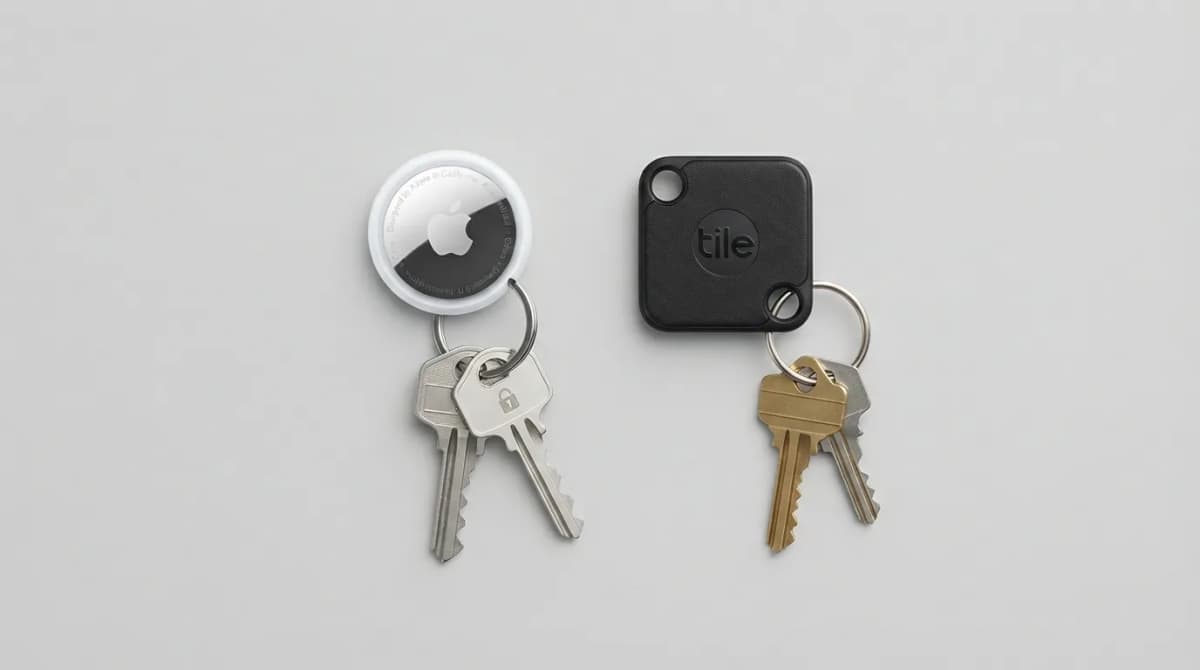
AirTag vs Tile Mate (2026): Which Key Tracker to Buy
Apple AirTag vs Tile Mate for keys: phone compatibility, range, battery and price compared from Apple and Tile maker pages, as of Oct 2026.
Best MagSafe Accessories for iPhone 18 Pro (2026)
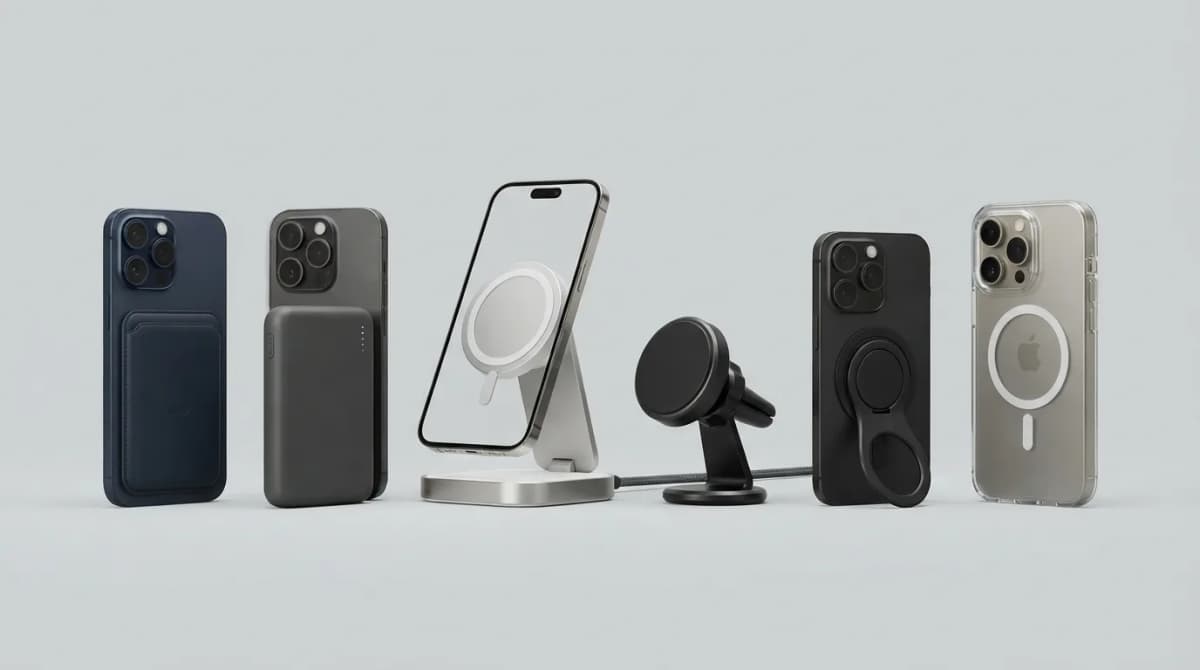
MagSafe and Qi2 accessories for iPhone 18 Pro and Pro Max: wallets, power banks, a dock, car mount, grips, cases, a keyboard, a controller, an SSD and more, with maker specs and prices as of Oct 2026.
Best Qi2 Power Banks 2026 for iPhone and Android
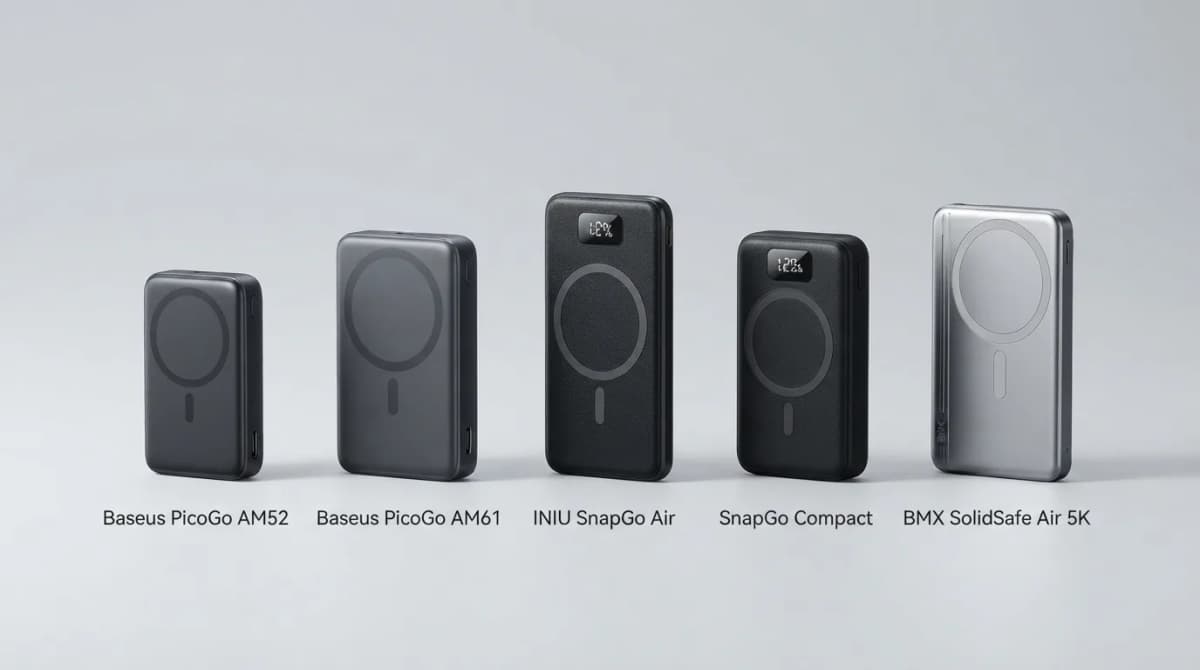
The best Qi2 and Qi2.2 magnetic power banks for 2026: Baseus PicoGo AM52 and AM61, INIU SnapGo Air and SnapGo Compact, and BMX SolidSafe Air 5K. Prices at publish, Oct 2026.
BMX SolidSafe Air 5K: Thinnest Qi2 Power Bank
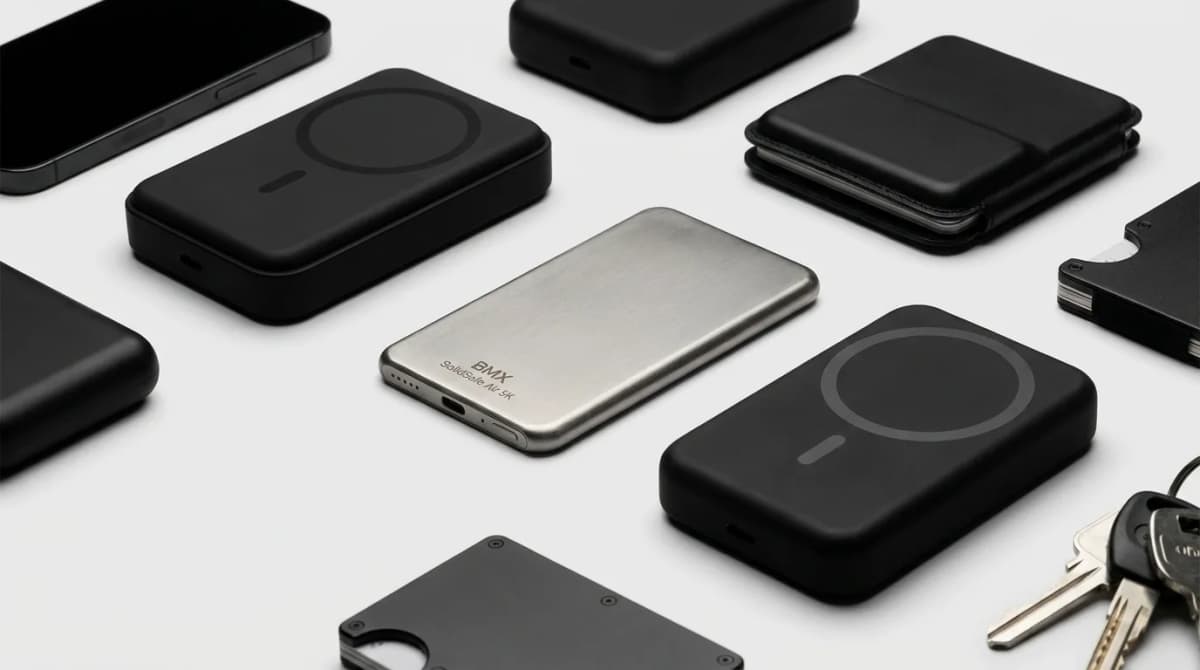
Thick MagSafe banks die in the bag. BMX SolidSafe Air 5K hits 6.8mm titanium, Qi2 15W, and a semi-solid-state safety pitch — pocket-first EDC power, not another brick. Who buys, who skips.