Best Minimal Watches for Everyday Wear
Clean dials, versatile straps, and no-nonsense cases make minimal watches work with everything. Here's what actually matters when choosing one.
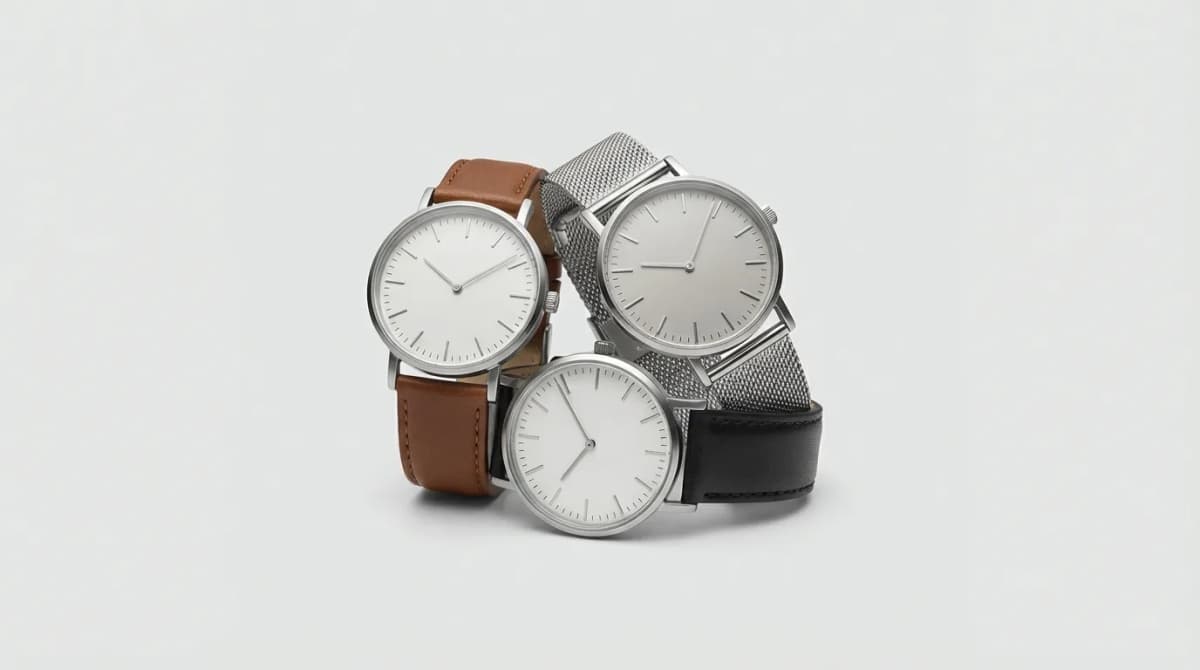
A minimal watch strips away everything except what you need to read the time clearly. No date windows fighting for attention, no chronograph subdials, no rotating bezels. Just a clean dial, legible markers, and a case that disappears under your sleeve.
Quick Picks
Our top recommendations at a glance:
- 1Citizen Eco-Drive Stiletto AR3070-55ASee current price
- 2
- 3
- 4
- 5Citizen Eco-Drive Titanium BM7431-51ESee current price
That simplicity makes them remarkably versatile. The same watch works with a dress shirt on Monday and a t-shirt on Saturday. But minimal doesn't mean they're all the same. Case diameter, movement type, and strap options create real differences in how they wear and what they cost to own.
Why Quartz Makes Sense for Most People
Quartz movements dominate the minimal watch space for good reason. They're accurate to within 15 seconds per month, require a battery change every 2-3 years, and cost substantially less than automatic movements. You don't think about them, and that's the point.
Automatic movements have their appeal. The sweeping second hand moves smoothly, and the mechanical complexity satisfies people who appreciate traditional watchmaking. But they require regular wearing or a watch winder, lose or gain several seconds per day, and add $100-500 to the price of an otherwise identical watch.
For an everyday watch you'll actually wear, quartz eliminates maintenance decisions. Citizen's Eco-Drive technology goes further by using light to recharge, removing even the battery replacement step. After six months of regular use, that convenience compounds.
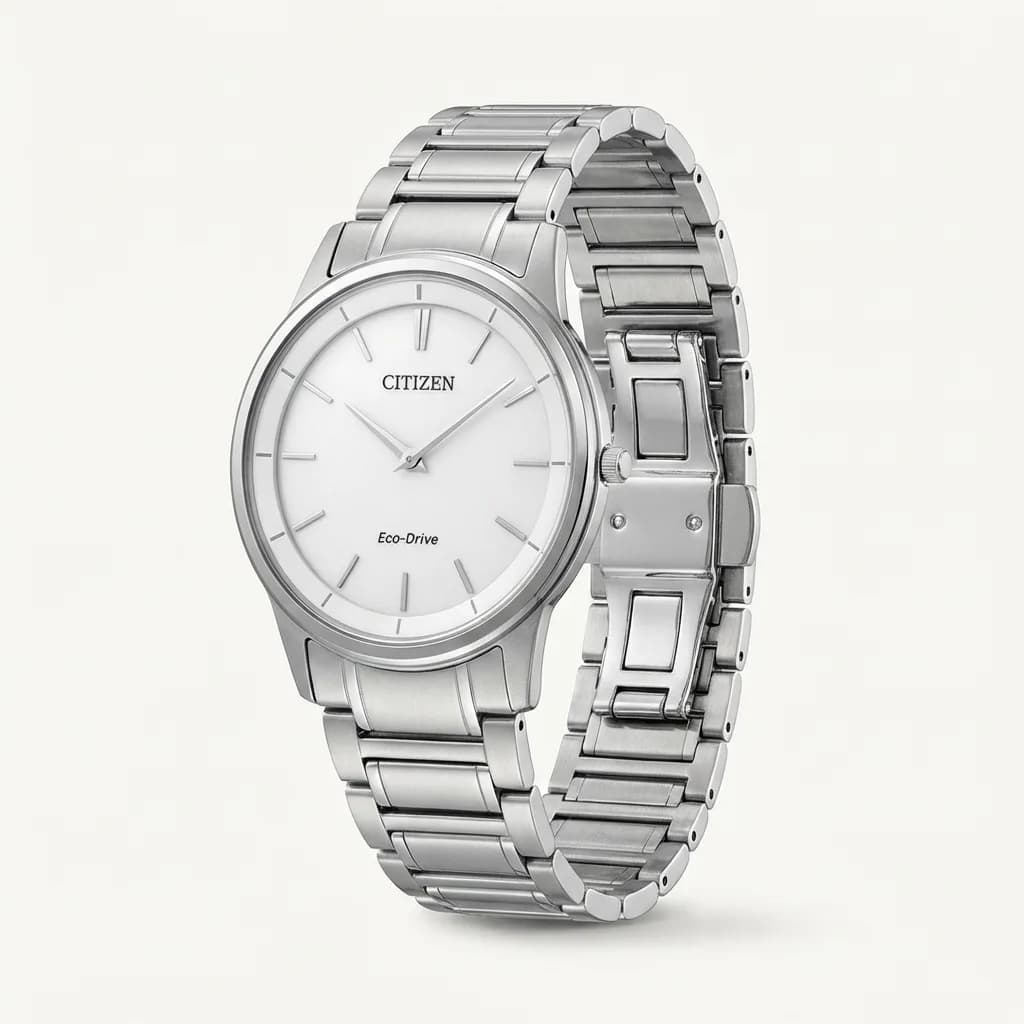
Citizen Eco-Drive Stiletto AR3070-55A
See current price
Ultra-thin 4.7mm case with solar-powered movement. Sapphire crystal and titanium construction at 40mm diameter. Six-month power reserve when fully charged.
The Stiletto lives up to its name with a profile thin enough to slide under any cuff. Titanium keeps it light despite the 40mm diameter, and the solar charging means you'll never schedule a service appointment. It's the watch that disappears until you need to check the time.
Case Size Actually Matters More Than You Think
Minimal watches typically range from 36mm to 42mm in diameter. Smaller cases (36-38mm) look more vintage-inspired and suit smaller wrists better, but they're harder to find from mainstream brands. Most people land in the 39-41mm range, which balances presence with versatility.
Lug-to-lug measurement matters more than diameter for how a watch wears. A 40mm watch with 48mm lug-to-lug will hang over the edge of a 6.5-inch wrist, while a 41mm watch with 46mm lug-to-lug fits comfortably. Check both measurements before buying, especially if you're ordering online.
Case thickness affects how the watch feels. Anything under 10mm slides easily under a shirt cuff. Between 10-12mm works fine for casual wear but can catch on jacket sleeves. Above 12mm, you're dealing with a watch that announces itself, which contradicts the minimal aesthetic.
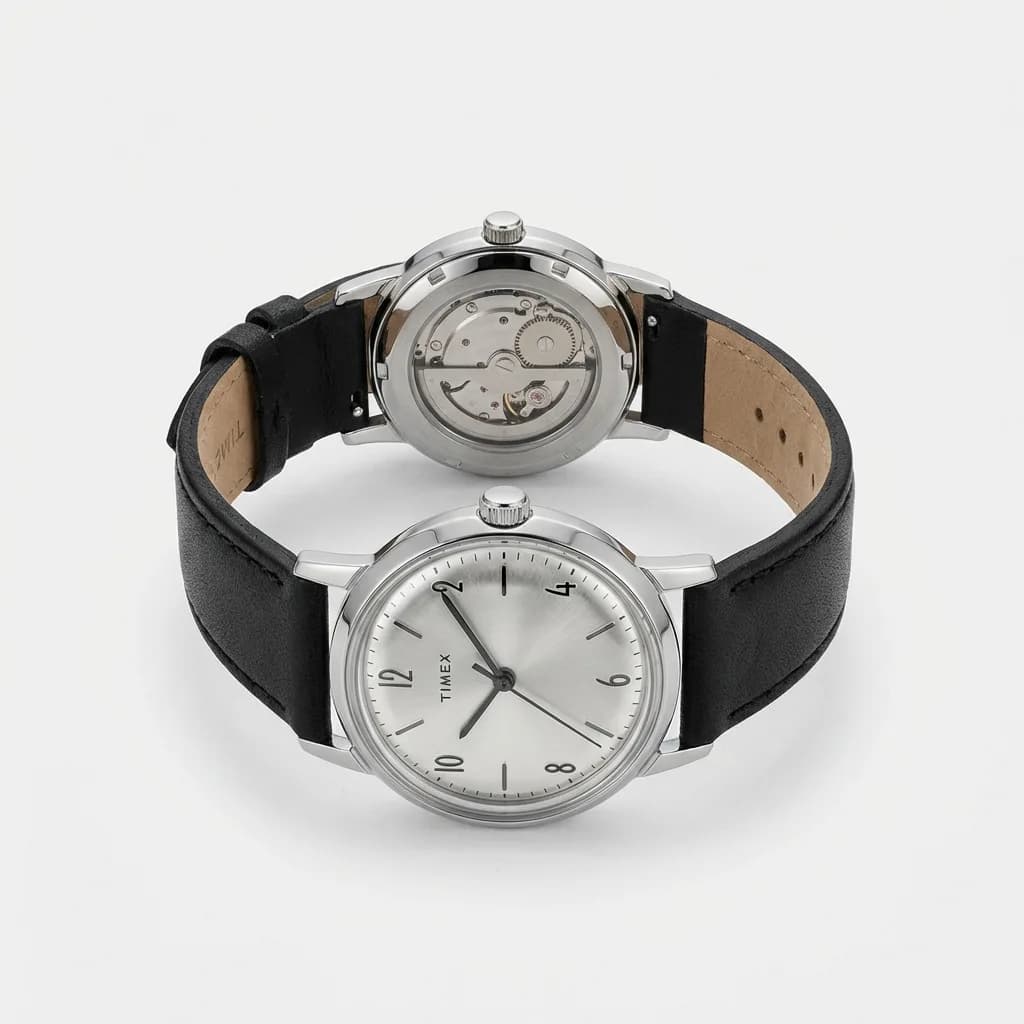
Timex Marlin Hand-Wound 34mm
$199
Mechanical hand-wound movement in a vintage 34mm case. Domed acrylic crystal and genuine leather strap. 50-hour power reserve with daily winding.
Timex's Marlin revival brings back the proportions people wore in the 1960s. The 34mm case looks small next to modern sports watches, but it wears elegantly and keeps vintage styling honest. Hand-winding takes five seconds each morning and connects you to the watch in a way quartz never does.
Strap Versatility Changes Everything
A minimal watch on a leather strap dresses up easily. Swap to NATO nylon and it looks casual. Switch to a mesh bracelet and you've got something that works at the beach or office. The watch itself stays neutral while the strap sets the tone.
Quality matters more with straps than people expect. Cheap leather cracks within six months and smells like chemicals. Genuine leather from Horween or Italian tanneries develops patina and lasts years. Quick-release spring bars make swapping straps a 30-second job instead of fumbling with a spring bar tool.
Steel bracelets raise the initial cost but eliminate strap replacement. A good bracelet includes solid links, a milled clasp, and micro-adjustments for sizing. Cheaper bracelets use hollow links that feel flimsy and catch arm hair. If the watch comes on a bracelet, lift it and listen for rattling. Solid construction sounds and feels different.
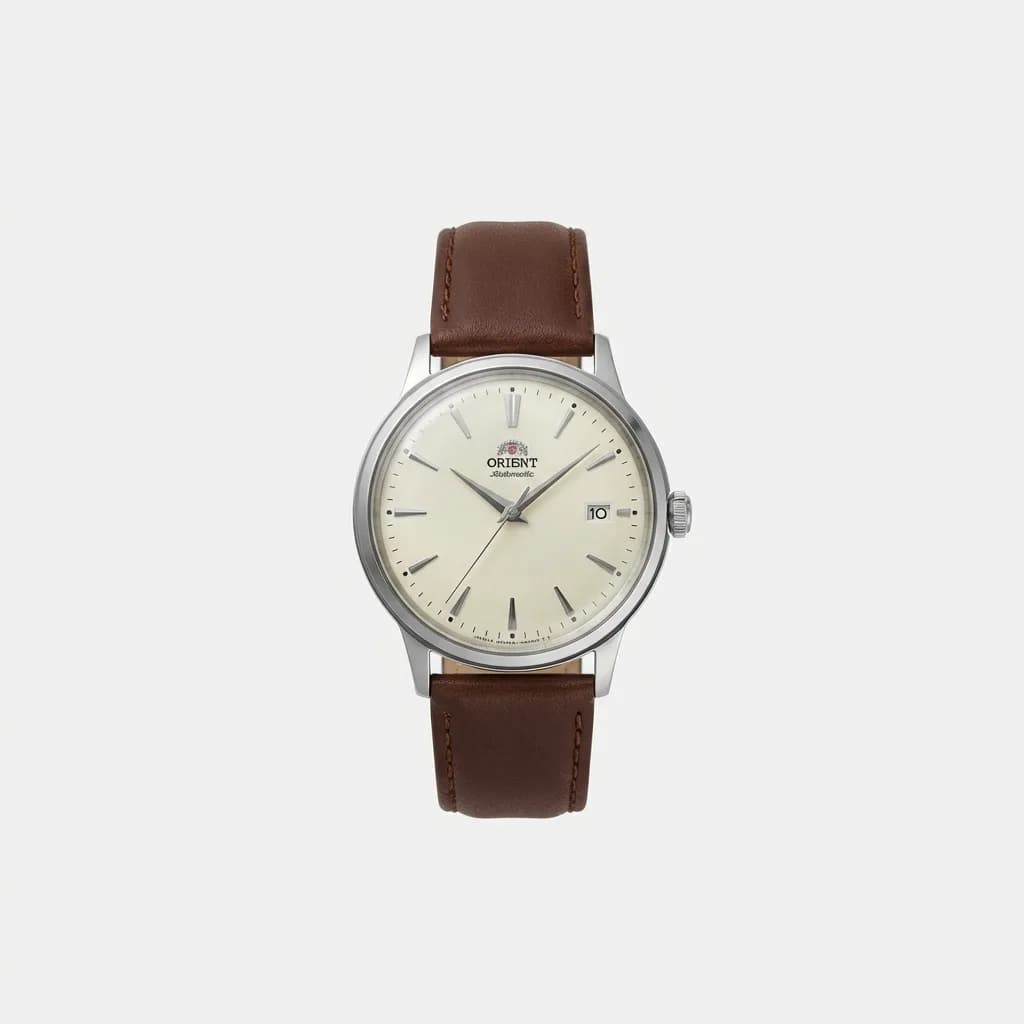
Orient Bambino Version 4
$149
Automatic movement with 40-hour power reserve in a 42mm dress case. Domed crystal, applied indices, and hand-winding capability. Ships with genuine leather strap.
Orient's Bambino hits the sweet spot between mechanical interest and everyday reliability. The exhibition caseback shows the automatic movement at work, while the clean dial keeps things minimal from the front. At $149, it's the automatic watch that makes sense without requiring a second mortgage.
What You Actually Get Above $200
Entry-level minimal watches (under $200) use mineral crystal, basic stainless steel cases, and reliable but unexciting movements. They tell time accurately and look good doing it. Spending more gets you sapphire crystal that resists scratches, higher-grade steel, and better finishing on case edges.
Sapphire crystal matters if you wear your watch daily around hard surfaces. Mineral crystal scratches from contact with concrete, car doors, and laptop edges. Those scratches catch light and make the dial harder to read. Sapphire costs more to produce but stays clear for years.
Movement finishing becomes visible in automatics above $300. You'll see perlage decoration on the rotor, blued screws, and Geneva stripes on bridges. These details don't affect accuracy but signal attention to craft. Whether that matters depends on how much you value the mechanical aspect versus pure function.
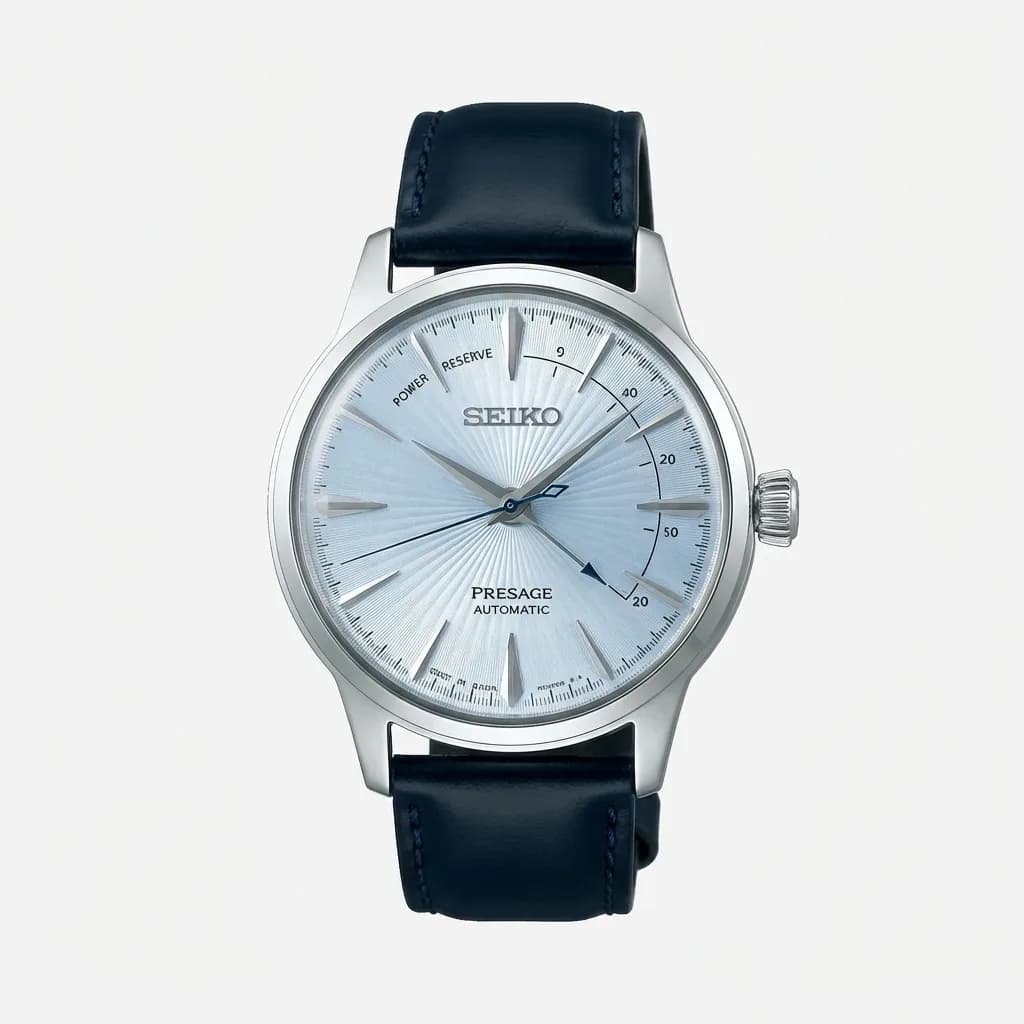
Seiko Presage Cocktail Time SRPB43
$425
Automatic 4R35 movement with 41-hour power reserve in a 40.5mm case. Power reserve indicator, sapphire crystal, and sunburst dial finishing. 50-meter water resistance.
The Cocktail Time series shows what Seiko does when they focus on finishing. The sunburst dial catches light at every angle, and the power reserve indicator adds function without cluttering the design. It's still minimal but elevated beyond basic three-handers.
Titanium Versus Stainless Steel
Stainless steel remains the default case material. It's durable, polishes well, and costs less to machine than alternatives. Weight becomes noticeable above 41mm, where a steel watch can feel substantial on your wrist all day. That weight reassures some people and bothers others.
Titanium cuts weight by roughly 40% compared to steel. A 40mm titanium watch feels closer to 36mm steel. The tradeoff comes in softness - titanium scratches more easily and shows desk-diving marks faster. Some people prefer the worn patina; others want their watch to stay pristine.
Grade 2 titanium (commercial pure) costs less but scratches easier than Grade 5 (6AL-4V alloy). Watch specs rarely specify which grade unless it's Grade 5, so assume commercial pure in budget titanium watches. Either one solves the weight issue, but Grade 5 maintains a cleaner appearance longer.
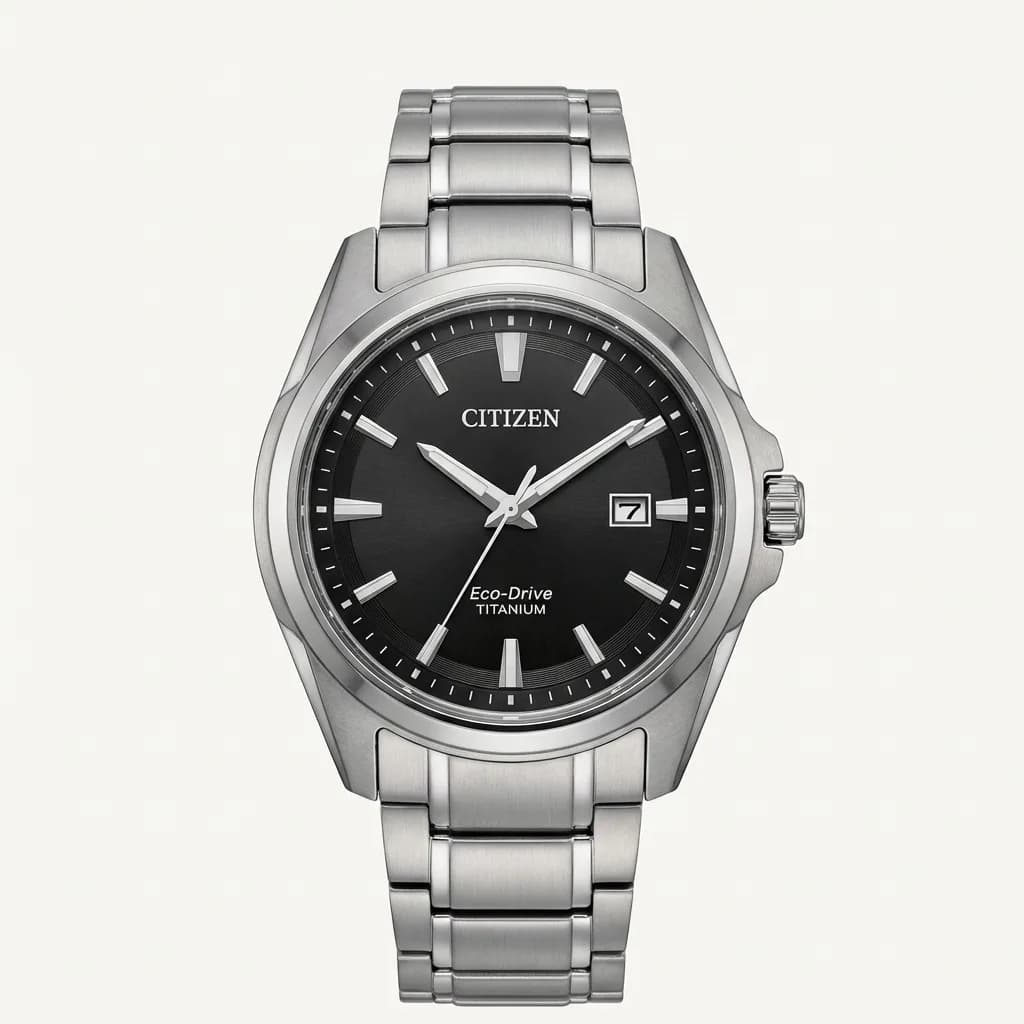
Citizen Eco-Drive Titanium BM7431-51E
See current price
Solar-powered quartz in a 40mm Grade 5 titanium case. 180-day power reserve, sapphire crystal, and anti-reflective coating. 100-meter water resistance with screw-down crown.
This Citizen combines everything that makes a low-maintenance daily watch work. Solar charging eliminates batteries, titanium drops the weight, and 100-meter water resistance means you never think about taking it off. It's the watch equivalent of putting something on autopilot.
When Automatic Makes Sense
Automatic watches appeal to people who value mechanical objects and don't mind occasional adjustment. If you rotate between multiple watches, you'll need to reset the time and date when picking up one that's stopped. That takes 30 seconds but breaks the grab-and-go convenience of quartz.
Service intervals for automatics run 5-10 years depending on the movement. A basic service costs $150-300 and includes cleaning, lubrication, and timing adjustment. Budget for this when calculating total ownership cost. Quartz movements typically get replaced rather than serviced at $50-100.
The sweeping second hand on an automatic moves smoothly compared to the tick-tick of quartz. Some people find the smooth sweep more satisfying to watch. It's a subjective preference that doesn't affect the watch's primary function but adds to the experience of wearing it.
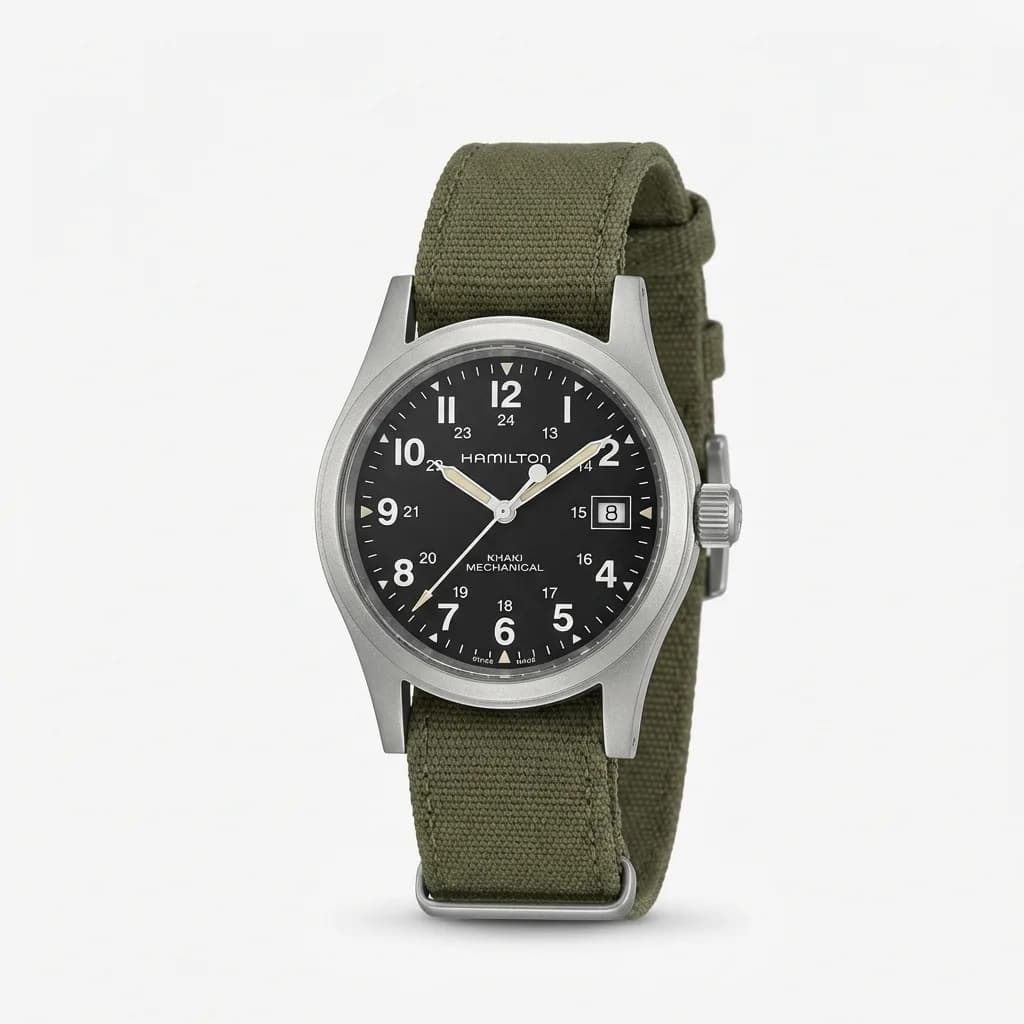
Hamilton Khaki Field Mechanical
$495
Hand-wound H-50 movement with 80-hour power reserve in a 38mm steel case. Canvas strap, 50-meter water resistance, and field watch legibility. Swiss movement with 3Hz beat rate.
Hamilton's hand-wound field watch distills military watch design to its essentials. The 80-hour power reserve means weekend wear won't stop it, and the 38mm case keeps vintage proportions accurate. It's mechanical without pretense, which suits the minimal approach.
The Details Most Reviews Skip
Lume quality varies dramatically between watches in the same price range. Good lume charges quickly under any light and glows visibly for hours. Weak lume barely shows up even after direct sunlight exposure. If you check your watch in dark rooms or movie theaters, this matters. Look for Super-LumiNova or equivalent in the specs.
Crown operation separates well-executed watches from cheap ones. The crown should pull out smoothly, turn with even resistance, and push back in firmly. Loose, wobbly crowns indicate poor tolerances in the case tube. Scratchy winding resistance suggests the stem or tube needs better finishing.
Date windows interrupt dial symmetry on minimal watches. Some designs integrate them at 3 o'clock or 6 o'clock without destroying balance, but many look like afterthoughts. Consider whether you actually reference the date often enough to justify the visual compromise. A clean three-hand dial ages better aesthetically.
Water resistance ratings tell you what the watch survives, not what you should do with it. 30 meters (3ATM) handles rain and hand washing but not showers. 50 meters (5ATM) tolerates brief swimming. 100 meters (10ATM) works for regular swimming and shallow snorkeling. If the watch doesn't specify water resistance, treat it as splash-resistant only.
What Actually Works Long-Term
The best minimal watch balances initial appeal with how it wears six months later. A watch that looks perfect on launch day but scratches easily or develops loose bracelet links becomes frustrating. Durability matters more than specs suggest.
Choose based on your maintenance tolerance. If you want zero interaction beyond occasional cleaning, quartz with solar charging removes all upkeep. If you enjoy the ritual of wearing and winding a mechanical watch, automatic or hand-wound makes sense. Neither choice is wrong, but matching the watch to your actual habits keeps you wearing it.
Consider how it fits your rotation. If this will be your only watch, prioritize versatility in size and strap options. If you're building a collection, you can afford more specific choices like a vintage-sized 36mm or a titanium sports watch that skews casual. The watch that works every day differs from one that fills a particular role.
Minimal watches succeed by doing one thing consistently well. They tell time clearly, wear comfortably, and adapt to whatever you're wearing. Everything else is preference, budget, and how much you value mechanical movements over pure utility. Pick the version that matches how you actually use a watch, and you'll still be wearing it years from now.
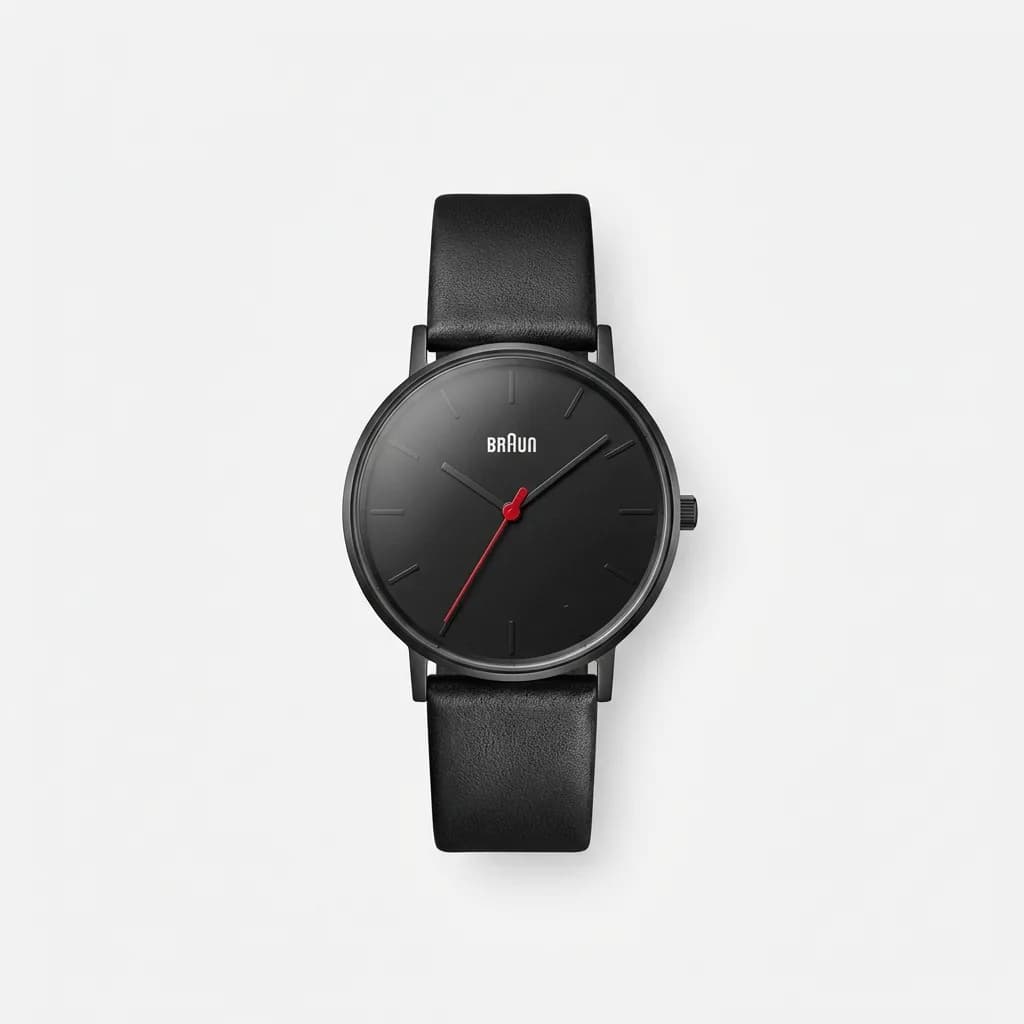
Braun BN0032 Classic Slim
$250
Quartz movement designed by Dieter Rams in a 38mm slim case. Matte black dial with red second hand. Italian leather strap and scratch-resistant mineral crystal.
Braun's approach to watch design follows the same principles as their iconic product design: maximum clarity, minimum fuss. The result reads like a watch should work if you designed it from scratch today rather than copying historical styles. Sometimes minimal means rethinking the basics entirely.
The Weekly Dispatch
Enjoying this article?
Subscribe and get our best gear picks delivered every Sunday morning.
Related Posts
Best Pocket-Friendly Sunglasses Cases
Hard shells can crack and soft pouches can scratch lenses. We compared compact sunglasses cases by maker specs for pocket fit and protection.

Best Lightweight Scarves for Travel in 2026
Discover the best lightweight travel scarves that pack small, provide warmth, and serve multiple purposes. From merino wool to silk blends, here's what works.
Best Compact Bike Lights for Daily Commuting
The right bike light makes you visible to cars and keeps you legal. We break down lumens, mount styles, battery life, and our top compact picks for daily rides.
Touchscreen Gloves That Actually Work
Most touchscreen gloves fail at basic tasks. We compared models by maker specs for conductive tech, insulation and materials.