Best Footrest for Under Desk Ergonomics 2026
The right footrest fixes pressure points, improves circulation, and takes stress off your lower back. Here are the models that actually deliver.
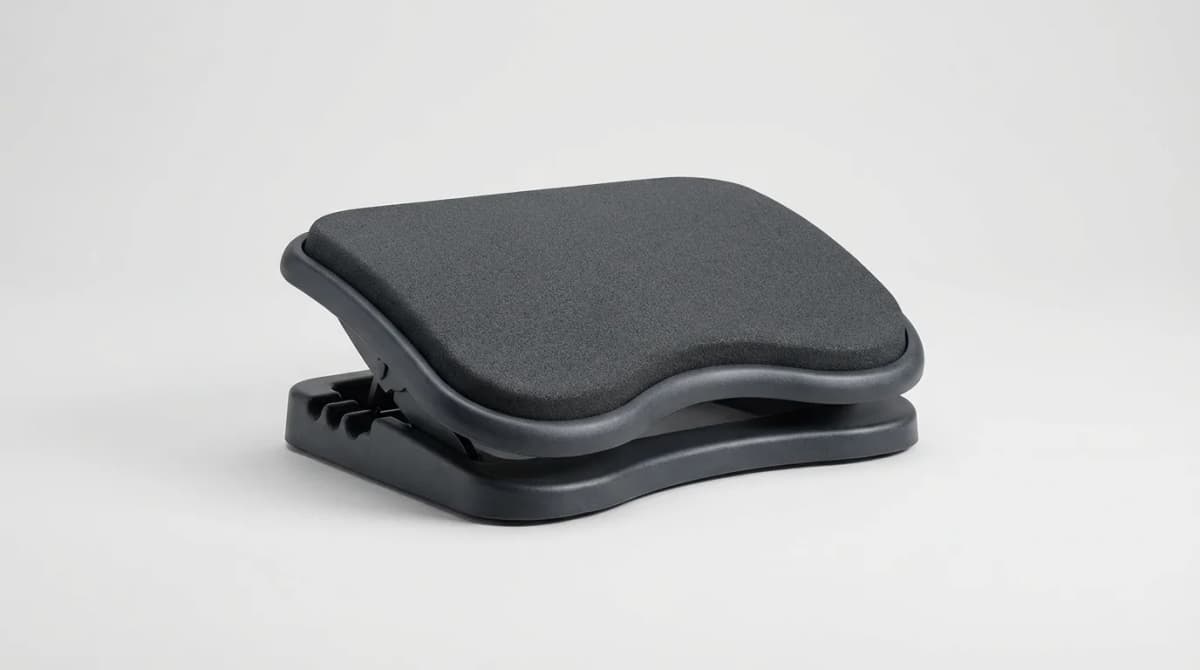
Most people sit wrong. Not because they lack discipline, but because standard desk heights push your feet into awkward positions that compress nerves and cut circulation. A footrest sounds minor until you realize your lower back pain traces directly to dangling feet or pressure on your thighs.
Quick Picks
Our top recommendations at a glance:
- 1Humanscale FM300 Foot MachineSee current price
- 2
- 3Kensington SoleMate Plus Foot RestSee current price
- 4
- 5
The difference between a useful footrest and desk clutter comes down to adjustment range, surface texture, and whether it stays put when you shift position. We compared models from $20 foam blocks to $100 tilting platforms.
Why footrest height and angle actually matter
Your feet should rest flat with knees at 90 degrees and thighs parallel to the floor. Most desks sit 28-30 inches high, which works for people around 5'10" but leaves shorter users with dangling feet and taller users cramped. That gap creates a chain reaction: dangling feet mean no support, which tilts your pelvis backward, which rounds your spine, which strains your lower back.
Angle matters more than most footrests acknowledge. A flat surface keeps your ankles locked. A tilting platform lets you rock between positions, which keeps blood moving and prevents the numbness that comes from static posture. The best models offer 0-25 degrees of tilt with enough resistance that your feet control the movement instead of the footrest sliding around.
Fixed-height foam blocks work if your setup never changes. Adjustable models handle multiple users, standing desk conversions, and the reality that your ideal position shifts throughout the day. 4-6 inches of height adjustment covers most scenarios without adding bulk.
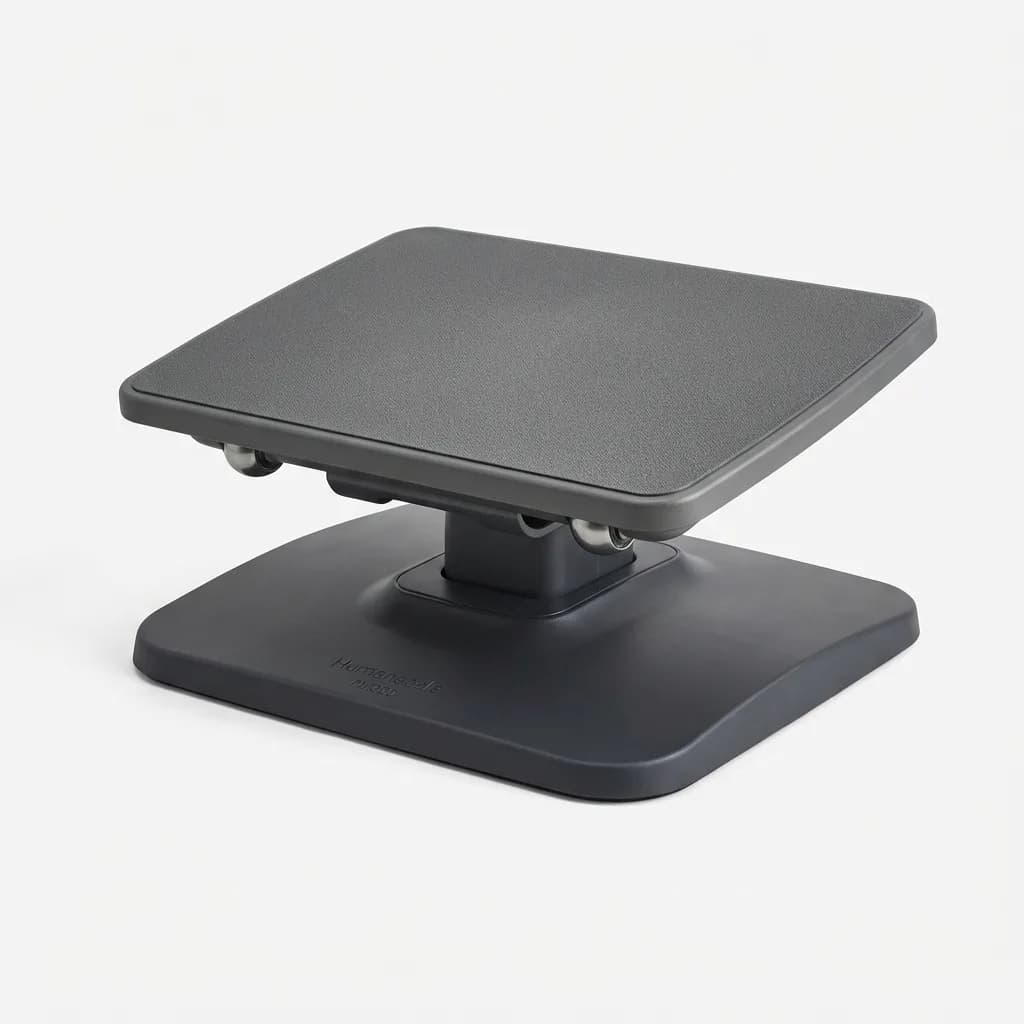
Humanscale FM300 Foot Machine
This one costs more than most office chairs, but the free-floating platform design creates micro-movements that actually keep your legs engaged. The surface tilts in any direction based on foot pressure, no knobs or levers involved. The weighted base prevents sliding without attaching to your desk.
Humanscale FM300 Foot Machine
See current price
Free-floating platform with multi-directional tilt, weighted non-slip base, encourages active micro-movements throughout the day. Premium build quality with minimal maintenance.
The platform measures 18 x 11 inches, large enough for size 13 shoes with room to shift. The textured surface works with bare feet, socks, or shoes. At 8 pounds, it stays planted even when you push hard against it. The main limitation is height: it sits 4.5 inches off the ground with no adjustment, which works for users 5'4" to 5'10" but may be too tall or short outside that range.
The constant subtle movement can reduce the leg fatigue that comes from locked ankles. Your feet naturally rock and adjust without thinking about it. The downside is cost - this runs $250-300, which only makes sense if you spend serious hours at your desk.
ErgoFoam Adjustable Foot Rest
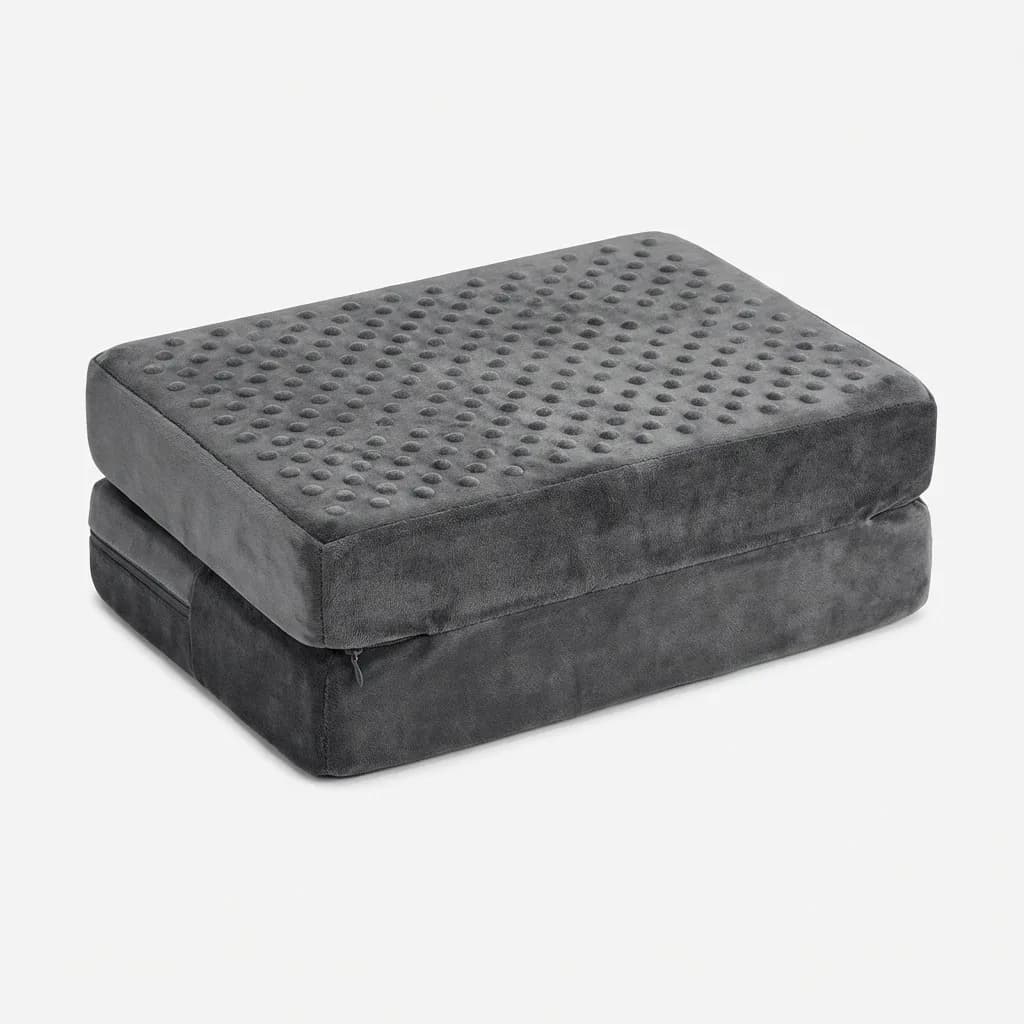
This hits the middle ground between cheap foam blocks and premium tilting platforms. The two-position height adjustment (3.9 or 5.1 inches) covers most users, and the textured surface provides enough grip without feeling abrasive. The foam density holds up better than budget models that compress into useless pancakes after six months.
ErgoFoam Adjustable Foot Rest
$44.95
Two-position height adjustment, high-density foam construction, textured massage surface, 17.5 x 11.2 inch platform. Includes machine-washable velour cover.
The massage bumps on the surface look gimmicky but actually feel good during long calls when you can kick off your shoes. The velour cover zips off for washing, which matters more than you'd expect once dust and skin cells accumulate. At 1.5 pounds, it slides easier than weighted models, but the rubberized bottom grips most surfaces well enough for daily use.
The main compromise is the two-position lock. You get 3.9 or 5.1 inches with nothing between. For most people that works fine. If you need precise height matching, look elsewhere. The foam construction also means no tilt - your feet stay flat at whatever angle you set. For under $50, it solves the core problem without overcomplicating things.
Kensington SoleMate Plus
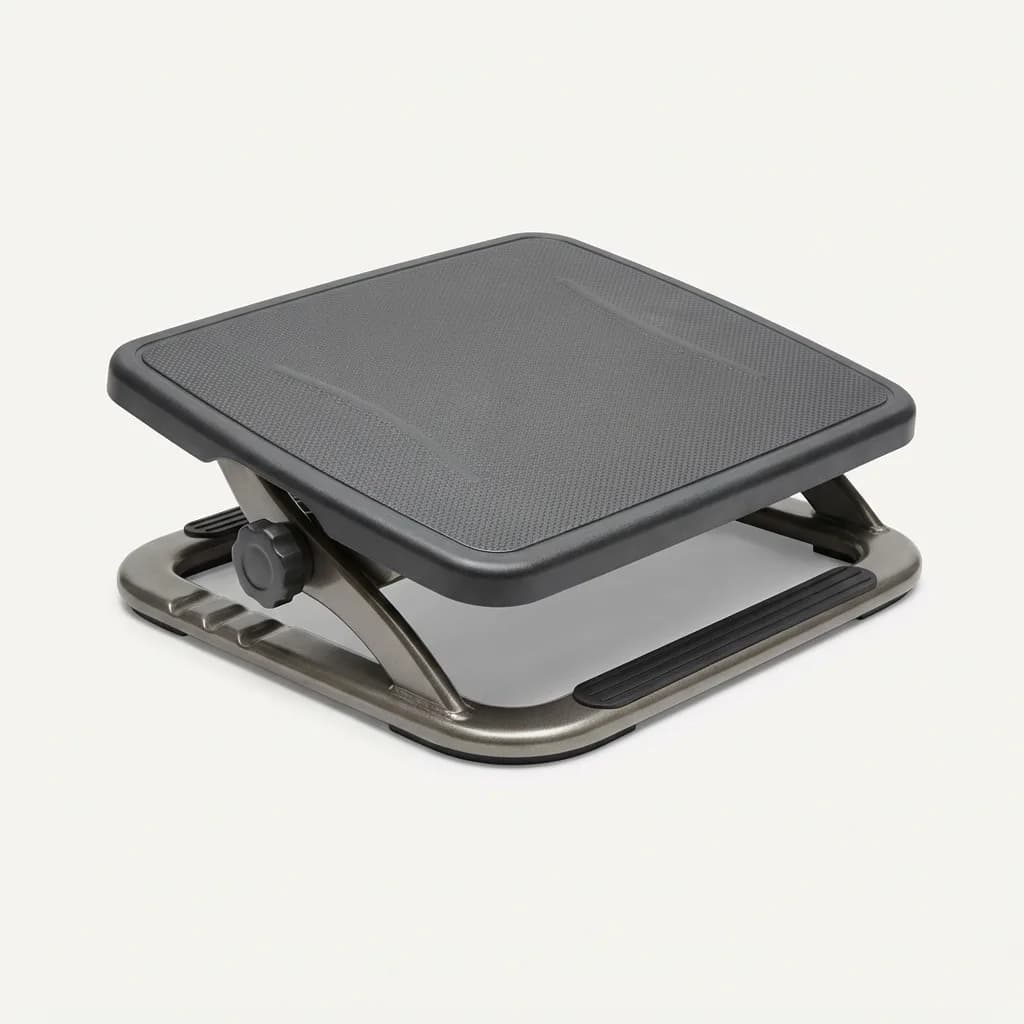
The tilting mechanism on this plastic platform feels more deliberate than the Humanscale's free-floating design. You get 0-20 degrees of tilt with adjustable tension, so you can lock it flat for stability or loosen it for rocking. The height adjusts from 3.5 to 5 inches across three positions.
Kensington SoleMate Plus Foot Rest
See current price
Three-position height adjustment (3.5-5 inches), 0-20 degree tilt with adjustable tension, textured platform surface, rubber grip strips on base. Supports up to 250 lbs.
The platform measures 17.7 x 13.3 inches, wider than most models, which helps if you tend to shift your feet around. The textured surface provides grip without the massage bumps that some people find annoying. The tension adjustment dial sits underneath, accessible but not in the way during normal use.
Build quality leans utilitarian. It's plastic throughout, not premium materials. That keeps weight down (2.7 lbs) and cost reasonable ($50-60), but it feels more functional than refined. The tilt mechanism holds position well. For mixed sitting and standing desk setups, the height adjustment range works better than fixed models.
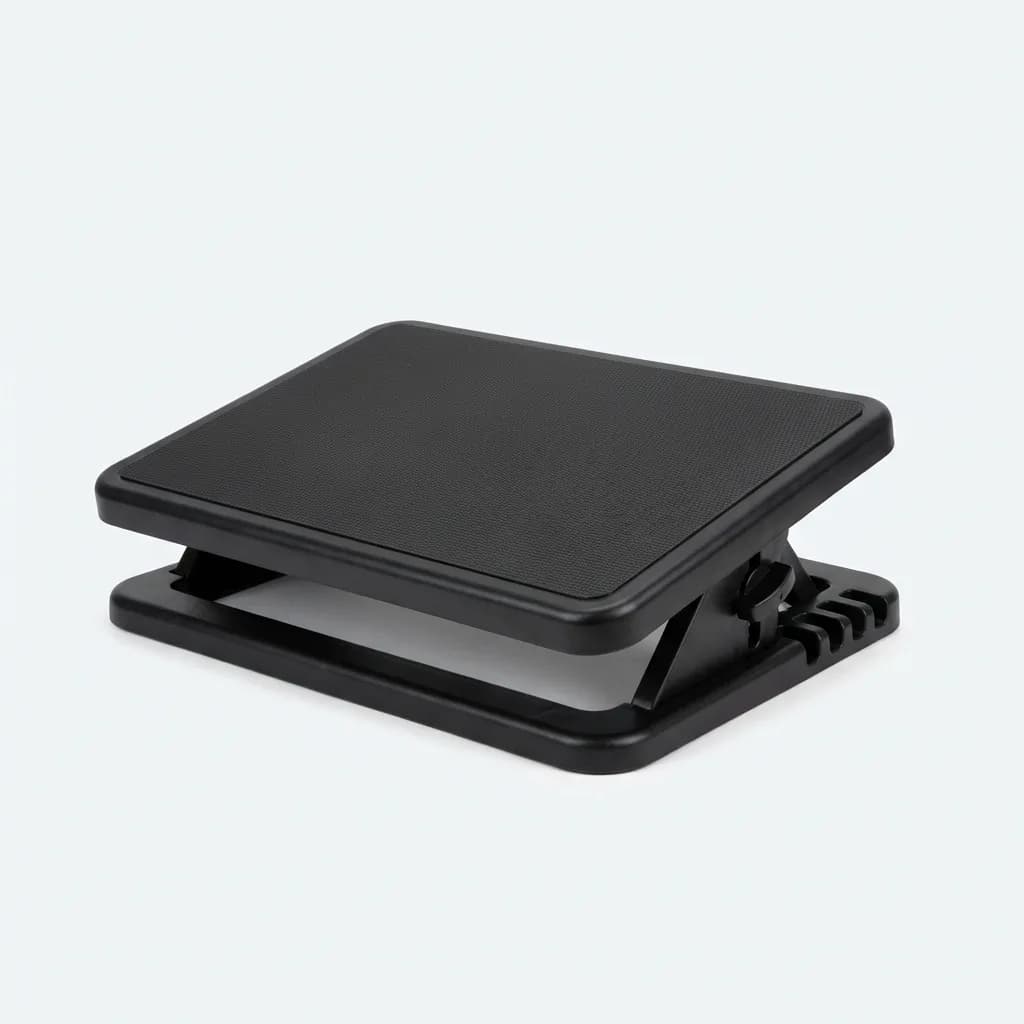
Mind Reader Adjustable Height Foot Rest
This one prioritizes maximum height adjustment over tilt features. The platform locks into eight positions from 3.7 to 6.7 inches, covering a wider range than most competitors. The extra height makes it useful under standing desks or for taller users who need more lift.
Mind Reader Adjustable Height Foot Rest
$34.99
Eight-position height adjustment (3.7-6.7 inches), extra-wide 20-inch platform, textured non-slip surface, durable plastic construction. No tilt function.
The 20-inch width accommodates larger frames or wide stances. The surface texture grips shoes well but can feel rough on bare feet. At 3 pounds with rubber feet, it stays put during position changes. The locking mechanism uses simple clips that snap firmly into each height setting.
The tradeoff is no tilt capability. Your feet sit flat at whatever angle you choose. For people who prefer stable platforms over rocking motion, that's fine. For others, the lack of tilt creates the same locked-ankle issue a footrest should solve. At $35, it's worth considering if you need specific height coverage or extra width.
Eureka Ergonomic Tilting Foot Rest
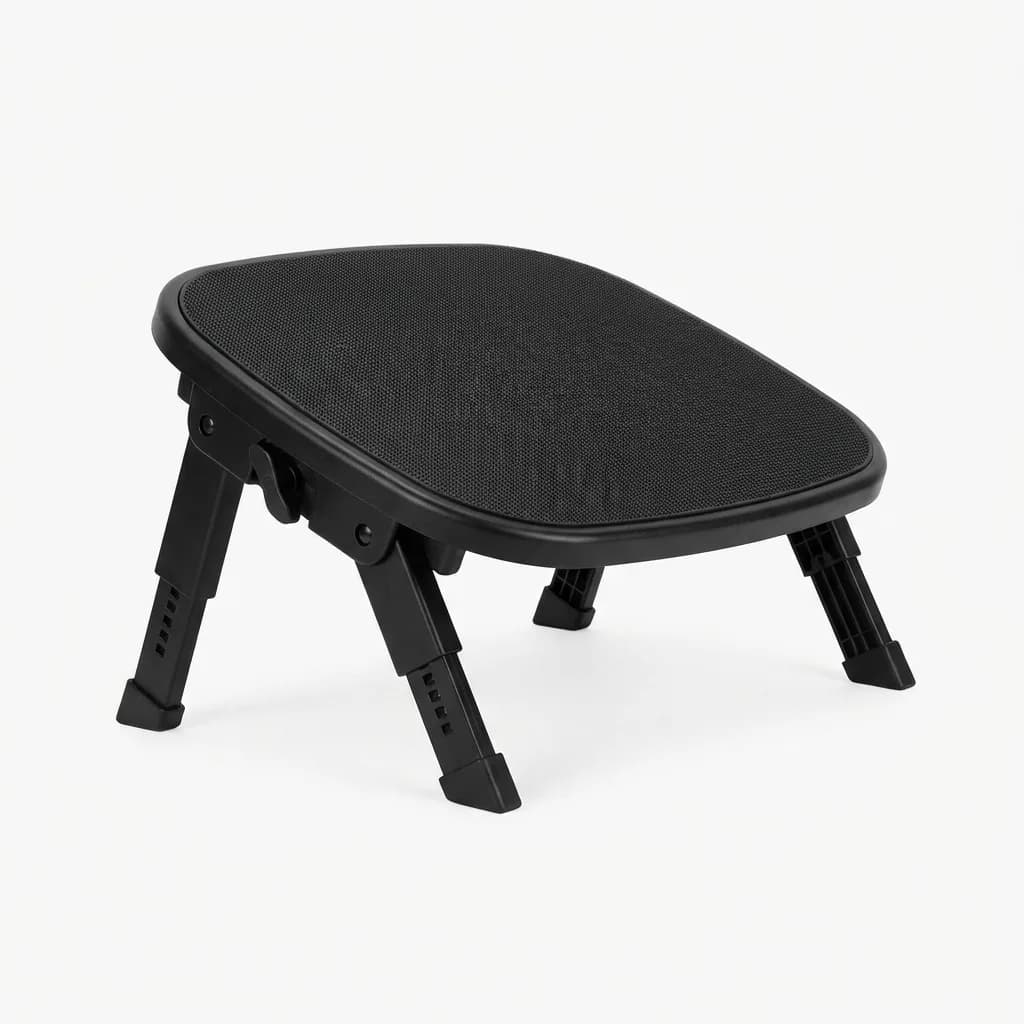
The standout feature here is the 30-degree tilt range, more than most models offer. The platform rocks freely or locks at 0, 15, or 30 degrees using a simple lever. The teardrop shape (wider at toes, narrower at heels) feels more natural than rectangular platforms.
Eureka Ergonomic Tilting Foot Rest
$42.99
30-degree tilt range with three lock positions, teardrop ergonomic shape, height adjustable 4-6.7 inches, removable massage surface. Supports up to 250 lbs.
Height adjusts from 4 to 6.7 inches across multiple positions. The massage surface layer removes if you prefer smooth plastic. The base includes rubberized strips that grip carpet and hard floors equally well. Build quality sits between budget foam and premium metal platforms - durable plastic with metal support bars underneath.
The extended tilt range works well for stretching calves and ankles during long sitting sessions. Locking at 30 degrees creates an active standing position that some people prefer. At 4.2 pounds, it's heavy enough to stay stable but light enough to reposition easily. For $40-45, you get most of the features from pricier models with a few material compromises.
What actually matters when choosing a footrest
Skip models without height adjustment unless your exact measurements match their fixed height. Your ideal position changes based on shoes, chair height, and whether you're leaning forward to type or back to read. Budget an extra $10-20 for adjustable height and avoid the hassle.
Tilt matters more for circulation than comfort. A locked flat surface works for short sessions but creates pressure points during long days. Even 10-15 degrees of rocking motion keeps blood flowing and prevents the numb feet that come from static positions. Free-floating designs like the Humanscale feel more natural than stepped locks, but either beats flat platforms.
Surface texture needs enough grip to prevent slipping without irritating bare skin. Aggressive massage bumps feel good initially but can become annoying after hours of contact. Textured but not aggressive works best for all-day use. Removable covers add cleaning convenience but aren't essential if the surface wipes clean.
Weight and base grip determine whether your footrest stays put or slides around. Models under 2 pounds need very sticky rubber feet to prevent creeping. Heavier models (4+ pounds) stay stable with basic rubber strips. If you adjust positions frequently, lighter weight helps. If you set and forget, prioritize stability over portability.
Do you need a footrest or a different chair?
If your feet barely reach the floor, a footrest fixes the problem directly. If your knees hit the desk or your thighs press hard against the chair edge, the issue is chair height - lower the seat first, then add a footrest if needed. Footrests compensate for desk-chair mismatch, they don't replace proper chair adjustment.
Standing desk users need footrests more than they realize. Even adjustable desks spend time at heights where a footrest reduces leg strain. The difference shows up after hour three or four when your lower back starts complaining. A footrest at standing height (6-8 inches) lets you shift weight between legs and reduces the load on your spine.
Try your setup without shoes before buying. A footrest that works with sneakers may sit too high for bare feet or slippers. If you switch between footwear throughout the day, adjustable height becomes essential instead of optional. The 2-3 inches between shoe sole and bare foot changes everything about positioning.
The footrest that works for most people
The Kensington SoleMate Plus hits the best balance of features and price for mixed use. The height range covers most users, the tilt adjustment lets you switch between stable and active modes, and the build quality lasts. It's not the cheapest or most premium option, but it solves the core problems without weak points.
If your budget stops at $30, the Mind Reader adjustable model provides solid height coverage and platform width without tilt features. For premium builds and free-floating motion, the Humanscale FM300 justifies its cost if you spend 6+ hours daily at your desk. The ErgoFoam works well for fixed setups where you rarely adjust height.
The wrong footrest adds clutter without solving anything. The right one disappears into your routine while quietly fixing circulation, posture, and the creeping discomfort that builds during long desk sessions.
The Weekly Dispatch
Enjoying this article?
Subscribe and get our best gear picks delivered every Sunday morning.
Related Posts
Best Monitor Light Bars for Desk Setup 2026
Monitor light bars eliminate desk clutter and reduce eye strain better than traditional lamps. We compare brightness, color temperature, and mounting systems.
Best Under-Desk Treadmills 2026: WalkingPad, Goplus & More
WalkingPad R2, Goplus 2-in-1, RHYTHM FUN and REDLIRO walking pads compared by maker specs: footprint, noise, top speed and weight limit.
Best Desk Organizers for Small Office Spaces
The right desk organizer reclaims workspace without adding clutter. We compared compact solutions by size, features and price for tight quarters.
Best Ergonomic Mouse for Wrist Pain 2026
Wrist pain from mouse use is fixable with the right hardware. We compared vertical mice, trackballs and angled designs by maker specs and ergonomics.