Best Flat EDC Tools for Minimal Carry
Flat EDC tools deliver pry bars, bit drivers, and wrenches in a profile thinner than two credit cards. Here's what actually works in your wallet.
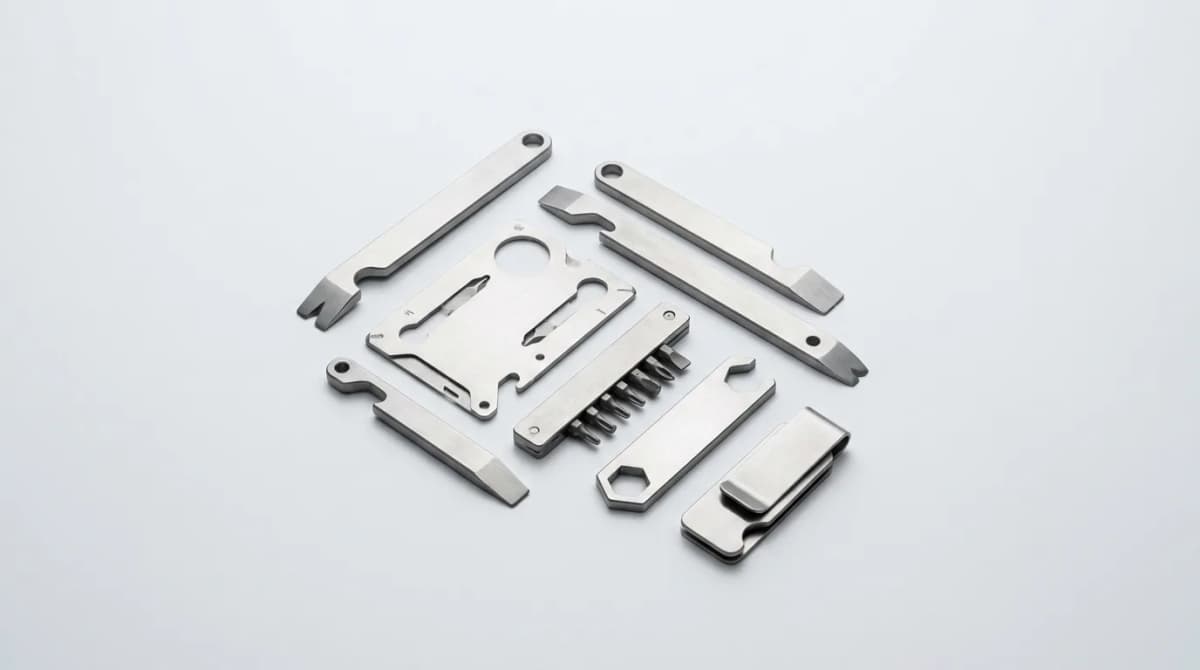
The thickest tool in my wallet measures 2.5mm. It has opened paint cans, tightened loose screws on sunglasses, and pried apart stuck phone cases without adding bulk I can feel when I sit down.
Quick Picks
Our top recommendations at a glance:
- 1SOG Escape CardCheck Price
- 2Keyport Pivot 2.0See current price
- 3
- 4True Utility TU247 Smart KnifeCheck Price
Flat EDC tools solve a specific problem: you want functionality without the pocket bulge of a full multi-tool. The best ones fit inside a wallet, clip to a key ring, or slip into a card slot. The worst ones bend when you actually use them or feature "tools" so small they're useless.
We compared two dozen flat tools. Many are too thin for basic pry tasks. A few stand out for holding up to real use.
What makes a flat tool worth carrying
Thickness matters more than you'd think. Tools under 3mm fit comfortably in a wallet without creating a visible bump. Anything over 4mm starts to feel chunky, and you'll notice it every time you sit down.
Material quality separates tools that bend from tools that work. Titanium offers the best strength-to-weight ratio but costs more. Stainless steel is heavier but usually cheaper and still plenty strong if it's thick enough. Aluminum looks good but deforms under real pressure.
The pry bar is the most-used feature on any flat tool. A good one needs a tapered edge thin enough to get under stuck objects but thick enough at the base to handle leverage without bending. We've broken three flat tools by using inadequate pry tips on paint can lids.
Bit storage makes the difference between a tool you use weekly and one that sits unused. Standard 1/4-inch hex bits are cheap and widely available. Proprietary bit sizes mean you're stuck ordering replacements from one manufacturer.
SOG Escape Card: The benchmark for pry function
The SOG Escape Card sets the standard for what a credit-card-sized tool should be. It's 2.5mm thick stainless steel with a straight pry edge, bottle opener, and four hex wrenches. No gimmicks, no breakable parts.
The pry tip is the real story here. It's thin enough to slide under a phone case or battery cover but backed by enough material to handle serious leverage. We've used it to pry open stuck drawers, remove baseboard trim, and pop off dozens of gadget covers without any bending.
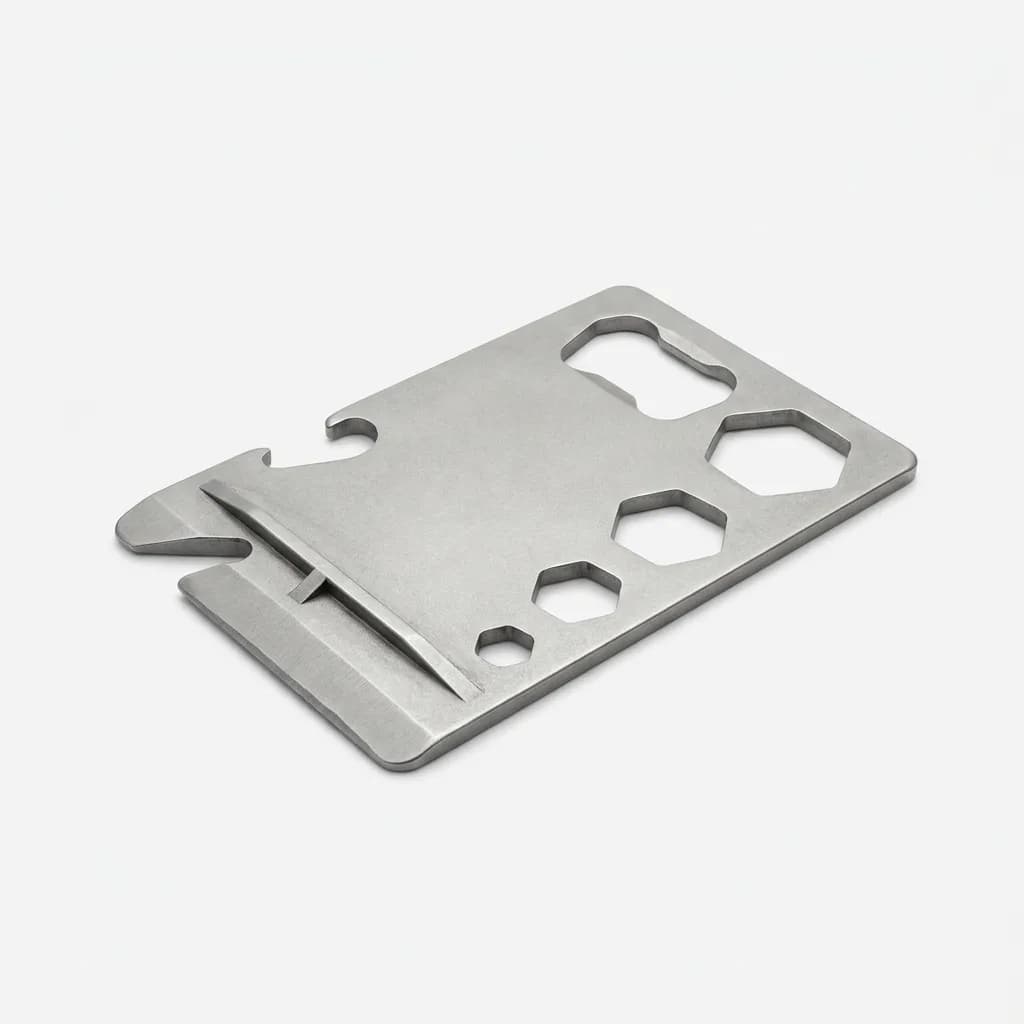
SOG Escape Card
Check Price
Credit card-sized stainless steel multi-tool with reinforced pry bar, bottle opener, and four hex wrench sizes. 2.5mm thick, fits in any wallet.
The hex wrenches (5mm, 6mm, 8mm, 10mm) handle most common hardware. We've tightened loose cabinet handles, adjusted bicycle seats, and fixed wobbly furniture. The sizes are useful for everyday stuff, not specialty fasteners.
It's not perfect. The bottle opener works but requires more force than a dedicated opener. The saw edge is too short and coarse to cut anything substantial. But as a pry bar with some bonus features, it's hard to beat for under $15.
Keyport Pivot 2.0: Best for bit storage
The Keyport Pivot 2.0 looks like a small knife but functions as a bit driver. It's 3.2mm thick titanium with storage for two double-ended 1/4-inch bits. The ratcheting mechanism is the key feature, and it actually works smoothly.
Standard bits mean you can use whatever you already own. The included Phillips and flathead bits handle most quick fixes, but we swap in Torx and hex bits depending on what we're working on that week. Having bit flexibility matters more than having 15 mediocre tools stamped into one card.
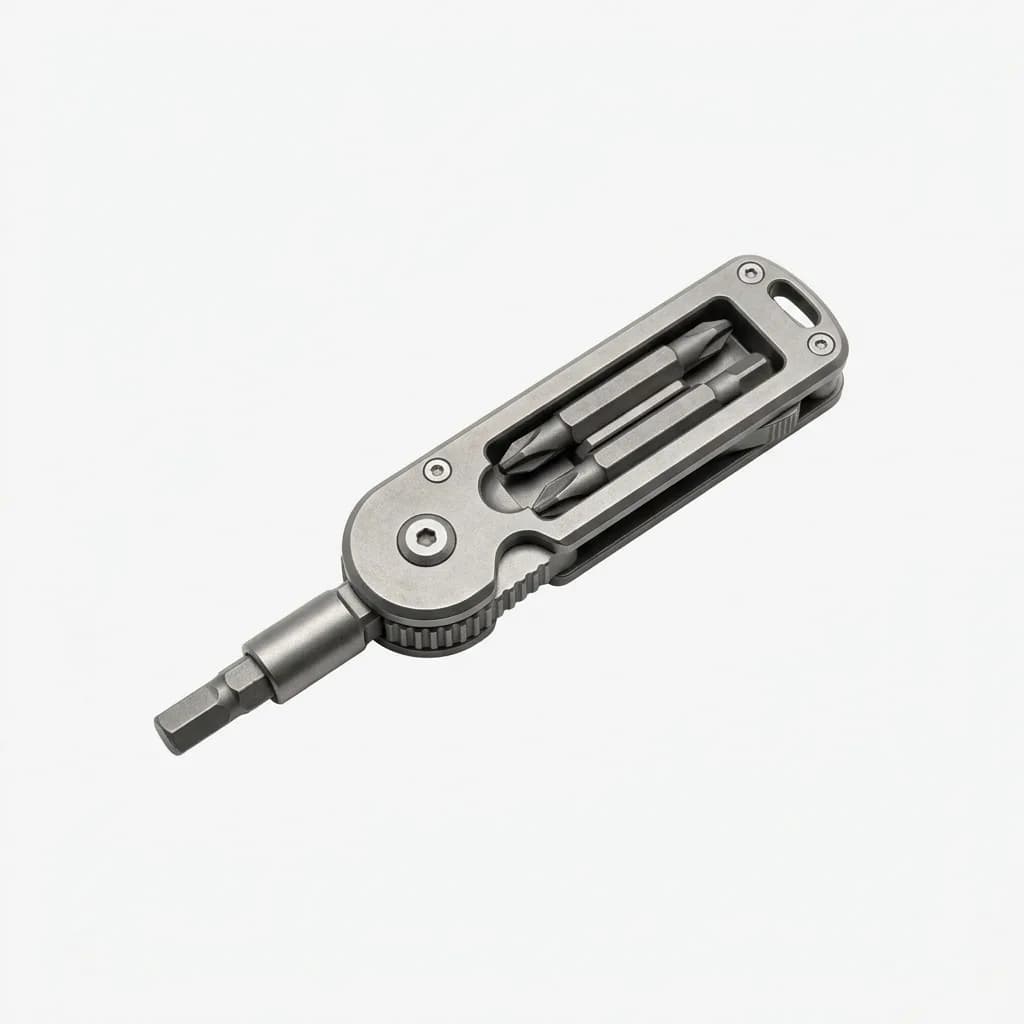
Keyport Pivot 2.0
See current price
Titanium bit driver with ratcheting mechanism and storage for two double-ended bits. Uses standard 1/4-inch hex bits. 3.2mm thick.
The ratchet lets you turn screws with short, controlled movements instead of having to spin the entire tool. This matters when you're working in tight spaces or don't have room for a full rotation. The mechanism has held up through hundreds of uses without any slop or skipping.
The pry function is adequate but not as good as the SOG card. The tip is thicker and less tapered, so it won't slip into narrow gaps as easily. If prying is your main use case, look elsewhere. If you need a capable screwdriver that happens to pry occasionally, this is the better pick.
Gerber Shard: Cheapest tool that doesn't bend
The Gerber Shard costs around $7 and delivers more utility than tools three times the price. It's 3mm titanium-coated stainless steel with a pry bar, small flathead driver, bottle opener, and wire stripper. The key ring hole keeps it accessible without taking wallet space.
The pry bar isn't as refined as the SOG card, but it handles normal prying tasks without complaint.
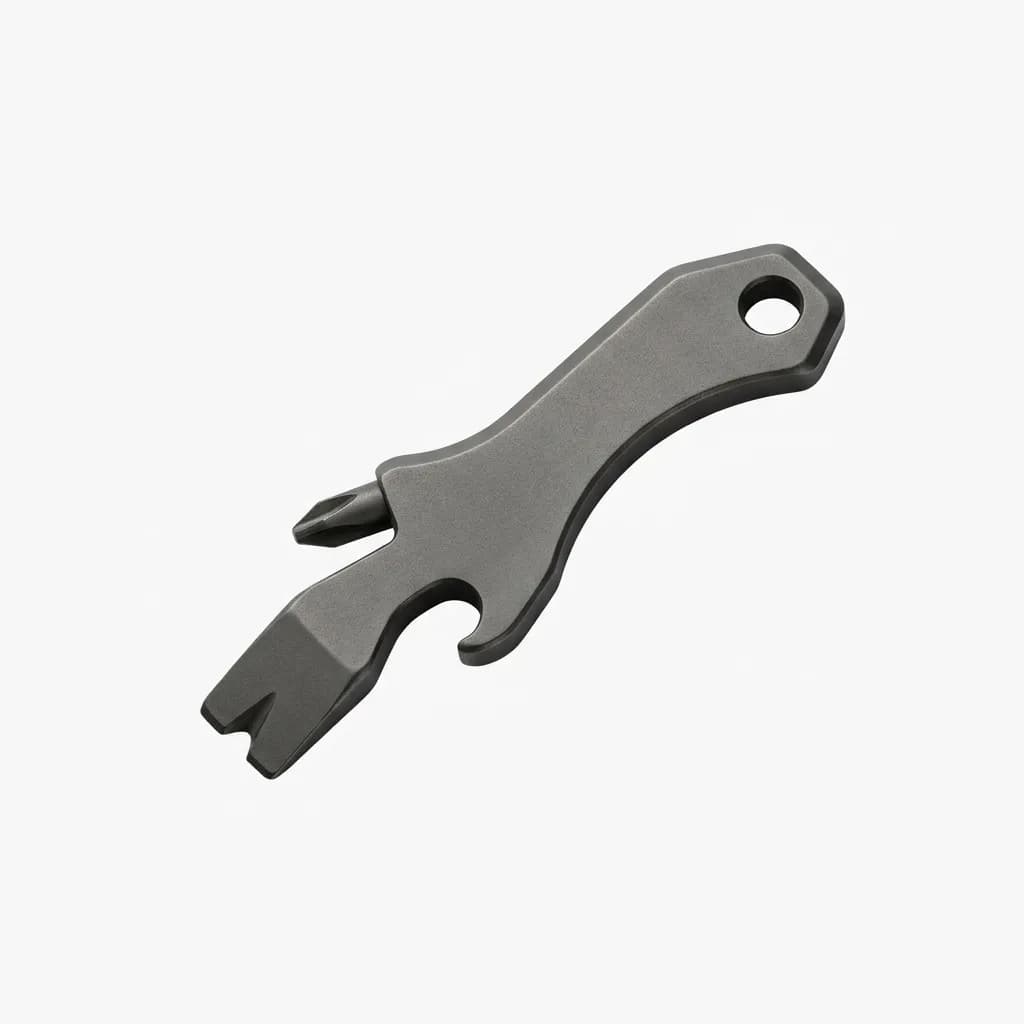
Gerber Shard
$7
Titanium-coated stainless steel keychain tool with pry bar, screwdriver, and bottle opener. 3mm thick, under $10.
The bottle opener is legitimately excellent, better than most dedicated openers. The wire stripper works for basic electrical work, though serious use calls for proper tools. The small flathead screws down eyeglass screws and tightens battery compartments, but it's too small for larger fasteners.
This is the tool to buy if you're not sure whether flat EDC tools are worth it. At $7, it's an easy experiment. If you find yourself using it regularly, upgrade to something more specialized. If it sits unused, you're only out the cost of lunch.
True Utility TU247 Smart Knife: Best integrated blade
Most flat tools skip the blade because adding cutting capability while staying truly flat is difficult. The True Utility Smart Knife solves this by using a sliding ceramic blade instead of a folding steel one.
The blade extends and locks with a simple slide mechanism. It's sharp enough for opening packages, cutting cord, and basic cutting tasks. It's not replacing a proper pocket knife, but it's more blade than you'd expect from something 3mm thick.
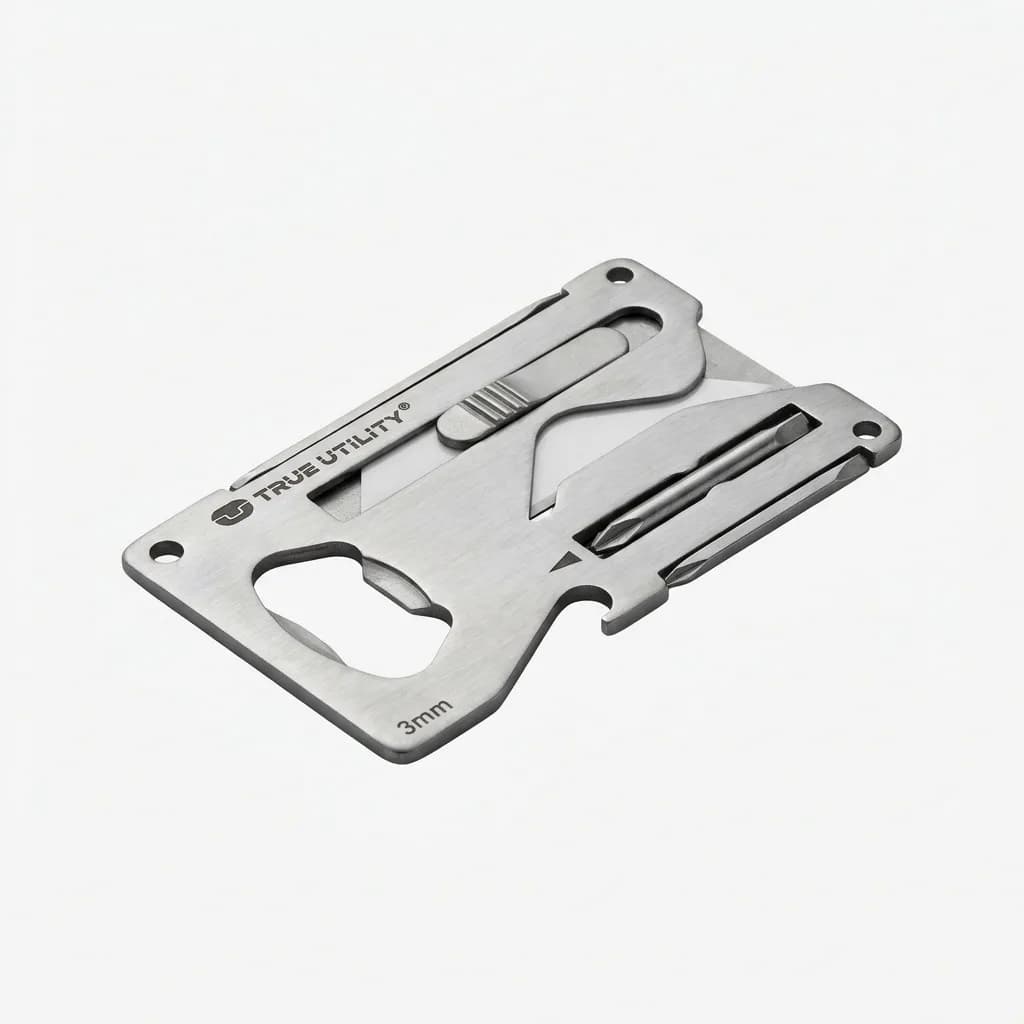
True Utility TU247 Smart Knife
Check Price
Credit card-sized tool with sliding ceramic blade, bottle opener, and multiple flathead drivers. 3mm thick stainless steel.
The ceramic blade stays sharp longer than steel would at this size, but it's also more brittle. Drop it wrong and it could chip. Avoid prying or twisting with the blade extended.
Beyond the blade, it's a solid flat tool. Multiple screwdriver sizes, a functional bottle opener, and adequate pry capability. If you need occasional cutting ability and want everything in one package, this is the most elegant solution we've found.
What about wallet multi-tools with 15+ functions?
They're mostly marketing. On tools claiming 20+ functions, most "functions" are either redundant (three slightly different pry edges) or useless (a "SIM card tool" that's just a small point).
The problem with cramming too many features into a credit-card footprint is that none of them work particularly well. The screwdrivers are too shallow to engage screw heads properly. The wrenches are too thin to apply real torque. The saw teeth are too fine to cut anything.
A flat tool should do three things well: pry, drive screws, and open bottles. Everything else is bonus. If the manufacturer is touting 20 functions, they're probably counting the four corners as four separate "pry points" and calling it innovation.
If you want a flat tool that lives in your wallet instead of on your keys, see our best card tool guide.
Thickness limits and when to carry something larger
Flat tools work great until you need actual torque or cutting power. If you're tightening a loose screw or opening a stuck case, they're perfect. If you're assembling furniture or doing any sustained work, you need real tools.
The practical thickness limit for wallet carry is about 3mm. Go thinner and you sacrifice strength. Go thicker and it's noticeably uncomfortable. Most people find 2.5-3mm to be the sweet spot.
Key ring carry opens up more options. You can go up to 4-5mm without it being annoying, which allows for more robust construction and better leverage. The tradeoff is you need to dig out your keys when you want the tool instead of pulling out your wallet.
How we actually use flat tools
Opening packaging is the most common use by far. Amazon boxes, plastic clamshells, stuck battery covers. A flat pry bar beats fingernails and doesn't risk cutting yourself like a knife might.
Tightening loose screws comes up more often than you'd expect. Sunglasses, drawer pulls, cabinet hardware, tech devices. Most aren't tight enough to need a proper screwdriver, but they're loose enough to be annoying. A quick turn with a flat tool is faster than finding the toolbox.
Bottle opening matters if you drink beer or soda from glass bottles. A flat tool opener works as well as any dedicated opener and doesn't require carrying a separate item.
Emergency prying is rare but valuable. Stuck phone battery covers, prying apart glued cases, removing staples, scraping off labels. When you need to pry something and don't have the right tool, a flat EDC tool saves a trip to the toolbox.
Which one should you carry?
If you want one tool that does everything adequately, get the SOG Escape Card. It's cheap, indestructible, and the pry function actually works. Wallet carry, no bulk, no complaints.
If you regularly need to drive screws and want versatility, get the Keyport Pivot. The bit storage and ratchet mechanism make it genuinely useful for actual fastener work, not just emergency use.
If you're testing the concept or want something on your key ring, get the Gerber Shard. At $7, it's the easiest way to find out if flat tools fit your carry style.
If you occasionally need cutting ability and want everything integrated, get the True Utility Smart Knife. The ceramic blade works better than you'd expect from something this flat.
Most people find that flat tools become more useful once you have one. You don't realize how often you need a pry bar or small screwdriver until you have one in your wallet. Start with the SOG card and see what you actually use it for. That'll tell you if you need something more specialized.
The Weekly Dispatch
Enjoying this article?
Subscribe and get our best gear picks delivered every Sunday morning.
Related Posts
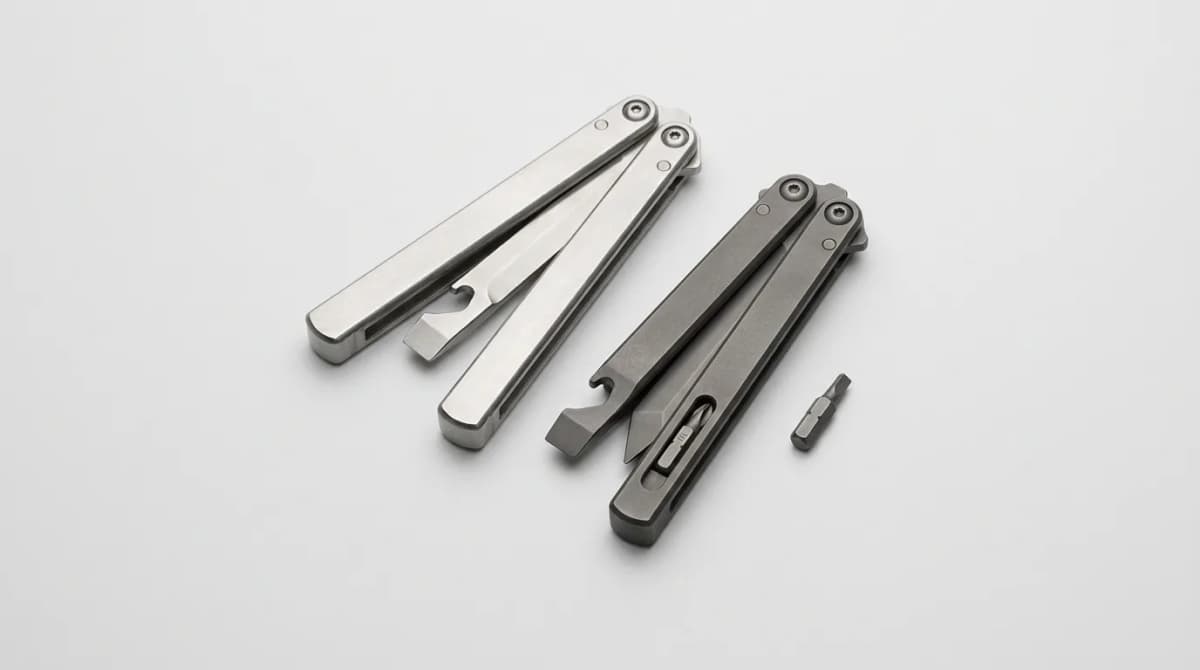
SnapTac 2601: Balisong Fidget Multitool That Works
Desk fidget that pries tape, opens bottles, and takes a 1/4 in hex — not a real knife. DiGimbal SnapTac 2601 in 304 SS or TC4 Ti: what it is, who buys, KS vs retail.
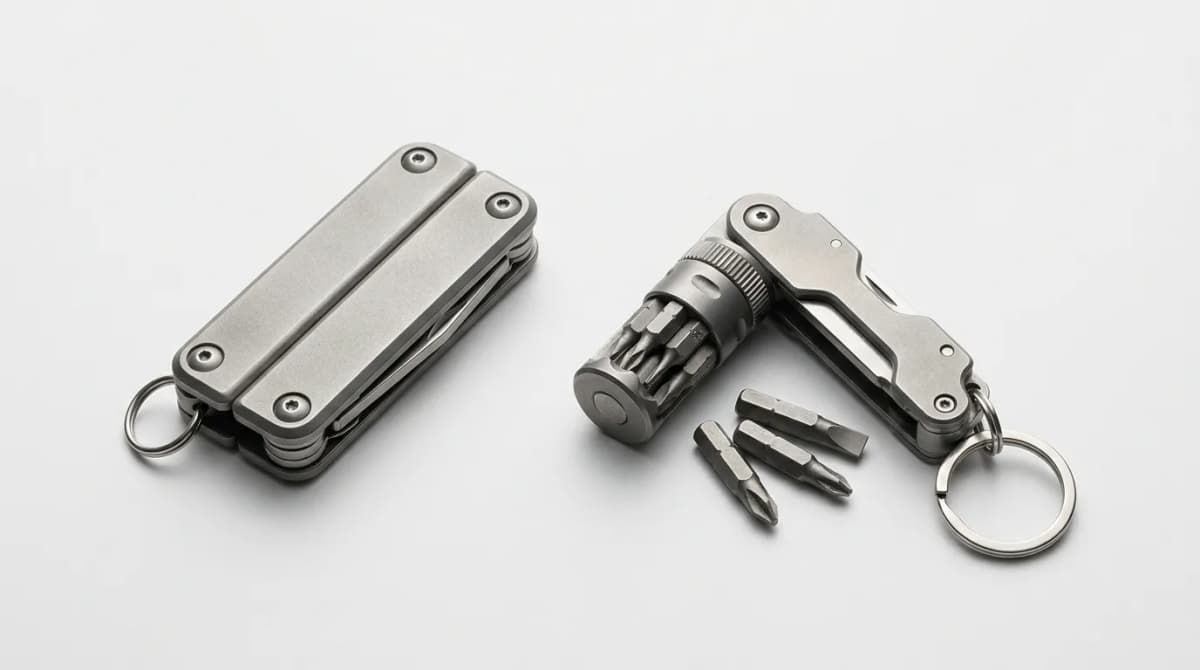
GripNGo Vault vs Rixel Revolver Multitools
Revolver bit magazines are the new keychain EDC flex. GripNGo Vault closes Sep 13 - how the 52.5 mm titanium tool stacks against Rixel and Geo.
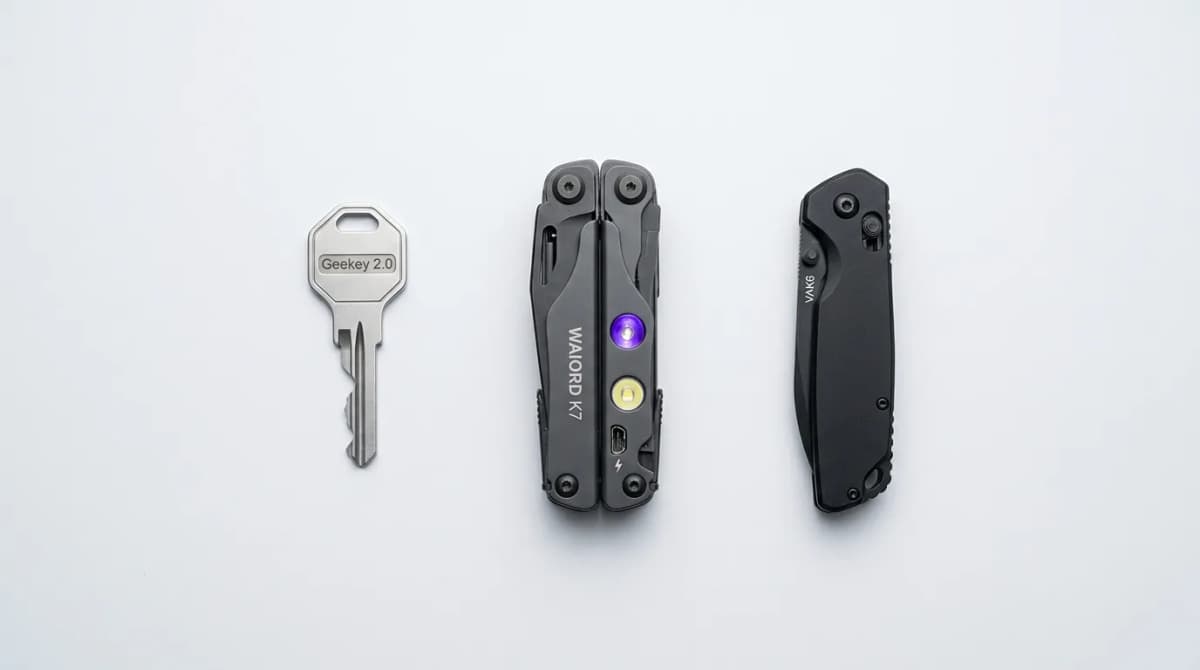
WAIORD K7 Review: Light, UV, and Plasma Arc EDC
WAIORD K7 packs a flashlight, UV, RGB glow, and windproof plasma arc into just 56 g. Closes Sep 10 - how it stacks against Geekey 2.0 and VAK6.
Best Pocket Tools for Apartment Maintenance
You don't need a full toolbox for apartment fixes. These pocket-sized tools handle loose screws, furniture assembly, and quick repairs without taking up drawer space.