The Best Mini First Aid Kits for Everyday Carry
Compact first aid kits that actually fit in your pocket or bag without compromising on critical supplies. Here's what to carry and why it matters.
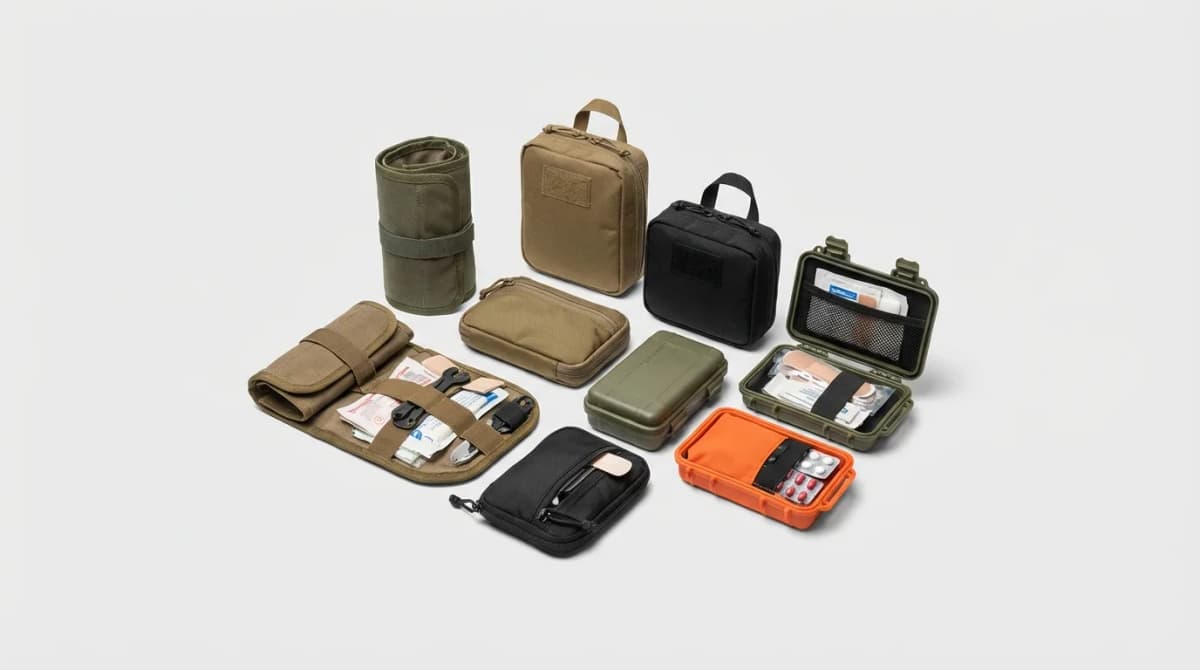
You don't need a full trauma bag on your hip. But you should have something between nothing and overkill. A pocket-sized first aid kit won't save someone from a gunshot wound, but it will handle the cuts, scrapes, blisters, and minor emergencies you'll actually encounter.
Quick Picks
Our top recommendations at a glance:
- 1
- 2
- 3
- 4
- 5
The problem with most mini kits is they're either too basic (three band-aids and a wet wipe) or poorly designed (bulky pouches that don't actually fit anywhere). The best ones balance compact size with genuinely useful supplies. They fit in a jacket pocket, glove box, or small bag compartment. And they contain items you'll use regularly, not once-in-a-lifetime gear that expires before you touch it.
What Actually Belongs in an EDC First Aid Kit
Start with wound care. Adhesive bandages in multiple sizes, gauze pads, medical tape, and antiseptic wipes cover 90% of what you'll face. Add tweezers for splinters, scissors for cutting tape or clothing, and a few safety pins for securing bandages or improvising a sling.
Pain relief matters more than people think. A few packets of ibuprofen or acetaminophen turn a splitting headache from a day-ruiner into a minor inconvenience. Same for antihistamines if you're prone to allergic reactions.
Blister care is underrated. If you walk more than a mile in new shoes or boots, you want moleskin or blister bandages. Regular adhesive bandages don't stay on heels or toes under friction.
Skip the instant cold packs and emergency blankets unless you have room. They're bulky and rarely needed for everyday carry. Save those for car kits or hiking packs.
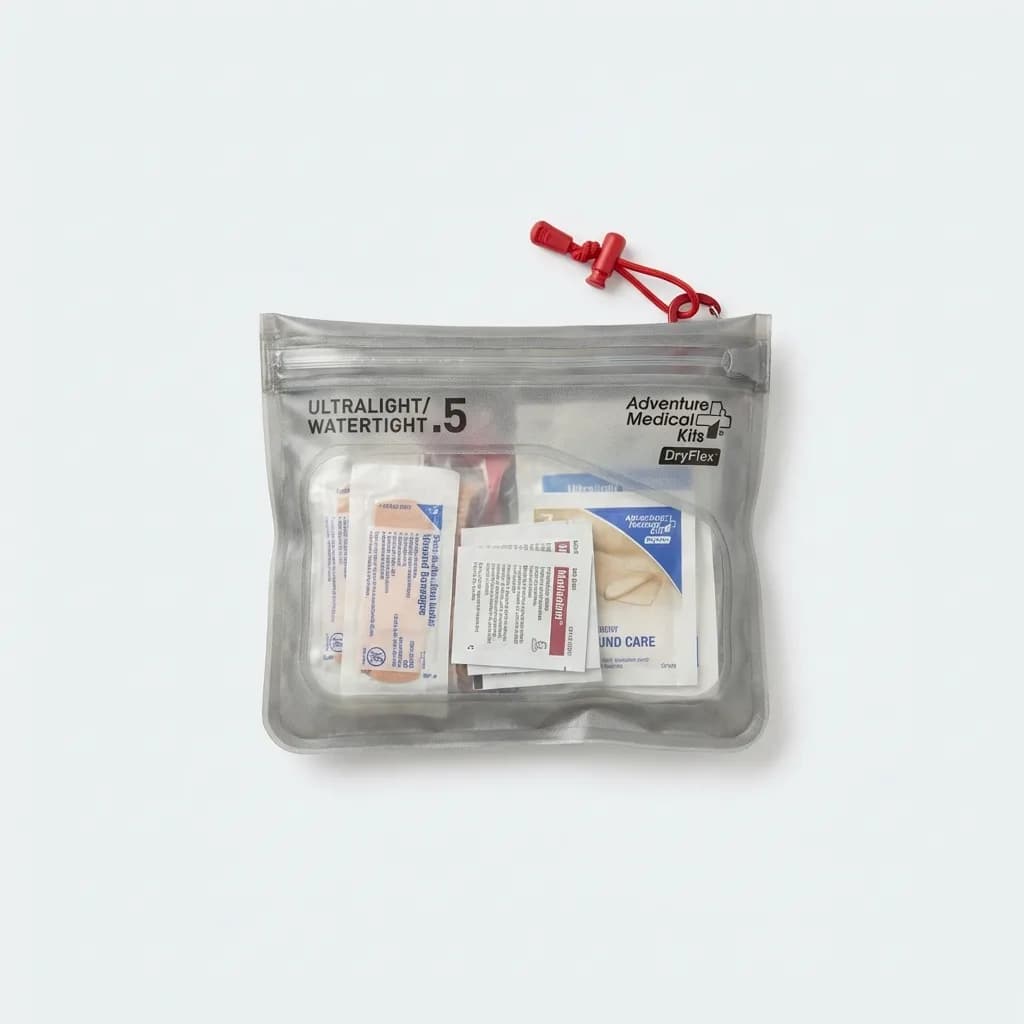
Adventure Medical Kits Ultralight/Watertight .5
$15
Waterproof case with 23 essential items including bandages, medications, and wound care. Weighs 2.4 oz and fits in a pocket. DryFlex bag keeps contents dry.
Hard Case vs Soft Pouch Design
Hard cases protect contents better. They prevent items from getting crushed in a bag or pocket, and the rigid shell doubles as a clean surface for organizing supplies during use. The downside is bulk. A hard case always takes up its full footprint, even when supplies run low.
Soft pouches compress and conform to available space. They fit into odd-shaped pockets and squeeze between other items in a bag. But zippers can fail, and soft materials offer zero protection if something heavy lands on your kit.
We prefer hard cases for glove boxes and bags where space isn't tight. For pocket carry, a slim soft pouch wins. Some hybrid designs use semi-rigid materials that offer moderate protection without the bulk of a full hard case.
Organization matters as much as protection. The best pouches use elastic loops, mesh pockets, or clear compartments so you can see and grab what you need without dumping everything out. Avoid kits where supplies are just thrown loose into a pouch.
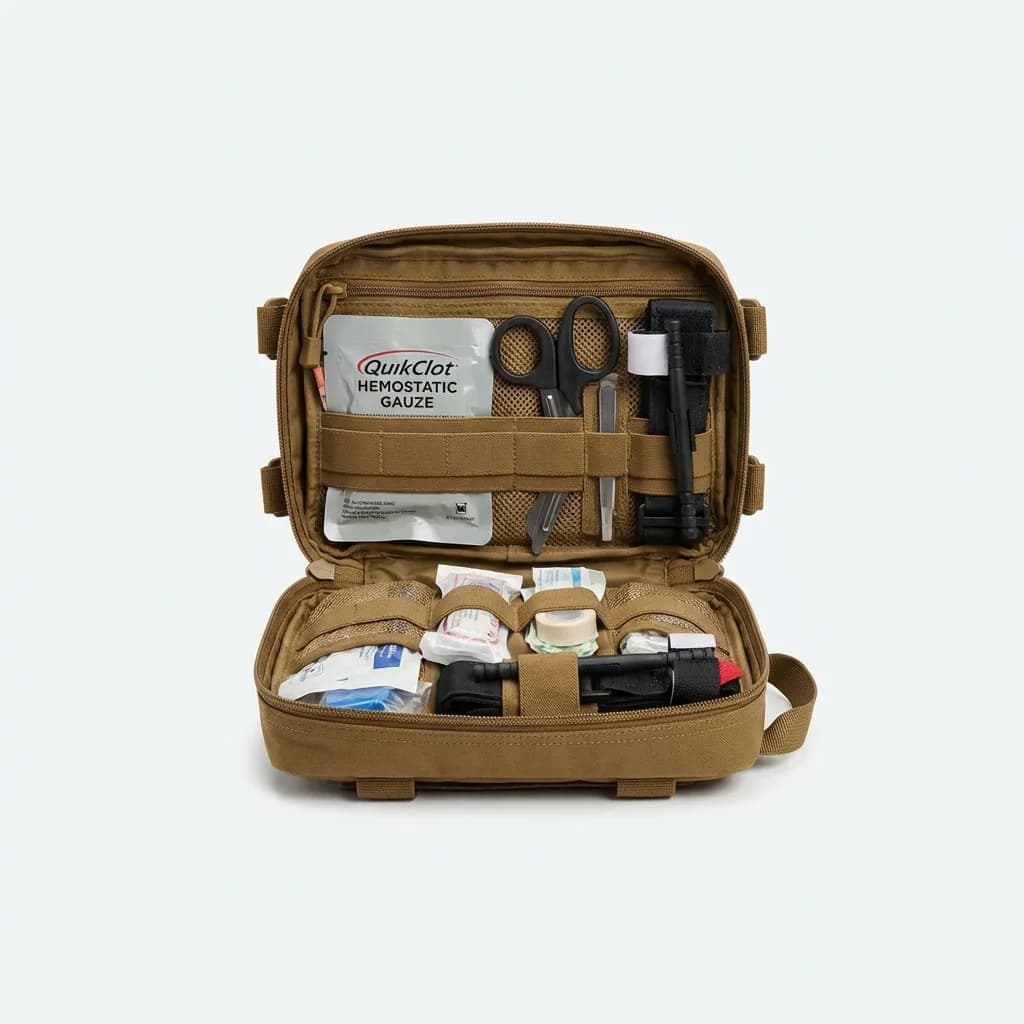
MyMedic MyFAK First Aid Kit
$40
Compact MOLLE-compatible pouch with organized compartments. Includes QuikClot gauze, trauma shears, tourniquet, and 72 total items. Water-resistant 600D nylon.
Where to Actually Carry a Mini Kit
Jacket pocket carry works if the kit is thin and light. Aim for under 3 oz and less than half an inch thick. Anything bulkier will sag in lightweight jackets or feel like a brick in heavier coats.
Backpack and messenger bag carry is the most practical for daily use. Toss the kit in an exterior pocket for quick access. If you carry a bag regularly, you can go slightly larger since weight and bulk matter less.
Glove box storage makes sense for car-based emergencies, but temperature extremes degrade medications and adhesives faster. Replace supplies annually if you store first aid kits in vehicles. Keep a separate kit in your trunk for more comprehensive coverage.
MOLLE attachment works for tactical bags, range bags, and hiking packs. Look for kits with built-in MOLLE webbing or snap loops. This keeps the kit accessible on the outside of your pack instead of buried at the bottom.
Cargo pocket carry is possible with ultra-slim kits, but most are too bulky. The kit will bang against your leg when walking and create an obvious outline. Better to keep it in a bag.
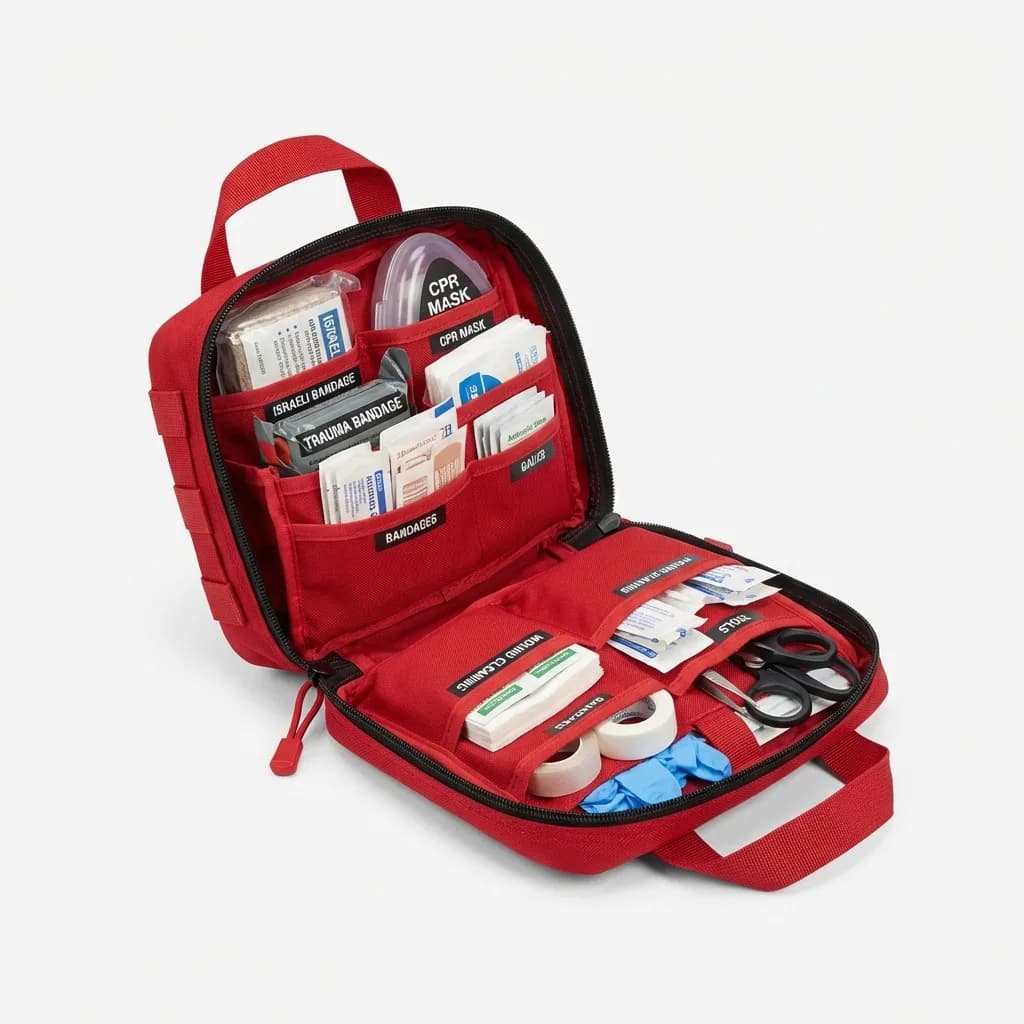
Surviveware Small First Aid Kit
$35
100 pieces in a compact molle-compatible bag. Organized sections with labeled compartments. Includes Israeli bandage, CPR mask, and comprehensive wound care. 7x5x3 inches.
Pre-Built Kits vs Building Your Own
Pre-built kits from reputable medical companies include supplies you might forget and often come cheaper than buying components separately. The downside is filler items. Most commercial kits pad their piece count with extra alcohol wipes, single-use ointment packets, and duplicate bandages you don't need.
Building your own kit lets you customize for specific needs. If you get frequent nosebleeds, add extra gauze. If you hike in tick country, include a tick removal tool. If you have prescription medications, you can pack a few doses.
The hybrid approach works best for most people. Buy a quality pre-built kit, then remove obvious filler and add your specific must-haves. You get the base supplies at a good price while still personalizing the contents.
Common items worth adding: liquid bandage for fingertip cuts, glucose tablets if you're diabetic or hypoglycemic, prescription antihistamines if you have severe allergies, a small LED light for checking pupils or working in low light.
Skip the gimmicks. You don't need a compass, fishing line, or fire starter in a first aid kit. Those belong in survival kits. Keep medical supplies focused on medical problems.
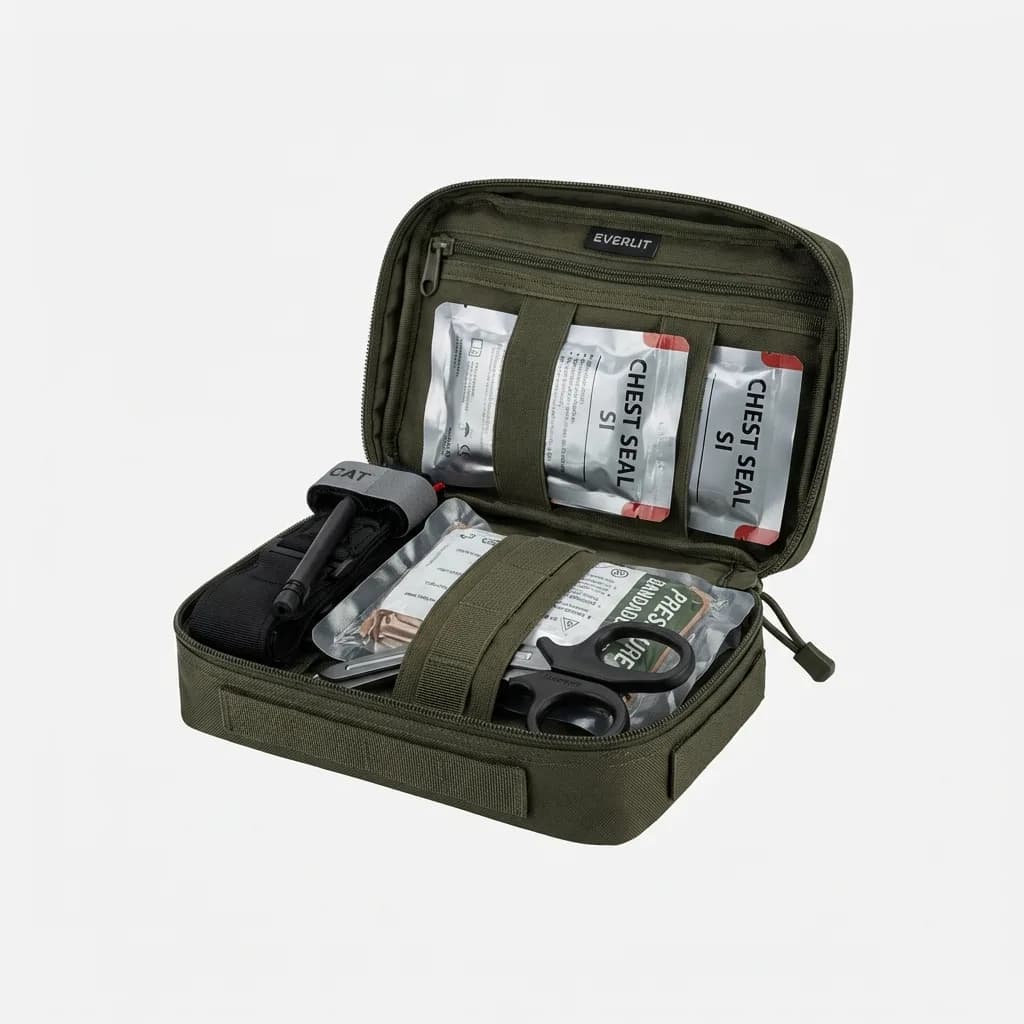
Everlit Emergency Survival Trauma Kit
$45
IFAK-style pouch with tourniquet, pressure bandage, chest seals, and trauma shears. MOLLE-compatible with multiple compartments. More serious than basic first aid.
The Difference Between Basic and Trauma-Focused Kits
Basic first aid handles common injuries: cuts, scrapes, burns, blisters, headaches, allergic reactions. These kits contain adhesive bandages, gauze, tape, medications, and antiseptic supplies. They're what most people need for daily carry.
Trauma kits address life-threatening bleeding. They include tourniquets, hemostatic gauze, pressure bandages, and chest seals. These items are larger, heavier, and require training to use effectively. If you don't know how to apply a tourniquet properly, carrying one doesn't help.
The gap between basic and trauma is wider than most people realize. A trauma kit won't help with a headache or blister. A basic kit won't stop arterial bleeding. Trying to combine both in a pocket-sized package means compromising on both.
For EDC, most people should carry basic first aid and leave trauma gear for specific situations: shooting sports, backcountry hiking, working in dangerous environments. If your daily routine involves power tools, motorcycles, or remote locations, trauma supplies make sense. If you commute to an office and walk around the city, basic coverage is enough.
One middle-ground option: carry a basic mini kit daily, and keep a more comprehensive trauma kit in your vehicle or at home. This gives you immediate access to common supplies without carrying bulk you'll rarely need.
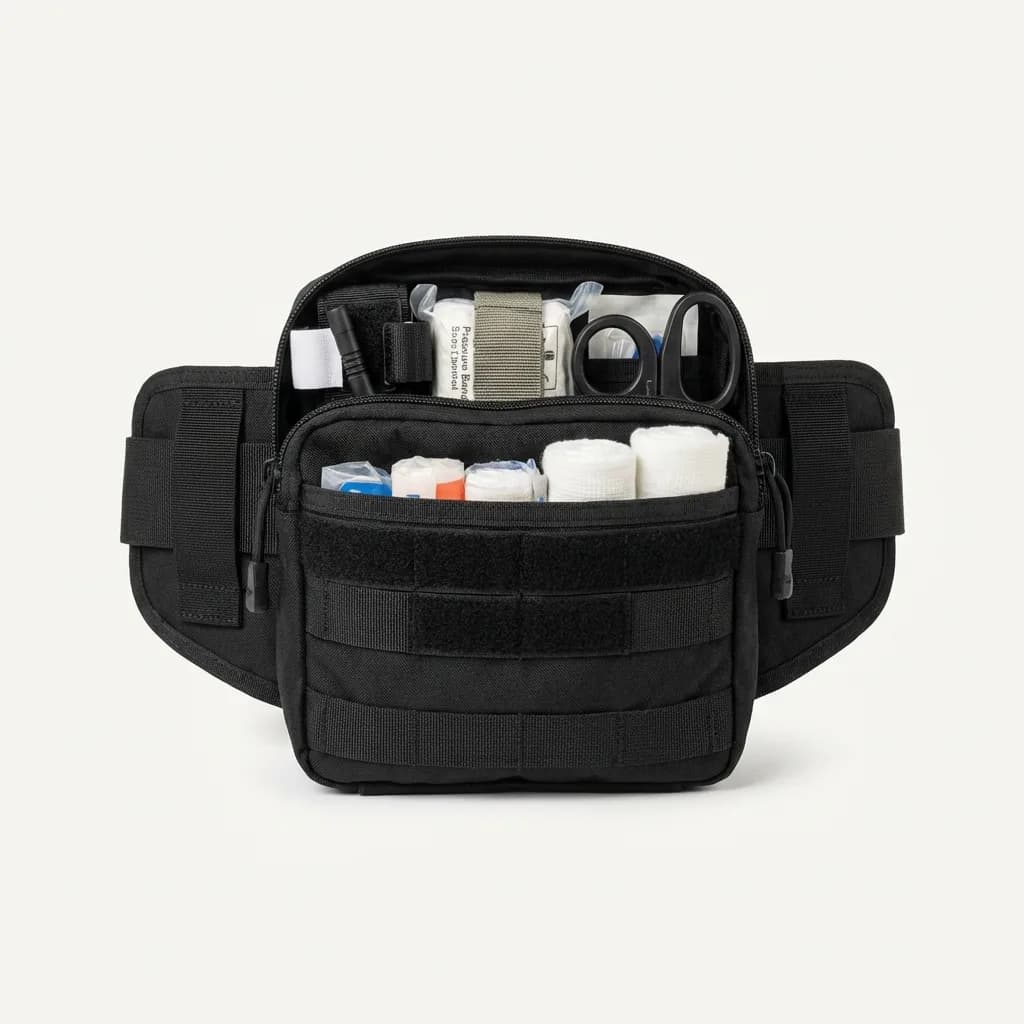
Lightning X Compact Medic First Responder Belt Pouch
$28
Belt-mounted EMT pouch with four compartments. Elastic loops and mesh pockets keep supplies organized. Fits full-size trauma shears and larger dressings. 7x5.5x2.5 inches.
Maintenance and Expiration Reality
Adhesive bandages don't really expire, but the adhesive loses stickiness over time. Gauze and tape last for years if kept dry. Medications have actual expiration dates that matter. Aspirin and ibuforil degrade faster in heat and humidity.
Check your kit every six months. Replace medications approaching expiration, restock items you've used, and verify that adhesive products still stick. If you store the kit in a car, check more frequently.
Keep a list of contents and expiration dates on your phone or tucked inside the kit. This prevents you from opening and digging through the kit just to check dates. Mark the kit exterior with the last inspection date using a label or permanent marker.
Rotate stock by using supplies from your kit instead of grabbing band-aids from the bathroom cabinet. This ensures items get replaced before they degrade and keeps you familiar with what's actually in the kit.
Consider vacuum-sealing backup supplies. If you buy a box of gauze pads or bandages, seal the extras in a small vacuum bag and store them with the kit. This keeps replacement stock fresh and immediately available when you need to restock.
Final Thoughts on Compact Medical Preparedness
The best mini first aid kit is the one you actually carry. A comprehensive kit sitting at home doesn't help when you slice your finger at a restaurant or get a blister three miles into a city walk. Start small, carry consistently, and add to it as you learn what you actually use.
Size your kit to your carry method. Pocket kits should be slim and light. Bag kits can be larger. Car kits can be comprehensive. Match the contents to likely scenarios, not worst-case fantasies.
Quality matters more in medical supplies than almost any other EDC category. Cheap bandages don't stick. Poor scissors don't cut. Flimsy pouches fall apart. Spend a bit more for reliable components that work when you need them.
And actually learn basic first aid. A kit full of supplies you don't know how to use properly is just extra weight. Take a class, watch training videos, or at minimum read the instructions that come with trauma items like tourniquets and hemostatic gauze. Ten minutes of education makes your kit ten times more useful.
The Weekly Dispatch
Enjoying this article?
Subscribe and get our best gear picks delivered every Sunday morning.
Related Posts
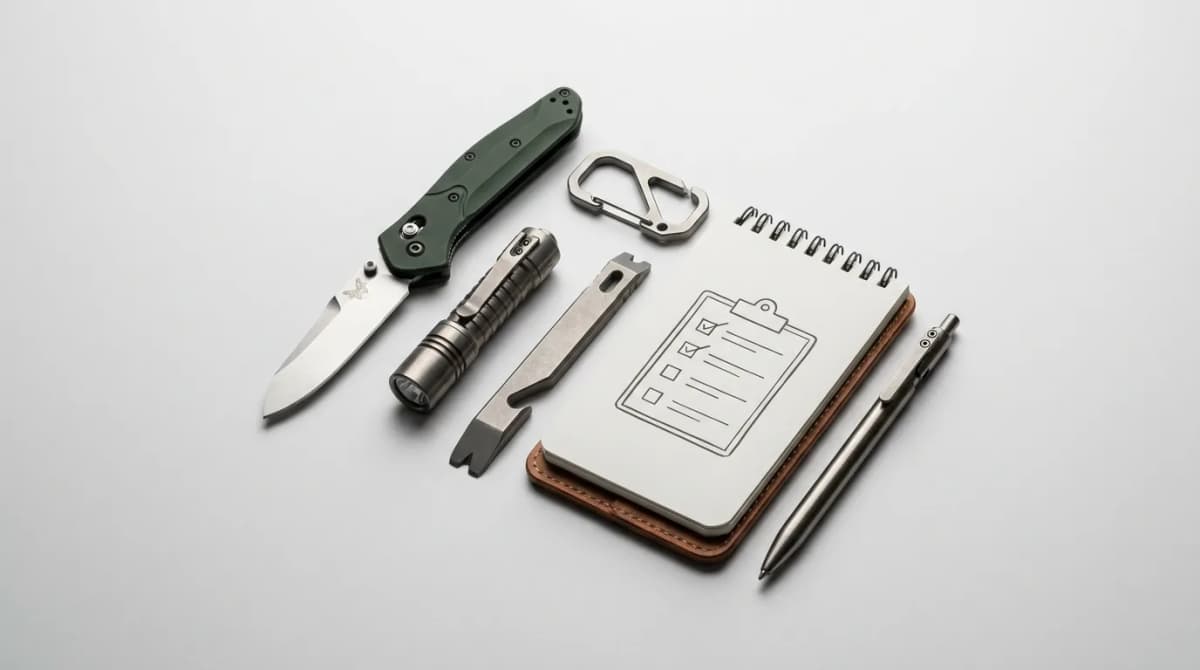
EDC Kickstarter Checklist: 10 Checks to Run First
EDC campaigns are everywhere this fall. Use this 10-point checklist, built on Kickstarter's own rules, to judge knives, lights and clips before you pledge.
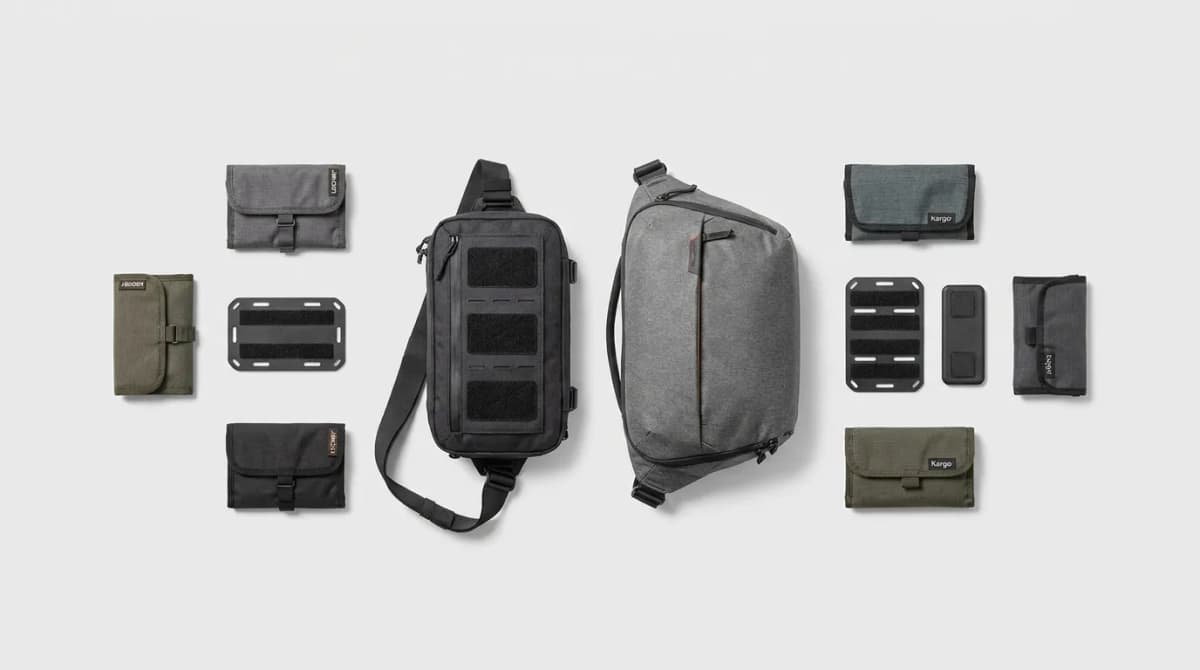
VAULT Sling vs Peak Design: Modular EDC Sling 2026
Tool-and-tech EDC slings, not camera bags. VAULT Flex Boards and 7L–9L magnetic expand vs Peak Design Everyday 6L, plus LOCHBY and Kargo.
EDC for Rainy Cities: The Complete Setup
Rainy-city EDC means canopy, wet pouch, and smarter fabrics. Build a daily carry that stays dry on transit without soaking your bag or pockets.
DIY EDC Mods: Personalize Your Everyday Carry Gear
Learn practical DIY modifications for your EDC gear: paracord wraps, anodizing, custom scales, and personalization techniques that improve function and style.