Edrin Titanium Carabiner Knife Review
The Edrin combines a carabiner clip with a D2 steel folding blade, bit driver, and tritium slots in a titanium package designed for everyday carry.
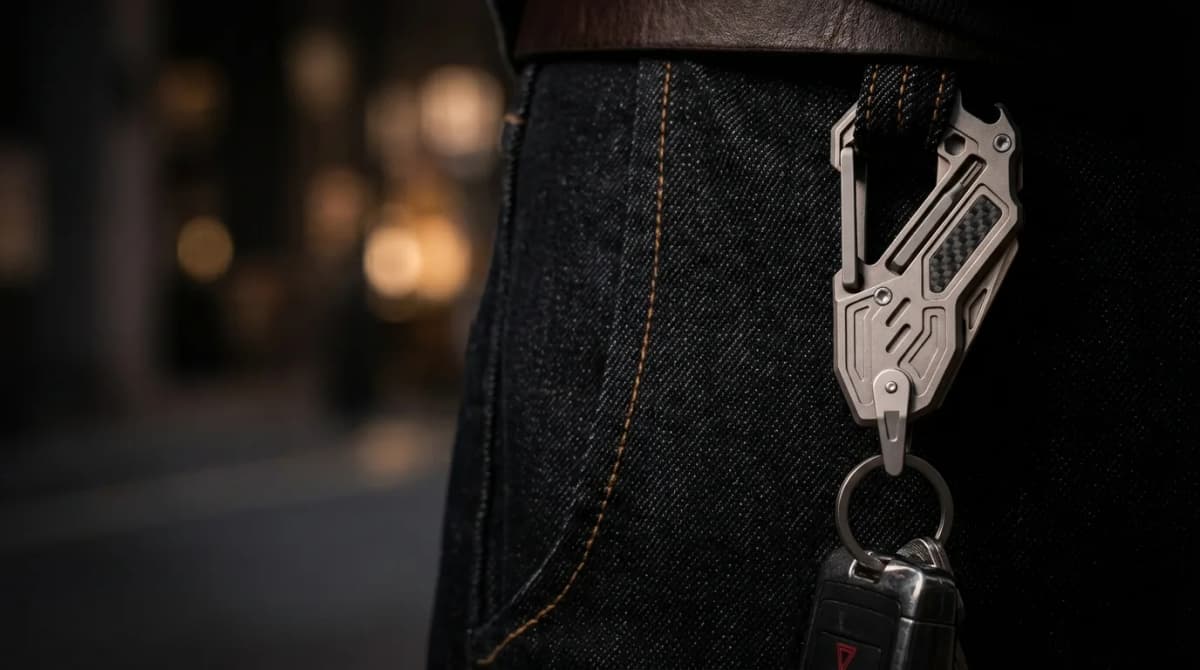
Most EDC knives treat the clip as an afterthought. The Edrin flips that logic on its head by building the entire tool around a functional carabiner. This is GR5 titanium shaped into a clippable frame that holds a D2 steel blade, a magnetic bit driver, and six tritium vial slots for low-light visibility. At $75 for early backers (MSRP $109), it's positioned against traditional keychain multi-tools, but it's designed for belt loops, bag straps, and anywhere you'd clip a carabiner.
Quick Picks
Our top recommendations at a glance:
- 1
- 2
- 3
- 4
- 5
The question isn't whether you need another EDC knife. It's whether a carabiner-first design makes more sense than the folder in your pocket.
Why Build a Knife Around a Carabiner
Traditional pocket knives optimize for the blade. You get a sharp edge, a reliable lock, and a clip that keeps it in your pocket. The Edrin starts with a different premise: the clip itself should be the attachment point, not just a piece of bent steel screwed to the handle.
The integrated carabiner means you can clip the Edrin to a belt loop, backpack strap, or keychain and access it instantly. No fishing around in your pocket. No fumbling with a friction folder. The carabiner gate opens with one hand, and the entire tool stays attached to your gear while you work.
This matters most when you're carrying multiple items. If you're already clipping a water bottle to your bag or hanging keys from a carabiner, the Edrin consolidates that attachment point. Instead of a dedicated carabiner plus a separate knife, you get both in one titanium frame.
Edrin Titanium Carabiner Knife
$75
GR5 titanium carabiner with integrated D2 steel folding blade, magnetic 4mm bit driver, bottle opener, and six tritium vial slots for low-light use.
The tradeoff is size. A carabiner frame is larger than a traditional pocket clip, so the Edrin takes up more space on your belt loop or bag strap. It's not pocket-friendly in the way a slim folder is. But if you're already carrying a carabiner, the Edrin replaces it rather than adding to your carry.
The D2 Blade and How It Opens
The blade is D2 steel, a high-carbon tool steel known for edge retention and wear resistance. It's harder than most stainless options, which means it holds a sharp edge longer but requires more effort to sharpen when it dulls. D2 is a good match for an EDC knife that gets used daily for opening packages, cutting cord, and light food prep.
The blade locks with a liner lock mechanism, which is standard for folding knives. You press a spring-loaded liner to release the blade, then fold it back into the handle. It's a proven design that's simple to operate and reliable when maintained.
What's less common is how the blade deploys. Because the Edrin's handle is a carabiner frame, the blade sits inside that frame when closed. You pull it out with a thumb stud, and it swings open in an arc that's wider than a traditional folder. The motion feels different at first, but it's smooth once you adjust to the geometry. For magnetic titanium quick-release key systems, see our TiLok vs Titaner TiNexus comparison.
The blade length isn't specified in the campaign details, but based on the proportions shown in the images, it appears to be in the 2-2.5 inch range. That's typical for a keychain knife and legal in most jurisdictions that restrict blade length.

CRKT Squid Compact Folding Knife
$35
D2 steel drop point blade with frame lock, deep carry pocket clip, and ultra-compact design for keychain carry. Field-tested budget alternative.
Magnetic Bit Driver and Tool Compatibility
The Edrin includes a magnetic bit driver that accepts standard 4mm bits. One bit comes pre-installed, and the magnetic socket holds it securely while you work. Swap it out for a different bit, and the magnet keeps it from falling out mid-task.
This is where the Edrin competes with traditional bit-driver multi-tools like the Leatherman Style PS or the Gerber Dime. Those tools include multiple bits in a compact housing, but they don't have the carabiner attachment or the folding blade. The Edrin gives you fewer bits out of the box, but it's compatible with any 4mm bit you already own. If you like the idea of swapping blades and handles, our Hightron Modulus modular titanium knife breakdown asks whether it is worth $262.
The bit interface is positioned opposite the blade, so you can use the driver without unfolding the knife. That's a smart layout choice. It means you can tighten a screw or adjust a bolt without deploying a blade, which is useful in situations where pulling out a knife would be awkward or prohibited. Small titanium blades are having a moment; our Ti-Toucan and micro titanium knife roundup covers the current crop.
The frame also includes a bottle opener and a nail puller. The bottle opener is built into the carabiner gate, so it's always accessible. The nail puller is a notched cutout that lets you pry up nails or staples without damaging the blade edge.

Leatherman Style PS
$40
Keychain multi-tool with scissors, knife blade, nail file, and carabiner clip. TSA-friendly for travel, with spring-action pliers and compact design.
Tritium Slots and Low-Light Visibility
The Edrin includes six slots for tritium vials, which are self-powered glow tubes that don't require charging. Tritium emits a faint green glow for up to 10 years, making it useful for locating gear in the dark. The vials aren't included with the Edrin, but the slots are pre-drilled so you can install them yourself.
Tritium is common on watches, gun sights, and high-end EDC gear. It's not bright enough to illuminate your surroundings, but it's visible in total darkness, which helps you find the tool when it's clipped to a bag or jacket.
Whether you need tritium slots depends on how often you're working in low-light conditions. If you're camping, hiking, or doing nighttime repairs, tritium makes sense. If you're using the Edrin during the day or in well-lit spaces, it's a feature you'll rarely use.
The slots are drilled into the titanium frame, so they add visual interest even if you don't install tritium. Some users fill them with colored inserts or leave them empty for a clean look.
GR5 Titanium and Carbon Fiber Construction
The frame is GR5 titanium, also known as Ti-6Al-4V, which is the most common titanium alloy used in aerospace and medical devices. It's lighter than steel, more corrosion-resistant, and strong enough to handle the forces applied to a carabiner under load.
GR5 is harder and more durable than commercially pure titanium (grades 1-4), which makes it better suited for a tool that will see daily use. It's also more expensive to machine, which is why titanium gear typically costs more than steel alternatives.
The Edrin also includes carbon fiber accents, though the campaign details don't specify where they're located or what role they play in the structure. Carbon fiber is often used for handle scales or decorative inlays, and it adds visual contrast against the brushed titanium finish.
The combination of titanium and carbon fiber is common in premium EDC gear. It signals durability and weight savings, but it also raises the price compared to aluminum or stainless steel options.

TiSlide Titanium Carabiner
$15
Grade 5 titanium carabiner with wire gate closure, ultra-light design for keychain carry, and 100-pound working load. Machined in the USA.
How the Edrin Compares to Similar Tools
The closest competitors are keychain multi-tools with blades, like the Gerber Shard, the Leatherman Style PS, and the CRKT Squid. Those tools prioritize compactness and TSA compliance, while the Edrin prioritizes clip functionality and blade quality.
The Gerber Shard is prybar-first, with a fixed blade and multiple screwdriver heads. It's smaller than the Edrin and cheaper, but it doesn't have a folding blade or a magnetic bit driver.
The Leatherman Style PS has scissors, a knife blade, and a carabiner clip, but the carabiner is an attachment point, not the frame itself. It's TSA-friendly, which the Edrin is not due to the blade length.
The CRKT Squid is a compact folder with a D2 blade and a deep carry clip. It's closer to the Edrin in terms of blade quality, but it doesn't have the carabiner or the bit driver.

Gerber Shard Keychain Multi-Tool
$9
Prybar-style multi-tool with bottle opener, wire stripper, flathead screwdrivers, and Phillips driver. TSA-friendly and lightweight for keychain carry.
The Edrin sits in a different category. It's larger, heavier, and more expensive, but it's designed for belt loops and bag straps rather than keychains. If you're looking for a pocket-sized multi-tool, the Edrin is overkill. If you want a carabiner that does more than clip, it makes sense.
Is the Edrin Worth $75?
The early bird price is $75, with an MSRP of $109 once the Kickstarter campaign ends. That's comparable to mid-range EDC knives like the Benchmade Mini Bugout ($100) or the Spyderco Delica ($75), but those are dedicated folders without the multi-tool features.
The value proposition depends on how much you'll use the carabiner. If you're already carrying a separate carabiner and a separate knife, the Edrin consolidates both into one tool. If you prefer pocket carry and don't need a carabiner, you're paying for features you won't use.
The tritium slots and carbon fiber accents add to the price, but they're aesthetic features rather than functional necessities. You can skip the tritium vials and still have a fully functional tool.
The D2 blade and GR5 titanium frame are the core value here. D2 holds an edge well, and titanium is lightweight and corrosion-resistant. If you're using this daily for cutting tasks, those materials justify the cost.

Benchmade Mini Bugout Folding Knife
$150
S30V stainless steel blade with AXIS lock, lightweight Grivory handle, and reversible pocket clip. Ultra-light at 1.5 ounces, made in the USA.
Final Thoughts on the Carabiner-Knife Concept
The Edrin works if you think in terms of attachment points. Most EDC knives are designed to disappear into a pocket until you need them. The Edrin is designed to hang from your gear, visible and accessible, doing double duty as a clip and a cutting tool.
That's a different carry philosophy. It's not better or worse, just optimized for a different use case. If you clip things to your belt loop or bag strap regularly, the Edrin makes sense. If you prefer minimalist pocket carry, it's too bulky.
The D2 blade, magnetic bit driver, and tritium slots add functionality beyond a basic carabiner, but they also add weight and complexity. You're trading simplicity for versatility, and whether that's worth it depends on how often you'll use the extra features.
The Kickstarter campaign ships in June 2026, and MR.GADGET has a track record of delivering on previous campaigns. The early bird price of $75 is reasonable for a titanium multi-tool with a D2 blade, but the MSRP of $109 puts it in premium territory. If you're on the fence, the deciding factor is whether you need a carabiner that cuts.
The Weekly Dispatch
Enjoying this article?
Subscribe and get our best gear picks delivered every Sunday morning.
Related Posts
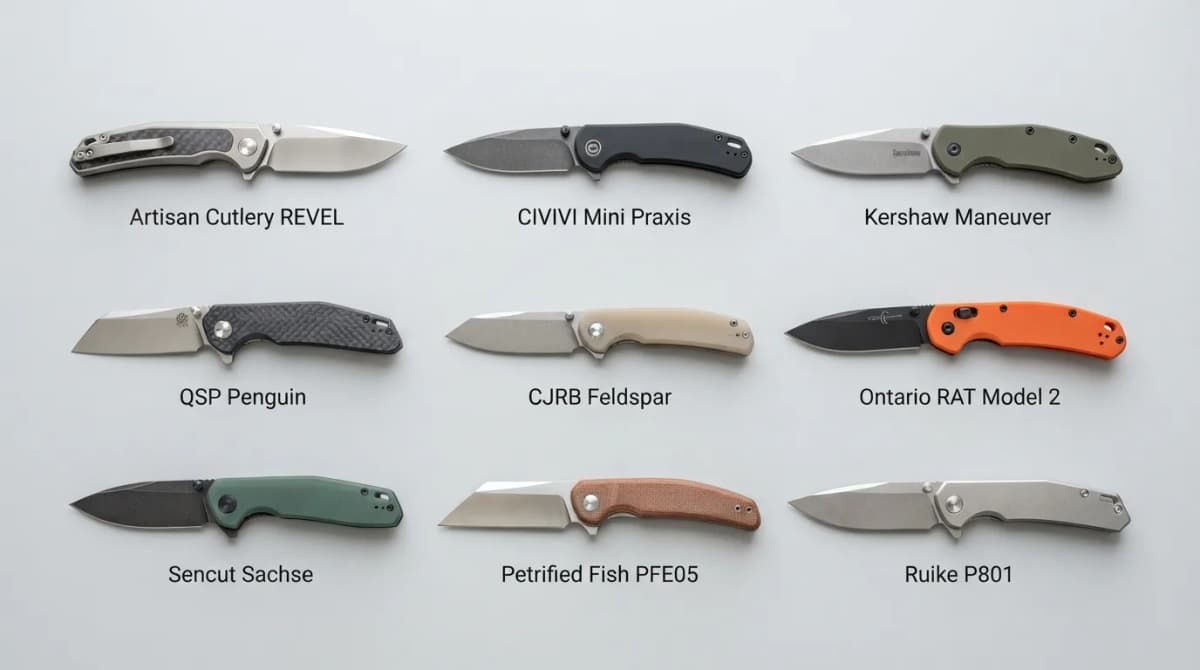
Best EDC Knife Under $50 (2026): 9 Folders by Spec
The best EDC knives under $50, compared by maker specs: Artisan REVEL, CIVIVI Mini Praxis, Kershaw Maneuver, QSP Penguin, CJRB Feldspar and more, with steel, lock, blade length, weight and price at publish (Oct 2026).
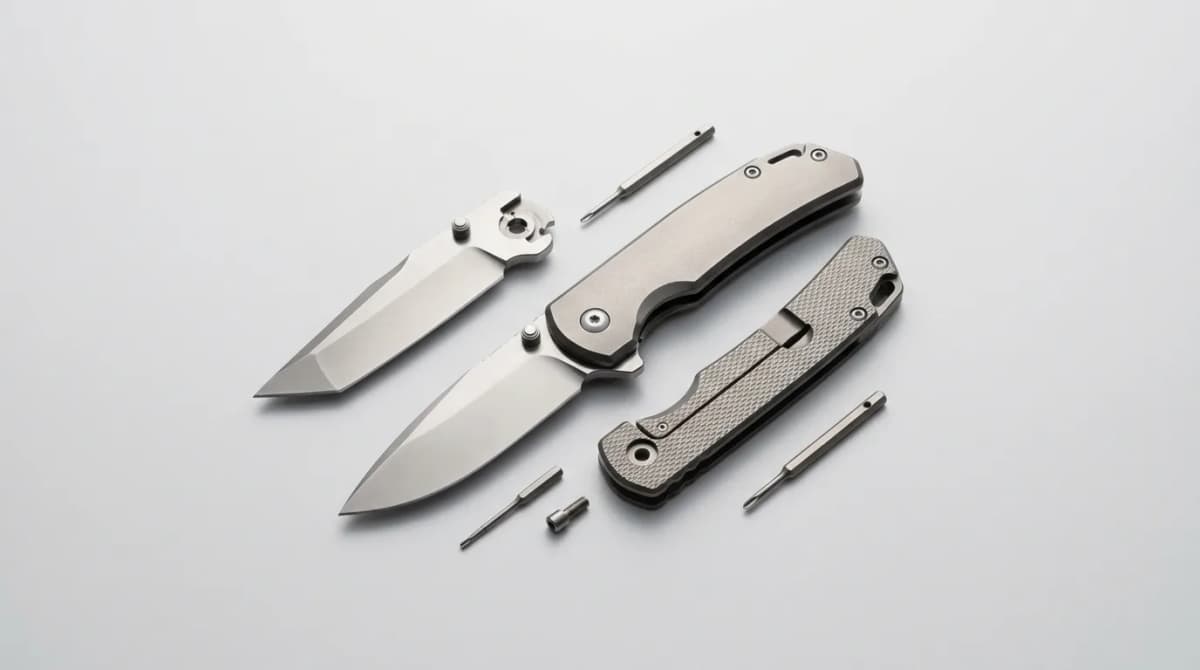
Hightron Modulus: Titanium Knife Worth $262?
Hightron's Modulus swaps blade heads and handle sections without tools. Here are the specs, tiers, real trade-offs and who should back it.
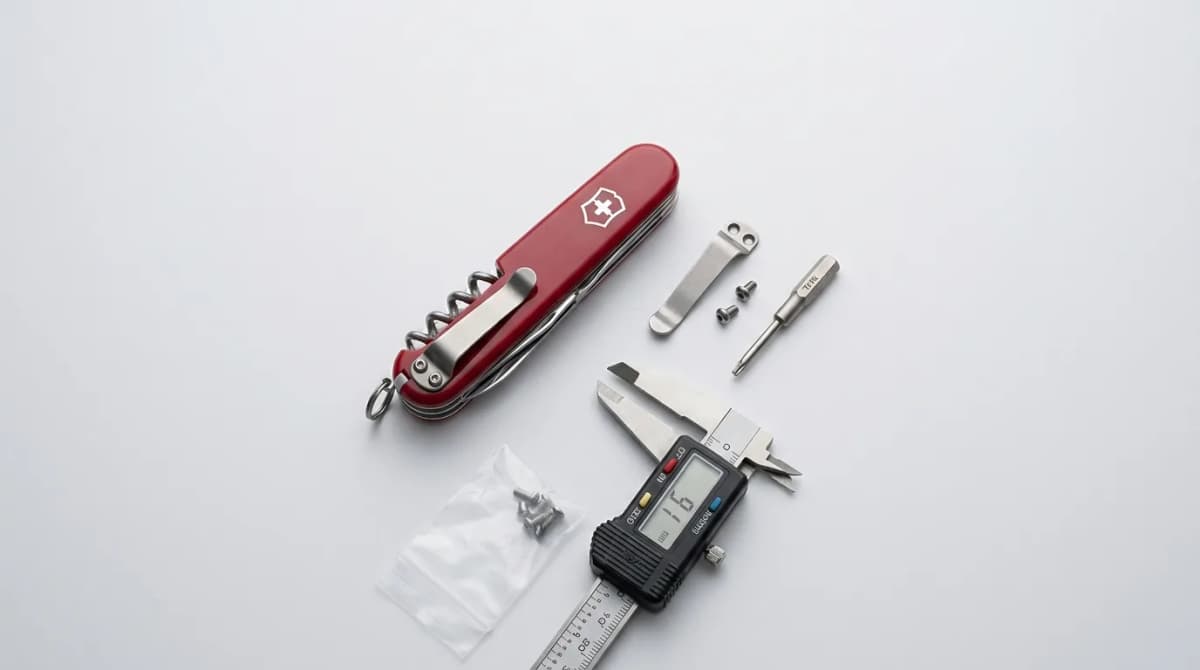
Lamprey91 Swiss Army Knife Clip: Will It Fit?
Tortoise Gear's Lamprey91 adds a pocket clip to 91 mm Victorinox knives with no tools. Check fit, install, pricing and alternatives before you back it.
OKNIFE MK Review: 52 g Light, Knife, Driver
The OKNIFE MK packs a 300 lm light, slipjoint blade and 4 mm bit driver into 52 g. Here is what independent tests found and who it actually suits.