ONAMI Titanium Utility Knife Review
Dapper Design's ONAMI combines aerospace titanium with Japanese aesthetics in a button-lock utility knife that accepts standard blades.

Most utility knives treat blade replacement as an afterthought. You fish around with a quarter, lose the screw, or fumble with a frame lock that pinches your fingers. The ONAMI Titanium Utility Knife from Dapper Design flips this script with a button-lock mechanism machined from titanium and decorated with Japanese ocean waves.
Quick Picks
Our top recommendations at a glance:
- 1
- 2
- 3
- 4
- 5
Standard utility blades cost pennies and cut cleaner than most premium steels after a week of hard use. But wrapping them in premium materials? That's been the missing piece. Dapper Design launched the ONAMI on Kickstarter, offering two finishes: sandblasted titanium for minimalists and a Seigaiha pattern for those who want their EDC to reference 16th-century Japanese textile designs.

ONAMI Titanium Utility Knife
$120
Button-lock utility knife machined from titanium. Available in sandblasted or Seigaiha ocean wave pattern. Accepts standard utility blades with tool-free replacement.
Why Titanium for a Utility Knife
Titanium gets overused in EDC, mostly as a status marker. But for a knife that accepts disposable blades, it makes practical sense. The frame doesn't need blade steel hardness. It needs corrosion resistance, low weight, and rigidity to keep blade play minimal.
The ONAMI weighs less than most steel-framed alternatives while maintaining the structural integrity needed for a proper button lock. Titanium also machines well for fine details like the Seigaiha wave pattern, which gets etched or laser-engraved depending on the finish option you choose.
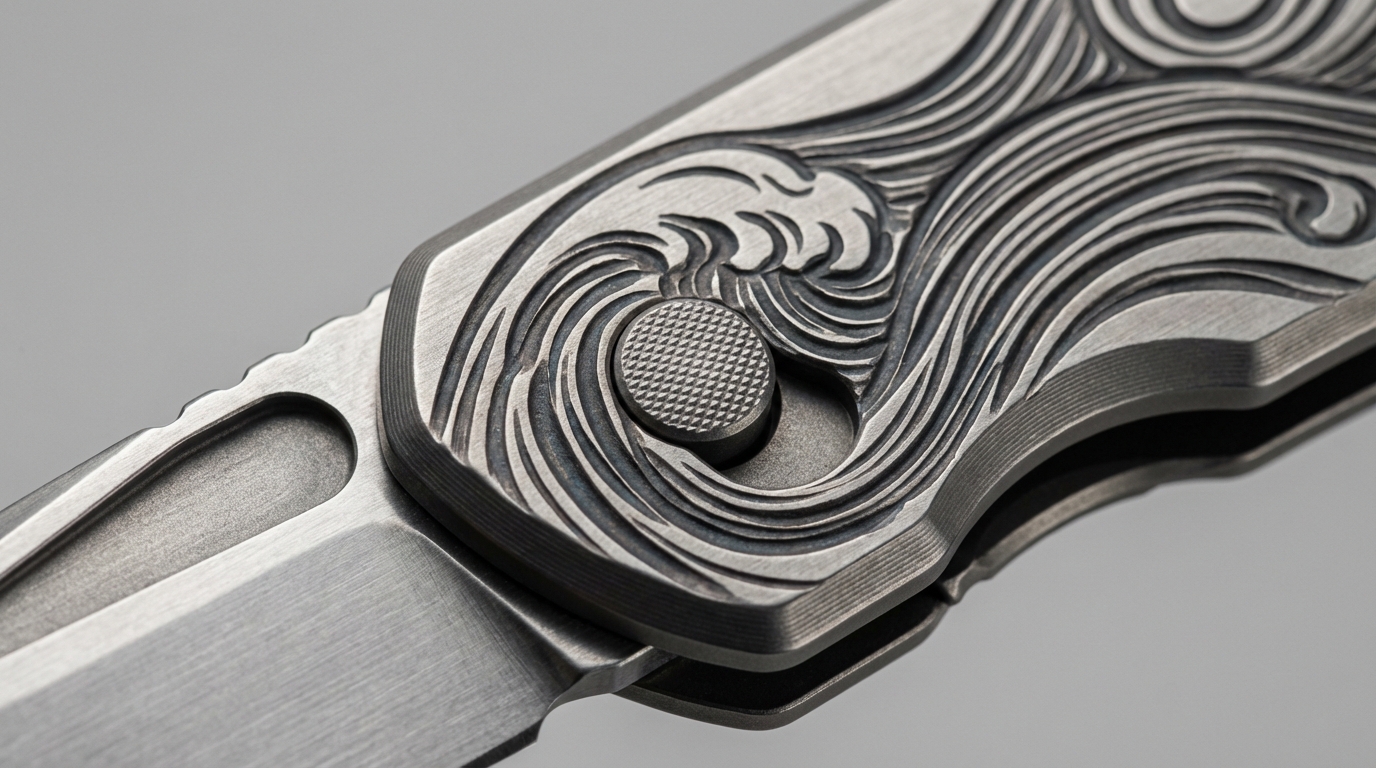
Most importantly, titanium won't corrode when you're cutting through wet cardboard, drywall, or rope. Steel-framed utility knives rust at the pivot, making blade changes progressively harder until you need pliers to extract a seized blade.
Button Lock vs Frame Lock in Utility Knives
Traditional utility knives use frame locks, liner locks, or worse, no lock at all. Frame locks work fine on folders with thick blade stock, but utility blades measure 0.024 inches thick. That creates two problems: the lock bar needs excessive tension to grip properly, which makes disengagement stiff, and repeated locking cycles wear the contact point faster.
Button locks solve both issues. The lock engages perpendicular to the blade rather than parallel, so blade thickness matters less. Disengagement requires deliberate pressure on the button, which sits recessed enough to prevent accidental release but remains easy to operate one-handed.

Gerber EAB Lite Pocket Knife
$15
Compact aluminum utility knife with frame lock and pocket clip. Uses standard contractor blades. Budget-friendly EDC cutter at 2.2 oz.
The ONAMI's button sits on the spine, positioned for thumb activation when holding the knife in a standard grip. This placement also means you can't accidentally press it while cutting, a common complaint with side-mounted buttons that contact your palm during heavy use. If you like the idea of swapping blades and handles, our Hightron Modulus modular titanium knife breakdown asks whether it is worth $262.
Seigaiha Pattern and Surface Finish Options
Seigaiha translates to "blue ocean waves" and appears throughout Japanese art from textiles to ceramics. Dapper Design adapted this pattern for the ONAMI's handle scales, creating a repeating semi-circular wave motif that adds grip texture while staying smooth enough for pocket carry.
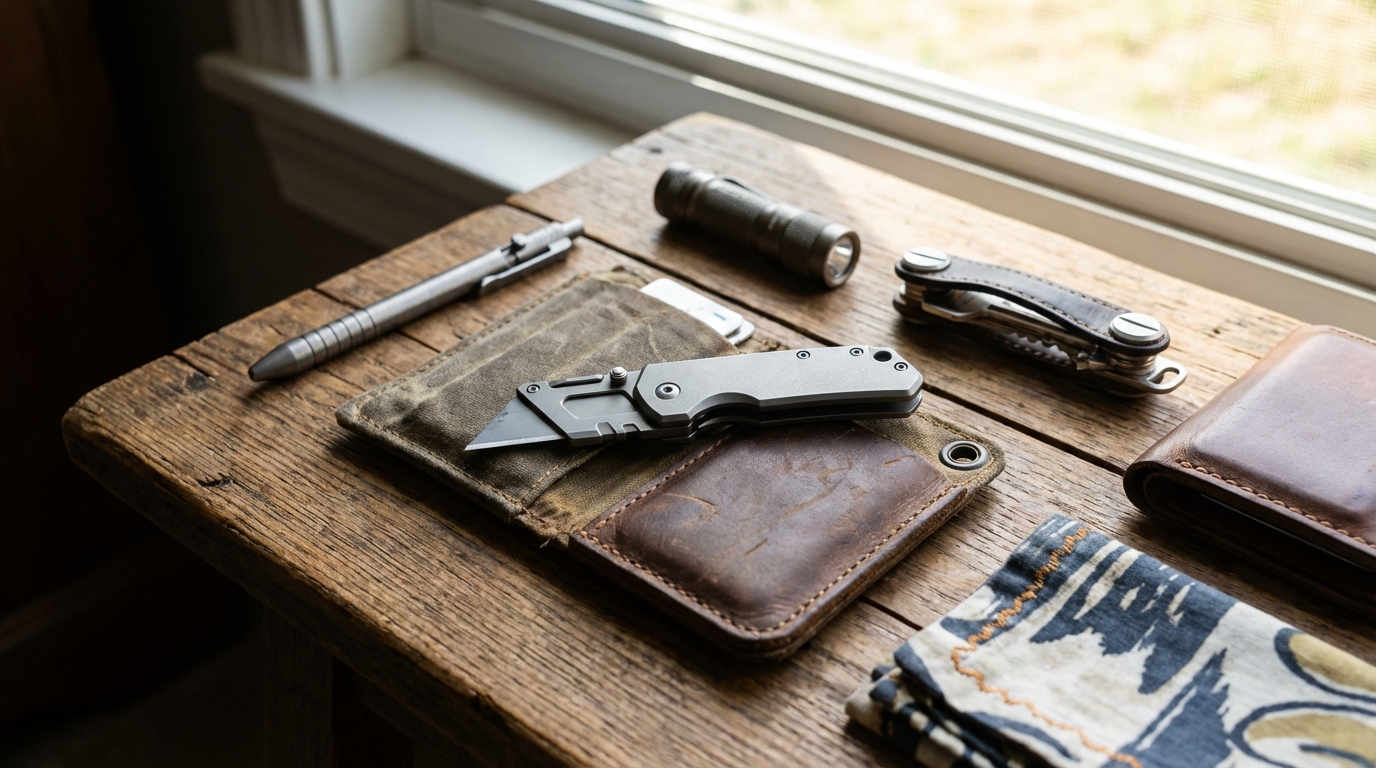
The sandblasted finish offers a uniform matte gray surface with subtle texture. It hides scratches better and provides more grip, especially with wet or gloved hands. The Seigaiha version uses either etching or laser engraving to create the wave pattern, leaving raised and recessed sections that catch light differently.
Both versions ship with a pocket clip, reversible for tip-up or tip-down carry. The clip appears to be titanium as well, based on Kickstarter campaign images, though production units might differ. Small titanium blades are having a moment; our Ti-Toucan and micro titanium knife roundup covers the current crop.

Benchmade 535 Bugout
$170
Lightweight CPM-S30V folding knife at 1.85 oz. Axis lock mechanism and Grivory handles. Premium EDC folder with excellent blade-to-weight ratio.
Blade Compatibility and Replacement Reality
The ONAMI accepts standard utility blades, the same ones you find in hardware stores for $10 per 100-pack. These measure 2.5 inches long, 0.024 inches thick, and come in various edge grinds from straight to hooked to serrated.
Blade replacement requires no tools. Press the button, swing the blade out, slide the old blade off the pivot, slide a new one on, close it. Total time: 10 seconds. Compare that to most folding knives where you either sharpen the blade yourself, mail it to the manufacturer, or buy sharpening systems that cost more than the ONAMI.
The campaign includes 20 replacement blades, enough for years of regular use unless you're a contractor burning through blades daily. When those run out, replacement costs are effectively zero compared to resharpening or replacing premium knife steel.
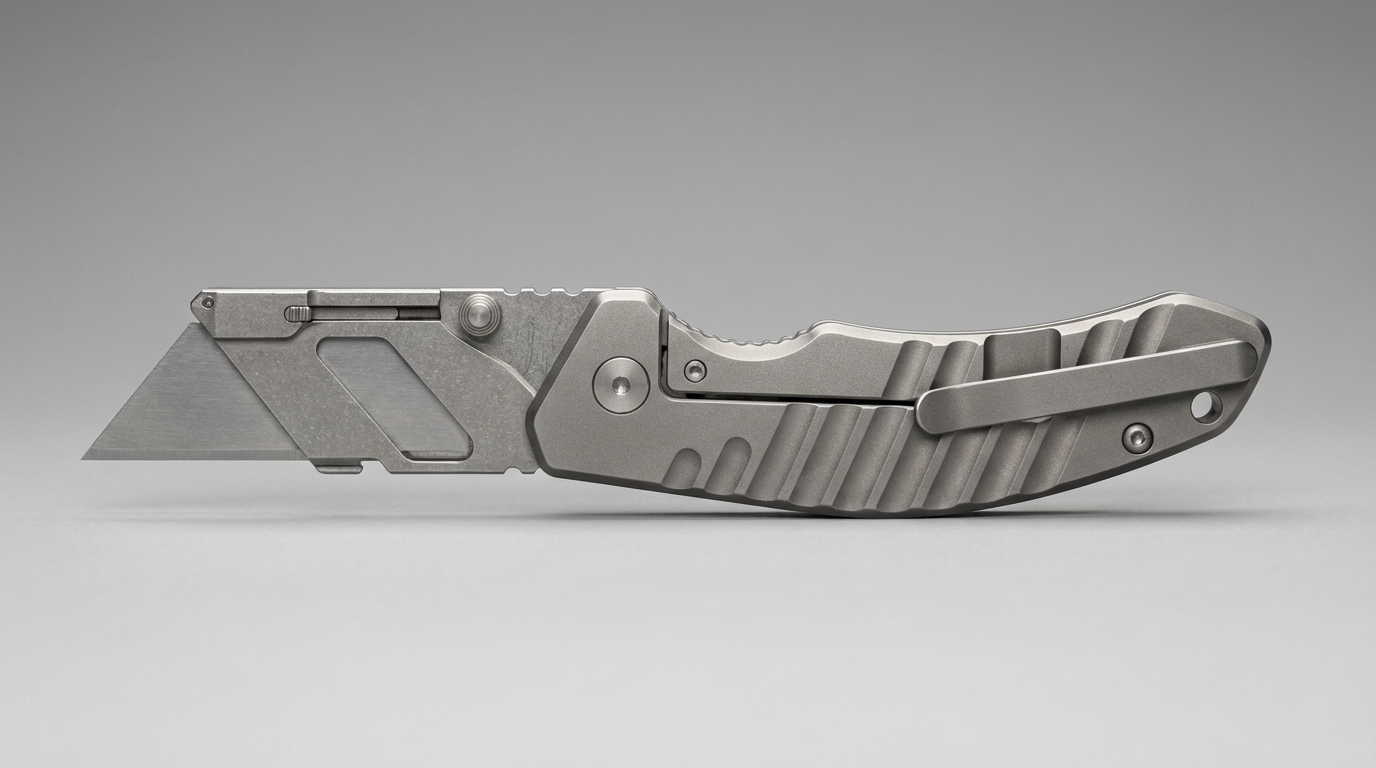
This creates an interesting value proposition. The ONAMI costs $120 for both finishes during the Kickstarter campaign (estimated $74 MSRP for a single knife after launch). That's premium folder territory. But you never pay for blade replacement or sharpening, so lifetime cost becomes competitive with budget knives that need frequent maintenance.

Milwaukee Fastback Utility Knife
$18
Heavy-duty folding utility knife with wire stripper and gut hook. Steel frame with textured grip. Workhorse cutter for contractors and tradespeople.
Who Actually Needs a Titanium Utility Knife
Not everyone. If you already carry a quality folder and only need occasional cutting tasks, adding a utility knife creates redundancy. If you work in construction or warehouse environments where knives get lost, stolen, or destroyed regularly, spending $74 on a titanium utility knife makes no sense.
The ONAMI targets a specific user: someone who values replaceable blades over fixed steel, wants premium materials in their EDC rotation, and appreciates Japanese-inspired design without crossing into overtly tactical aesthetics. You might rotate this with a traditional folder depending on the day's tasks, or use it as your primary EDC cutter if blade sharpness matters more than tip strength.

Spyderco Delica 4
$95
Lightweight VG-10 steel folder with 2.9-inch blade and fiberglass-reinforced nylon handle. Back lock mechanism. Proven EDC knife with excellent ergonomics.
Utility knives excel at precise cutting tasks: opening packages, trimming materials, scoring, and slicing. They struggle with prying, piercing, and anything requiring tip work. The thin blade stock means you can't treat this like a bushcraft knife or hard-use folder.
Material Choices That Matter
Beyond titanium, the ONAMI appears to use stainless steel hardware based on campaign images, though final production specs might vary. The pivot system needs to maintain precise tolerances to keep blade play minimal while allowing smooth deployment.
Button lock springs typically use stainless steel for corrosion resistance and fatigue life. A weak or corroded spring turns a reliable lock into a liability. Dapper Design hasn't published detailed specs on internal components, which is common for Kickstarter campaigns but less helpful for evaluating long-term durability.

Boker Plus Titan Drop
$125
Titanium framelock folder with VG-10 blade. German engineering meets Japanese steel in a compact 2.5 oz package. Premium materials for serious EDC users.
The Kickstarter campaign ships to anywhere in the world with free USA shipping, suggesting international orders pay additional freight. Estimated delivery sits at May 2026, typical for crowdfunded hardware projects with manufacturing in Asia.
Practical Considerations and Trade-offs
Carrying a utility knife instead of a traditional folder means accepting certain limitations. You gain blade sharpness and replacement simplicity. You lose tip strength and blade variety. Standard utility blades come in limited shapes, mostly straight or slightly hooked edges.
The button lock adds complexity compared to basic frame locks, creating more potential failure points. But it also provides better blade retention and safer one-handed operation. This trade-off favors occasional users over people who deploy and fold their knife 50 times daily.
Titanium's lightweight nature works against you in some cutting tasks. Heavier knives let the tool do more work when slicing through tough materials. The ONAMI requires more hand pressure for the same cut compared to steel-framed alternatives, though this rarely matters for typical EDC tasks like opening packages or cutting zip ties.

CRKT Squid Compact Folding Knife
$30
Affordable 8Cr13MoV steel folder with frame lock and glass-reinforced nylon scales. Compact at 3.5 oz. Solid budget EDC for everyday cutting tasks.
Is the ONAMI Worth It?
At $74 MSRP for a single knife, the ONAMI costs more than excellent traditional folders like the Spyderco Delica or Ontario RAT 1. You're paying for titanium construction, Japanese-inspired aesthetics, and the convenience of replaceable blades that never need sharpening.
The Kickstarter campaign offers both finishes for $120, a $28 discount from eventual retail pricing plus 20 replacement blades. If you want both the sandblasted and Seigaiha versions, backing the campaign makes financial sense assuming Dapper Design delivers on schedule.
For single-knife buyers, the decision hinges on whether you value replaceable blades enough to choose utility knife limitations over traditional folder versatility. The ONAMI executes its specific vision well, but that vision serves a narrower use case than most EDC folders.
Dapper Design's previous Kickstarter projects show completed fulfillment, reducing the risk of backing vaporware. Production quality and final specs remain unknowns until backers receive units, typical for any crowdfunded product launching in 2026.
The Weekly Dispatch
Enjoying this article?
Subscribe and get our best gear picks delivered every Sunday morning.
Related Posts
Best EDC Knife Under $50 (2026): 9 Folders by Spec
The best EDC knives under $50, compared by maker specs: Artisan REVEL, CIVIVI Mini Praxis, Kershaw Maneuver, QSP Penguin, CJRB Feldspar and more, with steel, lock, blade length, weight and price at publish (Oct 2026).
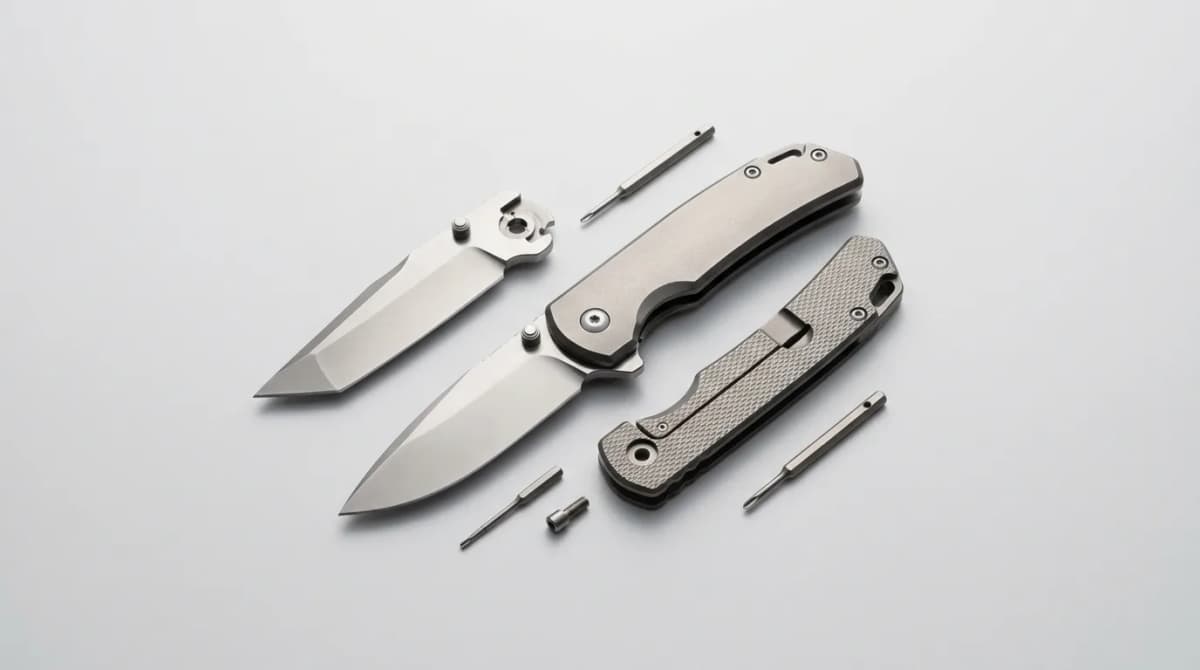
Hightron Modulus: Titanium Knife Worth $262?
Hightron's Modulus swaps blade heads and handle sections without tools. Here are the specs, tiers, real trade-offs and who should back it.
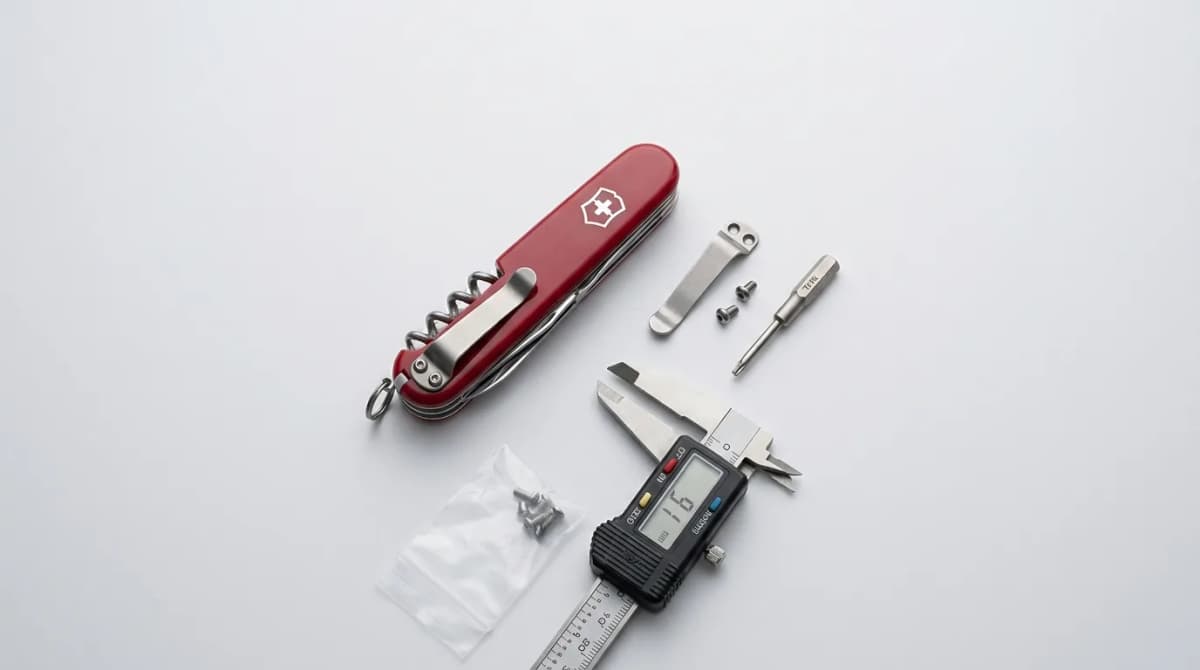
Lamprey91 Swiss Army Knife Clip: Will It Fit?
Tortoise Gear's Lamprey91 adds a pocket clip to 91 mm Victorinox knives with no tools. Check fit, install, pricing and alternatives before you back it.
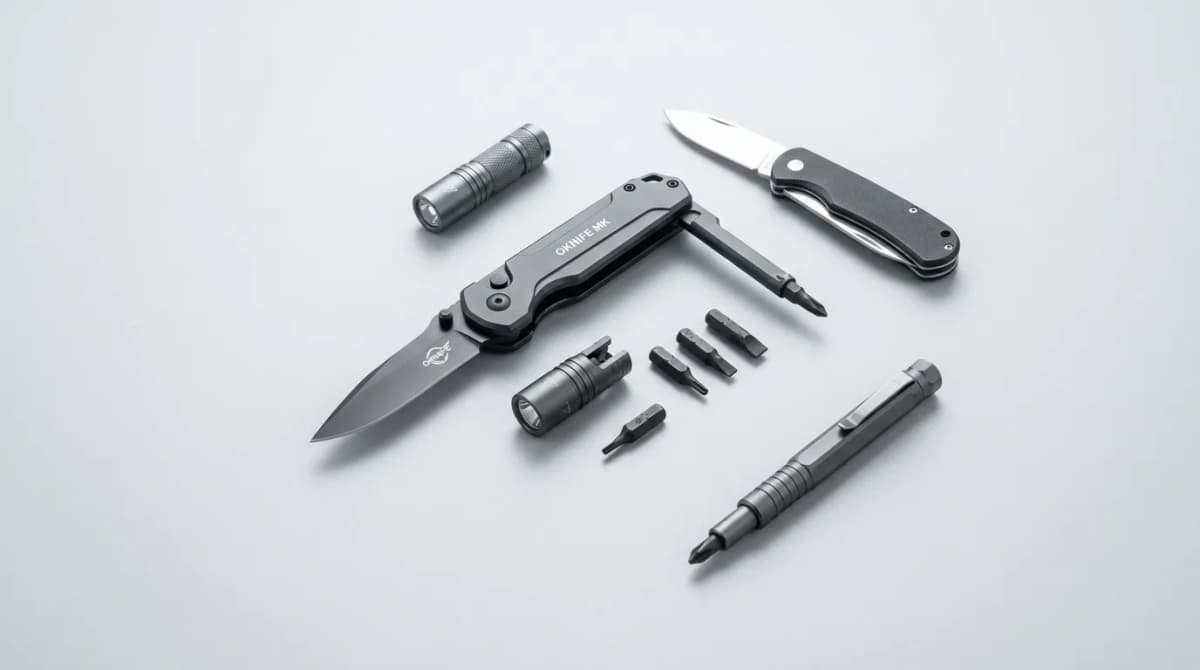
OKNIFE MK Review: 52 g Light, Knife, Driver
The OKNIFE MK packs a 300 lm light, slipjoint blade and 4 mm bit driver into 52 g. Here is what independent tests found and who it actually suits.