Best Pro Controller for PS5 with Back Paddles
Back paddles transform how you play PS5 games. Here are the pro controllers that nail the feature without compromising comfort or response time.

Back paddles change everything about competitive gaming on PS5. You can jump, slide, or reload without ever taking your thumbs off the sticks. That split-second advantage matters in ranked matches, and the difference between a good controller and a poorly designed one shows up immediately.
Quick Picks
Our top recommendations at a glance:
- 1
- 2
- 3
- 4
- 5
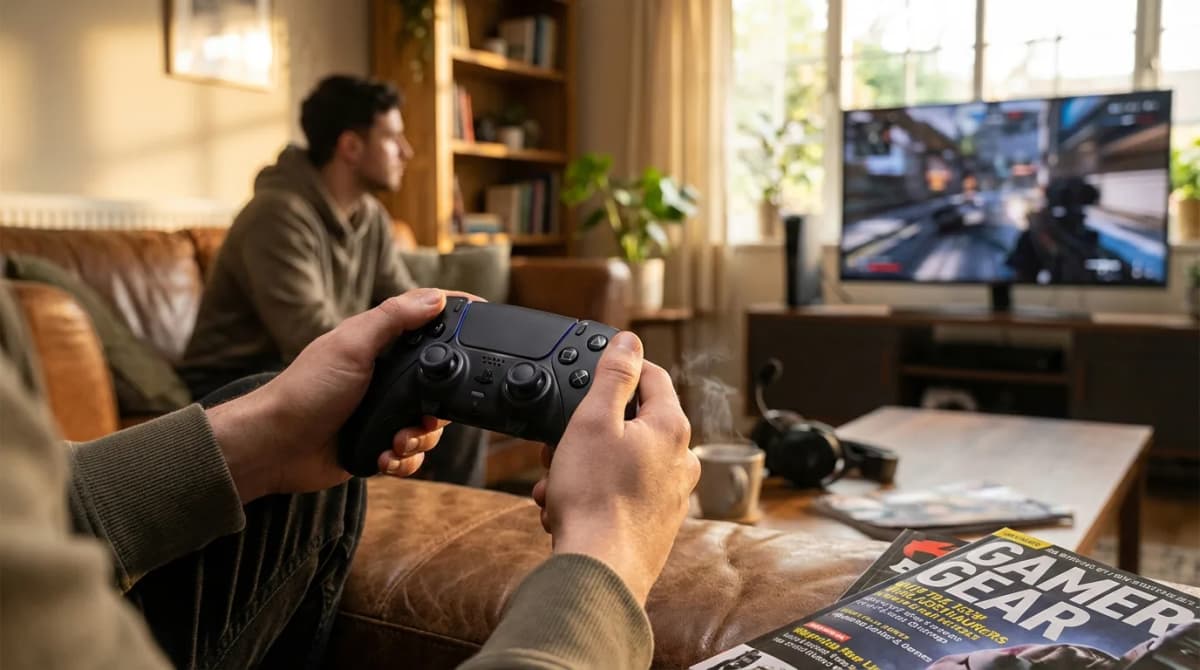
The PS5's DualSense is excellent out of the box, but it lacks back paddles entirely. Sony's official DualSense Edge offers them, but at $200, you're paying for brand recognition more than actual performance. Third-party manufacturers have closed the gap, and some have pulled ahead with better paddle placement, superior build quality, and features Sony doesn't offer.
We compared controllers across different hand sizes, game genres, and price points. Some paddles feel like an afterthought bolted onto a standard controller. Others integrate so naturally you forget they're an upgrade. Here's what actually delivers.
Sony DualSense Edge: The Official Option
Sony's own pro controller includes all the DualSense features you know (haptic feedback, adaptive triggers) plus back buttons, adjustable stick tension, and swappable stick caps. The paddles are small, lever-style buttons that sit flush when not in use. They work, but the design is conservative compared to what third parties offer.
The real limitation is battery life. The DualSense Edge lasts about 5-6 hours on a full charge, roughly half what the standard DualSense delivers. For a $200 controller, that's hard to justify. You get a braided USB-C cable and a carrying case, but those don't solve the core problem.

Sony DualSense Edge Wireless Controller
$200
Official PS5 pro controller with back buttons, adjustable stick tension, and full DualSense feature support. Battery life is notably shorter than standard DualSense.
Build quality is solid. The sticks use hall-effect sensors to reduce drift, and the trigger stops are useful for competitive shooters. If you value adaptive triggers and haptics above everything else, this is your only option with back paddles. But most competitive players disable those features anyway to maximize response time.
SCUF Reflex Pro: Paddle Placement Done Right
SCUF has been building pro controllers for years, and the Reflex Pro shows that experience. Four removable paddles sit exactly where your middle and ring fingers rest naturally. They're larger than Sony's implementation and require less pressure to activate. You can remove two paddles if you prefer a two-paddle setup.
The Reflex Pro comes in wired and wireless versions. The wireless model uses the same battery as a standard DualSense and lasts about 9-10 hours, significantly better than the DualSense Edge. You lose adaptive triggers and haptic feedback, which is a dealbreaker for some and an advantage for others. Competitive FPS players generally prefer the instant, consistent feedback of standard rumble.

SCUF Reflex Pro Wireless Controller
$200
Four removable back paddles with excellent placement, standard rumble instead of haptics, and better battery life than DualSense Edge. Available in wireless and wired versions.
Build quality matches the price point. The faceplate is interchangeable, and SCUF offers different thumbstick options. The paddles themselves are metal, not plastic, and feel more durable than most competitors. If a paddle breaks, SCUF sells replacements individually instead of forcing you to buy a full set.
Customization goes deep if you order directly from SCUF. You can choose trigger heights, thumbstick types, and color schemes before the controller ships. That level of personalization costs time (2-3 week lead times are common) but lets you dial in exactly what you want.
HexGaming Rival Pro: Aggressive Ergonomics
HexGaming builds controllers for players with larger hands who grip hard during intense matches. The Rival Pro has a thicker grip than standard DualSense controllers, and the back shell extends slightly to accommodate the paddle mechanism. Four paddles come standard, positioned lower than SCUF's design.
This placement works better if you use a claw grip or tend to curl your fingers underneath the controller. The paddles respond with a short, clicky activation. Some players love the tactile feedback. Others find it too aggressive, especially during long sessions where accidental presses become an issue.

HexGaming Rival Pro Controller
$240
Thicker grips and lower paddle placement designed for claw grip styles. Four clicky paddles with short travel, textured faceplate, and customizable thumbstick tension.
HexGaming includes adjustable thumbstick tension out of the box, similar to what Sony offers on the DualSense Edge but with a wider range. You can go looser or tighter depending on whether you play battle royales (where broad, sweeping camera movements matter) or tactical shooters (where small corrections dominate).
Like SCUF, HexGaming drops adaptive triggers and haptics in favor of traditional rumble motors. Battery life sits around 8-9 hours. The controller uses standard DualSense connectivity, so you don't need additional dongles or software to pair it with your PS5.
Aim Controllers PS5 Modded Controller: Budget-Friendly Entry
Aim Controllers takes standard DualSense controllers and adds back paddles through a modification process. You keep adaptive triggers, haptics, and the built-in speaker. The trade-off is that the paddles feel less integrated than controllers designed from scratch with paddles in mind.
The paddles attach via a removable module that clips onto the back. Two paddles come standard, positioned high near the L2/R2 triggers. They work, but they protrude more than other designs. If you rest the controller on a flat surface, it wobbles slightly. During gameplay, that doesn't matter, but it's noticeable when you set it down.

Aim Controllers PS5 Modded Controller
$150
Modified DualSense with clip-on back paddle module. Retains all standard DualSense features including adaptive triggers and haptics at a lower price point.
Price is the main draw here. At $150, you're spending $50 less than Sony's DualSense Edge while keeping features that controller includes. Aim Controllers also offers cosmetic customization during the order process - different faceplates, LED colors, and thumbstick styles.
The modification process is reliable. Aim Controllers has been doing this since the PS4 era, and warranty support is solid. If something breaks, they'll repair or replace it. Just expect longer turnaround times than major manufacturers offer.
Victrix Pro BFG: Modular and Overbuilt
Victrix takes a different approach with the Pro BFG. This is a wired-only controller built like a tank. The body is thicker and heavier than any other option here, with a metal frame inside the plastic shell. Four back paddles are removable, and Victrix includes 14 different thumbstick and paddle combinations in the box.
The paddles themselves are the largest in this roundup. They extend about 8mm from the back shell and require moderate pressure to activate. If you have small hands or prefer a minimal controller profile, this won't work for you. But if you want paddles you can't possibly miss during a firefight, these are perfect.

Victrix Pro BFG Wired Controller
$180
Wired-only controller with metal frame, four large removable paddles, and 14 included thumbstick and paddle configurations. Heaviest option tested, built for durability over portability.
Being wired eliminates input lag entirely and means you never worry about battery life. The included cable is 10 feet long and braided for durability. The connector uses a locking mechanism, so aggressive movements won't unplug it mid-match.
Victrix includes audio controls directly on the controller. Volume up, volume down, and mic mute buttons sit on the front edge. That's genuinely useful if you're running a headset through the controller's 3.5mm jack. Most pro controllers skip this entirely.
eXtremeRate Back Buttons Attachment: DIY Upgrade
Not everyone wants to buy a new controller. eXtremeRate sells a back button attachment that works with standard DualSense controllers you already own. Installation requires opening the controller shell and connecting a ribbon cable to the internal board. If you're comfortable with basic electronics, it takes about 20 minutes. If you're not, this will frustrate you.
The attachment adds two paddles positioned near the center of the back shell. They're smaller than dedicated pro controller paddles but larger than Sony's DualSense Edge buttons. The PCB includes programmable mapping, so you can assign any face button to either paddle through a button combination.

eXtremeRate Remap Board with Back Buttons for PS5
$40
DIY back button attachment for standard DualSense controllers. Requires opening the controller to install. Two paddles with programmable button mapping.
This is the cheapest way to add back paddles to a PS5 controller, but it voids Sony's warranty. The installation process involves removing about a dozen screws, carefully routing a ribbon cable, and reassembling everything without breaking the fragile plastic clips that hold the shell together.
If you already have a DualSense you like and just want paddles without spending $150+, this works. The paddles feel responsive once installed, and the mapping process is straightforward. Just know that if anything goes wrong during installation, you're on your own.
What to Look for in a Back Paddle Controller
Paddle placement matters more than paddle count. Four paddles sound better than two, but if they're positioned awkwardly, you'll end up removing half of them anyway. Think about how you grip the controller naturally and choose a design that matches.
Response time determines whether paddles feel instant or sluggish. Wireless controllers introduce minimal lag (under 5ms on most modern designs), but wired options eliminate it entirely. For competitive play, wired is still the gold standard.
Battery life becomes critical once you're gaming for more than a few hours straight. The DualSense Edge's 5-6 hour runtime is borderline unacceptable for a pro controller. Third-party options typically last 8-10 hours, and wired controllers eliminate the issue.
Build quality separates controllers that last years from ones that fail in months. Metal paddles outlast plastic. Replaceable components (sticks, paddles, cables) extend lifespan. If a company sells replacement parts individually, that's a good sign they expect people to use these controllers hard.
Do You Actually Need Back Paddles?
It depends on what you play. Fast-paced shooters benefit immediately. Being able to jump or slide without moving your thumb off the right stick keeps your aim steady during movement. That's a measurable advantage in games like Call of Duty, Apex Legends, or Destiny 2.
Single-player games and slower-paced titles see less benefit. If you're playing a story-driven RPG or a turn-based strategy game, back paddles don't add much. You're paying for a feature you won't use consistently.
The adjustment period is real. Expect to hit paddles accidentally for the first few hours while your muscle memory adapts. Start by mapping just one or two functions to the paddles instead of trying to use all four immediately. Once those feel natural, add more.
Competitive players almost universally prefer controllers with back paddles once they adapt. Casual players split 50/50. Some love the added functionality. Others find it unnecessary for how they play. If you're unsure, the eXtremeRate DIY option lets you test the concept for $40 before committing to a $200 controller.
Final Take
The SCUF Reflex Pro hits the best balance of paddle placement, build quality, and battery life. It costs the same as Sony's DualSense Edge but lasts longer per charge and uses more durable paddles. You lose adaptive triggers and haptics, which matters if you play a lot of single-player games that showcase those features.
HexGaming's Rival Pro works better for players with larger hands or aggressive grip styles. The thicker body and lower paddle placement suit claw grips specifically. It's the best-suited option here for extended sessions if you fit the target ergonomics.
Sony's DualSense Edge makes sense only if adaptive triggers and haptics are non-negotiable. Battery life is frustrating, but it's the only pro controller that retains the full DualSense experience. Competitive players generally don't care about those features, but if you split time between ranked multiplayer and cinematic single-player games, it covers both.
The Victrix Pro BFG dominates if you're wired-only and want something nearly indestructible. It's overkill for most players but perfect if you've broken multiple controllers through heavy use.
For budget-conscious players, Aim Controllers delivers back paddles at a lower price while keeping all DualSense features. The eXtremeRate DIY kit costs even less but requires technical skill and voids warranties. Both work if you're willing to accept compromises.
The Weekly Dispatch
Enjoying this article?
Subscribe and get our best gear picks delivered every Sunday morning.
Related Posts
Best Budget Gaming Keyboard Under $75 2026
Finding a gaming keyboard that performs well without emptying your wallet is easier than ever. These budget picks deliver mechanical switches and features that matter.
GameSir Tracer Pro Lightgun Review: Worth It?
We break down the GameSir Tracer Pro's specs, features and price to see who it's for, covering accuracy, latency and comfort in lightgun gaming.
Best Gaming Chair Under $300 Worth Buying 2026
Budget gaming chairs have improved dramatically. We compared top options under $300 by maker specs for comfort, build quality and support.

Best Gaming Headset with Microphone Under $100
Top gaming headsets under $100 that deliver clear audio and reliable mics without sacrificing comfort or build quality during long sessions.