Best Portable Water Filter for Hiking 2026
The right water filter transforms backcountry trips. We compared leading portable filters by maker specs for weight, flow rate and filtration.
A blister on day two ruins a hike faster than bad weather. So does stomach trouble from questionable water. The difference between a reliable filter and a problematic one isn't just convenience. It's the gap between finishing strong and limping back early.
Quick Picks
Our top recommendations at a glance:
- 1
- 2
- 3
- 4
- 5
We compared eight portable water filters for everything from quick day hikes to five-day backcountry trips. Weight matters, but so does flow rate when you're standing at a creek with three empty bottles. Durability matters when you're 30 miles from the trailhead. And versatility matters when water sources range from clear alpine streams to murky desert springs.
Here's what actually works.
Sawyer Squeeze: The Benchmark for Versatility
The Sawyer Squeeze has dominated for years because it solves multiple problems at once. At 3 ounces, it's light enough for ultralight packs but robust enough for group trips. The 0.1-micron hollow fiber membrane removes 99.99999% of bacteria and 99.9999% of protozoa, which covers giardia, cryptosporidium, E. coli, and everything else you'll encounter on North American trails.
What sets it apart is the squeezable pouch system. Fill the bag, screw on the filter, squeeze into your bottle. Fast flow rate means you're not standing there for five minutes per liter. The inline option lets you drink directly from a hydration bladder, and the gravity setup works for base camps when you need to filter large volumes.
The 32-ounce pouches feel flimsy at first, but they've proven durable through dozens of trips. We've had one spring a small leak after heavy use, but Sawyer's warranty covers that. The key is not over-tightening the filter threads.
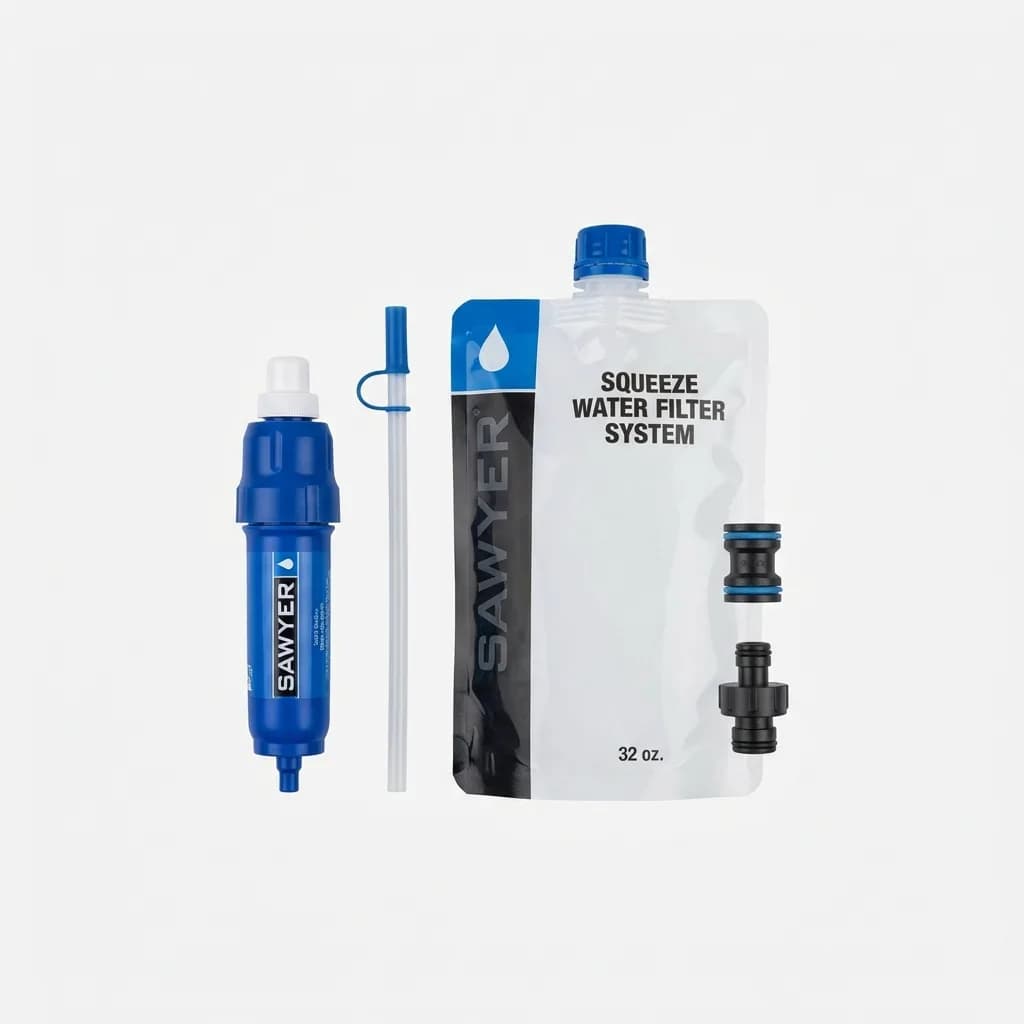
Sawyer Squeeze Water Filter System
$45
Ultralight 3-ounce filter with 0.1-micron hollow fiber membrane. Removes 99.99999% of bacteria and 99.9999% of protozoa. Includes 32-ounce collapsible pouch.
One downside: the filter needs backflushing after heavy use. Carry the included syringe and flush every few trips to maintain flow rate. Takes two minutes and prevents frustration later.
LifeStraw Peak Series: Ultralight Performance
LifeStraw evolved beyond the original straw design, and the Peak Series justifies the upgrade. The collapsible squeeze bottle weighs 2.1 ounces and packs down to nearly flat, which matters when every cubic inch counts. The membrane matches Sawyer's 0.1-micron rating for bacteria and protozoa removal.
The integrated bottle design eliminates fumbling with separate pouches and filters. Squeeze to drink or fill another container. Flow rate is faster than expected for such a compact system. We pushed 1.5 liters through in under three minutes, which beats many larger filters.
The bottle holds 650 milliliters, smaller than Sawyer's pouches but adequate for solo hikers who refill frequently. The cap design is built to prevent leaks in side pockets. The membrane lasts for 2,000 liters before replacement, roughly two seasons of heavy use.
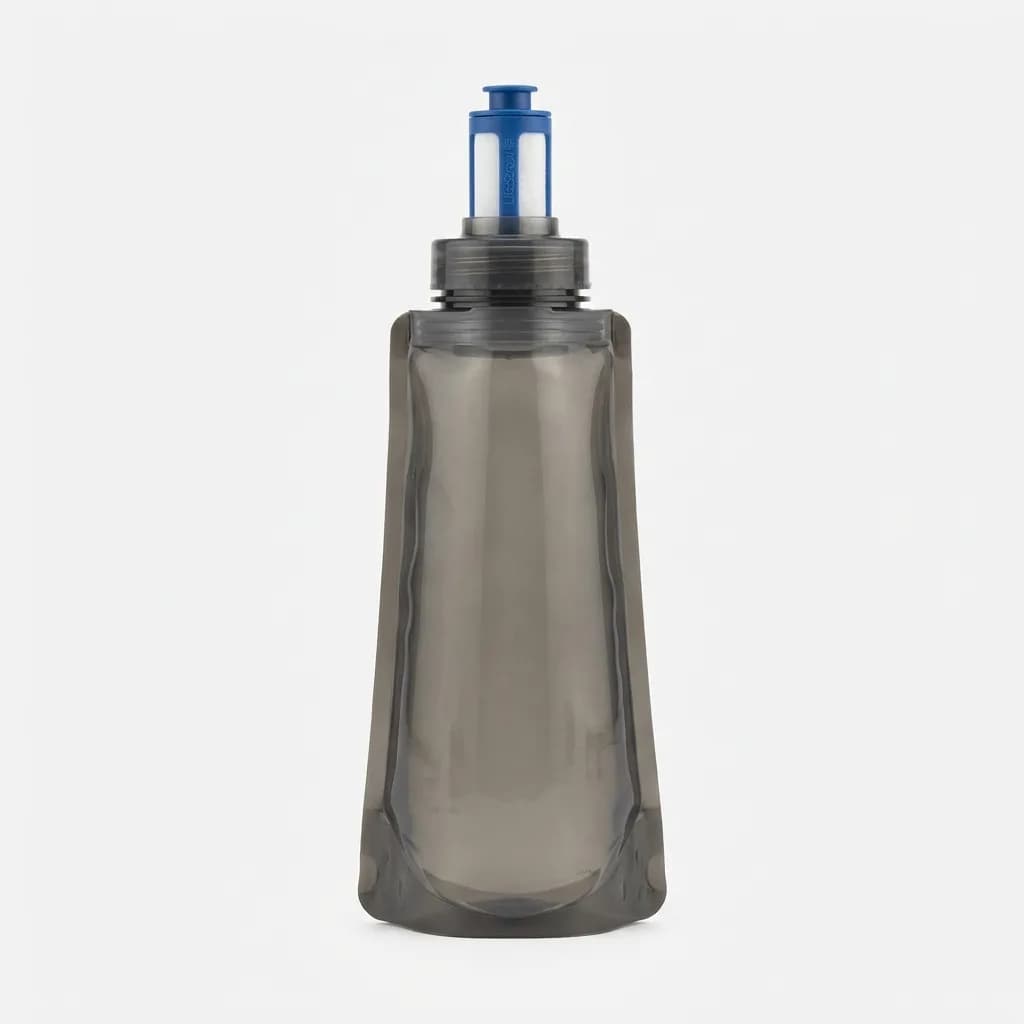
LifeStraw Peak Series Collapsible Squeeze Bottle
$50
Ultra-compact 2.1-ounce filter bottle. 0.1-micron membrane removes bacteria and protozoa. Collapses flat and holds 650ml. 2,000-liter filter life.
The Peak Series costs more than basic LifeStraw products, but the weight savings and packability justify it for serious backpackers. Not ideal for groups - you'll want something with higher capacity.
Katadyn BeFree: Speed When It Matters
The BeFree prioritizes flow rate above everything else, and it shows. 2 liters per minute through the 0.1-micron hollow fiber filter means you're not waiting around. For fast-paced hikers and trail runners who stop briefly at water sources, this speed advantage is real.
The collapsible flask design integrates with Hydrapak bottles, giving you a soft bottle that doubles as a filter. The wide-mouth opening makes filling from shallow sources easier than narrow-mouth competitors. Screw the cap on, squeeze or shake to filter. Simple system with fewer parts to fail.
Weight sits at 2.3 ounces for the 1-liter version, competitive with top ultralight options. The membrane lasts 1,000 liters, shorter than Sawyer or LifeStraw, but still covers a full season of weekend trips.
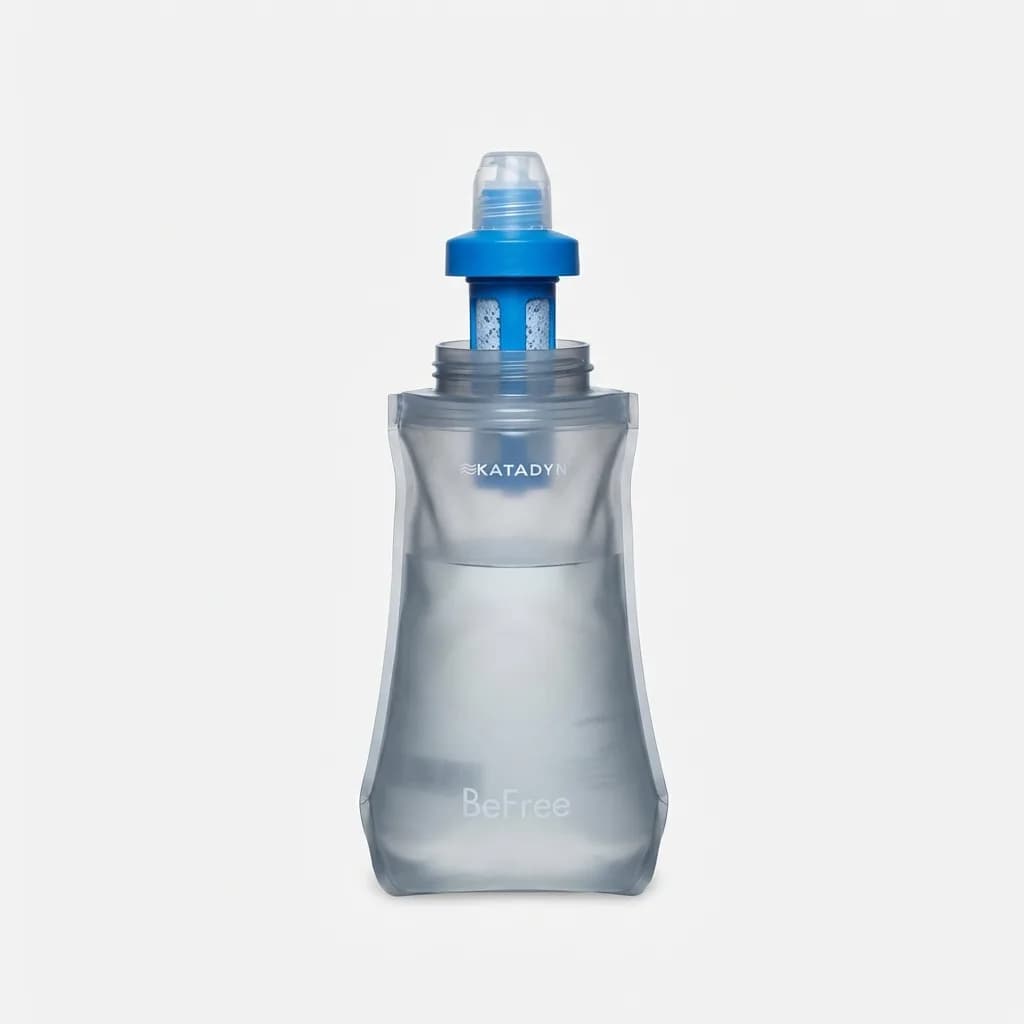
Katadyn BeFree Water Filter 1L
$45
Fast-flow 0.1-micron filter with 2 liters per minute output. Collapsible 1-liter flask weighs 2.3 ounces. Wide-mouth design for easy filling.
The BeFree requires shaking or swishing to maintain flow rate instead of backflushing. Easier in the field but less thorough for deep cleaning. Some users report flow rate dropping significantly after extended use.
Best for solo hikers covering high mileage who value speed over maximum filter lifespan.
MSR Guardian: Overkill That's Worth It
The Guardian costs three times more than budget filters and weighs 17.3 ounces. It also removes viruses, self-cleans with every pump, and handles the nastiest water sources worldwide. For international trekking or situations where you can't risk getting sick, it's the only option worth considering.
The pump system pushes 2.5 liters per minute through a 0.02-micron hollow fiber filter. That smaller pore size catches viruses (0.02 microns vs 0.1 microns for standard filters), critical in regions where viral contamination is a concern. The self-cleaning mechanism diverts 10% of water to backflush the filter with every stroke, maintaining flow rate automatically.
Build quality exceeds everything else here. Military-grade construction, replaceable cartridges, and a 10-year warranty reflect the design intent. This isn't for weekend warriors. It's for extended expeditions where filter failure means mission failure.
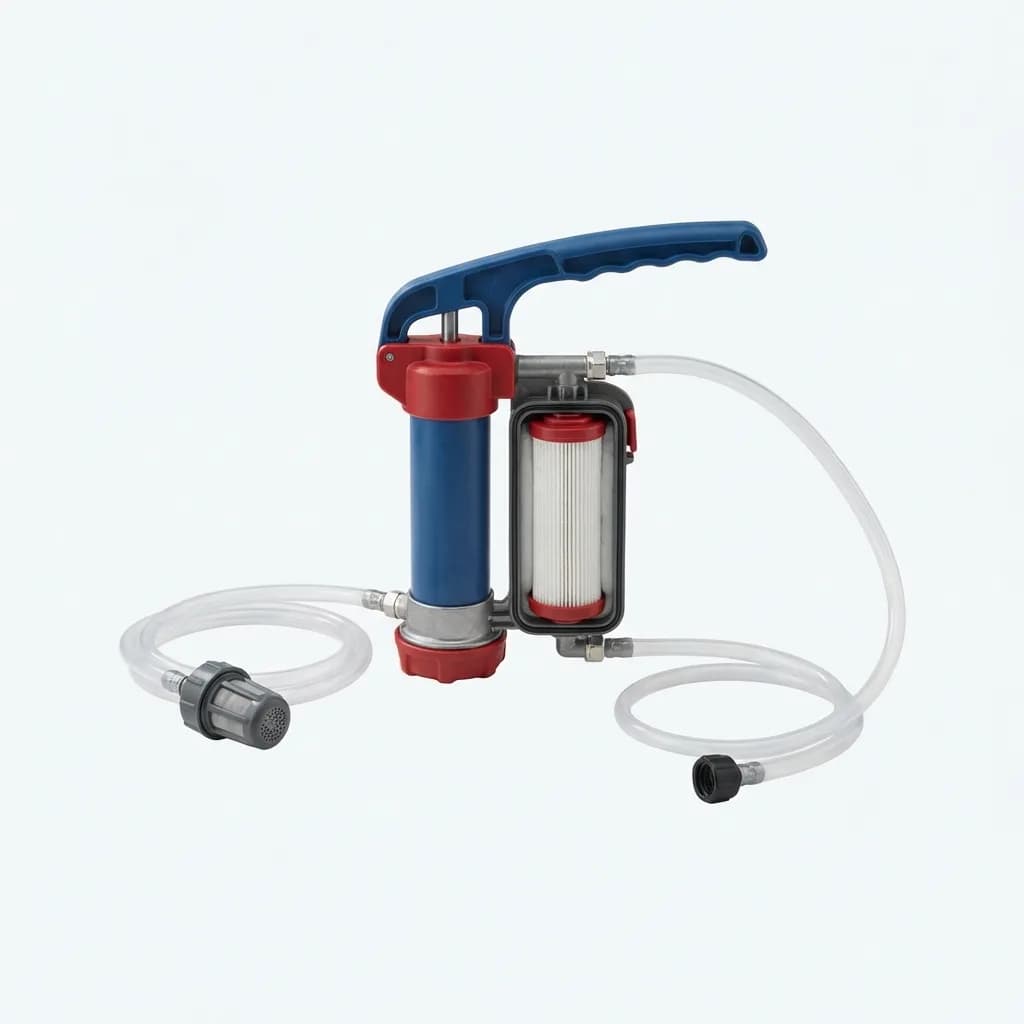
MSR Guardian Purifier Pump
$350
Expedition-grade 17.3-ounce pump filter removes viruses, bacteria, and protozoa. 0.02-micron filter self-cleans automatically. Pumps 2.5 liters per minute with 10-year warranty.
The weight penalty matters for backpacking but becomes irrelevant when you're filtering for a group or facing questionable water quality. Where viral contamination is a real risk, the peace of mind justifies carrying extra weight.
Not necessary for most North American trails where bacteria and protozoa are the main concerns. But for international travel or high-stakes situations, it's the gold standard.
Platypus QuickDraw: Budget Simplicity
The QuickDraw strips away features to hit an aggressive price point, and the result works better than expected. At 2.75 ounces and typically under $40, it competes with Sawyer for value. The 0.1-micron hollow fiber filter matches the standard for bacteria and protozoa removal.
The integrated bottle design avoids separate pouches. Fill the 1-liter reservoir, drink through the built-in bite valve or squeeze into another container. Flow rate is adequate though not exceptional.
Build quality feels lighter than competitors. The bottle material is thinner, which reduces weight but raises durability questions. It's worth handling more gently than the Sawyer system.
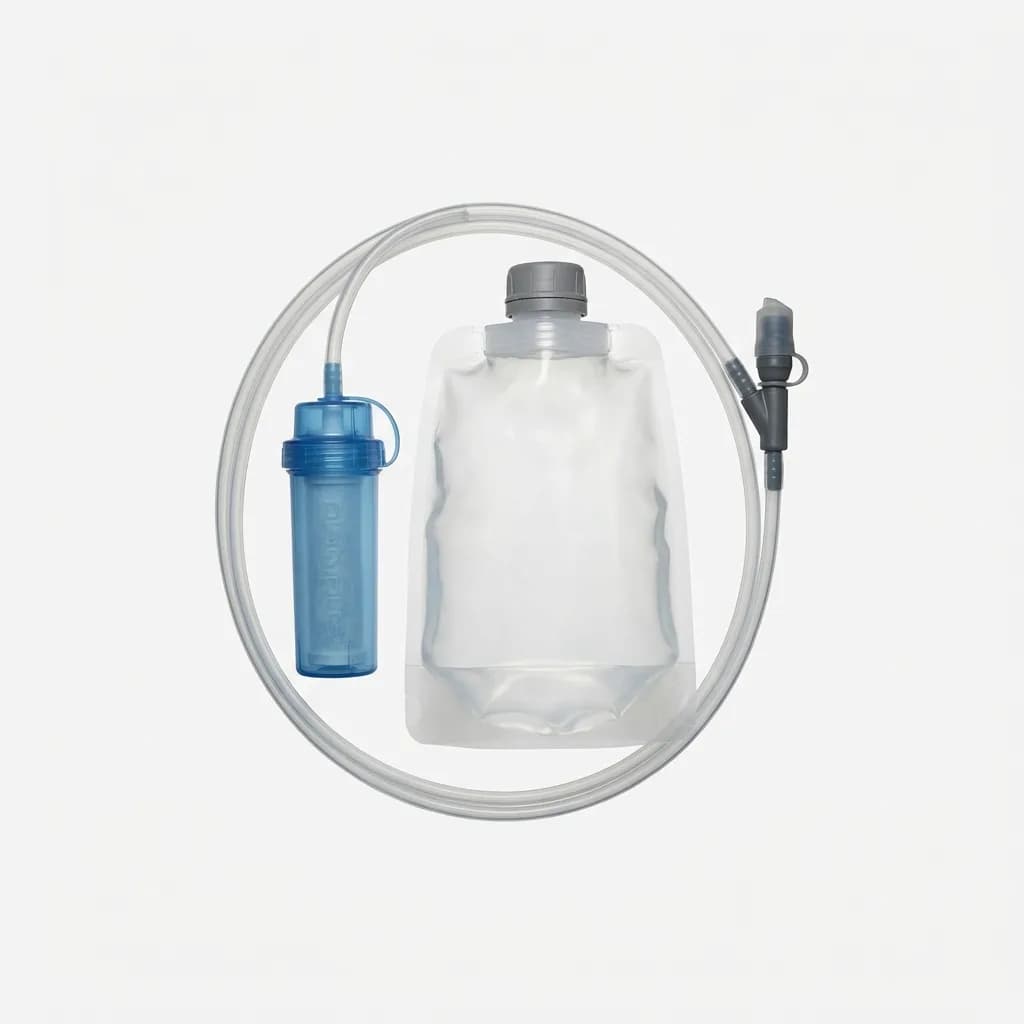
Platypus QuickDraw Water Filter System
$40
Budget-friendly 2.75-ounce filter with 1-liter collapsible bottle. 0.1-micron hollow fiber membrane. Integrated bite valve and squeeze design. 1,000-liter filter life.
The QuickDraw makes sense for casual hikers who need reliable filtration without premium features. Not the lightest, fastest, or most durable, but it covers the basics at a price that won't make you hesitate before your first backpacking trip.
What About Purification Tablets and UV Options?
Chemical tablets (Aquamira, Potable Aqua) work as backup or when weight matters more than taste. Chlorine dioxide tablets kill everything including viruses, but they take 30 minutes to 4 hours depending on water temperature. The chemical taste bothers some users. We carry tablets as emergency backup but prefer filters for daily use.
UV purifiers like the SteriPEN eliminate microorganisms in 90 seconds but require batteries and clear water. They struggle with sediment and particles. Weight is competitive (around 3 ounces with batteries), but the electronics add a failure point. Good for international travel where viral contamination is a concern and water is relatively clear.
Boiling remains the most reliable method when you have fuel and time. Brings water to a rolling boil, let it cool. Zero equipment weight if you're already carrying a stove. Impractical for filtering multiple liters throughout the day.
Filter Life and Maintenance Reality
Manufacturer ratings (1,000 to 100,000 liters) assume ideal conditions. Real-world filter life depends on water quality and maintenance. Silty desert water clogs filters faster than clear alpine streams.
Backflushing extends filter life significantly. Sawyer, MSR, and similar filters include syringes or built-in cleaning systems. Flush after every few trips or when flow rate drops noticeably. Takes a few minutes and can double practical filter life.
Store filters dry to prevent mold and bacteria growth. After your trip, backflush, shake out excess water, and let air dry completely. Never store a damp filter in a sealed bag.
Cold weather requires special care. Hollow fiber membranes fail if water freezes inside the tubes. In winter conditions, keep your filter inside your jacket or sleeping bag at night. If it freezes, assume it's compromised and replace it.
How to Choose Your Filter
Start with expected use. Solo hikers covering big miles need lightweight systems with decent flow rates - LifeStraw Peak Series or Sawyer Squeeze. Groups benefit from higher capacity or gravity systems - Sawyer Squeeze with multiple pouches or MSR AutoFlow.
Water source quality matters. Clear mountain streams work with any filter. Murky water with visible sediment benefits from pre-filtering through a bandana or coffee filter before running through your main filter. This protects the membrane and maintains flow rate.
International travel raises the stakes. Most portable filters remove bacteria and protozoa but not viruses. For regions where viral contamination is a concern (parts of Asia, Africa, South America), use the MSR Guardian or combine a standard filter with chemical treatment.
Duration affects choices too. Weekend trips tolerate heavier but more versatile systems. Thru-hikes demand lightweight, durable options with long filter life. Multi-week expeditions may justify the MSR Guardian's weight for its reliability and self-cleaning features.
The Real-World Winner
For most hikers on most trails, the Sawyer Squeeze remains the best balance. Light enough for ultralight packs, versatile enough for various setups, and reliable across thousands of filtered liters. The squeeze pouch system works for quick filtering or gravity setups. At $45, it's affordable enough to buy and try without major investment.
The LifeStraw Peak Series edges ahead for gram-counters who don't need versatility, and the Katadyn BeFree wins for speed-focused trail runners. The MSR Guardian is overkill for most situations but unmatched when stakes are high.
Budget shoppers should grab the Platypus QuickDraw and spend the savings on other gear. It covers the basics reliably.
The worst choice is no filter at all. Even clear mountain water carries risks. Giardia doesn't care how remote the stream looks. A $40 filter prevents days of misery and potentially trip-ending illness.
Pick one, learn how it works, maintain it properly, and you'll have reliable water access for years of trails.
The Weekly Dispatch
Enjoying this article?
Subscribe and get our best gear picks delivered every Sunday morning.
Related Posts
Best Dry Bags for City and Travel Use
Dry bags aren't just for kayakers anymore. Here's how to pick the right waterproof roll-top bag for urban carry, travel, and everyday protection.
Best Car Emergency Kits Worth Keeping in Your Trunk
The best car emergency kits combine first aid, tools, and survival essentials. We break down what actually matters when you are stranded roadside.
Best Rain Jacket for Hiking Under $150 2026
We compared 12 rain jackets under $150 by maker specs, materials and price. Here's what matters when budget meets weather protection.
Best Outdoor GPS Watch for Hiking Under $400
Finding a capable GPS hiking watch under $400 means understanding what specs matter on the trail and which premium features you can skip.