EDC··10 min read

Best EDC Pouch for Organizing Small Items

Stop digging through your bag for loose items. These EDC pouches keep cables, tools, and pocket gear organized with smart layouts and durable materials.

By Jerry Miller
Best EDC Pouch for Organizing Small Items

Your USB drive is loose at the bottom of your backpack again. So is that charging cable, the earbuds you swore you put in the side pocket, and three pens you can't actually find when you need one. The problem isn't that you carry too much. It's that small items need containment, or they turn every bag into a black hole.

Advertisement

An EDC pouch solves this by creating dedicated real estate for the things that matter most. The right one keeps your gear accessible without requiring you to dump everything onto a table. The wrong one adds bulk, blocks zippers with its own zipper pulls, or makes you wish you'd just used a ziplock bag instead.

We've tested dozens of these over the past three years. Some disappeared into desk drawers after a week. Others became permanent fixtures in daily bags, work kits, and travel setups. Here's what actually works.

What makes a good EDC organizer pouch

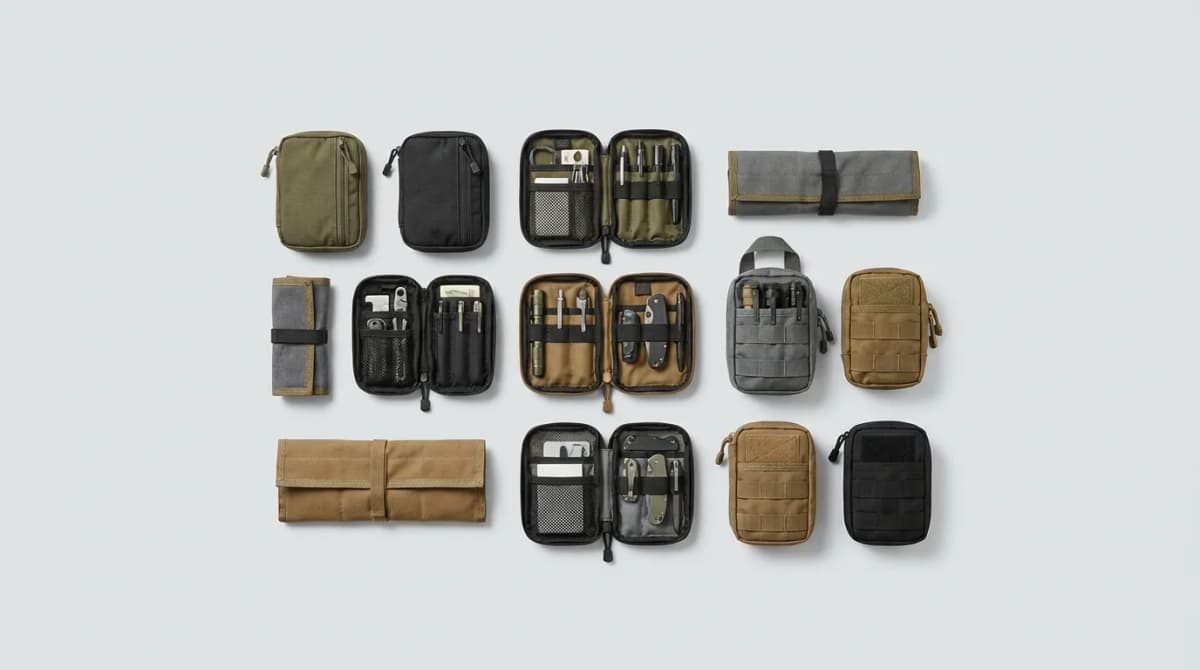
Size matters more than you'd think. A pouch that's too small forces you to leave things out or cram items into spaces they don't fit. Too large and it eats up bag space while half-empty. The sweet spot is 6-8 inches wide and 4-5 inches tall. That fits in most backpack pockets, briefcase compartments, and glove boxes without playing Tetris every time you pack.

Pocket layout separates winners from also-rans. Elastic loops work for pens and small tools. Mesh zipper pockets handle cables and adapters. Open slip pockets are perfect for cards or flat items. A good pouch has all three. A mediocre one relies too heavily on one type and leaves you improvising.

Material choice determines whether this thing lasts two months or two years. Ripstop nylon with a water-resistant coating handles daily abuse. Ballistic nylon adds puncture resistance if you carry sharp tools. Canvas looks better but shows wear faster. YKK zippers are non-negotiable - house-brand zippers fail at the worst times.

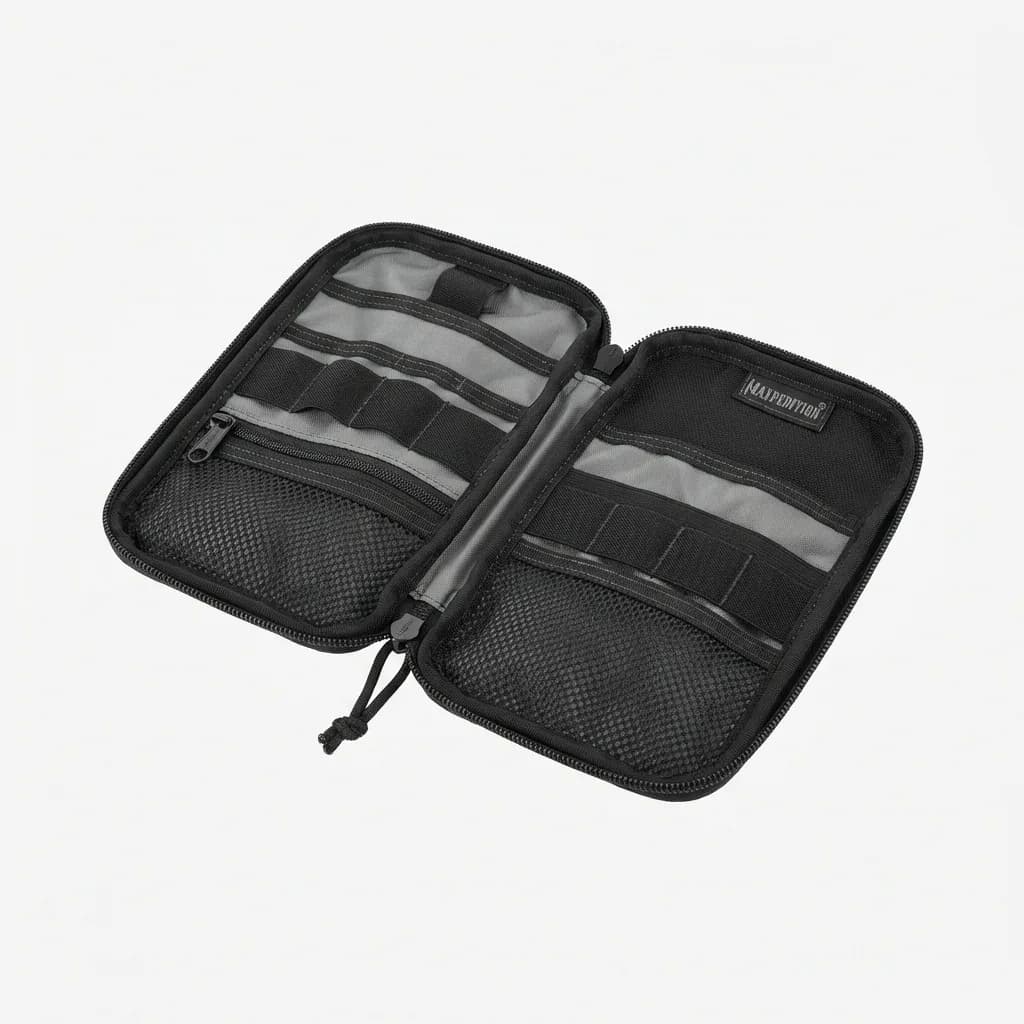
Maxpedition Micro Pocket Organizer

Maxpedition Micro Pocket Organizer

$25

Nine pockets including elastic loops and mesh compartments. 1000D nylon construction with YKK zippers. 7 x 5 inches, fits most bags without bulk.

Top compact pouches for everyday pocket gear

The Maxpedition Micro sits in that perfect size range where it holds everything you actually need without becoming a burden. Seven inches wide, five inches tall, less than two inches thick when packed. It fits in laptop compartments, side pockets, even larger jacket pockets. The main compartment unzips fully, which sounds basic until you've fought with pouches that only open halfway.

Nine total pockets spread across the interior. Three elastic loops sized for standard pens or flashlights. Two mesh zipper pockets that keep cables visible. Four slip pockets for cards, receipts, or flat tools. The layout makes sense - frequently accessed items near the top, secure storage deeper in. After six months of testing, both zippers still operate smoothly and the elastic hasn't stretched out.

Vanquest EDCM-HUSKY Maximizer

Vanquest EDCM-HUSKY Maximizer

$40

Modular layout with removable dividers. Scratch-resistant lining protects screens and lenses. 8 x 5.5 inches with MOLLE webbing for attachment options.

Vanquest's EDCM-HUSKY costs more but delivers flexibility you can't get elsewhere. The interior uses hook-and-loop dividers you can reposition or remove entirely. Carry a lot of cables one week, switch to small tools the next. The scratch-resistant liner protects anything with a screen or polished surface - we've carried camera lens filters, phones, and reading glasses without a single scuff.

The MOLLE webbing on the back panel lets you attach this to bags, belts, or vehicle headrests. It's overkill if you just need something to toss in a backpack. It's brilliant if you want mounting options or run a more tactical setup.

Best slim profile organizers for minimalist carry

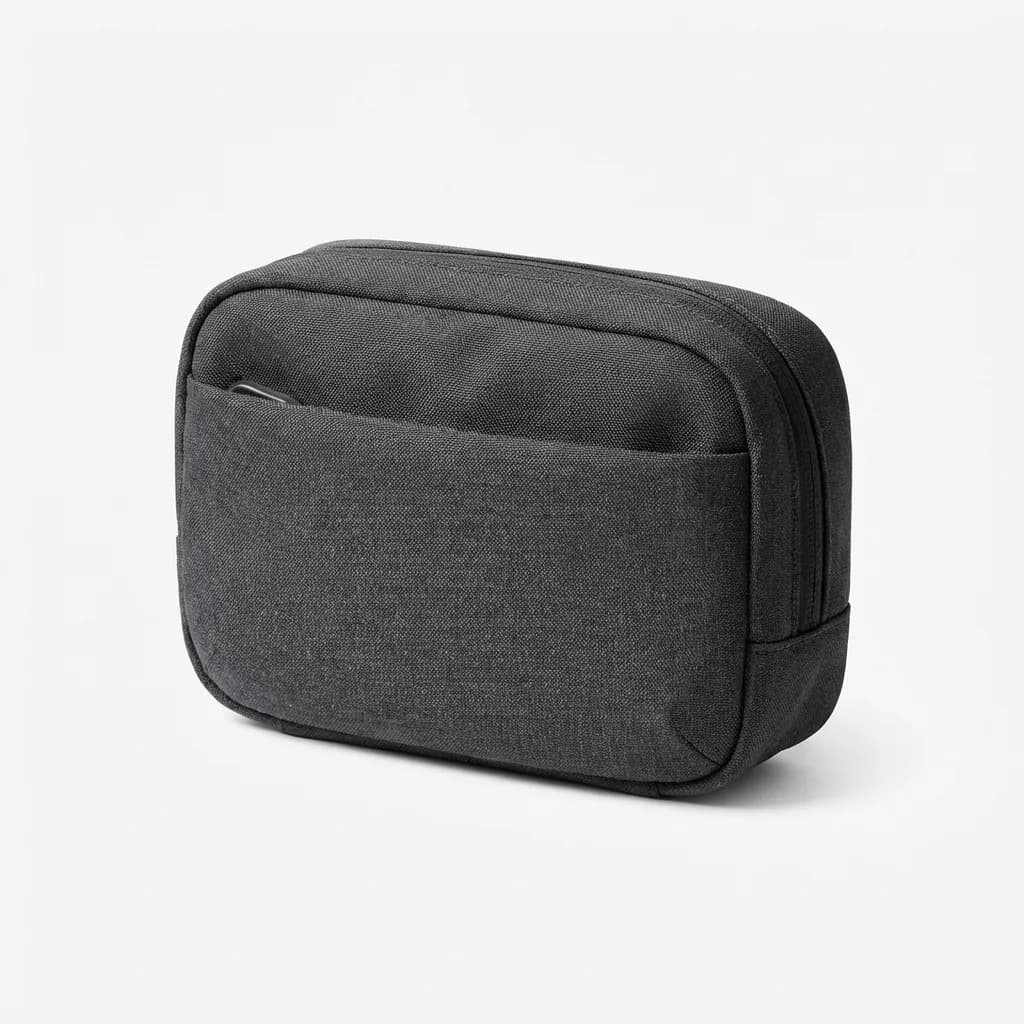
Sometimes you don't need nine pockets. You need three good ones and not an inch of wasted space. The Bellroy Tech Kit nails this approach. Five inches wide, four inches tall, barely over an inch thick. It disappears into bags but holds two cables, a charger, earbuds, and a battery pack without strain.

Bellroy Tech Kit Compact

Bellroy Tech Kit Compact

$45

Premium woven fabric exterior, three compartments including magnetic closure pocket. 5 x 4 x 1.25 inches, designed for tech accessories and minimal bulk.

The main pocket uses an elastic panel instead of loops, which conforms to whatever you put in it rather than forcing specific sizes. A magnetic closure pocket on the front holds items you grab constantly - we use it for charging cables and it's faster than any zipper. The woven exterior feels more refined than tactical nylon, which matters if you're pulling this out in meetings.

It's not built for abuse the way Maxpedition or Vanquest pouches are. The fabric will show wear if you're rough with it. But for office carry, travel, or situations where appearance matters as much as function, it's the best balance we've found.

Peak Design Tech Pouch

Peak Design Tech Pouch

$50

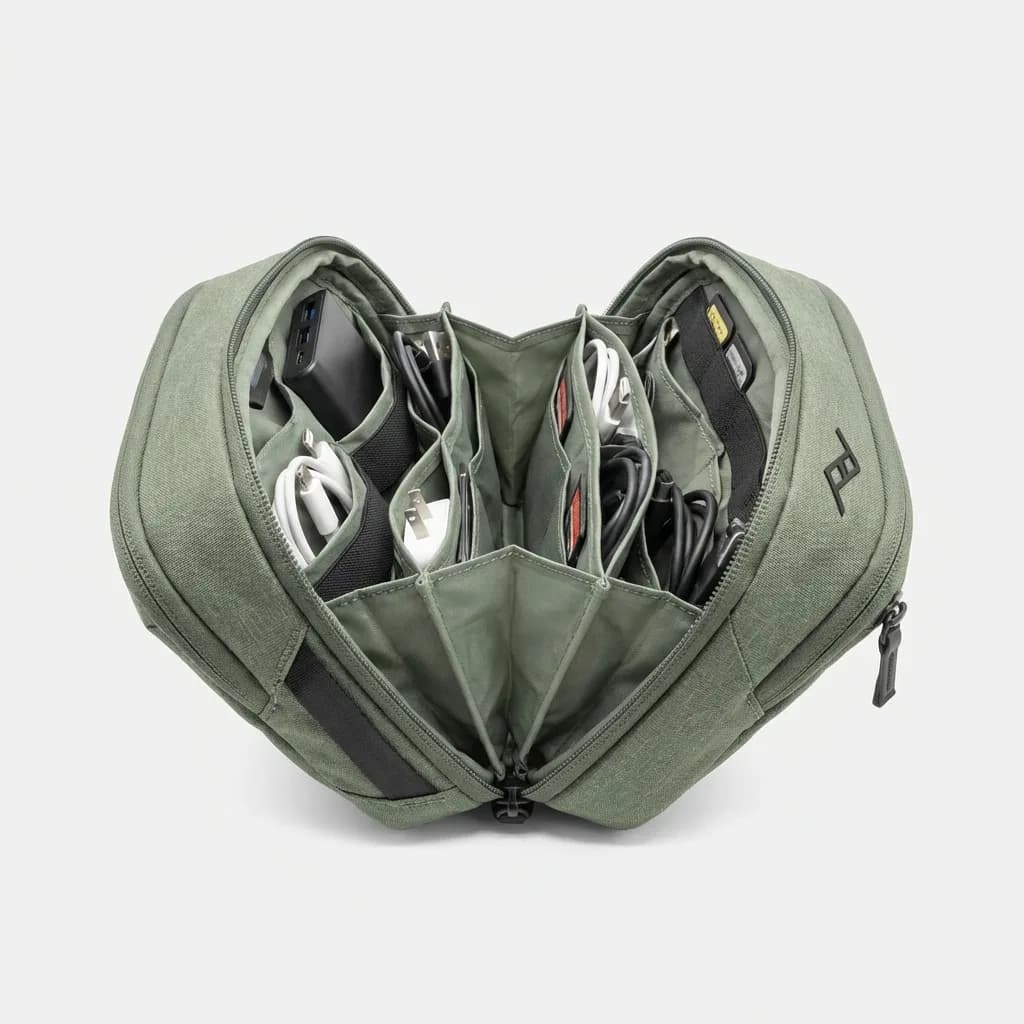
Clamshell opening with origami-style pockets. Weatherproof 400D nylon shell. 9.5 x 5.5 x 2.5 inches when full, compresses flat when empty.

Peak Design's Tech Pouch takes a different approach with its clamshell opening. Unzip it and the whole thing lays flat, showing every pocket at once. No digging, no moving one thing to reach another. The origami-style pockets expand when full and collapse when empty, so this adapts to how much you're actually carrying.

It's larger than the Bellroy - 9.5 inches wide when fully opened - but it compresses down to about an inch thick when you're not carrying much. The weatherproof shell has saved our gear during unexpected rain more than once. We've also used the external zipper pocket for boarding passes and IDs during airport security, which speeds things up considerably.

What about budget options under $20

The AmazonBasics Universal Travel Case gets recommended constantly because it's $12 and does the job. And it does - sort of. Three compartments, adequate zippers, acceptable stitching. It's fine for occasional use or as a backup. But the elastic loops lose tension within months, the material feels cheap because it is cheap, and the layout wastes space with oversized pockets you'll never fill.

AmazonBasics Universal Travel Case

AmazonBasics Universal Travel Case

$12

Three main compartments with elastic loops and mesh pocket. Budget-friendly option at 8 x 5 inches. Adequate for light use and backup storage.

If you're truly budget-constrained, it beats nothing. But spending $25 on the Maxpedition Micro gets you something that'll last years instead of months. The cost-per-use math favors the better pouch by a wide margin.

The Condor T&T Pouch sits right at the $20 mark and offers better value. It's built like Maxpedition's gear - 1000D nylon, real YKK zippers - but with a simpler layout that cuts costs. You get fewer pockets but the ones included are well-sized and positioned. The exterior MOLLE webbing adds attachment options that budget pouches usually skip.

Condor Gadget Pouch

Condor Gadget Pouch

$20

1000D Cordura nylon with YKK zippers. Internal mesh pocket and elastic organizer panel. 8 x 5 x 1.5 inches with MOLLE compatibility.

Common mistakes when choosing an organizer pouch

Buying based on pocket count is the biggest trap. Twelve pockets sounds better than six, but if eight of those pockets are too small for anything you actually carry, you've gained nothing. Focus on pocket variety instead - a mix of elastic loops, mesh compartments, and open pockets handles more gear types than fifteen identical slots.

Ignoring zipper quality catches people constantly. A failed zipper turns a $40 pouch into trash. YKK zippers cost more to source, which is why budget pouches skip them. But they're rated for thousands of cycles and rarely fail. House-brand zippers start sticking or separating within months of regular use.

Choosing pouches that are too deep creates a different problem than ones that are too wide. A pouch that's three inches deep means items stack on top of each other. You can't see what's at the bottom without removing everything else. Depth over two inches rarely helps unless you're carrying very specific items like battery banks or thick cables.

Not considering where this will actually live leads to mismatches between pouch and bag. A pouch with MOLLE webbing is useless if your bag has no MOLLE panels. A clamshell design that needs room to open fully doesn't work in tight compartments. Measure your bag's pockets before buying.

How we actually use these daily

The Maxpedition Micro lives in our primary backpack year-round. It holds charging cables, a USB drive, earbuds, lens wipes, and a few bandaids. Everything we need to grab quickly without thinking about it. When we switch bags for travel or work, this moves as a single unit. Five seconds and all the essentials transfer.

The Vanquest EDCM-HUSKY stays in our vehicle as a tool kit. We've reconfigured the interior dividers to hold a small flashlight, multi-tool, tire pressure gauge, and various adapters. The MOLLE attachment keeps it secured to a headrest mount where it's always accessible but never in the way.

The Bellroy Tech Kit handles travel exclusively. It's small enough for carry-on bags and TSA-friendly because everything's visible when opened. We pack it the night before a trip and know exactly what's inside - no last-minute cable hunts or missing adapters.

The Peak Design pouch serves as our photography accessory kit. Memory cards, lens caps, cleaning supplies, and small filters all fit with room to spare. The weatherproof shell matters when shooting in variable conditions, and the clamshell layout makes swapping cards fast during time-sensitive shoots.

What to look for in specialized configurations

If you carry medical supplies, skip general-purpose pouches and get something with clear pockets or labeled sections. We've seen too many people fumble through opaque compartments looking for specific medications. The Maxpedition FR-1 Pouch uses transparent mesh and printed labels specifically for first-aid organization.

For tech-heavy loads - multiple cables, adapters, battery banks - prioritize pouches with wire management features. Elastic loops alone don't cut it. Look for built-in cable ties or channels that keep cords from tangling. The Cocoon GRID-IT system takes this further with a full elastic grid, though it's overkill for most users.

Travel-specific pouches benefit from passport-sized pockets and RFID-blocking materials if you're carrying cards. The Zero Grid organizer includes both, plus a pen loop positioned where you can grab it quickly at customs. These features add cost, so only pay for them if you travel regularly.

Maxpedition FR-1 First Aid Pouch

Maxpedition FR-1 First Aid Pouch

$30

Transparent mesh pockets with medical cross branding. 8 x 6 inches with multiple compartments for organized emergency supplies. Red colorway for quick identification.

Why size matters more than you think

We tested this by packing identical items into pouches ranging from 4x3 inches to 10x7 inches. The smallest required aggressive folding of cables and left no room for anything else. The largest rattled with empty space and encouraged adding items we didn't actually need.

The 6-8 inch width range emerged as optimal. It fits standard USB cables without tight coiling. Pens and small tools sit flat. Power adapters don't require careful positioning. And crucially, pouches this size fit in most backpack organization pockets without blocking main compartments.

Height between 4-5 inches keeps items accessible. Taller pouches force you to stack things vertically, which defeats the organizational purpose. You end up pulling out half the contents to reach what's at the bottom. Shorter pouches limit what fits - many charging bricks exceed 3 inches in one dimension.

The depth debate comes down to use case. For flat items like cables, cards, and pens, 1.5 inches is plenty. If you're carrying battery banks, multi-tools, or bulkier accessories, 2-2.5 inches makes sense. Beyond that, you're better served by a different carry solution entirely.

Final recommendations by use case

For daily backpack organization: Maxpedition Micro Pocket Organizer. It's the workhorse that handles everything without complaint. The price-to-performance ratio is unbeatable, and after years of testing, we still recommend this first.

For premium minimalist carry: Bellroy Tech Kit Compact. If you value appearance and streamlined design over maximum capacity, this is worth the extra cost. It looks professional and functions flawlessly.

For modular flexibility: Vanquest EDCM-HUSKY. The configurable interior and attachment options make this ideal for users who frequently change what they carry or want mounting capability.

For travel and photography: Peak Design Tech Pouch. The clamshell design and weatherproofing justify the higher price when you need quick access and protection.

For budget-conscious buyers: Condor Gadget Pouch. At $20, it delivers real quality without the compromises that plague cheaper options.

The common thread across all these recommendations is intentional design. Every pocket serves a purpose. The materials match the intended use. And crucially, the size fits real bags and real carry needs without requiring you to build your life around the pouch. That's what separates functional organization from gear that sits unused in a drawer.

Advertisement

The Weekly Dispatch

Enjoying this article?

Subscribe and get our best gear picks delivered every Sunday morning.