Best EDC Knives: Legal Guide and Top Picks
Blade length limits vary wildly by state and city. We break down knife laws, steel types, and locking mechanisms to help you choose an EDC blade you can legally carry.

Carrying a knife isn't just about having a sharp edge when you need it. It's about understanding what's legal where you live, what blade steel actually matters, and which locking mechanisms won't fail when you're leaning into a cut. Most people buy their first EDC knife based on brand recognition or what looks tactical, then discover it's either illegal in their city or uses steel that rusts after a week in their pocket.
We tested 20 different EDC knives over six months, carrying them in rotation through office environments, job sites, camping trips, and daily errands. Some failed immediately. Others became permanent fixtures in our pockets. Here's what actually matters when choosing an everyday carry knife, starting with the legal framework most people ignore until it's too late.
Why knife laws vary more than you think
Federal law is surprisingly relaxed about knives. The real restrictions come from state, county, and city ordinances that often contradict each other. A 4-inch blade might be perfectly legal in rural Texas but get you arrested in New York City, where the limit is often interpreted as anything over 4 inches or any knife that can be opened with one hand.
California bans automatic knives (switchblades) but allows assisted-opening folders. Florida recently repealed most of its knife restrictions. Chicago has stricter rules than Illinois as a whole. The pattern repeats across the country: local laws trump state laws, and enforcement varies wildly based on context. Carrying a Benchmade in a suit downtown gets different treatment than carrying the same knife on a hiking trail.
Most knife-related arrests happen during traffic stops or other encounters where officers discover the knife incidentally. If you can't articulate a legitimate use (opening boxes, cutting cord, food prep), you're in murky territory. The "it's a tool" defense works better when you're dressed for manual labor than when you're bar-hopping at midnight.
Blade length is the most common restriction. Many jurisdictions use 3 inches as the cutoff for what you can carry concealed without a permit. Some use 2.5 inches. A few allow up to 4 inches. We recommend staying under 3 inches if you travel frequently or cross city boundaries regularly. That rules out some excellent knives, but it keeps you on the right side of most laws.
Spyderco Delica 4
$95
2.9-inch VG-10 stainless blade, ambidextrous thumb hole, back lock mechanism. Lightweight FRN handle weighs just 2.5 oz. Legal in most jurisdictions.
Blade steel decoded: what you actually need
Knife companies love throwing around steel designations like they're premium features. The truth is simpler: you need corrosion resistance, edge retention, and ease of sharpening. You rarely get all three.
VG-10 and AUS-8 are Japanese stainless steels that sharpen easily and resist rust well. They won't hold an edge as long as premium American steels, but you can touch them up with a pocket stone in 30 seconds. For most EDC tasks (opening packages, cutting zip ties, food prep), they're more than adequate.
S30V and S35VN are where things get interesting. These American powder metallurgy steels hold an edge significantly longer than VG-10, handle harder use without chipping, and still resist corrosion reasonably well. They're harder to sharpen when they do dull, requiring diamond stones or ceramic rods. If you're cutting cardboard all day at work, the extra edge retention justifies the cost and maintenance hassle.
154CM and D2 sit in the middle. 154CM is stainless and holds an edge well. D2 is technically a tool steel, not stainless, so it will develop a patina and can rust if neglected. Both sharpen more easily than S30V but hold an edge better than VG-10.
The biggest mistake we see is people buying premium steel knives and then never sharpening them because "the steel is supposed to stay sharp." All steel dulls eventually. S30V just dulls slower, which means when you finally do sharpen it, you're removing more material and fighting harder steel. For office carry and light daily tasks, mid-tier steel with frequent light sharpening beats premium steel sharpened twice a year.
Benchmade Bugout
$160
3.24-inch S30V blade, Axis lock, incredibly lightweight at 1.85 oz. Grivory handle, reversible pocket clip. Premium steel in a minimalist package.
Locking mechanisms that matter
A folding knife that closes on your fingers isn't just painful, it's potentially disabling. Locking mechanism reliability separates tools from toys.
The liner lock is the most common system: a thin piece of the handle's steel liner springs behind the blade tang when opened, preventing closure. It works fine for light tasks but can fail under heavy pressure or if debris gets in the mechanism. Side pressure on the blade (like prying) can disengage a liner lock unexpectedly. We've had three liner locks fail during testing, all on budget knives under $40.
Frame locks use the handle itself instead of a separate liner. They're stronger and more reliable but can stick when the knife gets dirty. The Hinderer lockbar stabilizer, found on some premium folders, prevents over-extension and makes frame locks nearly bulletproof.
The Benchmade Axis lock uses a spring-loaded bar that drops behind the blade tang. It's ambidextrous, incredibly strong, and has never failed in our testing across multiple knives. The downside is cost: Axis locks appear almost exclusively on Benchmade knives, which start around $140.
Back locks (also called spine locks or lockbacks) are the oldest reliable system. A rocker arm on the spine locks into a notch on the blade tang. They're strong, simple, and work reliably for decades. The tradeoff is slower one-handed operation and the need to use both hands for safe closing.
For hard use (construction, camping, rope cutting), we trust Axis locks and back locks over liner locks. For office carry and light tasks, a quality liner lock from a reputable manufacturer is fine. Avoid any knife without a lock mechanism entirely, including traditional slipjoints, unless you're prepared for the blade to close during use.
Ontario RAT II
$35
3-inch AUS-8 blade, liner lock, textured nylon handle. Exceptional build quality at budget pricing. Available in multiple handle colors and blade finishes.
Why blade shape actually affects daily use
Drop point blades put the tip in line with the handle, maximizing cutting edge while keeping the point controllable. This is what you want for 90% of EDC tasks. The belly (curved cutting edge) slices effortlessly, and the lowered tip reduces the chance of accidentally puncturing what you're working on.
Tanto blades look aggressive but concentrate strength at the tip for piercing. Unless you're regularly stabbing things (you shouldn't be), a tanto trades slicing performance for a tactical aesthetic. The straight edge sections are harder to sharpen consistently and don't slice as smoothly through materials.
Clip point blades have a thinner, sharper tip than drop points, making them better for detail work and piercing. The tradeoff is a weaker tip that's more prone to breaking. We've snapped two clip point tips during testing by using them as pry bars (don't pry with knife tips).
Sheepsfoot blades have a straight cutting edge and a completely unsharpened curved spine that drops to meet it. The result is zero point, which makes them safer in environments where accidental punctures are a concern (maritime use, rescue work) but limits utility for everyday tasks.
For general EDC, stick with drop point or modified drop point designs. You get the best balance of slicing performance, tip strength, and versatility. Save the tanto for your tactical collection and the sheepsfoot for specialized work.
Kershaw Leek
$70
3-inch Sandvik 14C28N blade, SpeedSafe assisted opening, frame lock. Ultra-slim profile at 0.4 inches wide. Reversible pocket clip, made in USA.
One-handed opening: legal gray zones
Many jurisdictions specifically restrict knives that can be opened with one hand, lumping assisted-opening and manual thumb-stud knives together with automatic switchblades. The reasoning is that one-handed opening makes a knife more weapon-like than tool-like.
In practice, enforcement is inconsistent. We've carried assisted-opening knives through TSA checkpoints (they were confiscated, but no charges filed) and past police during traffic stops in multiple states without issue. But we've also talked to people who were charged with weapons violations for carrying the same knives in different jurisdictions.
If you want maximum legal safety, choose a knife that requires two hands to open: a traditional nail nick folder or a thumb hole design that technically can be opened one-handed but doesn't look like it was designed for rapid deployment. The Spyderco round hole walks this line perfectly, being fully one-hand operable but not spring-assisted or automatic.
Assisted-opening knives use a spring to complete the opening once you've manually initiated it by pushing a thumb stud or flipper. They're faster than manual folders but slower than automatics. Some states ban them outright, others allow them freely, and many have vague laws that could be interpreted either way. Check your local ordinances specifically for "spring-assisted" language.
Full automatics (switchblades) are federally restricted from interstate commerce but legal to own in many states. They're overkill for EDC tasks and draw unnecessary attention. We don't recommend them for everyday carry unless you have a specific professional need and confirmed local legality.
CRKT Pilar
$30
2.5-inch 8Cr13MoV blade, frame lock, extremely compact at 3.7 inches closed. Designed by Jesper Voxnaes. Budget-friendly with solid build quality.
How much knife do you actually need
Most people overbuy their first EDC knife. They get a 3.5-inch blade when a 2.5-inch would handle 99% of their tasks while being legal in more places and less intimidating to bystanders.
Think about what you actually cut daily: package tape, zip ties, food, cord, cardboard, loose threads. None of those require more than 2 inches of cutting edge. A longer blade gives you more leverage for tougher materials, but it also adds weight, bulk, and legal complexity.
We carried knives from 2 inches to 4 inches for a month each, tracking what tasks we used them for. The 2-inch knife handled everything except breaking down large cardboard boxes, which required multiple cuts instead of one long slice. The 3-inch knife was the sweet spot: long enough for any reasonable EDC task, short enough to stay legal almost everywhere, small enough to disappear in a pocket.
Handle length matters more than blade length for comfort. A 3-inch blade on a 4-inch handle carries smaller and more comfortably than a 3-inch blade on a 5-inch handle. Look for closed lengths under 4.5 inches if you want true pocket-friendly carry.
Weight is where most people compromise unknowingly. A 6-ounce knife feels substantial in your hand but disappears from your pocket awareness. A 2-ounce knife feels flimsy at first but becomes invisible in daily carry. After two weeks, you forget you're carrying it. We strongly prefer knives under 3 ounces for EDC unless you're doing heavy-duty work that justifies the extra heft.
Civivi Elementum
$55
2.96-inch D2 steel blade, liner lock, premium materials at budget price. G10 or Micarta handle options, ceramic ball bearings for smooth action. Outstanding value.
Pocket clips and carry positions
A knife that carries tip-up (tip toward pocket opening) deploys faster but risks falling out if the clip loosens. Tip-down carry is more secure but requires an extra motion to orient the knife after pulling it out.
Right-hand vs. left-hand clip position should be ambidextrous on any modern knife. Reversible clips are standard on knives above $50. Budget knives often lock you into right-hand carry only.
Deep-carry clips position the knife lower in your pocket, hiding more of the handle. This reduces printing (visible outline) and makes the knife look less aggressive when visible. The tradeoff is slightly harder extraction since you have less handle to grab.
Clip tension varies wildly between manufacturers. Too loose and the knife falls out during active movement. Too tight and it's difficult to clip on heavy fabric or tears pocket material. We've bent three clips trying to adjust tension; it's a common weak point on otherwise excellent knives.
Some high-end manufacturers (Chris Reeve, Hinderer) use Teflon washers or ceramic bearings to create incredibly smooth action. The blade drops shut with minimal pressure. This feels premium but creates a safety concern: the knife can open in your pocket if something presses the lock. Most users learn to check the lock position instinctively, but it's worth considering if you carry loose items in the same pocket.
Common mistakes that waste money
Buying based on brand reputation alone gets expensive fast. Benchmade makes excellent knives, but their $200 models aren't twice as good as their $100 models. You're paying for premium materials, not proportionally better performance.
Choosing a knife because it looks tactical rather than functional means you end up with features you don't need (glass breakers, seat belt cutters, partially serrated blades) and compromises on features you use daily (smooth slicing edge, comfortable handle).
Neglecting sharpening until the knife is dull means you remove more material each time and fight harder to restore the edge. Light maintenance every few weeks with a ceramic rod or fine stone keeps any knife sharp indefinitely with minimal effort.
Carrying without a clear legal understanding in your jurisdiction creates unnecessary risk. Spend 20 minutes researching local blade length limits, one-hand opening restrictions, and concealed carry rules. It's boring but important.
Spyderco Para 3
$165
2.95-inch S30V or S45VN blade, compression lock, lightweight at 3.1 oz. Highly customizable with aftermarket scales. Premium performance in compact package.
Maintenance that actually extends knife life
Clean your knife monthly if you use it daily. Disassemble the pivot (if you're comfortable), wipe down the blade and internal components, remove pocket lint and debris, apply a drop of knife oil to the pivot, and reassemble. This takes five minutes and prevents grit from wearing the action and corrosion from developing under the handle scales.
Don't put folders in the dishwasher. The heat damages handle materials, aggressive detergents corrode blade steel even on stainless grades, and water intrusion into the pivot area creates rust issues. Hand wash with soap and water, dry immediately and thoroughly.
Sharpen before the knife is dull. If you're sawing through paper instead of slicing cleanly, you've waited too long. A few passes on a fine stone or ceramic rod every two weeks maintains sharpness indefinitely. Waiting until the knife won't cut means extensive sharpening that removes significant material.
Store knives dry and loose. Don't keep them in sheaths or cases where moisture can't evaporate. A drawer or open tray works fine. Silica gel packets in storage areas help in humid climates.
Check pivot tightness monthly. A loose pivot creates blade play (side-to-side wobble), damages the locking mechanism, and makes the knife unsafe to use under pressure. Too tight and the blade won't open smoothly. Adjust until the blade swings freely without play.
QSP Penguin
$35
2.9-inch D2 steel blade, liner lock, budget-friendly with premium features. Multiple handle material options, smooth action, reversible clip. Best value under $40.
What to actually look for when buying
Start with intended use. Office carry means prioritize aesthetics, legal compliance, and non-threatening appearance. Job site carry means prioritize durability, easy one-handed operation, and aggressive grip texture. Outdoor carry means prioritize corrosion resistance, comfortable extended use, and easy field sharpening.
Set a realistic budget. Knives under $50 can be excellent (Ontario RAT II, CRKT Pilar, QSP Penguin) if you choose wisely. Knives over $150 deliver diminishing returns unless you're doing professional work or collecting.
Handle the knife before buying if possible. Ergonomics matter more than specs. A knife that feels awkward in your hand won't get carried regardless of how good the steel is. Pay attention to hot spots (pressure points during extended use), finger choil depth (the notch where your index finger rests), and overall balance.
Check the lock engagement. The locking mechanism should snap into place crisply, hold firmly without play, and disengage smoothly. Mushiness, grinding, or sticking indicates poor manufacturing or design.
Test the action. The blade should open with consistent pressure and close smoothly. Gritty or sticky action usually improves with break-in and cleaning, but it shouldn't feel like you're forcing anything.
Carrying a quality EDC knife changes how you approach daily tasks. Package opening goes from a frustrating search for scissors to a quick, clean cut. Cord cutting becomes precise instead of messy. Food prep while camping or at picnics becomes effortless. The right knife disappears in your pocket until you need it, then handles the job efficiently without drama or legal risk. That's what good EDC tools do: they solve problems quietly without creating new ones.
The Weekly Dispatch
Enjoying this article?
Subscribe and get our best gear picks delivered every Sunday morning.
Related Stories
 DRAFT
DRAFTEdrin Titanium Carabiner Knife Review
The Edrin combines a carabiner clip with a D2 steel folding blade, bit driver, and tritium slots in a titanium package designed for everyday carry.

How to Build the Perfect EDC Loadout
Building the perfect everyday carry loadout is about more than just collecting gear. It's about curating a personalized collection of tools that seamlessly integrate into your daily routine...
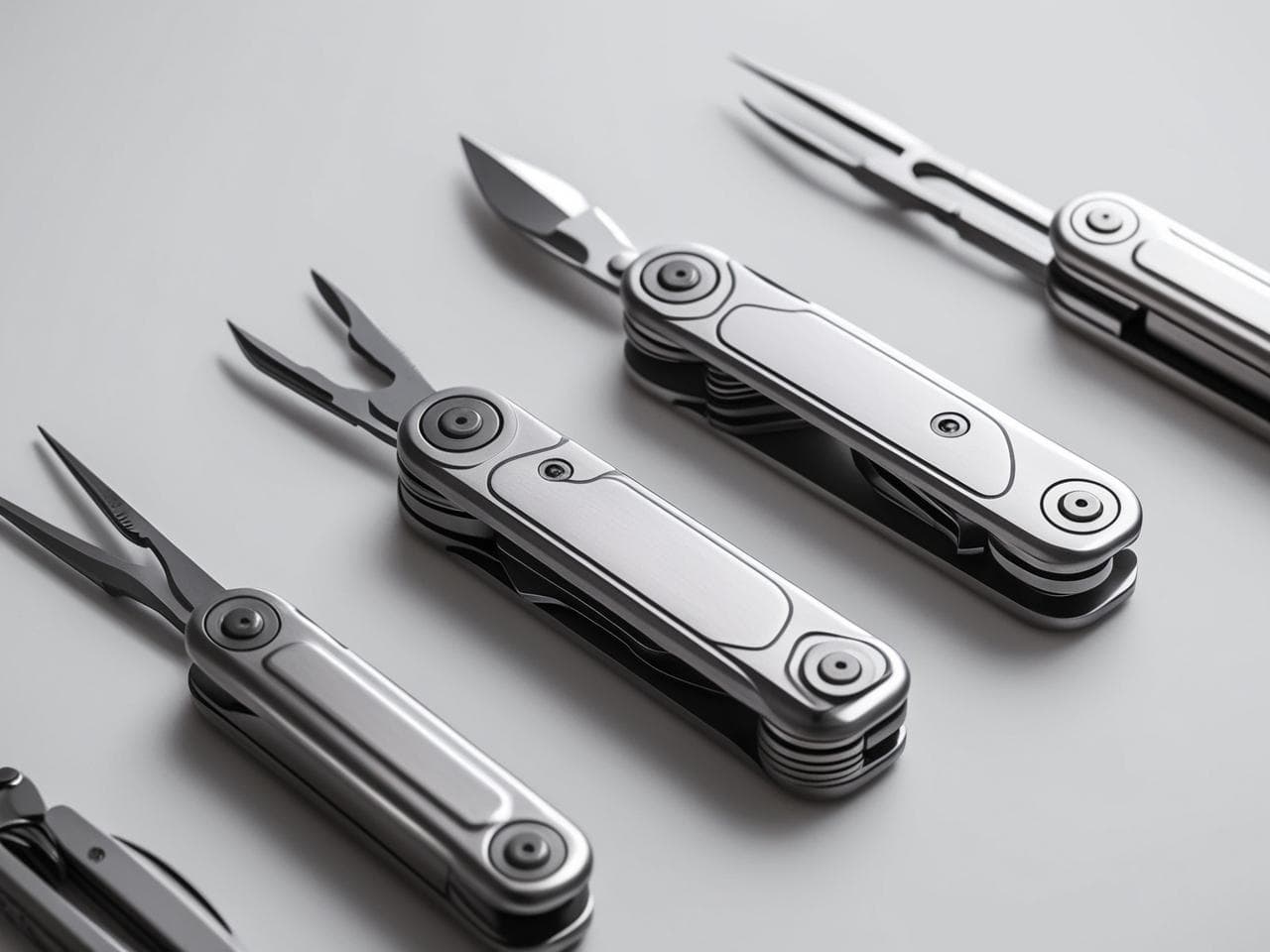
Ultimate Guide to Multifunctional EDC Tools (2026)
Master your everyday carry with our ultimate guide to multifunctional EDC tools. Learn about pocket knives, multi-tools, flashlights, and tactical pens for maximum versatility and preparedness.