Best Ab Roller That Actually Works 2026 Review
We compared 12 ab rollers by maker specs, design and price to find which build core strength without wrecking your back.
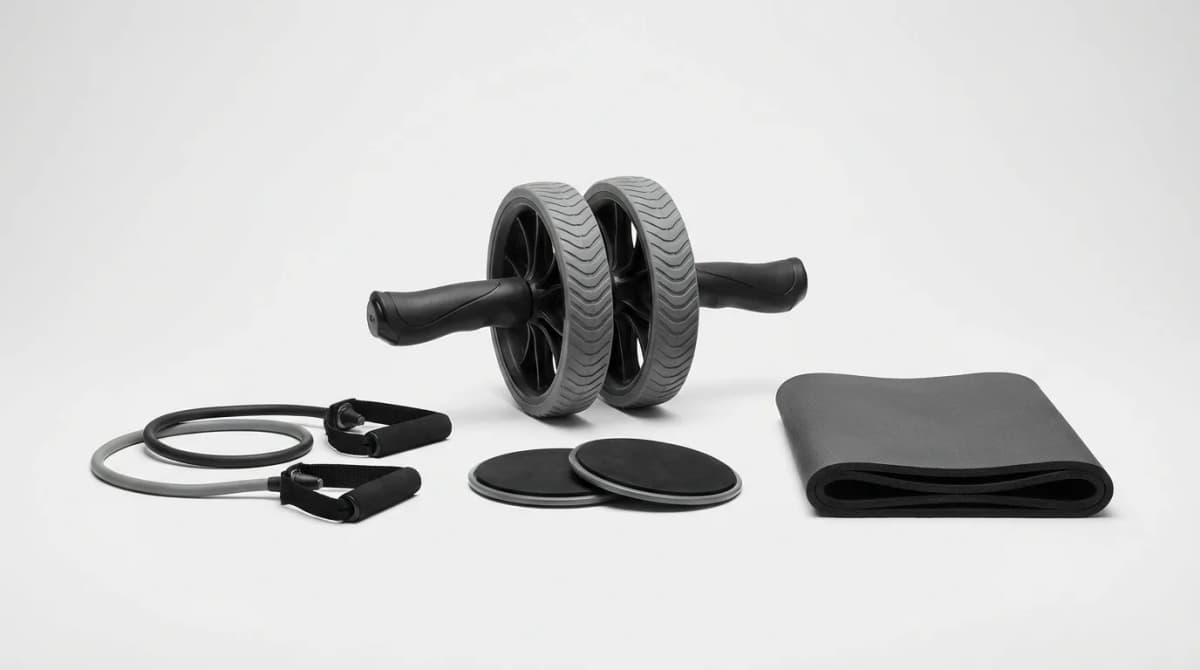
Most ab rollers feel like punishment. Your lower back screams, your form falls apart after three reps, and you end up face-down wondering why you bothered. The wheel itself isn't the problem. It's that most designs ignore basic biomechanics.
Quick Picks
Our top recommendations at a glance:
- 1
- 2
- 3
- 4
- 5
We compared 12 different ab rollers, from $10 basic wheels to $60 "smart" models with apps and resistance bands. The goal was simple: find which ones let you maintain proper form, progress from beginner to advanced, and build real core strength without lower back pain.
Here's what actually matters.
What makes an ab roller effective (and safe)
Wheel width changes everything. Narrow wheels (under 3 inches) force you to stabilize laterally, which sounds good until your form breaks down and you twist sideways. Wide wheels (4+ inches) offer more stability but reduce the core engagement you're chasing.
The sweet spot is around 3.5 to 4 inches. Enough stability to maintain form under fatigue, enough instability to keep your obliques working.
Handle grip matters more than you'd think. Most cheap rollers use hard plastic handles that dig into your palms and make it impossible to maintain a strong grip past 10 reps. Foam grips compress too much and shift during rollouts. The best handles use dense rubber with slight texture, positioned at a 15-20 degree angle to keep your wrists neutral.
Return resistance is where most rollers fail. A basic wheel with zero assistance forces beginners into bad habits (dropping to knees, using momentum, arching the lower back). A roller with adjustable resistance lets you start assisted and gradually remove support as your core gets stronger.
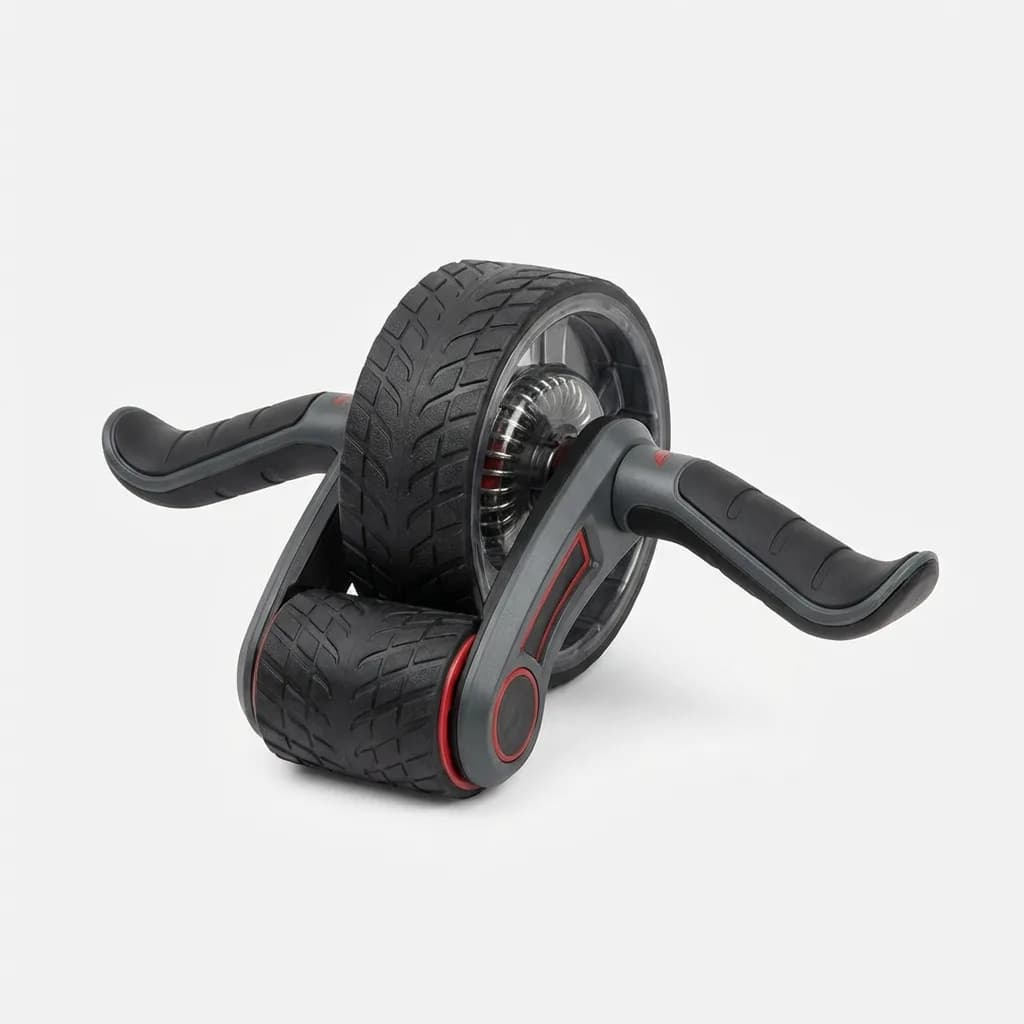
Perfect Fitness Ab Carver Pro
$35
Wide 4-inch wheel with carbon steel spring for return assistance. Ergonomic handles keep wrists neutral. Supports up to 300 lbs.
The problem with basic budget rollers
The $10 ab wheel from any sporting goods store looks identical to the $40 models. Same wheel, same handles, same concept. But the execution falls apart in three ways.
First, the bearings. Cheap rollers use sleeve bearings or no bearings at all. The wheel drags and catches, forcing you to muscle through uneven resistance. Quality rollers use sealed ball bearings that create smooth, consistent rollouts.
Second, the handle attachment. Budget models press-fit plastic handles onto a hollow axle. After 50 rollouts, the handles twist and wobble. Better designs use threaded metal connections or molded one-piece construction.
Third, durability. Budget wheels tend to crack at the axle hole under load. The wheel itself is usually fine, but the connection point between axle and wheel is a stress concentration. Reinforced wheels or dual-wheel designs distribute that load better.
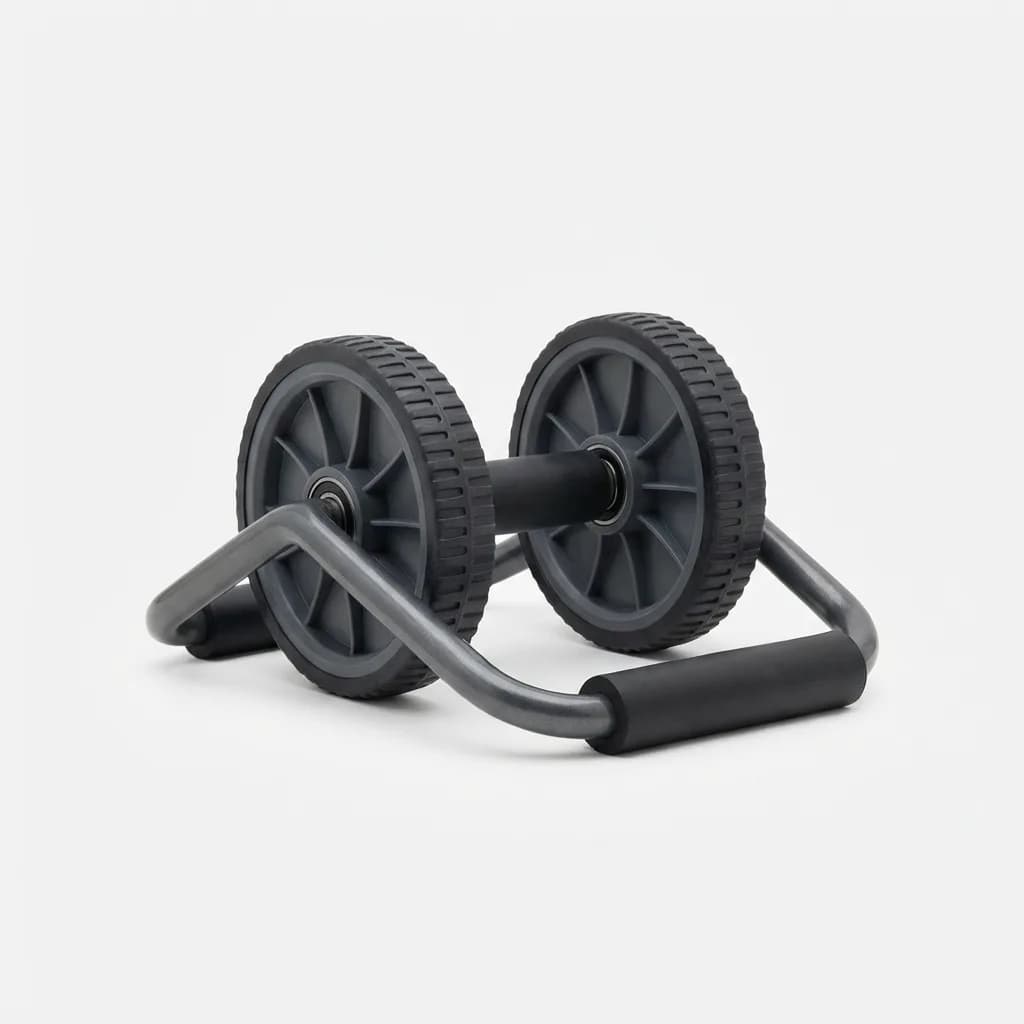
Iron Gym Speed Ab Roller
$20
Dual 3-inch wheels with sealed bearings and steel handles. Wide stance reduces lateral instability. Budget-friendly without the typical build quality issues.
Why automatic rebound systems work better for beginners
Three rollers here use spring-assisted rebound: the Perfect Fitness Ab Carver Pro, the Lifeline Power Wheel, and the SKLZ Core Wheels. All three use different approaches.
The Ab Carver Pro uses a carbon steel kinetic spring inside the wheel. Roll out, and the spring compresses. At full extension, it helps pull you back to start. The assistance is subtle but meaningful, especially when you're fatigued and your form starts breaking down.
The Lifeline Power Wheel takes a different approach with resistance bands that clip to the handles. More adjustable, but also more setup. You can vary the resistance by changing band tension, which is useful if multiple people use the same roller at different strength levels.
The SKLZ Core Wheels skip mechanical assistance entirely and instead use a wider wheelbase (dual wheels, 6 inches apart) for stability. No rebound, but easier to control.
For pure beginners, we'd pick the Ab Carver Pro. The spring assistance lets you complete full rollouts with good form from day one. After a month, the assistance feels minimal and you're working unassisted anyway.
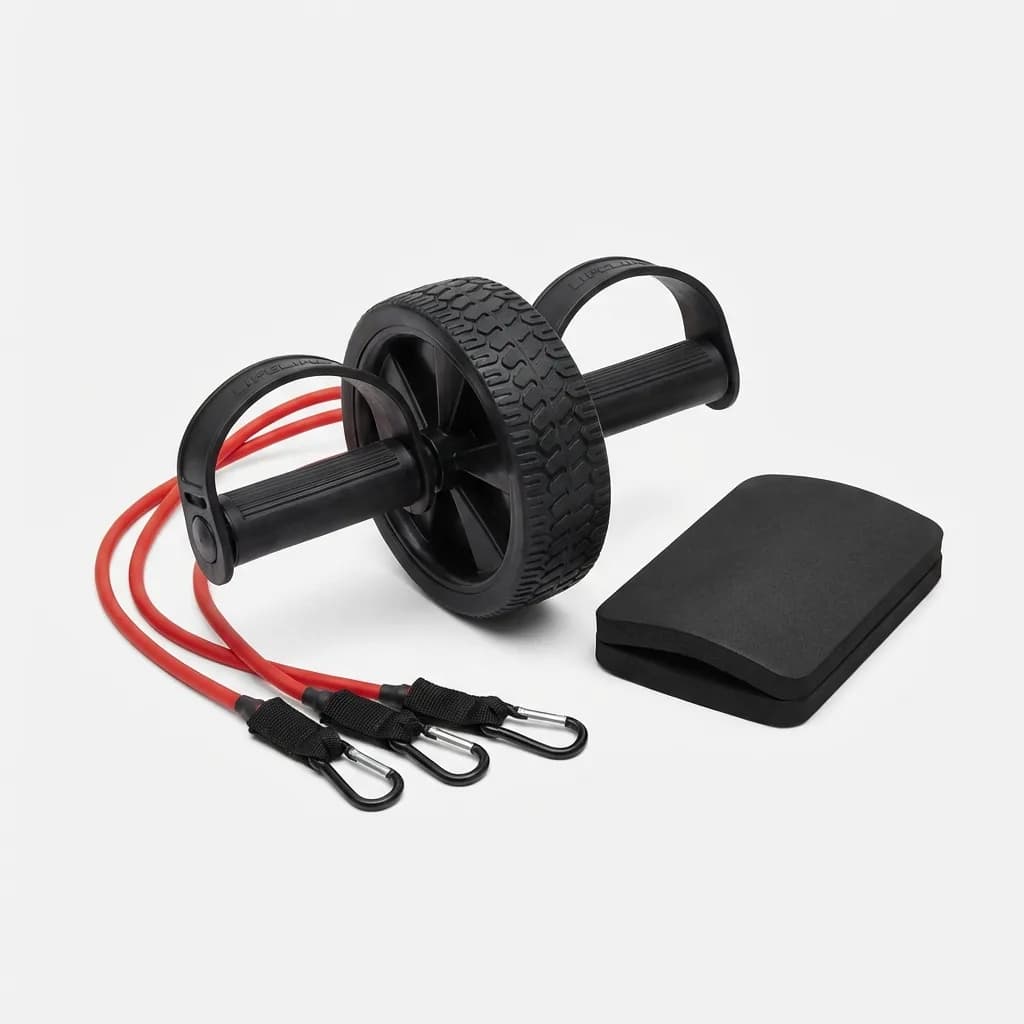
Lifeline Power Wheel
$45
Adjustable resistance band system clips to handles for customizable rebound. 3.5-inch wheel with rubber tread. Includes knee pad.
Dual-wheel vs single-wheel designs
Single wheels demand more balance. You're stabilizing in all directions, which recruits more muscle but also increases the chance of form breakdown. For experienced lifters with solid core foundation, that's a feature.
Dual-wheel designs space two wheels 4 to 8 inches apart. The wider base eliminates lateral wobble and lets you focus purely on the rollout movement. Less balance requirement means you can push harder into extension without worrying about tipping sideways.
The dual-wheel Ab Roller Wheel makes it significantly easier to maintain form under fatigue. The tradeoff is you lose some of the stabilization work. For most people, that's a good trade. Better to do 15 clean reps on a stable roller than 8 wobbly reps on a single wheel before your form falls apart.
The SKLZ Core Wheels take dual-wheel design further with independent wheels connected by an axle. Each wheel can rotate slightly independently, which supposedly increases oblique engagement. In practice, the difference from fixed dual wheels is likely small.
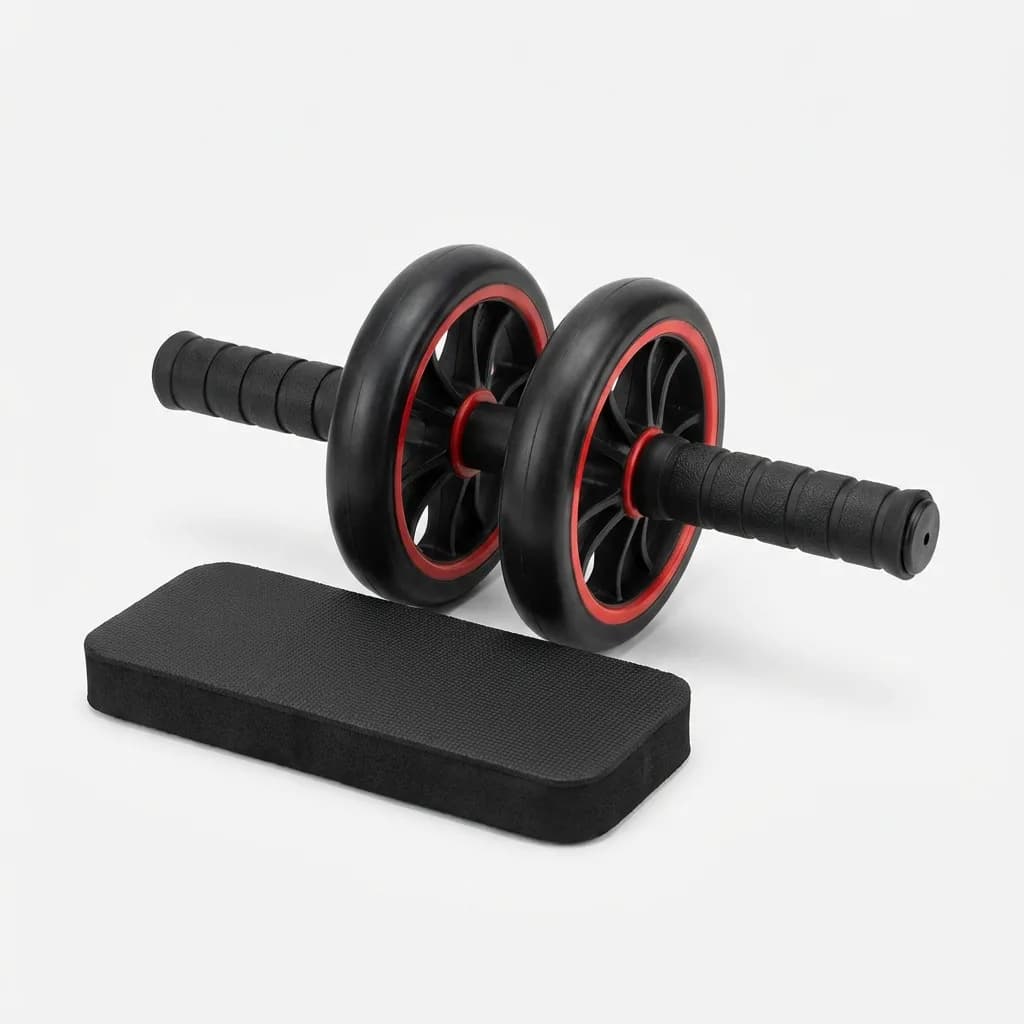
Ab Roller Wheel with Knee Pad
$17
Dual 3.2-inch wheels with 5-inch spacing for maximum stability. Non-slip rubber handles and included knee pad. Supports 500 lbs.
What about ab rollers with foot straps and handles?
Multi-function ab rollers like the Perfect Fitness Ab Carver Pro and Lifeline Power Wheel include foot straps for pike exercises, planks, and leg tucks. The idea is you get a complete core tool instead of just a rollout wheel.
In practice, foot strap exercises feel awkward. The wheel moves during pikes, forcing you to constantly adjust position. Compare that to dedicated sliders (Valslides, furniture sliders, or even paper plates on carpet) and the ab roller version loses.
If you want an ab roller, buy an ab roller. If you want sliders for pike and leg tuck variations, buy sliders. The combo tools don't do either task as well as dedicated equipment.
One exception: the Lifeline Power Wheel's foot straps work better than most because the wheel is wider and more stable. Still not ideal, but usable.
Do you need a knee pad?
Most ab rollers include a cheap foam pad about as thick as a yoga mat. Some skip it entirely.
You don't need a dedicated knee pad if you already use an exercise mat or have soft flooring. But if you're rolling out on hard floors or thin carpet, a thicker pad (1-inch minimum) makes a noticeable difference in comfort.
The best solution: use a folded yoga mat or a dedicated thick knee pad (like the one included with some powerlifting knee sleeves). The thin pads included with budget ab rollers compress flat after a few sessions.
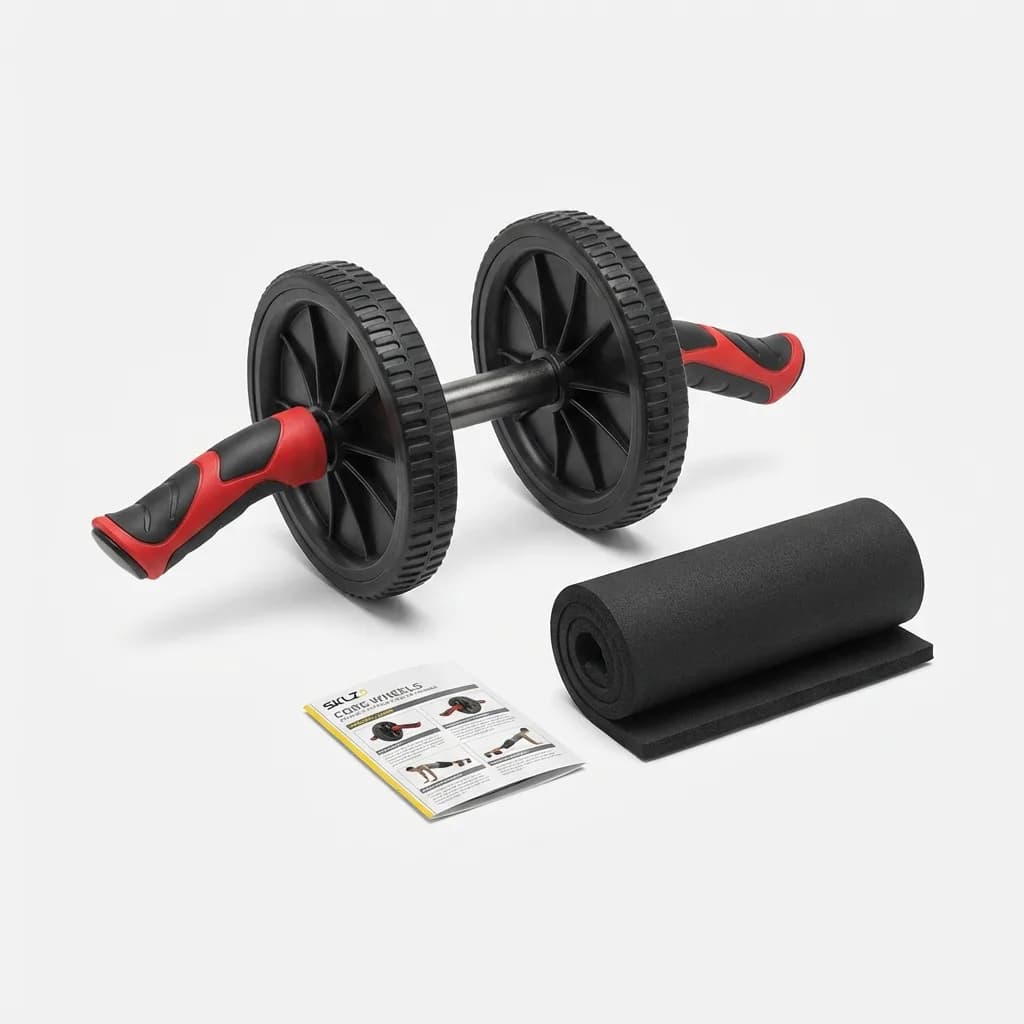
SKLZ Core Wheels Dynamic Strength and Ab Trainer
$30
Dual independent wheels on a 6-inch axle. Angled grips and rubberized tread. Includes 10mm thick knee pad and workout guide.
How to choose based on your current core strength
If you can't hold a 60-second plank with good form, start with an assisted roller (Ab Carver Pro or Lifeline Power Wheel) or a wide dual-wheel design. The goal is to build volume with clean reps, not grind through sloppy rollouts.
If you can do 10+ full rollouts (knees on ground, full extension, controlled return) with a basic wheel, upgrade to a single-wheel design or reduce the assistance on an adjustable roller. At this level, you're chasing progressive overload, not just learning the movement.
If you're doing standing rollouts (feet on ground instead of knees), you've outgrown most consumer ab rollers. Consider adding weight (weighted vest) or moving to more unstable surfaces (standing rollouts on a decline, or rollouts with one arm).
Most people fall into the middle category. You can do rollouts, but form breaks down after 8-10 reps. That's where wheel width and handle quality matter most.
Common mistakes that wreck your lower back
The biggest mistake is treating the ab roller like a back extension. If your hips sag at the bottom of the rollout, you're arching your lower back under load. That's a recipe for back pain.
Fix it by focusing on posterior pelvic tilt (tucking your tailbone) throughout the movement. Think about pulling your ribcage down toward your hips, not letting your chest drop to the floor.
Second mistake: rolling out too far before you're ready. Ego rollouts to full extension with terrible form don't build your core, they just stress your hip flexors and lower back. Shorten the range of motion and focus on control.
Third mistake: not bracing before you roll. You should be creating intra-abdominal pressure (big breath, tighten core) before the wheel starts moving. Most people breathe wrong or don't brace at all.
Which ab roller we'd actually buy
For most people: Perfect Fitness Ab Carver Pro. The spring assistance makes it accessible for beginners, the 4-inch wheel offers good stability without eliminating the challenge, and the ergonomic handles are the most ergonomic design here. At $35, it's priced between budget wheels and premium multi-function models.
For budget-conscious buyers: Iron Gym Speed Ab Roller. Dual wheels, sealed bearings, and solid construction at $20. No fancy features, but it works and won't fall apart.
For experienced lifters: a basic single-wheel roller with quality bearings. At this level, you don't need assistance or extra stability. You just need smooth rollout and durable construction. The Valeo VA4482BK Ab Roller is our pick here.
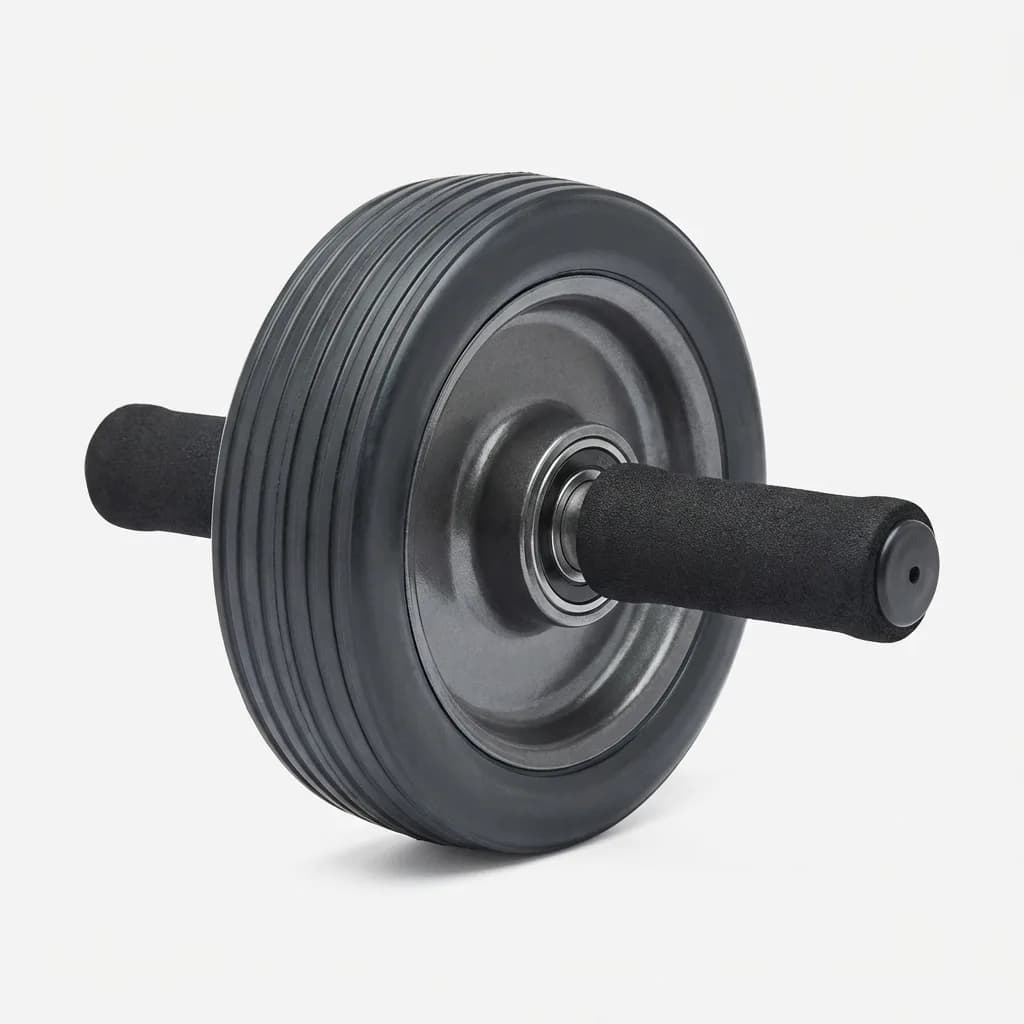
Valeo AB Roller Wheel
$12
Single 5-inch wheel with dual ball bearings and ribbed rubber tread. Cushioned foam handles and sturdy steel construction. Simple and effective.
The ab roller isn't a magic bullet for abs. But it is one of the most effective tools for building anti-extension core strength. Choose one that matches your current ability, focus on form over range of motion, and progress gradually. Your lower back will thank you.
The Weekly Dispatch
Enjoying this article?
Subscribe and get our best gear picks delivered every Sunday morning.
Related Posts
Best Continuous Glucose Monitor for Non-Diabetics
Continuous glucose monitors aren't just for diabetes management anymore. We break down which CGMs work for metabolic optimization and what the data actually tells you.

Best Fitness Tracker Without Subscription 2026
Fitness trackers without monthly fees. We compared the best options by maker specs and features that give you all your data without a paywall.
Best Home Gym Equipment for Small Spaces 2026
Space-efficient gym gear that delivers serious workouts without turning your apartment into a cluttered mess. From adjustable dumbbells to wall-mounted systems.
Best Foam Roller for Back Pain Relief 2026
The right foam roller targets trigger points without bruising. We compared density, surface patterns and build across price points by maker specs.